

Determining Field Capacity Using Continuous Soil Water Content Data
Introduction
The field capacity of a soil is often used to guide irrigation decisions and manage soil water. It refers to the amount of water retained in the soil after precipitation, once excess water has drained away and the downward fow has substantially decreased (Figure 1). Soil water content at feld capacity typically serves as an upper threshold for irrigation management. Despite its widespread use, the concept of feld capacity remains imprecise because there is no standardized method for estimating it and measuring it accurately can be challenging (Krueger & Ochsner, 2024; Veihmeyer & Hendrickson, 1931).
Although direct feld measurements are likely the most accurate method of determining a soil’s feld capacity, they can be costly and labor intensive. Instead, feld capacity is often estimated by measuring the water content remaining at some time after precipitation, by measuring the amount of water that remains in the soil at a certain pressure, or by using predictive formulas based on other soil properties. An alternative to all of these approaches is to estimate feld capacity from long-term soil water content records — also known as time series data — that is continuously collected from in-ground sensors.
| Image | Description |
|---|---|
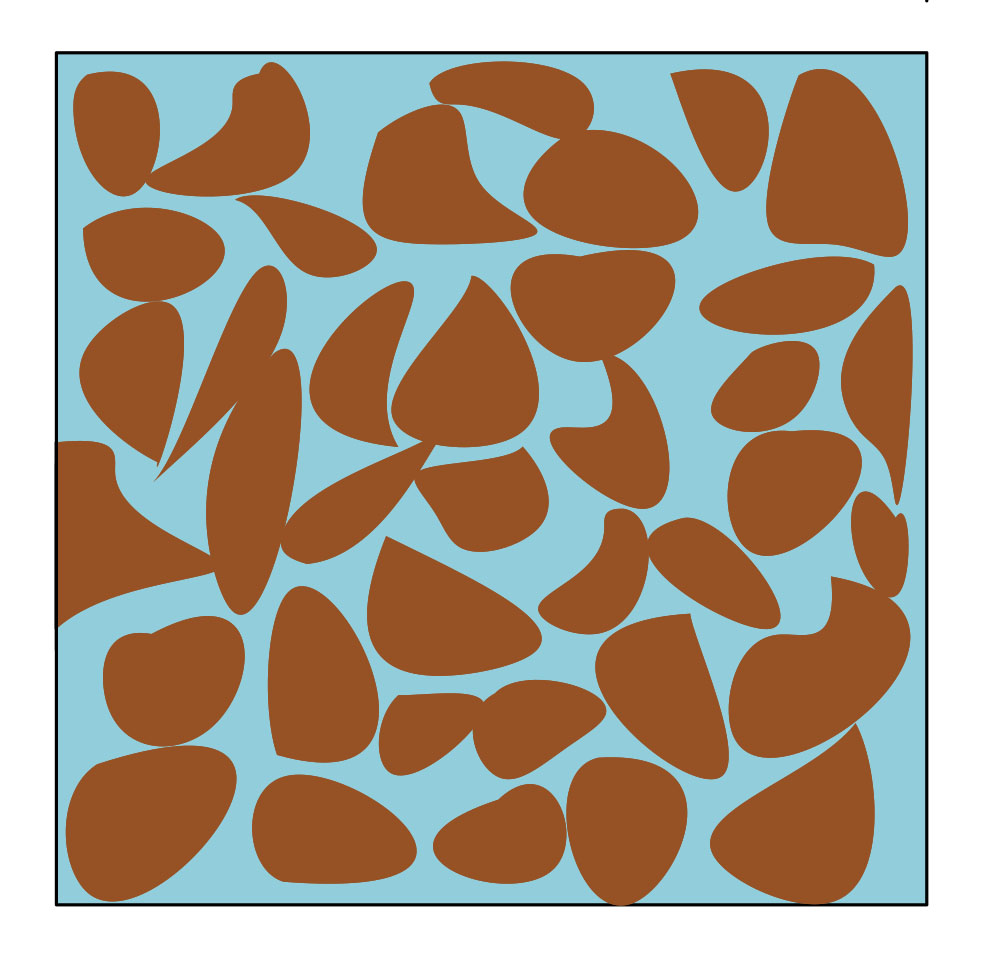 | Saturation All pores are filled with water |
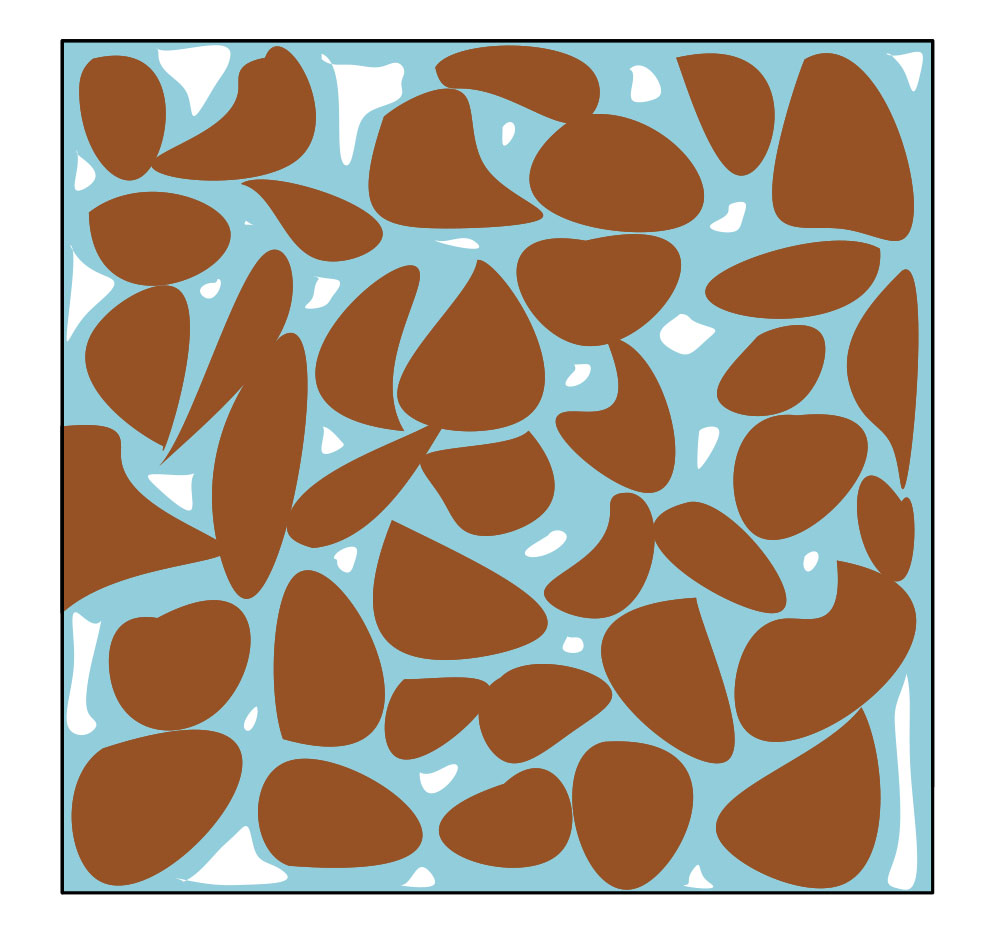 | Field Capacity Water in larger pores has drained |
Figure 1. Soil water content at saturation and feld capacity (Datta et al., 2017).
Automated In-Ground Soil Water Content Monitoring Systems
With the increasing demand for precision agriculture and sustainable water management, automated soil water content monitoring can play a crucial role in optimizing irrigation, while also ensuring crop productivity. The data from these sensors can be analyzed to detect soil water content peaks, declines and the time when soil water content stabilizes. These wetting and drying cycles can be used to accurately and precisely estimate feld capacity based on actual site conditions, rather than relying on other estimation methods that may be less reliable. It is important to note that soil water content readings and the estimated feld capacity based on them can vary depending on the type of sensor used.
The most accurate way to identify the point at which feld capacity is reached is by having experts review the time series data from individual sites and depths. However, this is difficult when dealing with large datasets. To overcome this difficulty, scientists have developed automated methods to analyze data from soil water content sensors to detect when soil water content spikes, then drops, and finally stabilizes. This stable period is considered feld capacity, which may occur between 1 and 10 days after peak soil water content, depending on factors such as soil texture. In a recent study in Oklahoma, USA, a simple automated routine like this was utilized to determine feld capacity based on soil water content time series (Krueger & Ochsner, 2024).
Soil Water Content Peak Detection and Feld Capacity Determination
Oklahoma Mesonet Soil Moisture Measurements
With measurements at more than 100 locations spanning over 70,000 square miles (Figure 2) and a data record beginning in the late 1990’s, the Oklahoma Mesonet is one of the longest running and most densely monitored, large-scale soil moisture networks in the world. The soil moisture data are used by the Mesonet to provide plant available water estimates for farmers, ranchers, land managers and the general public across the state. In the study by Krueger & Ochsner (2024), these soil moisture data were analyzed to estimate feld capacity for Mesonet sites. Soil moisture data at depths of 2, 10 and 24 inches were collected from 118 Oklahoma Mesonet stations between 2002 and 2022, and soil moisture at feld capacity was estimated for each site and depth. Figure 2 indicates-the location of the Oklahoma Mesonet stations and how sand content varies across the state.
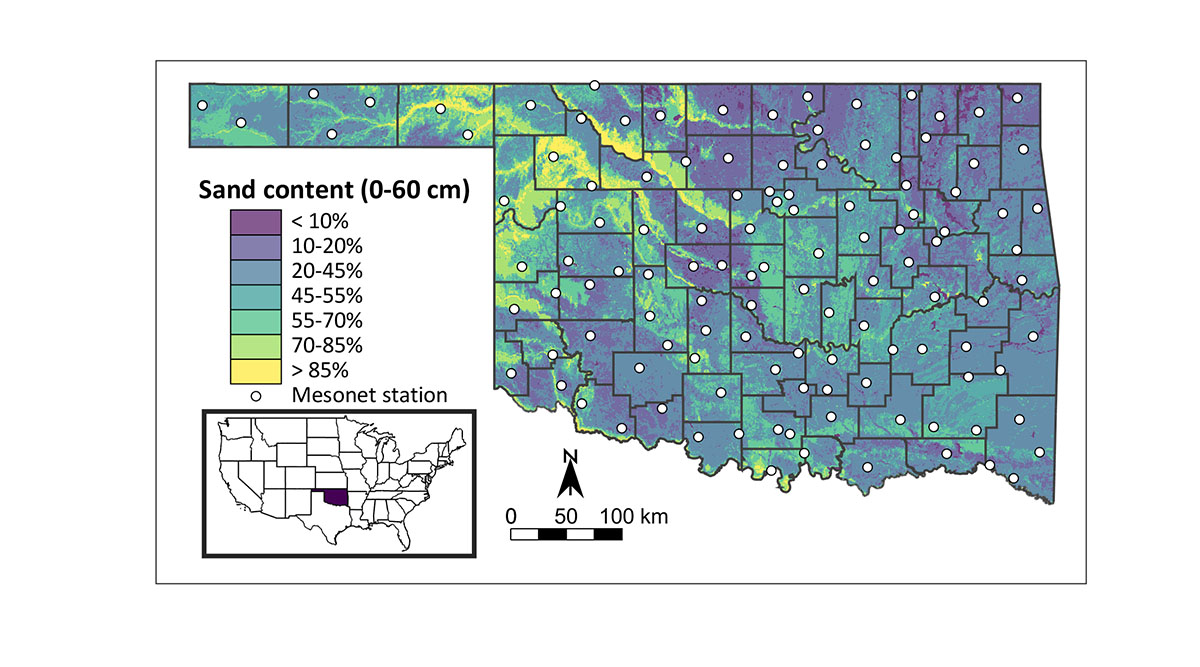
Figure 2. Oklahoma Mesonet site locations as of January 2024 and estimated sand content for the top 24 inches of soil (0-60 cm) across the state (Krueger & Ochsner, 2024).
Identifying Peaks in Time Series Data
To identify peaks in soil water content time series and analyze the water content behavior after each peak, the soil water content on a given day is compared with that on previous and subsequent days. A peak is defined as any daily soil water content value that was at least 0.1 % higher than the day before and days after. This relatively low threshold was required to capture peaks recorded by the soil moisture sensors used by the Oklahoma Mesonet, and higher thresholds are likely more appropriate for other sensor types. This threshold is approximately equal to a 0.5 to 1% of feld capacity, which helps identify meaningful increases from minor daily fluctuations. Three criteria were used to determine whether an identified peak in the soil water content time series is useful for feld capacity estimation. The first criterion requires that the soil water content at each peak be at least 95% of the maximum observed soil water content for the entire period of record. This threshold ensures that peaks with soil water content values likely below feld capacity are excluded from the analysis, as they may not represent true feld capacity conditions.
The second criterion relates to the seasonal timing of the peaks. For a peak to be considered valid for feld capacity estimation, it must occur during the winter months, which are December through February for Oklahoma. By selecting peaks from this season, the influences of evaporation and transpiration are minimized. During winter, soil water is generally replenished by precipitation, and soil water content tends to remain near feld capacity for extended periods. In addition, vegetation is typically dormant, resulting in minimal water use by vegetation. Therefore, there is less fluctuation in soil water content compared to other seasons, where evaporation and transpiration are greater.
The third criterion pertains to the amount of precipitation that falls in the 10 days following the peak. For a peak to be valid, the total precipitation within this period must be less than 0.4 inches. This ensures that rainfall after the peak does not interfere with the natural decline of soil water content after the peak. To ensure that the feld capacity estimation process is robust and reliable, at least three valid peaks are required for each location and depth. This requirement ensures that there is enough data to observe reproducible trends in soil water content dynamics and reduce the likelihood that the feld capacity estimates are based on anomalous or isolated events.
Estimating Field Capacity After Soil Moisture Peaks
Identifying the time after a peak when soil moisture stabilizes is the key to defining feld capacity using this approach, but it can be challenging because this point is influenced by environmental factors and soil properties. This challenge is illustrated using the soil water content time series from the Marena and Bessie Mesonet sites (Figure 3a and 3b). At the Marena site, three valid peaks are shown after precipitation during the winter of 2020-2021. Because the soil was already near feld capacity at the time of precipitation, and there was little evaporation or water use by vegetation afterward, the peak is visually subtle. The stability in soil water content following the peak suggests that feld capacity was reached quickly, on the first day after each peak.
In contrast, at the Bessie site, peaks were followed by rapid water loss, dropping from 37% at the peak to 29% after three days. However, this did not indicate a stable water content plateau after wetting, as expected under traditional feld capacity definitions. Instead, there was a near continual decline that ceased only when soil moisture was replenished by precipitation or approached the permanent wilting point of the soil. The distinct behaviors of these sites occur even though they are covered with similar vegetation (native grassland) and are of similar soil texture (loam soil at Marena and silt loam at Bessie). For the Bessie site and others with similar water loss patterns, defining feld capacity one day after the peak is a practical approach since any definition beyond one day risks underestimating soil water content at feld capacity. Therefore, to pinpoint the feld capacity, Krueger and Ochsner (2024) suggested using the daily average soil water content 1 day after each valid peak in soil water content. Once feld capacity values were estimated using this approach for all identified peaks, the final feld capacity value is determined by calculating the average of these individual estimates.
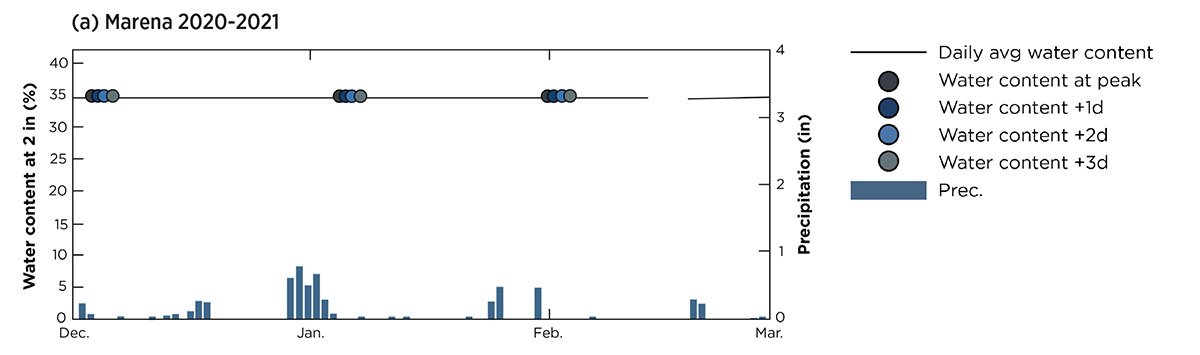
Figure 3 (a). Daily and half-hourly measurements of volumetric soil water content (θ) at a 2-inch depth, along with precipitation from December 2020 to February 2021 at the Marena Oklahoma Mesonet site. The figure also high-lights peaks detected and the water content measured 1, 2, and 3 days after each peak.
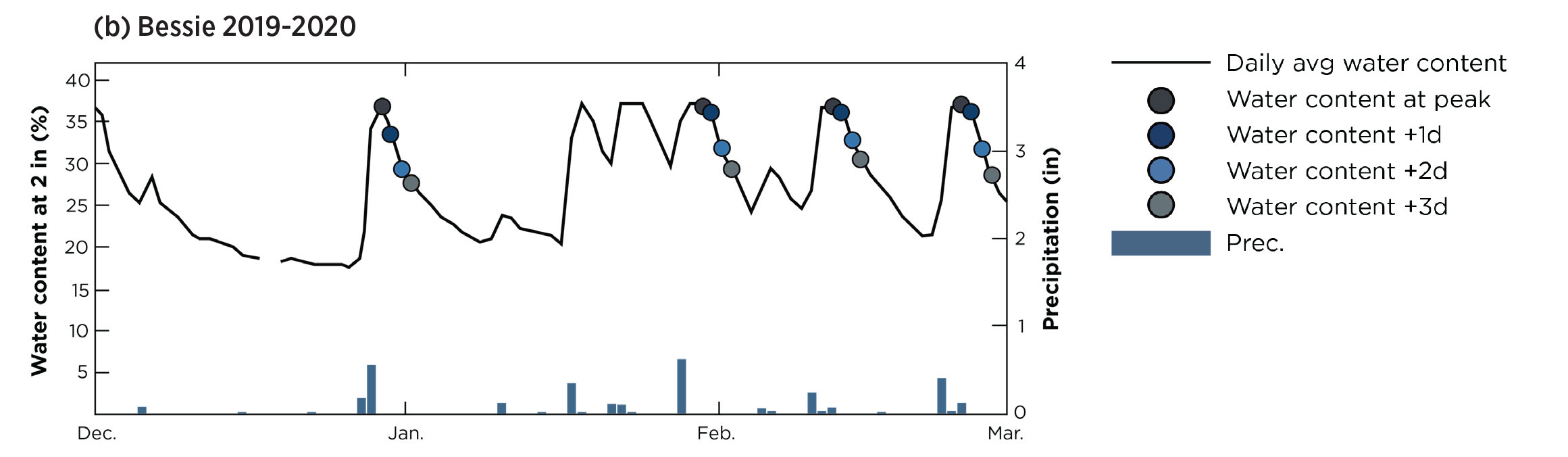
Figure 3 (b). Daily and half-hourly measurements of volumetric soil water content (θ) at a 2-inch depth, along with precipitation from December 2019 to February 2020 at the Bessie Oklahoma Mesonet site. The figure also highlights peaks detected and the water content measured 1, 2, and 3 days after each peak.
Why Does Field Capacity Matter?
Understanding feld capacity is essential for managing water resources effectively, especially in regions that often experience soil water shortfalls or have irrigated agriculture. The amount of water retained at feld capacity varies with soil texture (Figure 4), which is key to understanding how to manage different soils to optimize plant growth and agricultural productivity. Figure 4 shows the soil moisture at feld capacity estimated using the above method for various soil textures across all Oklahoma Mesonet stations, represented using notched box plots. Each box indicates the distribution of feld capacity values for a specific soil type, highlighting differences in water retention across textures. Coarse-textured soils like sand and loamy sand have the lowest feld capacity, typically below 20%. In contrast, fine-textured soils such as silty clay loam, silty clay, and clay exhibit the highest feld capacity, generally above 35%. This trend reflects the ability of finer-textured soils to retain water due to their greater surface area and smaller pore spaces.
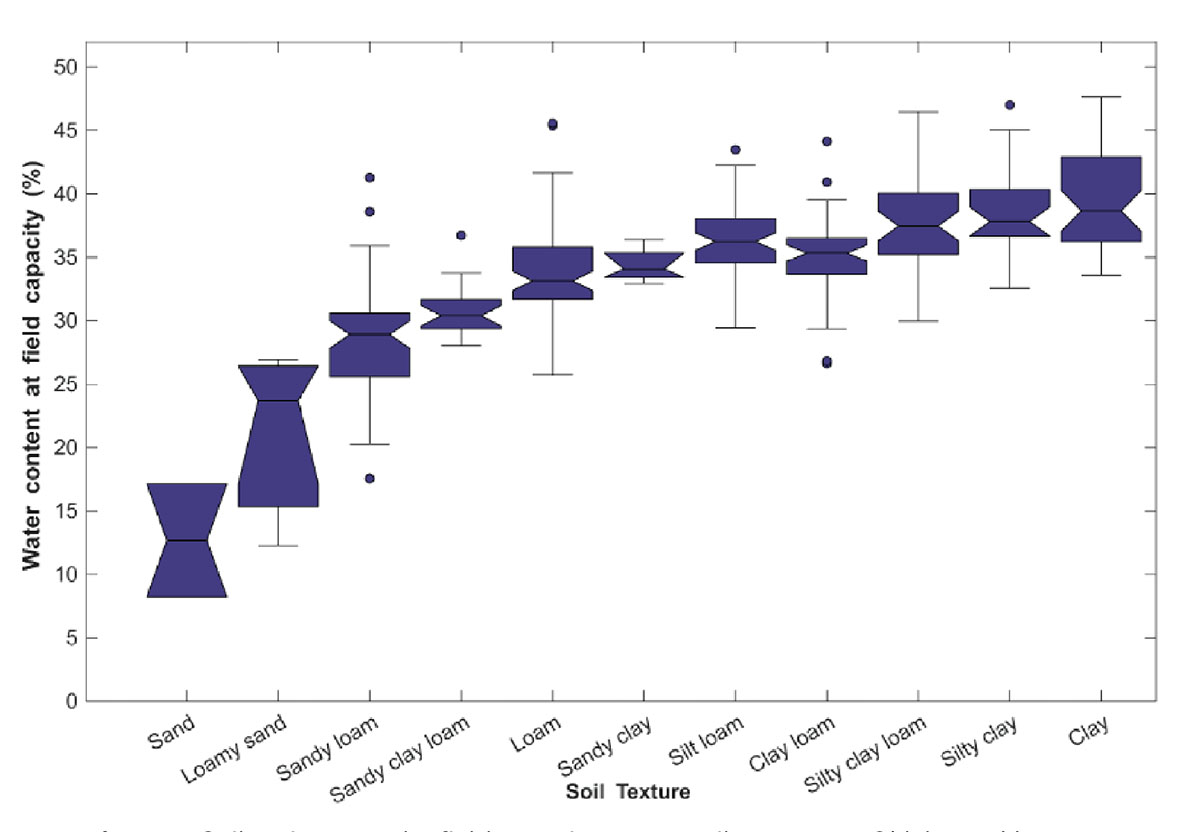
Figure 4. Soil moisture at the feld capacity across soil textures at Oklahoma Mesonet stations. Silt is not represented since this texture does not occur at any of the Mesonet sites. These values represent feld capacity estimates at individual sensor depths, not averages across the entire soil profile. The figure highlights the dependence of soil moisture at feld capacity on soil texture.
Summary
In summary, irrigation managers and others interested in understanding soil moisture conditions should be aware that:
- Determining feld capacity remains a critical but challenging task, due to its dependence on various soil and environmental factors and the lack of standardized measurement methods.
- Reliable feld capacity estimates are possible using data from automated soil water content monitoring systems.
- By analyzing soil water content time series and detecting peaks meeting the criteria described in this fact sheet, reliable feld capacity values can be obtained.
- This approach offers a promising solution for enhancing soil water management in agricultural and environmental applications.
- Field capacity varies substantially across different soil textures. Finer-textured soils, such as clay, retain more water at feld capacity, while coarser soils, like sand, retain less. Understanding these differences can help optimize irrigation management for agricultural productivity.
References
Datta, S., Taghvaeian, S., & Stivers, J. (2017). Understanding Soil Water Content and Thresholds for Irrigation Management— Oklahoma State University. https://extension.okstate.edu/fact-sheets/understanding-soil-water-content-and-thresholds-for-irrigation-management.html
Krueger, E. S., & Ochsner, T. E. (2024). Traditional matric potential thresholds underestimate soil moisture at feld capacity across Oklahoma. Soil Science Society of America Journal, 88(5), 1678–1690. https://doi.org/10.1002/saj2.20733
Veihmeyer, F. J., & Hendrickson, A. H. (1931). The moisture equivalent as a measure of the feld capacity of soils. Soil Science, 32(3), 181.