

Armyworms in Wheat
Portions of this pest alert are from a previous article by retired IPM Coordinator Tom Royer.
The cool, rainy spring weather provided excellent growing conditions for Oklahoma winter wheat, but also for armyworm food. Armyworm infestations typically occur in late April through the first two weeks of May. They feed on leaves and awns (Fig. 1A) and occasionally clip the head from developing plants. Head clipping (Fig. 1B) is mostly restricted to secondary tillers with very small, green heads that contribute very little to yield.
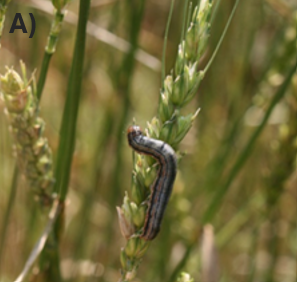
Figure 1a. Armyworm feeding on winter wheat.
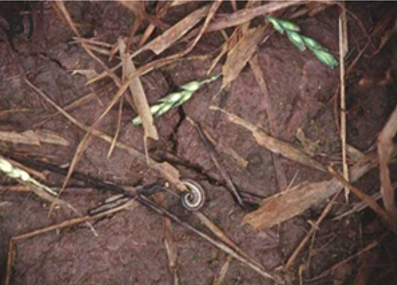
Figure 1b. Armyworm and wheat heads clipped by armyworm feeding. (Photos: Tom Royer, Oklahoma State University)
Wheat head armyworms (Fig. 2) have also been observed around the state. Fortunately, these are a minor pest in wheat. Wheat head armyworms are greenish, cream colored with longitudinal white and brown lines along the side of their body. This makes them difficult to detect when they feed on wheat heads during the cooler parts of the day, early morning and late evening. In the heat of the day, they can be found in the soil at the base of the plant. Wheat head armyworm damage can be classified as ‘IDK’ (insect damage kernels). Larvae will feed on the kernels and hollow them out, leaving damage like that caused by stored grain pests. However, justification for scouting these worms and spraying insecticide is low due to the wheat head armyworm’s typically sporadic and isolated infestations. Wheat head armyworms typically infest field margins, therefore producers with an infestation may find that baling the perimeter of the field and then harvesting the interior separately can reduce IDK concerns.
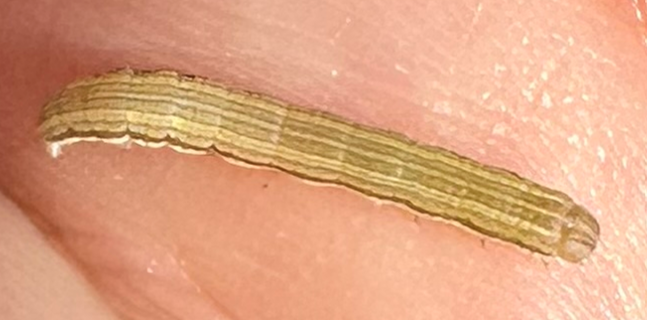
Figure 2. Wheat head armyworm. (Photo: Ashleigh M. Faris, Oklahoma State University)
To accurately determine the need for control, producers should have a good estimate of pest numbers, know the value of their crop, and know the cost of control. When applying any pesticide at this point in the season one needs to also keep in mind the preharvest interval (PHI). See OSU Fact Sheet CR-7194 “Management of Insect and Mite Pests in Small Grains” for more information on registered insecticides, application rates, and grazing/harvest waiting intervals.
Since armyworm infestations tend to occur more frequently around waterways, areas of lush growth, or areas with lodged plants, check them first to determine the size of the infestation. Early signs of an infestation include chewed leaves with ragged margins. You may find “frass” i.e. the excrement from armyworm caterpillars, around the base of wheat stems and clipped heads. Also, look for evidence of armyworms parasitized by the wasp Glyptapanteles militaris. This parasitoid attacks armyworms as well as several other caterpillars. When the larva emerges, it produces a cottony cocoon about the size of a Q-tip. Scout for armyworms at five or more locations looking for “curled up worms” (Fig. 3A & B). Armyworm caterpillars tend to feed at night, so another good strategy is to bring a flashlight, shine it on the emerged wheat heads after dusk and count armyworms that are feeding on the heads and plant stems.
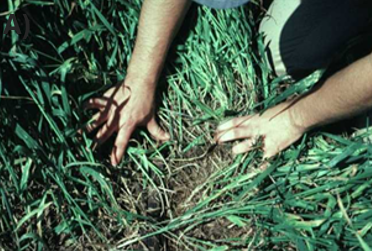
Figure 3a. Scouting for armyworms involves carefully inspecting for worms at the soil level.
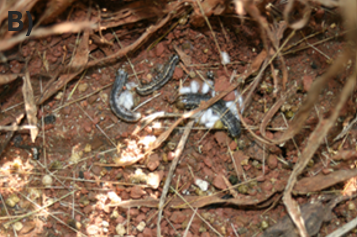
Figure 3b. Armyworms and their cottony, Q-tip sized cocoons. (Photos: Tom Royer, Oklahoma State University)
The suggested treatment threshold for armyworms is 4-5 caterpillars per linear foot of row (Fig. 4). Like most insect pests, armyworms are easier to manage with insecticides when they are in their smaller, early instar stages. Generally, no control is needed if wheat is past the soft dough stage unless there is visible head clipping, and caterpillars are present and feeding.
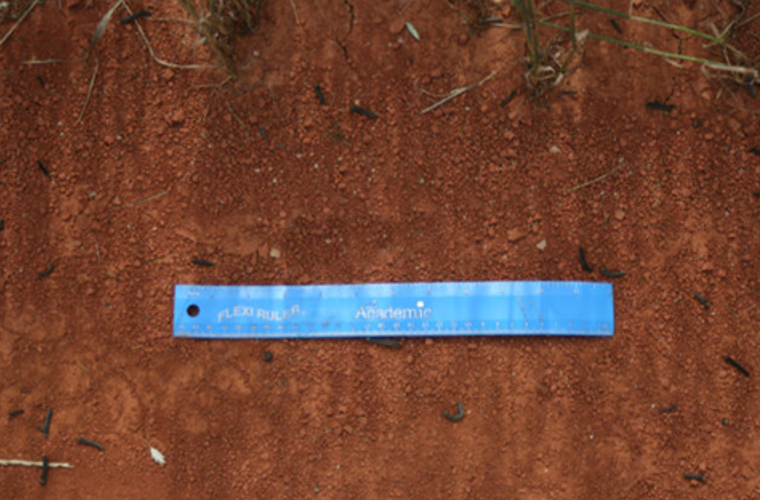
Figure 4. Treatable numbers of fall armyworms are 4-5 worms per linear foot of row. (Photo: Tom Royer, Oklahoma State University)
If a producer is considering a fungicide application, this might be an opportune time to evaluate your field for armyworms. If NEEDED, combine an insecticide with a needed fungicide application to control multiple pests. Check CR-7194, “Management of Insect and Mite Pests in Small Grains” for insecticide suggestions, application rates, and grazing/harvest waiting periods.