
Extension

Open Main MenuClose Main Menu

Wheat Disease Update – 25 March 2024

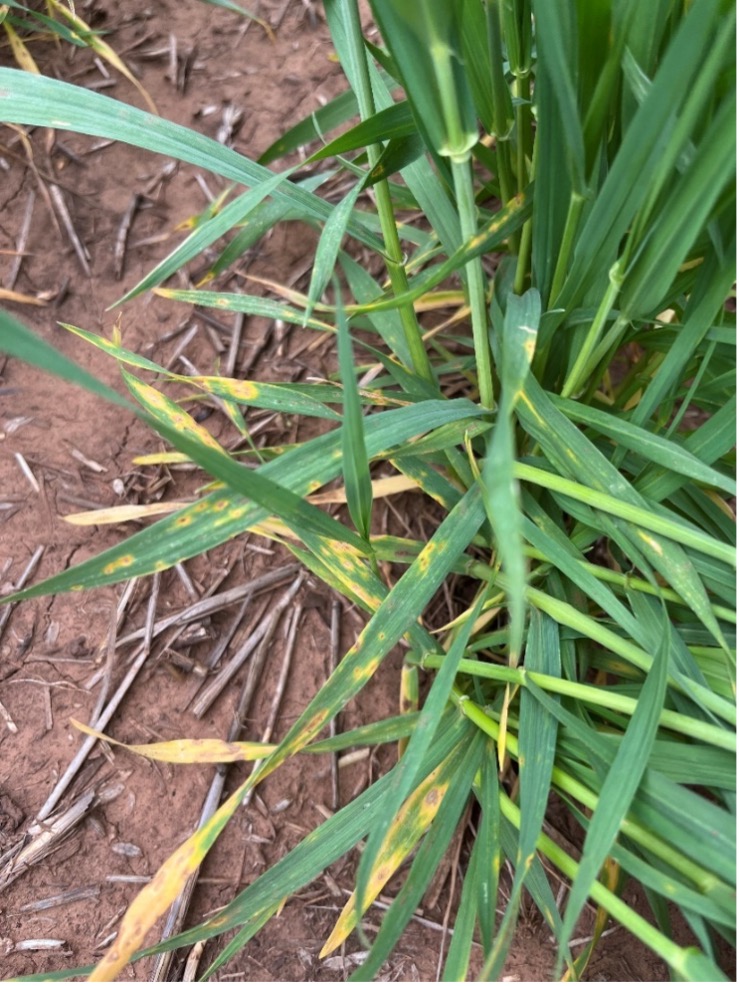
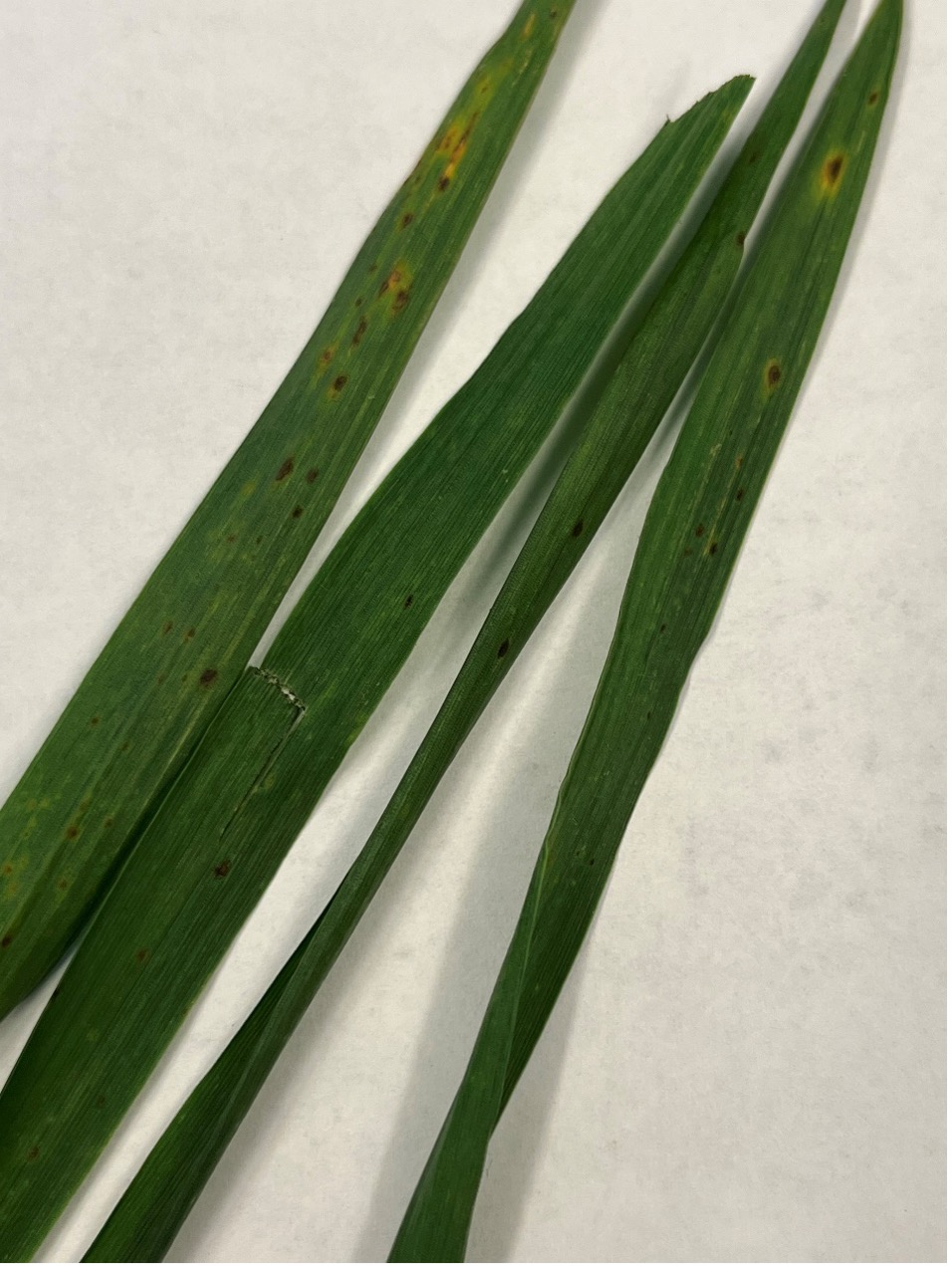
On March 19, Tyler Lynch (Agriculturalist Sr, OSU, Department of Plant and Soil Sciences, OSU) brought wheat samples (Figure 1) showing tan spot symptoms from the wheat variety trials at Balko (Beaver County) and Hooker (Texas County), OK. Tyler reported that tan spot incidence was low and mainly observed on lower leaves. Tan spot was reported at Chickasha (Grady County) in my previous update on March 21. On March 14, spot blotch (caused by Bipolaris sorokiniana, Figure 2) was found at low incidence at Chickasha.
 

A bundle of wheat leaves with yellow spots with darker brown spots inside the yellow.

Figure 1. Tan spot on lower wheat leaves at Chickasha, OK (March 15, 2024).


Four dark green leaves with a view black spots.

Figure 2. Spot blotch on wheat leaves at Chickasha, OK (March 14, 2024).


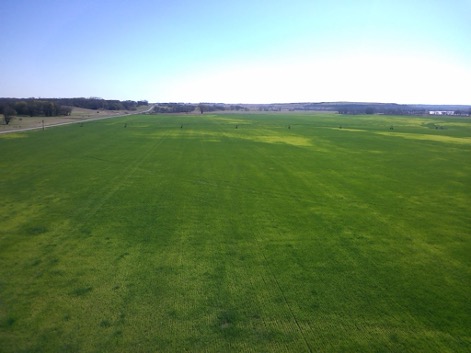
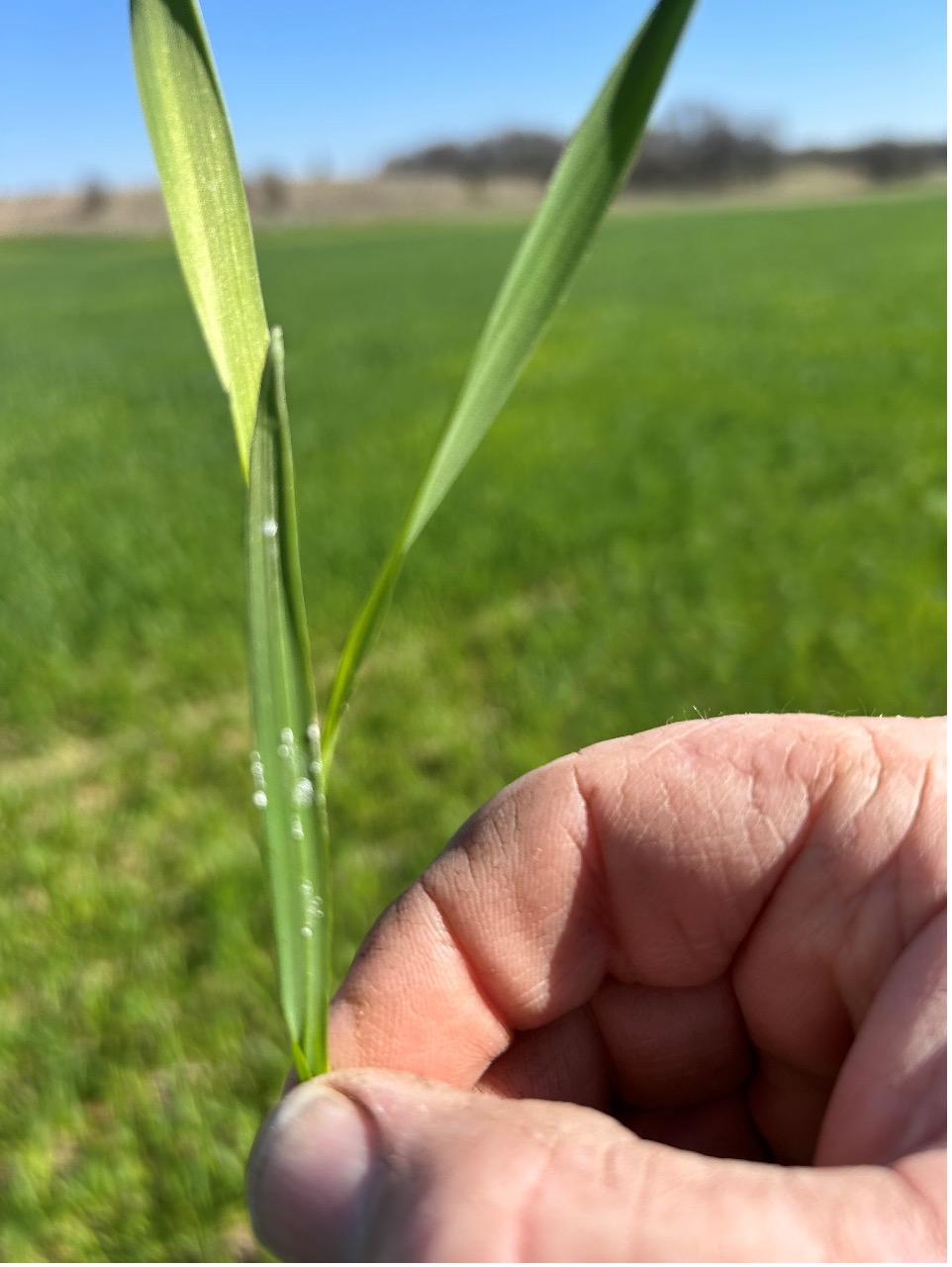
On March 19, powdery mildew was reported in a grower’s field at Hominy (Osage county), northeastern Oklahoma (Figure 3, 4). The infected field area showed pale green to yellow patches as shown in Figure 3. White cottony patches (fungal mycelium and spores) were observed on the upper surface of lower leaves (Figure 4). 
 

A large dark green wheat field with a view lighter green area showing.

Figure 3. Light green to yellow patches in a wheat field affected by powdery mildew at Hominy, OK (March 19, 2024). 


A hand holding one leaf with a view white spots.

Figure 4. White cottony patches (fungal mycelium and spores) indicative of powdery mildew infection (Hominy, OK; March 19, 2024). 


Stripe rust (Figure 5) was observed at Altus, Southwestern OK (Jackson County) on March 20, 2024. On March 22, Tyler Lynch reported moderate to high stripe rust pressure in the wheat variety trial at Altus with susceptible varieties showing up to 70% disease severity. The wheat crop at Altus is at flag leaf stage and all wheat plots at the variety trials showed symptoms of stripe rust. The wheat varieties in Altus were rated for their reactions to stripe rust. On March 22, Tyler also found stripe rust at Tipton (Tillman County), OK, however the disease pressure was low.
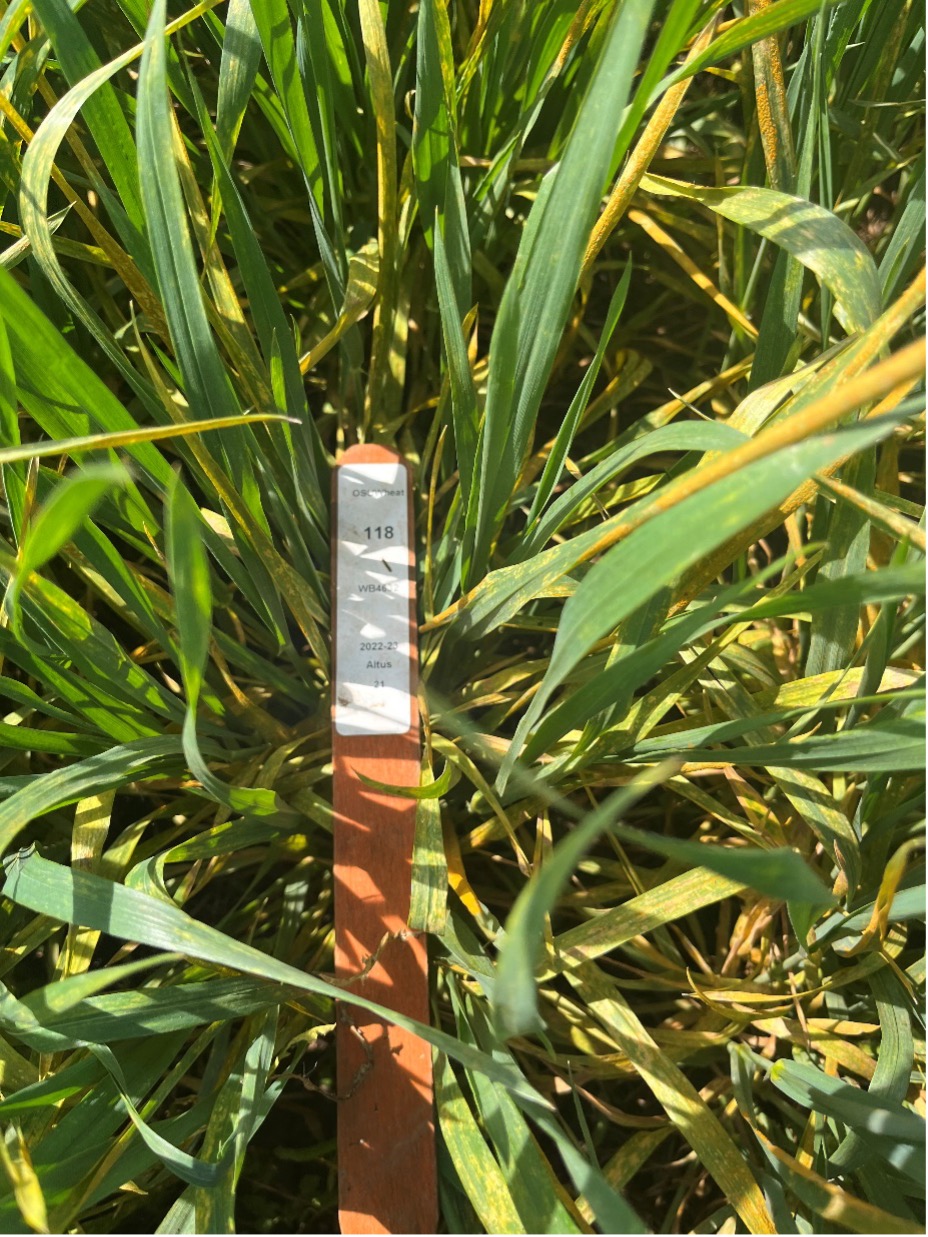
 

A close up in a wheat field with a brown wooden marker number 118.

Figure 5. Stripe rust on a susceptible winter wheat variety at Altus, OK (Photo: Mike Schulz, March 20, 2024).


Fact Sheet
Mite Control in Oklahoma Peanut Production

By Ashleigh Faris. Learn more about mite control in peanut production in Oklahoma, specifically Identification and biology, Crop injury, Scouting tips & action threshold.

Insects, Pests, and Diseases
Fact Sheet
Plant Disease & Insect Diagnostic Laboratory

By Jennifer Olson, Sara Wallace and Katie Oomens. Learn about the Plant Disease & Insect Diagnostic Laboratory’s mission, services, staff, fees, imaging methods, sample submission tips and contact/web info for plant and pest diagnostics.

Commercial Agriculture Insects, Pests, & DiseasesInsects, Pests, and Diseases
Fact Sheet
An Introduction to Fireflies

By Andrine Shufran, Teri Cocke and Emily Geest. Information about fireflies, discussing the diet, flashing signals, history, defense, identification, conservation and best time to see fireflies.

Insects, Pests, and Diseases
Fact Sheet
Poison Ivy, Poison Oak and Similar Plant Identification

By Brooklyn Evas, Pam Sharp, Shelley Mitchell, Ryan Patton, Justin Quetone Moss. Knowing how to recognize poison ivy, oak and sumac can save you from a miserable red itchy rash. All three of these closely related plants contain an irritating, oily sap called urushiol. Urushiol causes many people to break out in a rash when it comes in contact with their skin. Being able to identify these plants is beneficial considering there are many plants that look similar, but are harmless. This Fact Sheet is to help inform and educate the general public on how to identify poison ivy, poison oak and poison sumac so they can be avoided.

Gardening & Lawn CareInsects, Pests, and DiseasesShrubsWeeds & Invasive Plants
VIEW ALL
MENUCLOSE