

Nitrogen Fertilizer Timing for Winter Canola
A primary yield limiting factor for winter canola in the southern Great Plains is nitrogen (N). Based on current recommendations, canola needs approximately 2.5 lbs of N per bushel of expected seed yield or 5 lbs of N per 100 lbs of seed, which is slightly higher than the recommendation for winter wheat. However, there are several factors that affect crop N need and uptake. Management decisions related to N applications can be highly impactful on successful management of the crop.
When is the Best Time to Apply N Fertilizer for Winter Canola?
This can depend on several factors but overall growers want adequate fall growth to build enough photosynthetically active tissue to survive the winter. Too much, however, and or the crop progressing toward reproductive growth can result in heavy winter canola stand loss, diminished resources and limited early spring growth and development. Additionally, highest demand of N for the crop is in the spring after winter dormancy; therefore, excessive N applied at planting could result in high amount of losses and lower efficiency.
A recent trial at Oklahoma State University evaluated multiple N fertilizer application strategies for impact on canola yield (Figure 1). Trials evaluated rates of 75 and 125 lbs N/ac with fertilizer applied at planting, spring green-up and a winter application, as well as a combinations of these. Winter application date varied but always occurred after the first major freeze but before January. Treatments below will highlight these applications based on percent of total application as a percent for each application, in the order of fall applied, winter applied and spring applied (0:0:0).
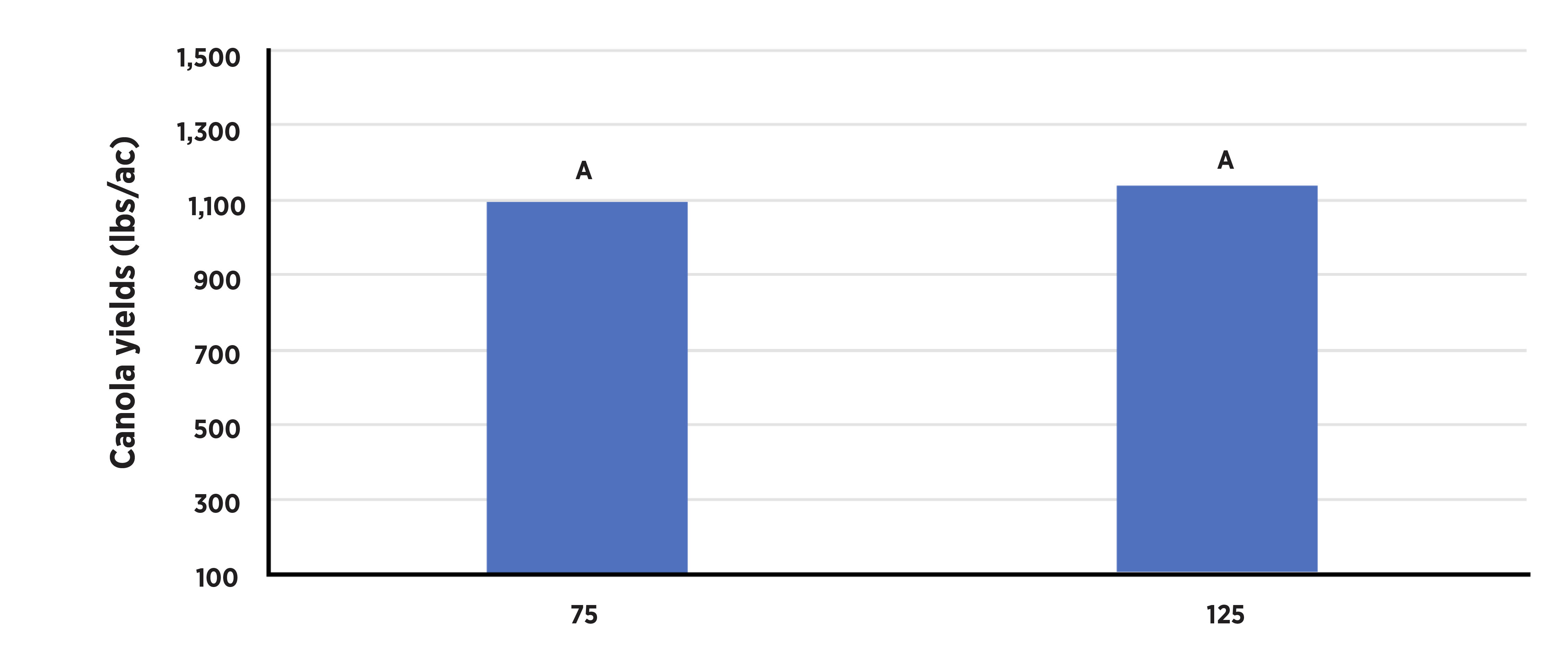
Figure 1. Impact of N fertilizer on winter canola yields
Note: Different letters in the bars would indicate significant differences between the N rates.
Throughout the three years of evaluation, canola yield was not affected by N rate (difference of 46 lbs/ac). Therefore, discussion will focus on N application timing over the N rates.
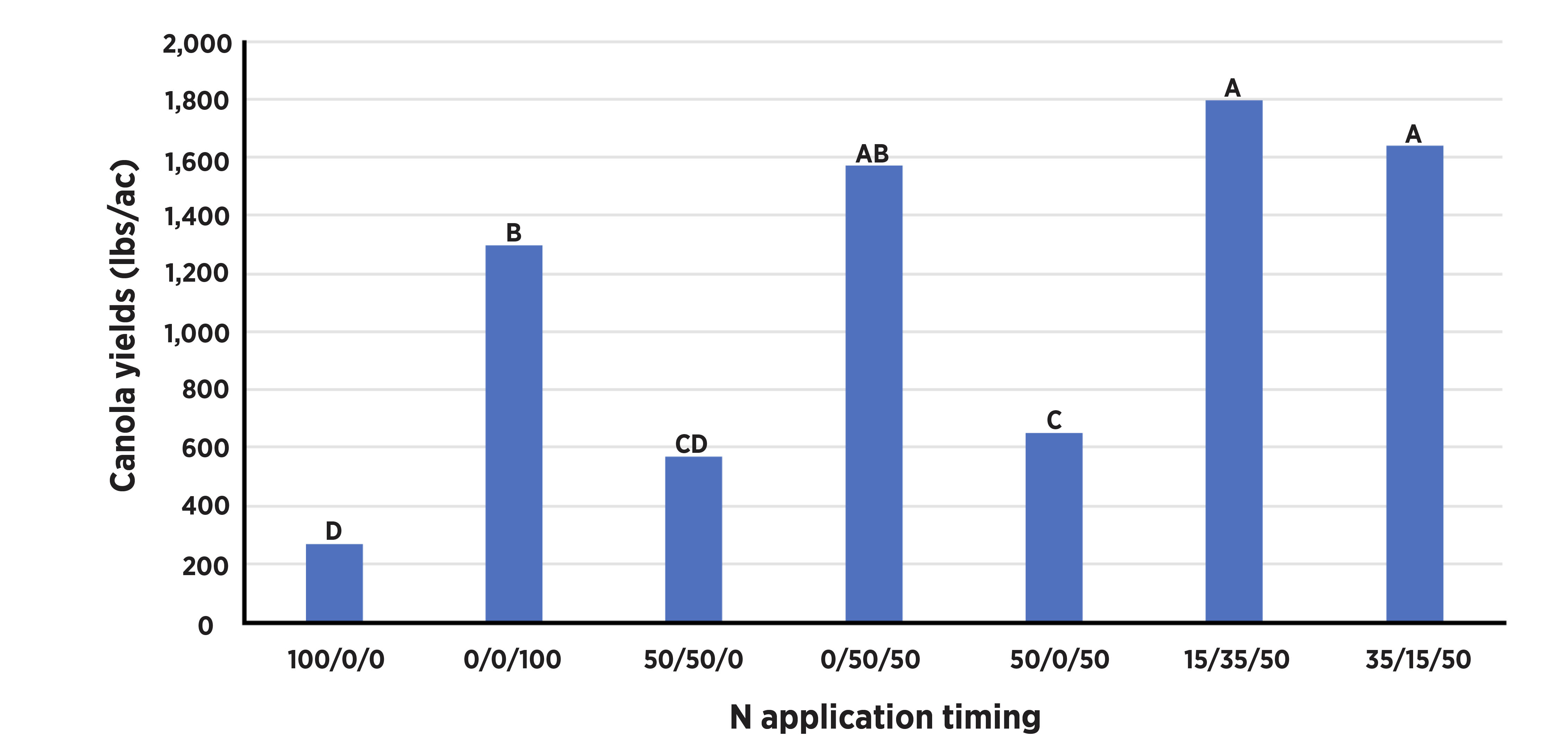
Figure 2. Impact of N fertilizer timing on winter canola yields averaged across N rates
Note: Timing includes a fall, winter and spring application (0:0:0) based on percent of fertilizer being applied (i.e. 15 would be 15% of total N was applied at that time). Different letters indicate significant differences between treatments.
The results suggest that using split applications is the best way to manage N in winter canola. Single applications, even those applied in the spring when canola needs the greatest amount of N, resulted in lower yields compared to N being split over two or three spring applications. Split applications allow for synchrony between N supply and plant demand, resulting in adequate fall growth, more photosynthetic activity and better yield.
A three-way split, which included a low or modest amount of N at planting, one application during winter dormancy and a larger application at spring green-up, resulted in the best yields. The use of planting or spring green-up applications are not a new concept in canola production; however, the winter application could be a newer practice for most. The value of winter applications is often not observed until the spring. When winter tissue loss is high, leaf regrowth is needed to successfully develop enough resources for reproductive growth. That growth is important prior to the time the stem and pods take over as the primary photosynthetically active portion of the plant. Fertilizer applications at planting, or delaying these until regrowth has started, can risk the plant becoming N limited during this time. This can result in limited regrowth and a lesser amount of tissue to start the most critical period of growth for the plant. These winter applications will typically have limited loss mechanisms and allow for a greater amount of N to be available during this time. Furthermore, winter applications allow growers to have greater flexibility, in both rate and timing, for the spring applications.
High N applications at planting will often result in lower yields in winter canola. This is often attributed to higher amounts of winter kill when excessive growth is experienced. However, this is not the only factor. A large amount of fall growth can result in soil moisture that would otherwise be available to the plant during the spring. Figures 3 and 4 highlight this fact with data from a year with limited winter plant losses. Greater fall growth will often result in lower yields compared to having more modest fall growth that reserves resources for the spring.
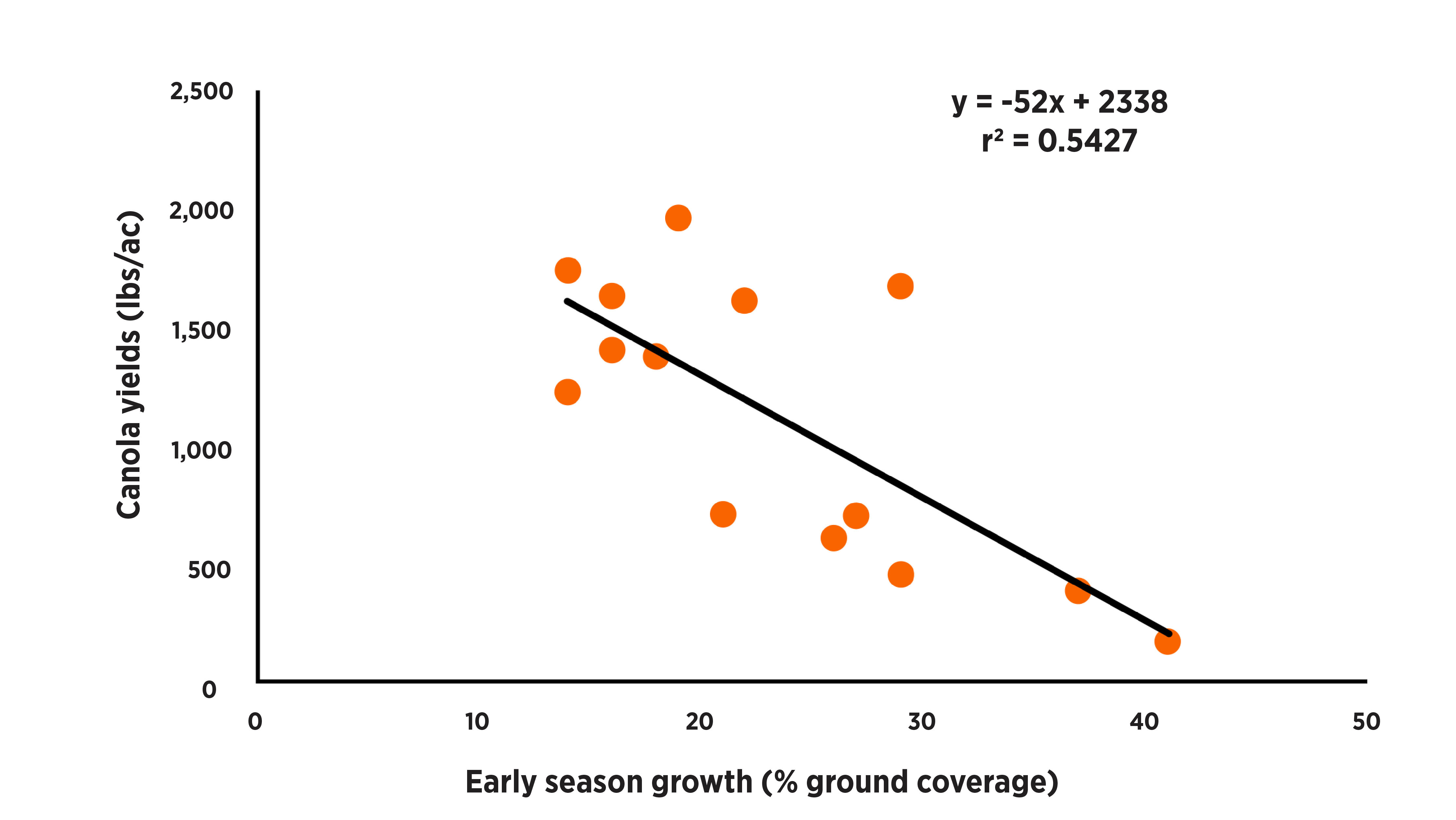
Figure 3. Relationship between early season growth (% ground coverage in the fall) and end-of-season winter canola yields
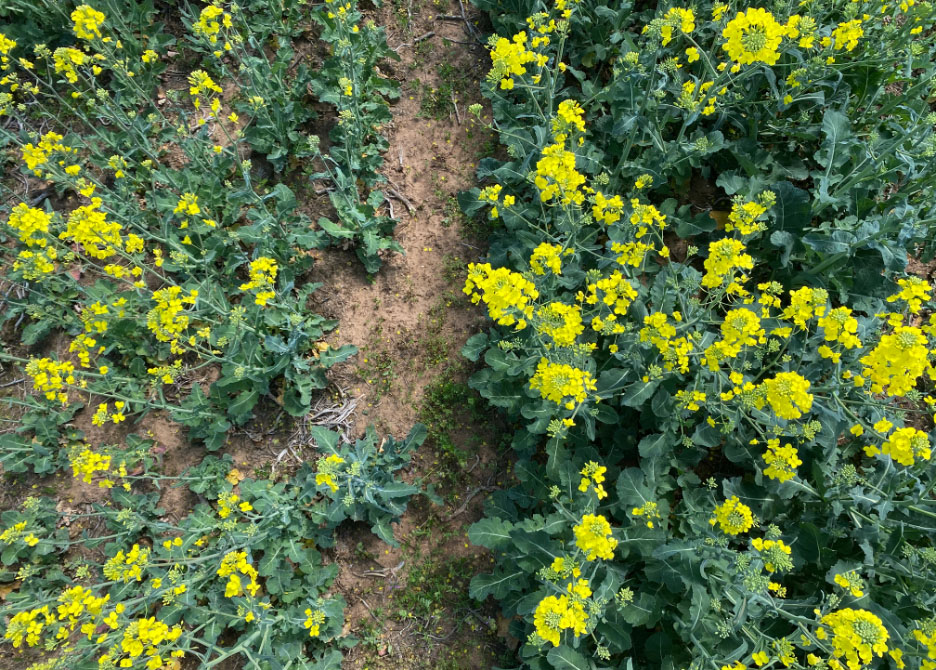
Figure 4. Visual representation of high N being applied at planting (left) with no winter application compared to the three-way split application (15-35-50; right)
Economic Value
While there is an agronomic benefit to split N applications in canola, application costs are necessarily greater. Therefore, an economic evaluation is warranted. The figure below highlights an economic scenario with the following assumptions: canola price of $0.15 per pound of canola and fertilizer application cost of $8 per acre for each additional application over where all N was applied in the spring (assumed as the standard treatment in this analysis). Since all the treatments were applied at the same N rate for the above agronomic and the below economic evaluation, fertilizer cost was not included in this evaluation. The standard treatment was considered as all fertilizer being applied at spring green-up (0-0-100).
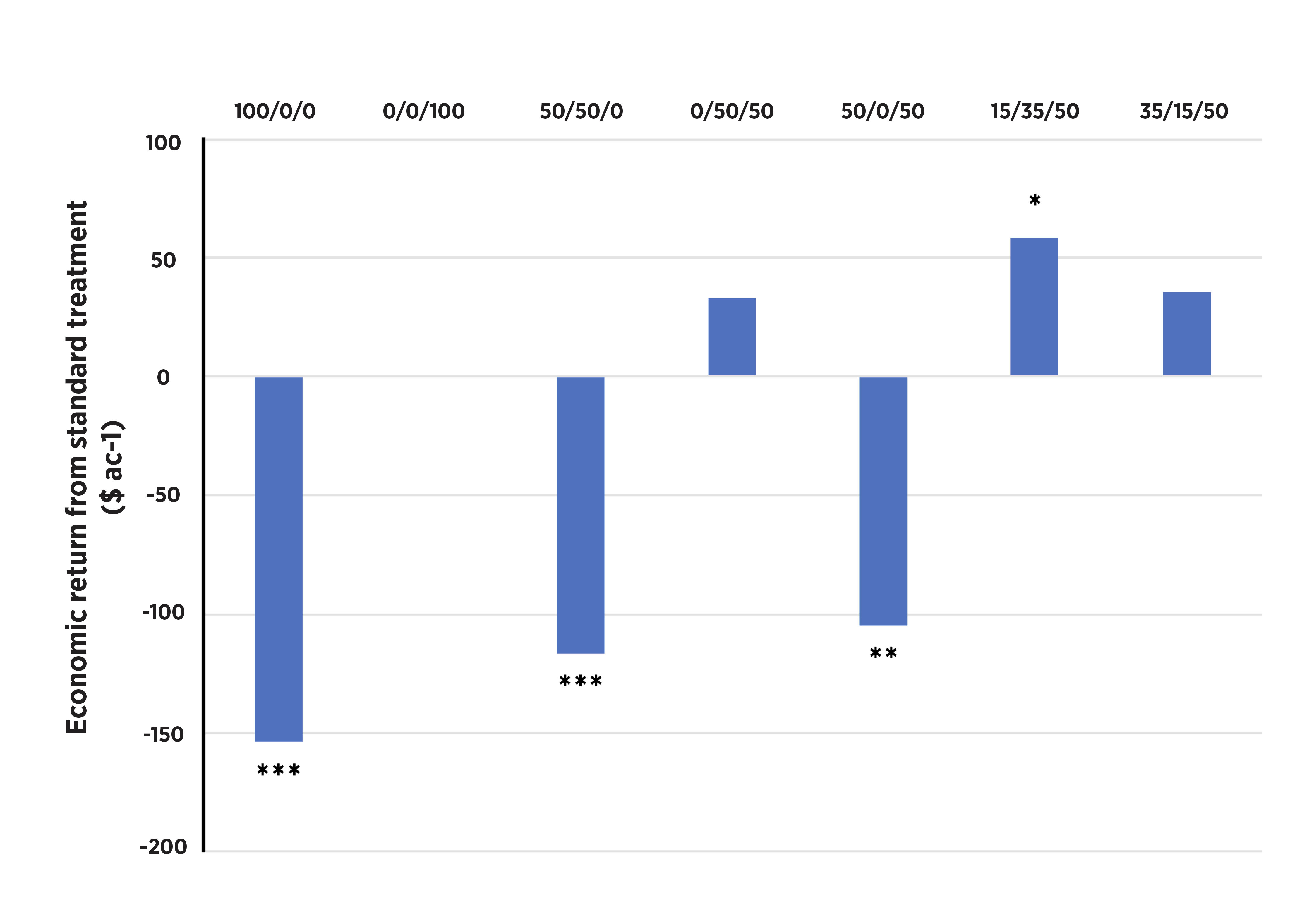
Figure 5. Economic partial net return of nitrogen application in winter canola
Note: Positive numbers indicate higher return compared to the check (all nitrogen applied at spring green-up; 0-0-100), a negative number would indicate that treatment yielded less than the check. Assumptions: $0.15 per pound of canola; $8 an acre of fertilizer application cost.
Similar to yields, applying a large fraction of total N in the spring had a positive economic return compared to the standard treatment. Those with higher up-front applications had a negative return compared to the standard treatment. This is not unexpected as these applications also yielded significantly lower than the standard treatment. The economic return of the winter and spring applied (0-50-50) was similar to the three-way application utilizing a higher application rate at planting (35-15-50), with neither being significantly different from the 0-50-50 treatment. A significant partial net return was noted with the lower fall applied N (15-30-50) compared to the 0-50-50 treatment.
Take-Home
Nitrogen management in canola can be challenging. While total amount of N applied to winter wheat and canola can be similar, wheat is less sensitive to N application timing than canola. Supplying N fertilizer in multiple small applications can help growers overcome the challenges of fall growth in canola. Applying N in winter ensures the nutrient is ready for plants when spring growth begins. While the optimum application time is often early spring, poor weather can cause delays. By applying a portion of the N during winter, growers can attempt to optimize the potential productivity and efficiency of the crop.