

Budget-Conscious Nutrition: Eating Well Without Overspending
Abstract
Rising food prices make it increasingly difficult for households to balance nutrition and affordability. Budget-conscious nutrition focuses on practical, evidence-based strategies that support healthy eating while reducing food costs. This factsheet presents approaches such as building meals around versatile pantry staples, selecting cost-effective forms of fruits and vegetables, planning and preparing meals in advance, and using simple recipe modifications. Staples like rice, pasta, beans, and canned vegetables can serve as affordable foundations for many meals, while frozen and canned produce provide nutritious, lower-cost alternatives to fresh options. This factsheet also highlights budget-friendly food swaps and the importance of using unit prices to identify the best value when shopping. Together, these strategies promote informed food choices along with financial resilience in the face of rising food costs.
Food prices continue to rise, making it more challenging for families to stay within their grocery budgets. Several factors can increase food costs, including buying out-of-season foods, assuming bulk purchases are always the best value, and making im-pulse purchases while shopping on an empty stomach. Research shows that hunger can influence food choices and increase the amount of food purchased. Planning and using simple budgeting strategies can help households eat well while spending less.
Choosing versatile pantry staples is one of the easiest ways to support budget-friendly meals. Foods such as rice, pasta, beans, canned vegetables, canned tomatoes, and basic spices can be used in many different recipes. For example, rice can be transformed into fried rice, a grain bowl or a stew. Pasta pairs well with canned tomatoes, garlic and oil for a quick sauce. Beans can be added to soups, salads or chili, or mashed into dips. Keeping these staples on hand or using what is available from a local food store can make meal planning easier and reduce the need for last-minute purchases. Evidence also shows that frozen and canned fruits and vegetables are nutritious and cost-effective options when fresh produce is not available for meeting daily fruit and vegetable recommendations.
Batch cooking and freezing meals is another tip that can save both time and money. Preparing large portions of soups, stews, or casseroles allows families to eat multiple meals from one cooking session. Freezing individual portions makes it easier to re-heat meals on busy days and helps reduce food waste. Dishes such as lentil soup made with dried lentils and vegetables or pasta casseroles made with canned vegetables and a simple sauce are affordable options that freeze well. Leftovers can be turned into new meals with a little creativity. Leftover rice can become rice pudding, roasted vegetables can be added to wraps or sandwiches and cooked chicken can be used in soups or salads. Repurposing leftovers stretches food dollars and reduces waste.
Changing recipes based on what is already on hand, what is in season, what your family enjoys and how much time you have to cook can also help lower food costs. Simple ingredient swaps can reduce calories, sugar, fat and sodium while increasing fiber and nutrients. Changing preparation methods, such as baking or roasting instead of frying, can also make meals healthier.
If you are looking for ways to reduce grocery costs without sacrificing quality, the budget-friendly swaps below may help.
| Food Item | Budget-Friendly Swap or Tip |
|---|---|
| Eggs | Use unsweetened applesauce for baking, a flax egg (1 Tbsp flax meal + 2.5 Tbsp water), or chia seeds mixed with water to replace eggs in recipes. |
| Chicken | Buy whole chickens, which usually cost less per pound, or use canned beans or lentils as afford-able protein alternatives. |
| Beef | Purchase larger or bulk packages for lower cost per pound. Choose lower-cost cuts such as chuck, round or brisket and use slow-cooking or braising methods. |
| Milk | Compare prices of dairy and plant-based milks such as soy, almond, oat or hemp. Shelf-stable cartons and powdered milk may offer lower-cost options. |
Another helpful shopping strategy is comparing prices using the unit price. The retail price is the amount you pay at checkout, while the unit price shows the cost per pound, ounce, or item. Unit prices are usually listed on shelf tags and make it easier to compare different brands and package sizes. If unit prices are not listed, you can calculate them by di-viding the retail price by the number of units. Remember that one pound equals 16 ounces.
| Image | Caption |
|---|---|
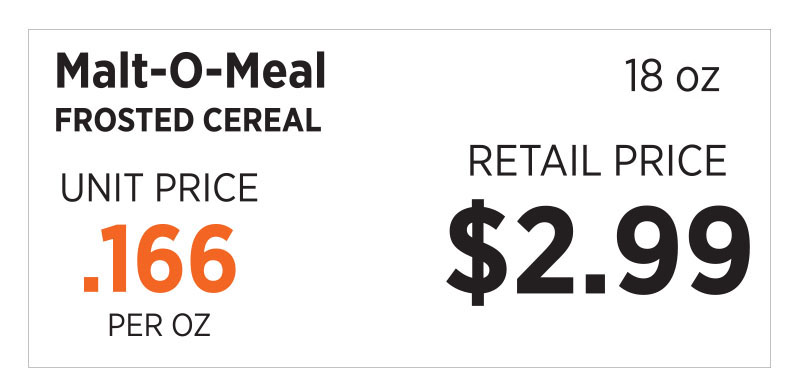 | Price per ounce $.166 |
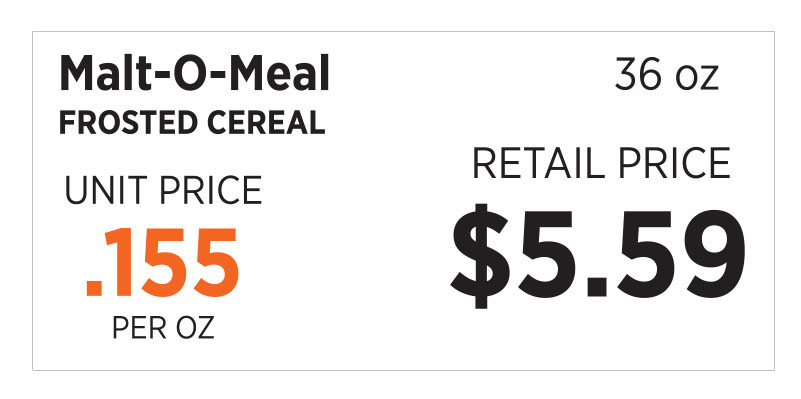 | Price per ounce $.155 |
In the example above, the item prices differ for the two products. The product on the top appears cheaper based on the shelf price, but the product on the bottom is actually the better value. The unit price for the top product is $0.166 per ounce, while the unit price for the bottom product is $0.155 per ounce. Comparing unit prices helps consumers identify the “best buy” and decide whether buying a larger size or choosing a different brand will save money.
With thoughtful planning, smart shopping, and simple cooking strategies, families can stretch their food dollars while still enjoying nutritious, satisfying meals.
Take-Away Strategies and Practical Tips to Save Money on Groceries
Meal Planning
- Actionable tip: Plan meals for the week and make a shopping list based on what you already have
- Why it helps: Reduces impulse purchases and prevents buying duplicate items
Shopping Habits
- Actionable tip: Avoid shopping when hungry and stick to your list
- Why it helps: Helps control spending and limits unnecessary items
Price Comparison
- Actionable tip: Use unit prices (cost per ounce or pound) to compare products
- Why it helps: Identifies the best value, even if the package price is higher
Seasonal Choices
- Actionable tip: Buy fruits and vegetables that are in season
- Why it helps: Seasonal produce is often lower in cost and better quality
Smart Alternatives
- Actionable tip: Choose frozen or canned fruits and vegetables when fresh options are expensive
- Why it helps: These options are nutritious, last longer, and reduce food waste
Pantry Staples
- Actionable tip: Keep affordable basics like rice, pasta, beans, and canned tomatoes on hand
- Why it helps: Allows you to prepare multiple meals without extra trips to the store
Cooking Strategies
- Actionable tip: Batch cook meals and freeze portions for later
- Why it helps: Saves time, reduces waste, and stretches food dollars
Using Leftovers
- Actionable tip: Repurpose leftovers into new meals (e.g., chicken into soup, vegetables into wraps)
- Why it helps: Maximizes food use and reduces waste
Protein Choices
- Actionable tip: Use beans or lentils, or buy whole chickens and lower-cost cuts of meat
- Why it helps: Provides affordable, nutritious protein options
Store Brands
- Actionable tip: Choose store brands instead of name brands when possible
- Why it helps: Often lower in cost with similar quality
Bulk Buying
- Actionable tip: Buy in bulk only when the unit price is lower and items will be used before spoiling
- Why it helps: Prevents waste while saving money
Milk Options
- Actionable tip: Compare prices of dairy, plant-based, shelf-stable, and powdered milk
- Why it helps: Helps find the most cost-effective option for your needs
Citations
Nederkoorn, C., Guerrieri, R., Havermans, R. C., Roefs, A., & Jansen, A. (2009). The interactive effect of hunger and impulsivity on food intake and purchase in a virtual supermarket. International Journal of Obesity, 33, 905–912.
Miller, S. R., & Knudson, W. A. (2014). Nutrition and cost comparisons of select canned, frozen, and fresh fruits and vegetables. American Journal of Lifestyle Medicine, 8(6), 430–437.
Jackey, B., & Bush, C. (2021). Recipe Swaps: Common Substitutions for Making Recipes Healthier (FS-1174). University of Mary-land Extension.
McClanahan. Seven Household Staples and Their Inflation-Friendly Swaps. U.S. News & World Report.