

The New Dietary Guidelines for Americans (2025–2030)
Abstract
This fact sheet summarizes key updates in the Dietary Guidelines for Americans, 2025–2030, highlighting both longstanding recommendations and new areas of emphasis. It outlines the continued focus on balanced eating patterns rich in fruits, vegetables, whole grains and minimally processed foods, along with limits on saturated fat. The fact sheet also describes new guidance on prioritizing whole and minimally processed foods, adequate protein intake for muscle health, sufficient dietary fiber and water as the primary beverage.
The Dietary Guidelines for Americans, 2025–2030 (10th edition) was released on January 7, 2026, by the U.S. Department of Agriculture (USDA) and the U.S. Department of Health and Human Services (HHS). Updated every five years, the guidelines reflect the latest scientific evidence on nutrition and health and provide practical recommendations to help Americans build healthy eating patterns and reduce the risk of chronic diseases such as heart disease, diabetes and obesity.
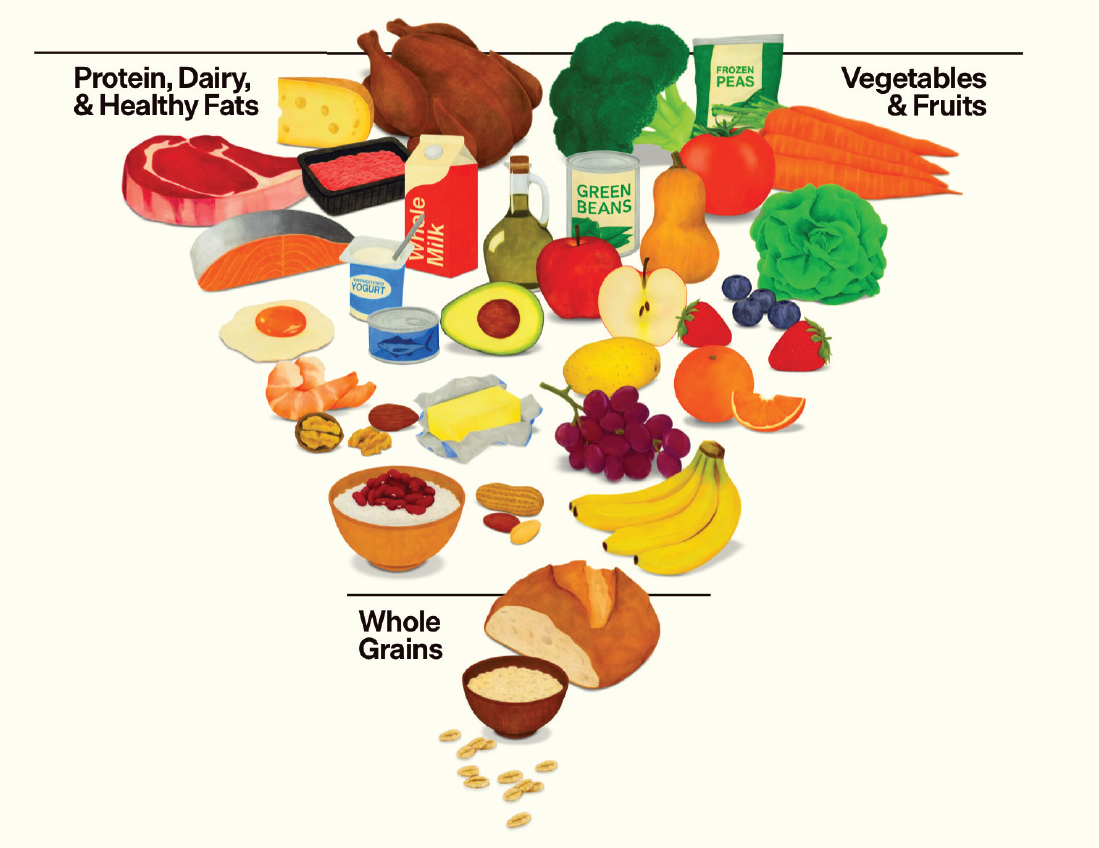
Figure 1. The current guidelines use an inverted pyramid to present federal nutrition recommendations. Source: Real Food
Why the Guidelines Are Updated
Nutrition science continues to evolve as new research improves our understanding of how foods and dietary patterns affect health across the lifespan. The five-year update cycle allows the guidelines to incorporate findings from large population studies, clinical trials and systematic reviews, ensuring recommendations remain current and evidence-based.
What Stayed the Same
The 2025–2030 guidelines continue to emphasize the importance of healthy eating patterns built around a variety of vegetables and fruits, whole grains and minimally processed foods. For a 2,000-calorie eating pattern, the guidance still recommends about three servings of vegetables and two servings of fruits per day. The recommendation to limit saturated fat to less than 10% of total daily calories also remains unchanged, which equals about 20 grams per day for someone consuming 2,000 calories. These consistent messages reinforce the foundation of good nutrition: balance, variety and moderation.
| Food group | Serving goals (based on a 2,000-calorie eating pattern) |
|---|---|
| Protein | 1.2 - 1.6 grams of protein per kilogram of body weight per day; adjusting as needed based on individual caloric requirements |
| Dairy | 3 servings; adjusting as needed based on individual caloric requirements |
| Vegetables | 3 servings; adjusting as needed based on individual caloric requirements |
| Fruits | 2 servings; adjusting as needed based on individual caloric requirements |
| Whole Grains | 2 - 4 servings; adjusting as needed based on individual caloric requirements |
Serving goals are based on a 2,000-calorie eating pattern and may vary depending on age, activity level and calorie needs. Unlike other food groups listed as servings, protein recommendations are based on body weight because protein needs vary depending on age, body size and physical activity level.
Source: Dietary Guidelines for Americans, 2025-2030
What’s New
The updated guidelines place stronger emphasis on choosing whole and minimally processed foods and reducing intake of highly processed and ultra-processed products. Highly processed foods are typically made from refined ingredients such as oils, sugars and starches, often with additives and little whole-food content.
The guidelines also highlight the importance of adequate protein intake, particularly for supporting muscle health as people age. Protein recommendations are based on body weight rather than the number of servings. The Recommended Dietary Allowance (RDA) for healthy adults remains 0.8 grams of protein per kilogram of body weight per day. Emerging evidence highlighted in the updated guidelines suggests that some groups, including older adults and physically active individuals, may benefit from higher protein intakes in the range of 1.2–1.6 g/kg/day. For example, a person who weighs 165 pounds (75 kilograms) would need about 60 grams of protein daily to meet the RDA, with higher amounts potentially beneficial depending on age and activity level. Protein foods such as milk, yogurt, lean meats, beans, lentils, nuts, seeds, eggs, poultry and seafood can be included across meals and snacks to help meet daily protein needs. The Dietary Guidelines encourage choosing lean protein options to help limit saturated fat intake.
Increased attention is also given to dietary fiber and its role in digestive and overall health. Fruits, vegetables, whole grains, and legumes remain excellent sources of fiber. Water remains the primary beverage of choice.
What Americans Are Encouraged to Eat More of and Less of
Overall, the updated guidance encourages Americans to eat more whole, nutrient-dense foods and fewer highly processed foods. Emphasis remains on vegetables, fruits, whole grains and a variety of protein-rich foods, while limiting added sugars to less than 10% of daily calories, keeping saturated fat below 10% of calories and reducing sodium intake to less than 2,300 milligrams per day. A healthy dietary pattern includes a variety of vegetables from all subgroups, such as dark green, red and orange; beans, peas and lentils; starchy; and other vegetables, along with fruits, especially whole fruits and grains, with most coming from whole grains. Protein foods should include a mix of beans, peas and lentils; nuts, seeds and soy products; seafood; and lean meats, poultry and eggs.
Why the Guidelines Matter
The Dietary Guidelines provide recommendations for every life stage, including infancy, childhood, adolescence, adulthood, pregnancy and lactation and older adulthood. Although written primarily for health professionals, nutrition educators and policymakers, the Dietary Guidelines shape many consumer-facing resources and federal nutrition programs, including the National School Lunch Program and WIC (Women, Infants, and Children).
For individuals and families, the main message is to prioritize balanced, healthy eating patterns. Those with questions about how these recommendations align with their personal health goals are encouraged to consult qualified professionals, such as healthcare providers.
References
United State Department of Agriculture. (n.d.). Dietary guidelines for Americans. Dietary Guidelines for Americans. https://www.dietaryguidelines.gov/
Institute of Medicine. 2006. Dietary Reference Intakes: The Essential Guide to Nutrient Requirements. Washington, DC: The National Academies Press. https://doi.org/10.17226/11537
American Heart Association. Protein: What’s enough? https://www.heart.org/en/healthy-living/healthy-eating/eat-smart/nutrition-basics/protein-and-heart-health