

Screwworm
The screwworm, Cochliomyia hominivorax (Coquerel) (Diptera: Calliphoridae) also known as the primary screwworm or new world screwworm (NWS), is a pest native to North and South America1. Historically, this species was present across much of Oklahoma during the warmer portions of the year, and adult fly activity decreased as temperatures cooled in the fall and fell below 21°C (70°F)1. In normal years, the flies were only able to overwinter in southern Texas, Florida, California, Arizona, and New Mexico, and migrated northward as temperatures warmed in the spring and summer2 (See Figure 1).
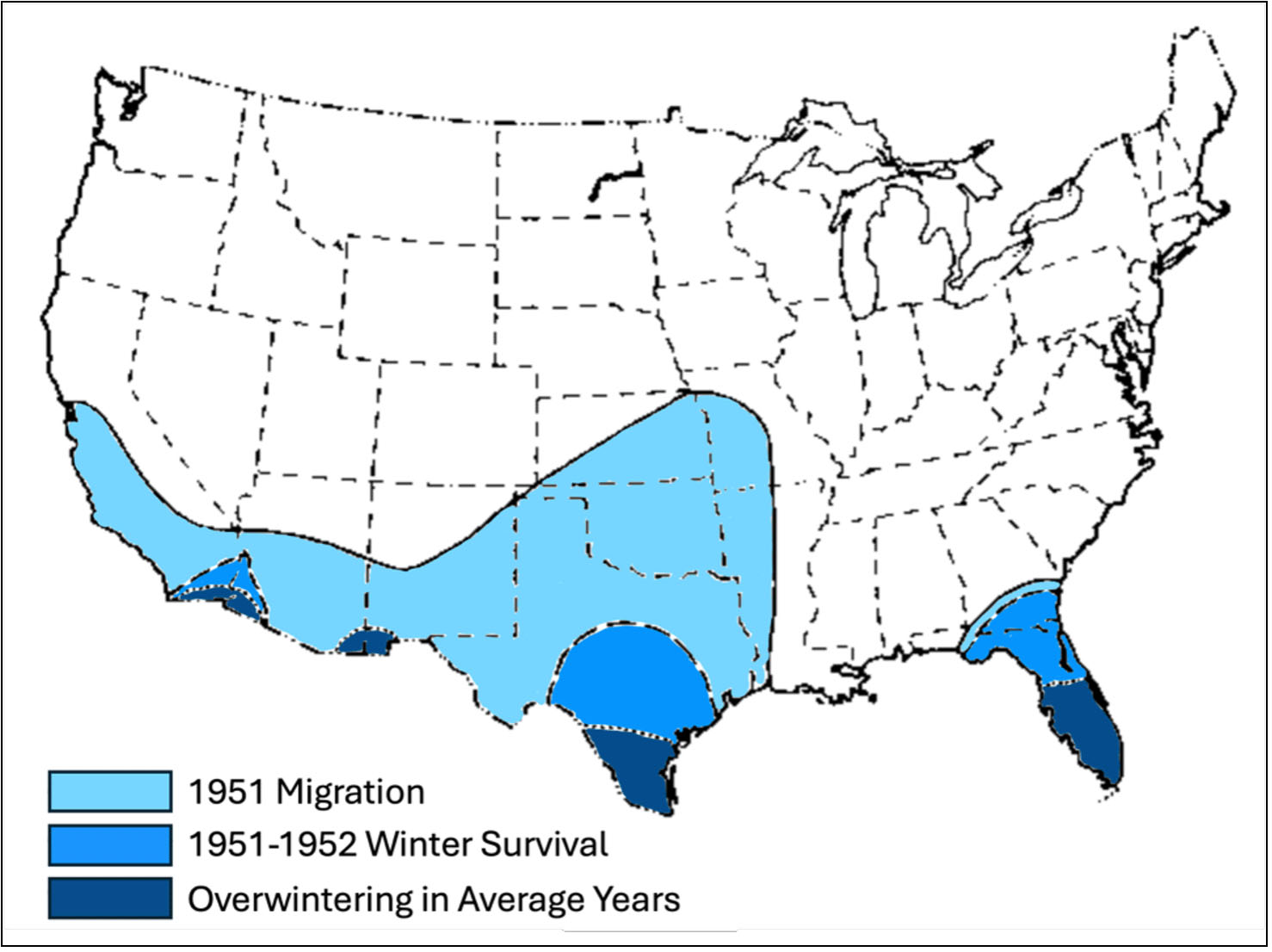
Figure 1. Historical screwworm distribution in the United States prior to the eradication program. Modified from Bushland (1985)2.
Due to billions of dollars in losses in cattle production in the early and mid 1900s, the USDA began eradicating screwworms from the United States in the late 1950s. The last recorded outbreak of screwworms in Oklahoma occurred in 19763 and the US was declared screwworm free by the early 1980s. Since that time, eradication efforts have continued to push the species south, to the Darién Gap, Panama. In 2023, that containment area was breached, and the species has continued to spread throughout Central America, and into southern Mexico.
Screwworms have not been documented in Oklahoma or the United States as a result of this current northward spread.
Current Status
Screwworms are currently found in South America, Central America, some Caribbean islands, and southern Mexico5. The current northernmost collections have occurred in the states of Veracruz and Oaxaca, Mexico, which are approximately 1,100 miles south of Oklahoma.
Screwworms are considered a pest, because the larvae cause myiasis, which is the infestation of living tissue by fly larvae. This pest is a threat to the livestock industry, as well as wildlife, companion animals, and people. The term “screwworm” is often used to describe the larval stages (i.e. maggots) of this fly because of the general shape and behavior of the larvae when feeding: they burrow “head-first” into the tissue of the living animal as they feed on it, much like a screw.
Life Cycle and Biology
The entire life cycle of the screwworm is completed in approximately 21 days, but can be slightly shorter if temperatures are warm, or longer if temperatures are cool1. Adult female flies are attracted to host animals by the smells produced by bacteria in open or infected wounds4, urine or feces matted fur/hair, or wet matted fur/hair that has become infected with bacteria. The female fly will lay approximately 200 eggs (range: 10-490) on or near these bacteria-infested areas, which will hatch into larvae, that will eventually feed on the living tissue of the host animal. Once the larvae have completed their development over the course of 5-7 days, they will drop off the host animal, burrow into the ground to pupate, and emerge as adult flies as little as 7 days later.
Infected wounds/openings can range from something small like tick bites and barbed wire pokes/scratches, to larger wounds like those obtained during dehorning, branding, castration, or an umbilical attachment that has not fully healed.
What to Look for in Animals
- Irritation or discomfort
- A smell of death or decay coming from a living animal, particularly around a wound or natural body openings
- Open wounds or sores, that may be oozing or weeping
- Wounds that have become colonized by maggots
Management
The only effective management strategy for NWS is the areawide, sterile insect technique program that is operated by a joint effort between USDA and the Panamanian government. If you suspect an animal has become infested by NWS, contact your veterinarian or your local OSU Extension office. Samples of larvae must be collected from your living animals so they can be identified to the species level. After sample collection, topical larvicides containing the active ingredient permethrin or coumaphos can be used to kill the larvae, followed by would cleaning. Animals should be inspected routinely, cleaned of any matted fur/hair, and any open wounds treated with an antibacterial ointment, to help prevent the infestation and spread of new world screwworm. VIew a list of pesticides registered for use against screwworms.
Key Takeaways
- New World Screwworm is not currently present in Oklahoma, or the United States
- OSU Extension, ODAFF, and USDA are working together to develop a monitoring and action plan for New World Screwworms in Oklahoma
- If New World Screwworms are found in Oklahoma, limit the transport of animals that are suspected to be infested until they can be inspected by your veterinarian or OSU Extension personnel, to help prevent further spread
Read more information on New World Screwworm.
References
- FAO, 1990. Manual for the control of the screwworm fly Cochliomyia hominivorax, Coquerel. Rome, FAO. 93 pp.
- Bushland, R.C. 1985. Eradication program in the southwestern United States. Symposium on the eradication of the screwworm from the United States and Mexico. Miscellaneous Publication. Entomological Society of America 62: 12-15.
- Snow, J.W. and C.J. Whitten. 1979. Status of the screwworm (Diptera: Calliphoridae) control program in the southwestern United States during 1977. Journal of Medical Entomology 15(5-6): 518-520. DOI: 10.1093/jmedent/15.5-6.518
- Tomberlin, J.K. T.L. Crippen, A.M. Tarone, M.F.B. Chaudhury, B. Singh, J.A. Cammack, and R.P. Meisel. 2017. A review of bacterial interactions with blow flies (Diptera: Calliphoridae) of medical, veterinary, and forensic importance. Annals of the Entomological Society of America 110(1): 19-36. DOI: 10.1093/aesa/saw086
- USDA-APHIS. 2025. New World Screwworm. https://www.aphis.usdata.gov/livestock-poultry-disease/cattle/ticks/screwworm. Visited on 3 June 2025.