

Peanut Disease Update – Seedling Diseases
Several environmental, chemical, biological factors can affect the stand of a peanut crop and influence grower’s replanting decisions at the beginning of each season. Fungal diseases are among those factors. That is the case of couple peanut fields located in Beckham County that were showing delayed crop emergence and poor stand. Samples collected from those fields this week (05/26/2025) presented the production of yellow-green fungal structures that are typical of the pathogen Aspergillus flavus (Figure 1). This fungus is responsible for producing the mycotoxin aflatoxin, which is carcinogenic, but it can also reduce seed viability and germination rates. It’s important to keep in mind that other pathogens such as Aspergillus niger can also infect peanut seedlings, resulting in stand losses.
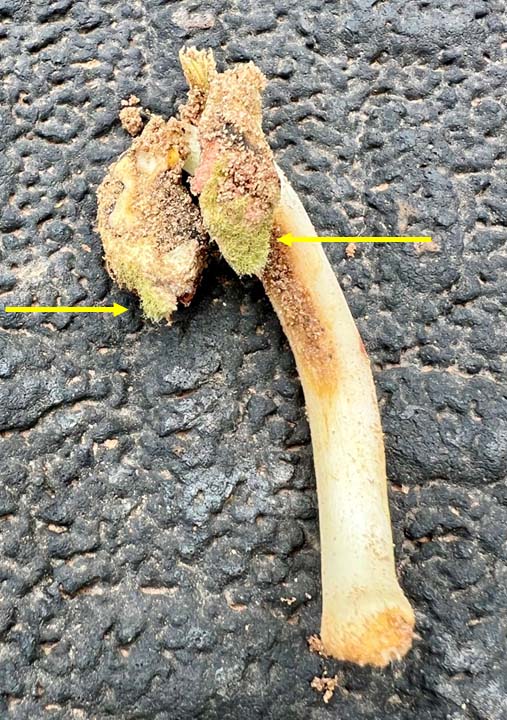
Figure 1: Peanut seedling showing the production of green structures that are characteristics of the pathogen Aspergillus flavus (yellow arrows) (Photo credit: David Nowlin).
Seed treatments are the main tool available to protect peanut seeds from seedling diseases and to prevent poor stands. Seed treatments such as Dynasty and Rancona® V PD have been commonly used by peanut growers to prevent seedling diseases and protect the peanut establishment. The use of seed treatments and in-furrow fungicide applications should help the crop establish and decrease the presence of seedling diseases, since the pathogen can be housed in the seed itself (Figure 2). However, in 2020, peanut growers in Georgia experienced low seed germination on fields with seeds treated with the product Dynasty, and high frequencies of the pathogen Aspergillus flavus were found in those fields and in the seed lots from which those seeds came. Investigation conducted at under laboratory conditions demonstrated that some isolates of Aspergillus flavus had developed resistance against the active ingredient Azoxystrobin, a compound in the seed treatment product Dynasty. This explained why the seed treatment was not effective in protecting seed from A. flavus during the 2020 growing season in Georgia.
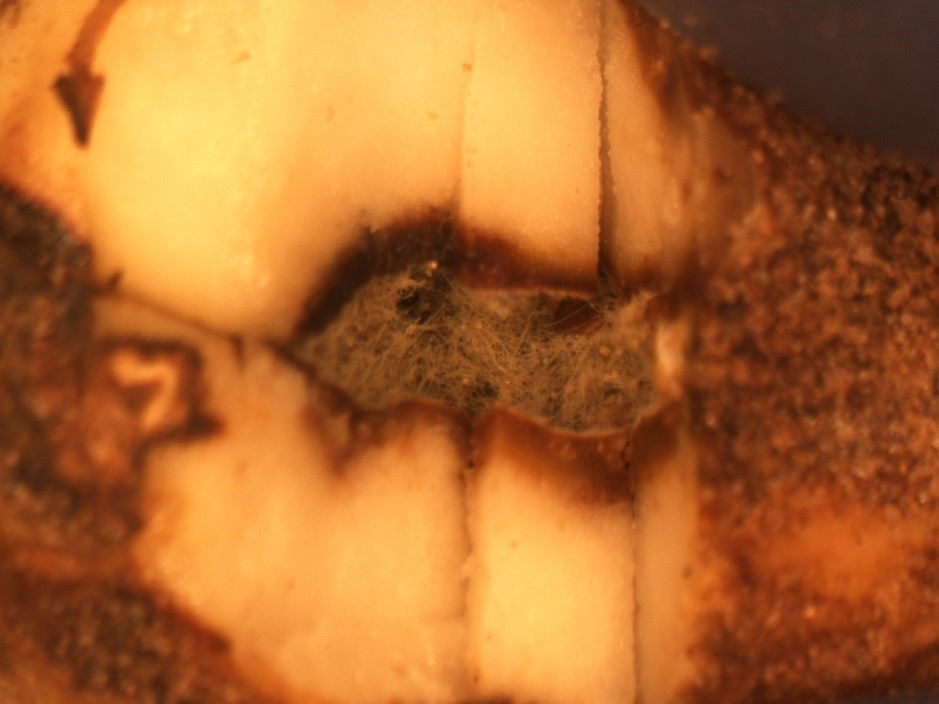
Figure 2: Fungal pathogen structures growing inside a peanut seed.
It is currently unknown if the isolates of Aspergillus flavus present in Oklahoma are resistant to Azoxystrobin. However, in light of this information, seed companies should avoid using the Dynasty seed treatment only to manage fungal diseases and switch to products that have other compounds in their formulation than Azoxystrobin, such as Rancova ® V PD, Trebuset, or others products available.
If you notice poor stands on your peanut fields and deformed or discolored seedlings, please contact Drs. Duffeck (OSU; (347) 205-2180) or Bennett (USDA-ARS; (405) 385-9533), or David Nowlin (Oklahoma Peanut Commission; (405) 933-0641). One of us can come to your fields, scout for seedling diseases, and help provide the correct diagnosis in case there is plant pathogen problem.