

Corn Leafhopper Detected in Southeast Oklahoma – Scouting & Management Guidance
Yesterday, June 23, Steve Carlson (Field Agronomist for Bayer CropScience), received reports of corn leafhoppers in field corn located 4 miles south of Grant, OK (approximately 10 miles south of Hugo, OK) along the Red River. Based on photos of leafhoppers collected at this site and recent northward movement of the insect, OSU Extension Entomologist Dr. Ashleigh Faris believes that these are corn leafhoppers (Dalbulus maidis). Field visits for further confirmation will be conducted this week. Reports from Texas A&M AgriLife's Extension Entomologist, Dr. David Kerns, have indicated that corn leafhoppers have moved from central Texas into northward Texas counties. It seems the timing for this year's corn leafhopper arrival in Oklahoma is on track with the timing of last year's. With Oklahoma wheat harvest delayed due to the rainy weather, producers that are planting double crop corn should be vigilant in scouting for and preparing to manage corn leafhoppers.
Corn Leafhopper, Dalbulus maidis, Identification
The corn leafhopper is a small (1/8th inch), yellow to tan insect that can vector pathogens associated with corn stunt disease. The corn leafhopper has two small black dots that are surrounded by light halos located between their eyes (Figure 1). These two dots are not unique to corn leafhoppers as many leafhopper species have black dots between their eyes. The combination of the following characters can help to distinguish the corn leafhopper from other leafhoppers: in addition to the two black dots surrounded by lighter colored halos, the corn leafhopper lacks additional markings - there are no dots or marks on their wings, back, abdomen, top of head, or face (Figure 1). Corn leafhopper nymphs, the immature stage, are wingless. Nymphs can also lack the two dark dots with halos (Figure 2). For more on the corn leafhopper lifecycle, biology, and corn stunt disease see OSU Pest e-Alert EPP 23-17. Corn stunt disease is not a concern for non-corn crops.
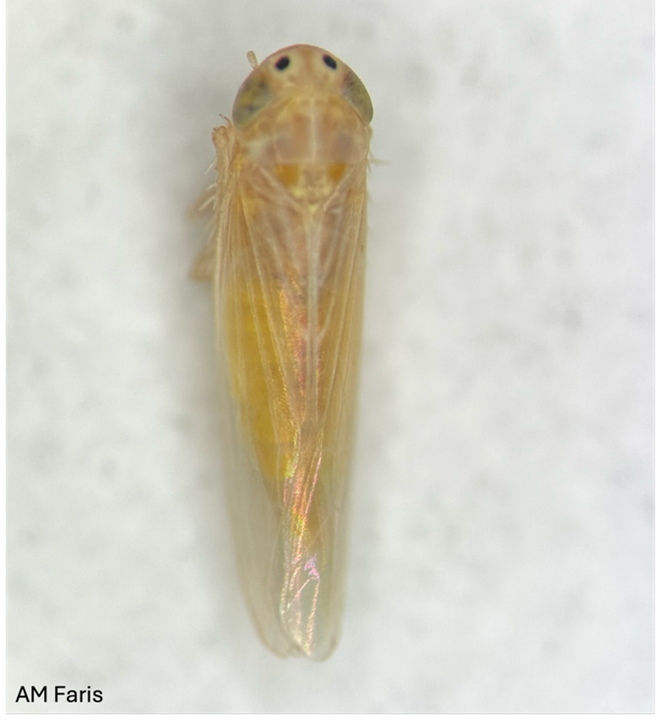
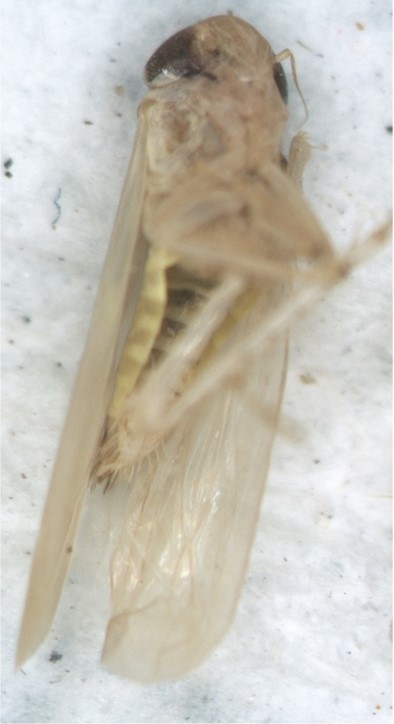
Figure 1. Back and underside view of corn leafhopper adult. Photo Credits: Ashleigh M. Faris, Oklahoma State University.
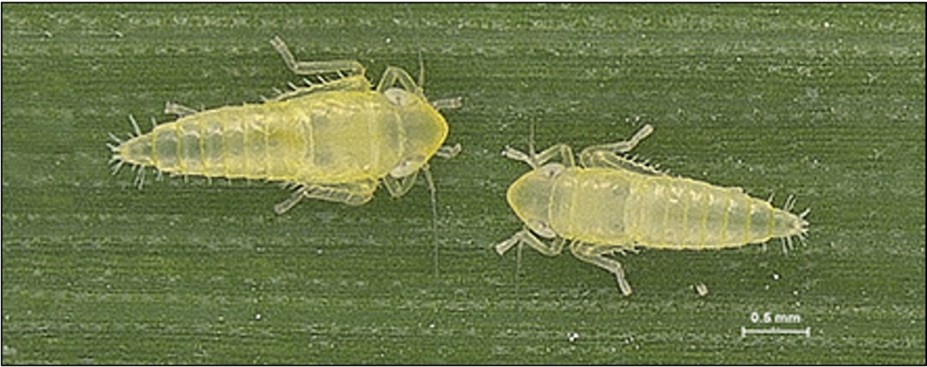
Figure 2. Corn leafhopper nymphs. Note that leafhopper nymphs cannot be distinguished from other leafhopper species by morphology alone. Photo Credit: Ivair Valmorbida, University of Missouri.
The corn leafhopper looks very similar to several other leafhopper species that are not economically damaging but do naturally and commonly occur in Oklahoma cropping systems. To learn more on how to distinguish the corn leafhopper from other common, native leafhoppers please see OSU Pest e-Alert EPP-25-24.
Scouting for Corn Leafhoppers
Corn leafhoppers can be challenging to detect due to their small size, preference for resting deep in the whorl of developing corn plants, and rapid darting behavior when disturbed. Eggs are laid in the leaf tissue, so they are not detectable in the field. Eggs will typically hatch within 10-12 days, increasing the population and likely making the corn leafhoppers more noticeable. Frequent scouting with a combination of tools are suggested for monitoring for the corn leafhopper: vacuum sampling, visual detection, sweep nets, and yellow sticky traps.
When corn is in the vegetative stage, carefully inspect the whorls of the plant for corn leafhopper (Figure 3). The insect will go deep into the whorl of the plant. Corn leafhoppers may be able to be vacuumed out of the whorl using a handheld, cordless car vacuum (Figure 4) or a modified leaf vacuum.
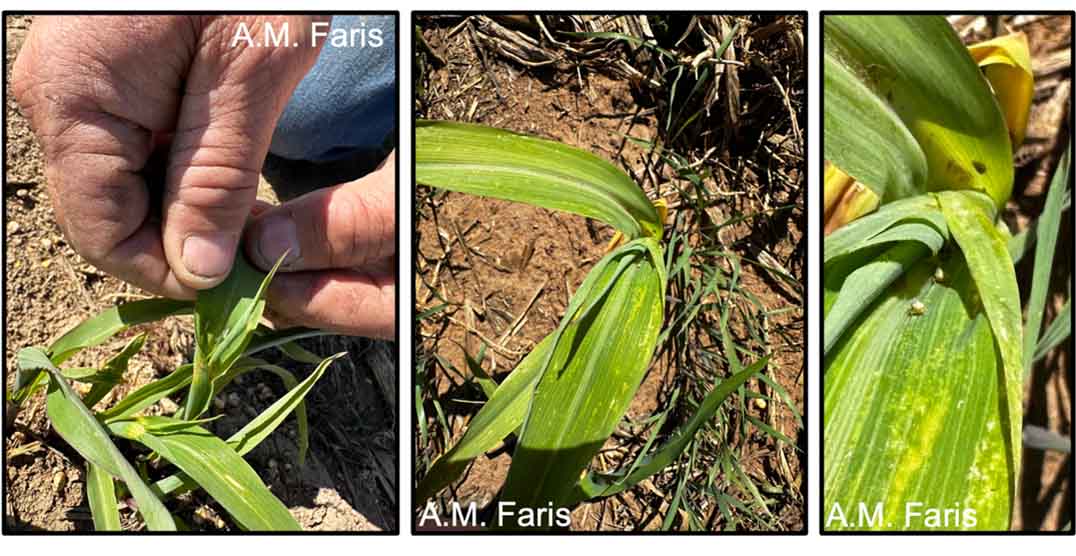
Figure 3. Corn leafhoppers in whorls of corn plants. Photo Credits: Ashleigh M. Faris, Oklahoma State University.
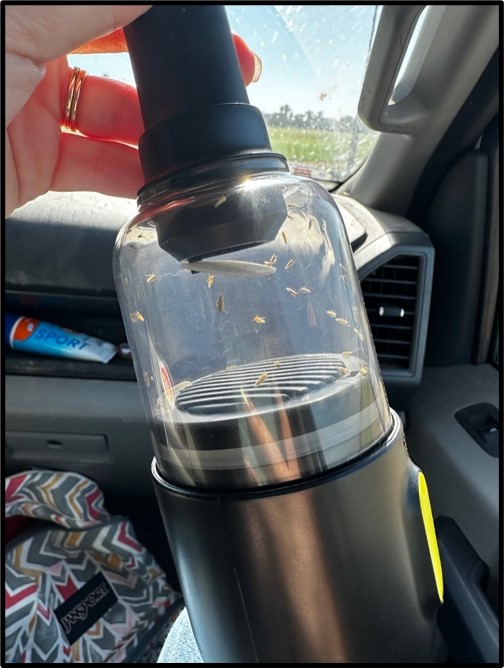
Figure 4. Handheld, cordless car vacuum used to collect corn leafhoppers from corn plant whorls. Photo Credit: Ashleigh M. Faris, Oklahoma State University.
Sweep nets are also an option for scouting corn leafhoppers. Sweep the net side to side as you walk down a row, making a figure eight motion with the net in front of you and swinging over the corn plants on either side of you as you walk. Flip the net over on itself to close the net and then open the net slowly when you are ready to visually inspect for corn leafhoppers. As corn enters the reproductive stage, sweep the net up and down the side of the corn plant.
Visual inspection of corn plants in the vegetative and reproductive stages is an effective means for scouting corn leafhoppers. At vegetative stages, inspect the whorls. As the canopy increase in height and corn enters the reproductive stages, look under the leaves of corn plants for the corn leafhopper (Figure 5). When entering an area to scout, stop and pause, then carefully look around as to not disturb the corn leafhoppers. Walk a few more feet, stop, pause, and look at more surrounding corn plants. In addition to the insect, other signs of corn leafhopper presence are their honeydew (shiny in appearance and sticky to the touch) secretions, black sooty mold that develops in the honeydew, and the white/translucent cast skins (exuviae) from corn leafhoppers molting from one stage into the next (Figure 6).
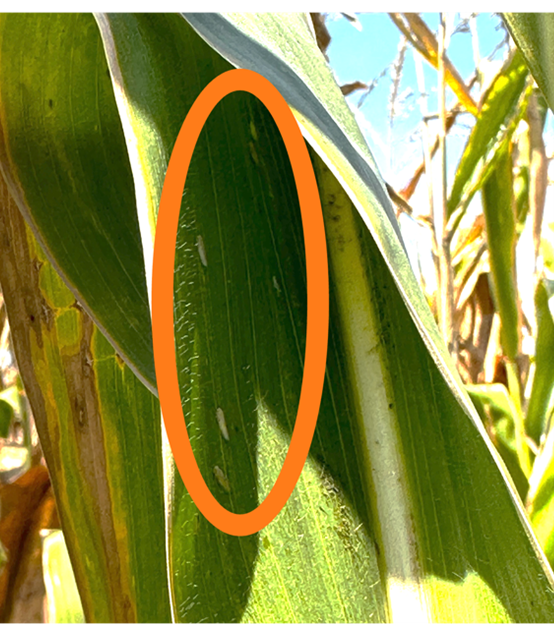
Figure 5. Corn leafhopper adults under leaves of field corn in the reproductive stages. Photo Credit: Ashleigh M. Faris, Oklahoma State University.
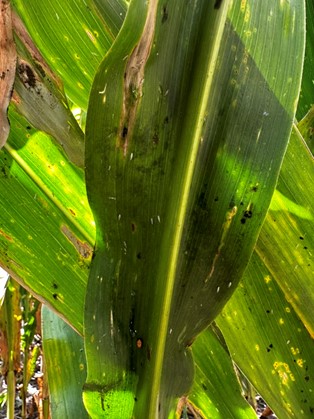
Figure 6. Black sooty mold (black specks) and cast skins (also known as exuviae, white specks) of corn leafhoppers progressing through their life cycle. Black sooty mold develops in honeydew that is secreted by the corn leafhopper as they feed. Photo Credit: Ashleigh M. Faris, Oklahoma State University.
Yellow sticky traps are a form of passive monitoring that may be able to pick up on corn leafhoppers migrating into a field (Figure 7). Yellow, non-bait sticky traps can be placed at the edge of a corn field, adjusted to the height of the canopy. Traps should be checked frequently. However, as with most trap devices, trap catches are not indicative of population size. It is also possible for the yellow sticky trap to not collect the first corn leafhoppers that enter the field. This is why a combination of scouting methods are recommended for accurate detection. Accuracy of detection will increase with the frequency and number of plants inspected/sampled within a field. There is no economic threshold for the corn leafhopper as these insects are efficient vectors. Additional information on corn leafhopper scouting can be found in OSU Pest e-Alert EPP-25-3.
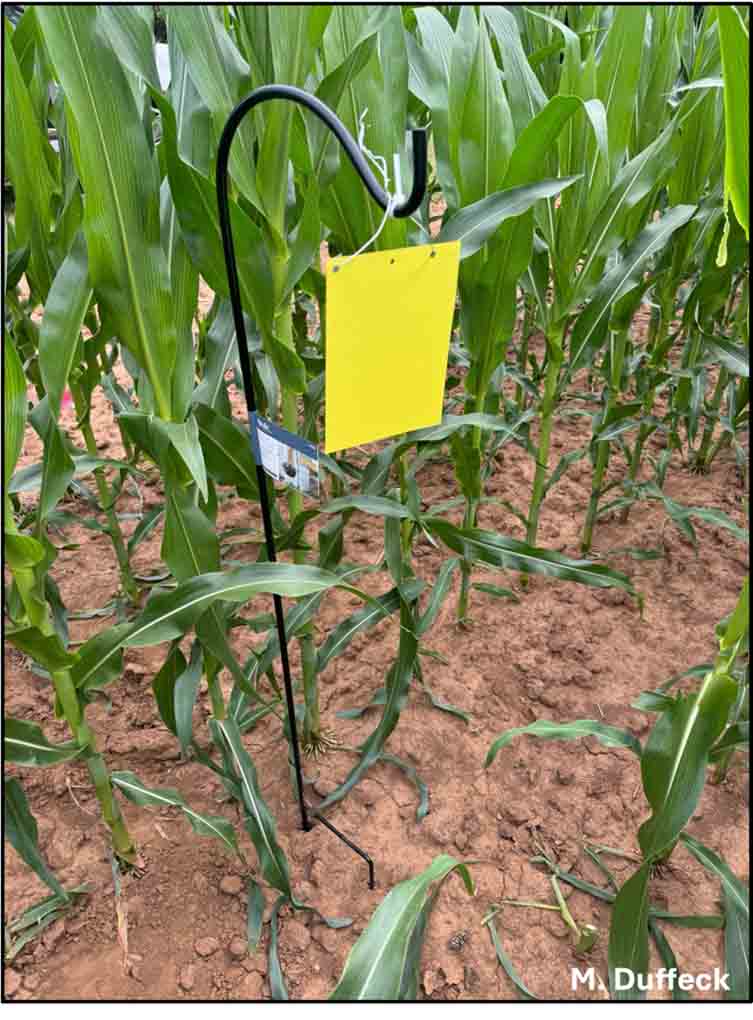
Figure 7. No-bait yellow sticky trap placed at height of corn canopy at outer edge of corn field. Photo Credit: Maira Duffeck, Oklahoma State University.
Current Integrated Pest Management (IPM) Guidance for Corn Leafhoppers
There is still much to be learned about the corn leafhopper, corn stunt disease, and the behavior of this pathosystem in U.S. corn production. Oklahoma State University Extension Specialists and Research Scientists will be conducting insecticide efficacy field trials this summer to provide growers with chemical control options for the insect. Current guidance suggests that growers protect their corn crop from corn leafhoppers through the V8 stage. However, more research is needed to determine if the corn stunt pathogens can cause yield loss if they are transmitted to corn at or after V8. Below are current suggestions for IPM of the corn leafhopper.
Pre-planting and planting
There are currently no known corn stunt resistant hybrids available on the U.S. market. In areas where volunteer corn is present, growers should remove it as this vegetation serves as a reproductive resource for the insect and a potential reservoir for corn stunt pathogens. When possible, growers are encouraged to plant corn early, as this will help reduce the likelihood of corn being planted when corn leafhoppers are present. At planting, growers should use a high insecticide seed treatment containing Cruiser® Corn 1250 or Poncho® 1250 to allow for protection until V3.
Scout for corn leafhopper
Follow the guidance outlined above to scout for the corn leafhopper. Due to the efficiency of the corn leafhopper to transmit pathogens associated with corn stunt disease, there is no economic threshold. Growers are encouraged to apply an insecticide when corn leafhoppers are detected. At this time, it is unknown the exact corn growth stage at which scouting should cease. Past guidance encouraged through V8 but more studies are needed to verify the validity of this claim.
Chemical control options
Earlier this month, TAMU AgriLife Research and Extension conducted efficacy trials where foliar applications of Sivanto® Prime at 7 oz provided a little over a week protection. Transform at 1.5 oz gave knockdown, but populations built back after 5-8 days post treatment. Steward at 6oz knocked back corn leafhoppers but not at an acceptable rate. Increasing the rate of Steward would make it equivalent to Sivanto® Prime. Pyrethroids were found to be ineffective in controlling the corn leafhopper and Dimethoate at a pint did not fare much better. Currently results from their trials indicate that Sivanto and likely a higher rate of Steward are the most effective foliar insecticides for corn leafhopper control. These trials are still in progress and updates will be released as available. As corn leafhopper pressure builds, similar insecticide efficacy trials will be conducted in Oklahoma this season by Cropping Systems Extension Entomologist Dr. Ashleigh Faris.
When selecting an insecticide, choose one that is not broad-spectrum and that is soft on beneficials to preserve natural control of arthropod pests. Always read and follow the guidelines provided on the insecticide label, the label is the law. Only apply insecticides when the corn leafhopper is confirmed to be present in the field you are treating. There is evidence of some insecticide resistance for corn leafhopper populations in Brazil and Argentina. Being a good steward of the insecticide chemistries we have available and applying insecticides only when needed, based on the insecticide label is key to preventing contributions to insecticide tolerance and resistance.
IPM guidance for the corn leafhopper will continue to evolve as we learn more about the vector and corn stunt disease in Oklahoma corn production. Stay tuned for future OSU Pest e-Alerts and follow Cropping Systems Extension Entomologist Dr. Ashleigh Faris @OSU_crop_insects on Instagram for regular updates and the results of this year's Oklahoma corn leafhopper insecticide efficacy trials.