

Osage Orange
| Plant Profile | |
|---|---|
| FYUSE 3d image |
Common Name: Osage Orange Other Names: Bodark, Bowood, Hedgeapple, Horseapple, Bois d’Arc Species Name: Maclura pomifera Family Name: Moraceae |
Examples of Osage OrangeMaclura pomifera


| Plant Facts | |
|---|---|
| Origin | North America |
| Sun Preference | Full Sun |
| Susceptibility | Leaf spot, bacterial leaf spot, blights, canker, rust, aphids, Japanese beetle, mining scale, foliar nematodes |
| Distribution in the U.S. | Throughout the country |
| Distribution in Oklahoma | Throughout the state |
ID Characteristics
- Field Identification Characteristics
Vegetative
- Arching branches; stout thorns and short spurs
- Glossy dark green leaves; pointed at tip and edges smooth
- Bark tan-brown, papery; inner bark an iconic orange
Floral
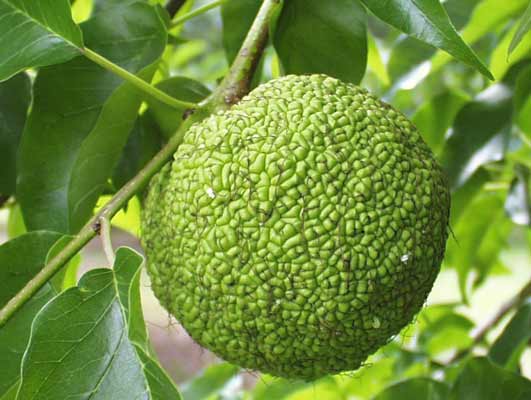
- Fruits huge, yellow-green, and “brain-like”
- Leaf and Stem Characteristics
- Plant Height: 60-foot diameter, 60-foot height
- Growth Form: Tree
- Leaf Type: Simple
- Leaf Arrangement: Alternate
- Leaf Blade Edge: Entire
- Leaf Blade Length: 6-13 centimeters
- Floral Characteristics
- Petal Number: Absent
- Flower Timing: May
- Fruit Type: Multiple of nutlets
| Habitat/Ecology | |
|---|---|
| Habitat | Prairies and open woody uplands and bottomlands |
| Soil Type | Adapted to most soil conditions |
| USDA Cold Hardiness Zone | 5º |
| Successional Stage | Mid |
| Notes | Very tough native tree; tolerant of wet and dry soils, high pH, and summer heat; stem exudes a milky sap when cut |
Topics: