

Cow-Calf Corner | January 26, 2026
Arctic Blast and Cattle on Feed
Derrell S. Peel, Oklahoma State University Extension Livestock Marketing Specialist
Much of cattle country is in the midst of a severe winter event including extremely cold temperatures and, in some regions, heavy snow and/or ice. These conditions create numerous management challenges for cattle producers and will impact cattle markets in the coming weeks and perhaps months.
Prolonged sub-freezing temperatures require much additional effort by cattle producers to ensure water availability (chopping ice) and provide additional feed required to maintain cattle. For cow-calf operations in calving season the challenges are greater. Newborn calves are especially vulnerable to cold weather until they get dried off and successfully nurse. It takes additional effort to save calves and avoid frozen ears, tails and feet. Calf losses may impact cattle supplies in the coming months. The cold temperatures will reduce feedlot cattle performance, adding additional days to finish cattle and reducing carcass weights and beef production in the coming weeks.
The January Cattle on Feed report showed an on-feed total of 11.45 million head to start the year, down 3.2 percent year over year and the fourteenth consecutive month of declining feedlot inventories. Average feedlot inventories for the past year (twelve-month moving average) are now at the lowest level since September 2018 and are down 3.8 percent from the cyclical peak in September 2022.
December feedlot placements were down 5.4 percent from one year ago and were the ninth consecutive month of lower placements. Total placements for the last six months account for 92 percent of the current feedlot inventory and were down 8.2 percent year over year. Figure 1 shows the sharp decrease in average feedlot placements and marketings.
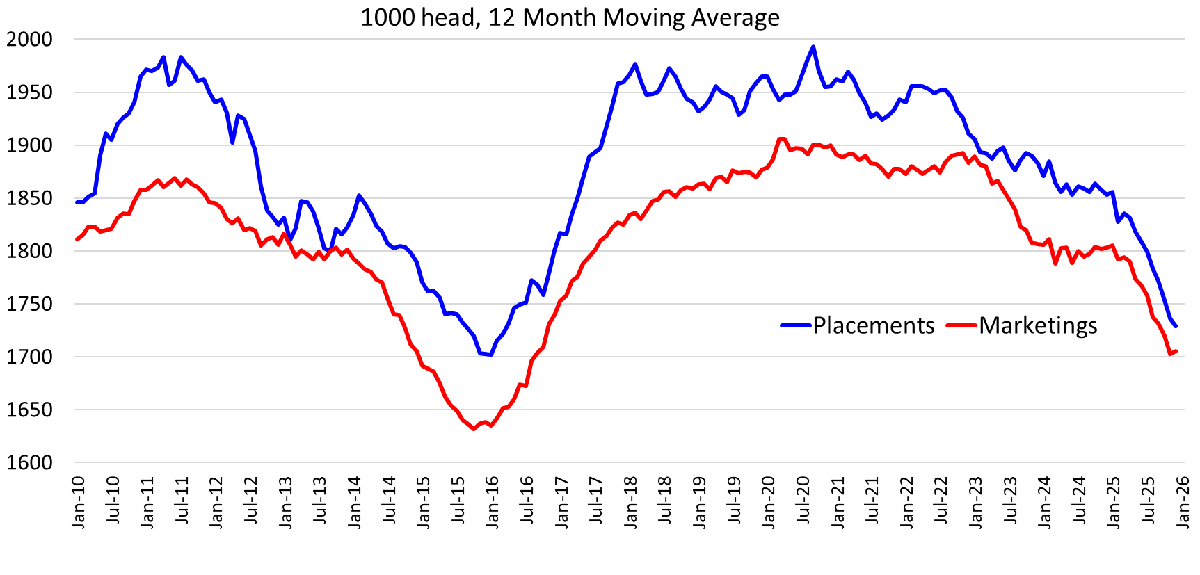
Figure 1. Feedlot Placements and Marketings, 1000 head, 12 Month Moving Average
Feedlot marketings in December were higher than last year, up 1.8 percent year over year. Slightly higher December marketings follows an 11.9 percent drop in November marketings and was the first increase in monthly marketings in eight months. Total marketings the past six months were down 6.9 percent year over year.
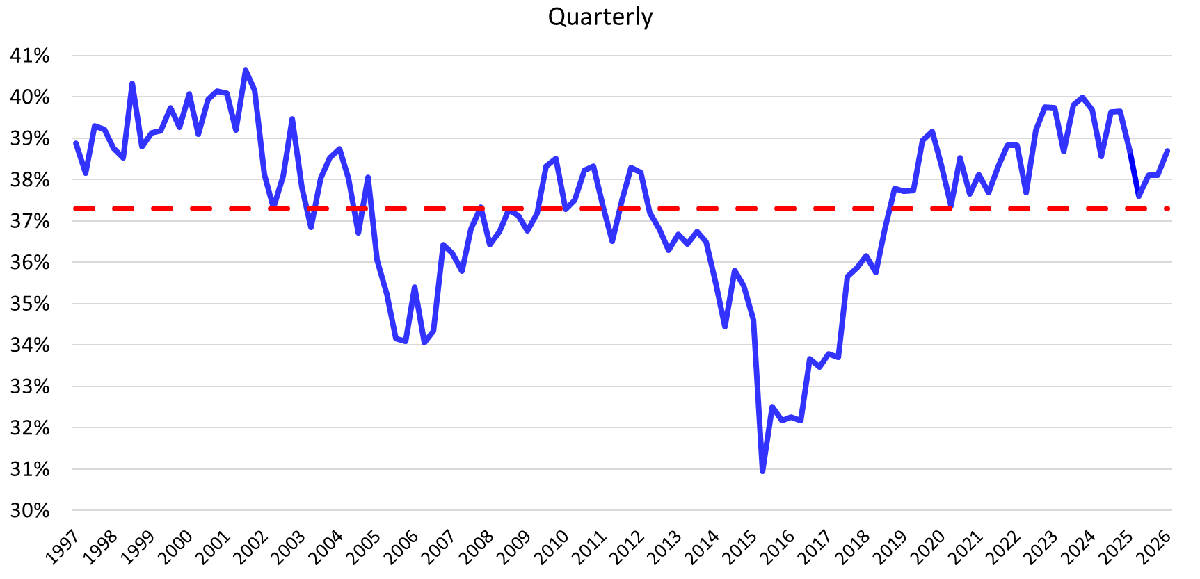
Figure 2. Heifers as Percent of Total Cattle on Feed, Quarterly
The January Cattle on Feed report also included the quarterly inventory of steers and heifers in feedlots. Heifers as a percentage of feedlot inventories increased to 38.7 percent, the highest level in the last year. Figure 2 shows that heifers continue to make up an above average share of total cattle on feed and suggest limited heifer retention thus far. USDA will release the Cattle report on January 30 and provide data on cattle inventories, including the inventory of replacement heifers.
Derrell Peel, Livestock Marketing Specialist, breaks down the latest cattle market trends, what’s driving the rebound, and what producers should watch for in the coming weeks on SunUpTV from January 17, 2026.
Water Needs during Cold Weather
Dana Zook, OSU Cooperative Extension NW Area Livestock Specialist
During winter, much of the conversation around cow management focuses on helping cattle maintain body condition through cold temperatures. Supplementation and feeding strategies are always top of mind, but one often overlooked component of winter management is water. How much water do cows really need during cold weather?
As temperatures decrease, cows’ energy requirements increase. This added energy is typically supplied through dry feeds such as hay, byproduct cubes, or commodity blends. Adequate water intake is essential for cows to properly digest these feeds. When water is limited, feed intake often declines, making it difficult for cows to maintain body weight and condition.
Stage of production also plays a significant role in determining water needs. As production demands increase, so does water intake. Lactating cows, for example, require more water than pregnant, non-lactating cows. Water intake data collected by Oklahoma State University and other research institutions provide baseline estimates across production stages. These guidelines are useful for producers hauling water or planning new water infrastructure.
So, how much water do cows need in cold weather? OSU factsheet AFS-3299, Estimating Water Requirements for Mature Beef Cows, reports that 1,300-pound cows experiencing 40°F temperatures typically require 9 to 15 gallons of water per day. The lower end of this range applies to open or pregnant, dry cows, while the higher end reflects the needs of lactating cows.
Additional research is currently underway by Dr. Dave Lalman and his research team to further refine these estimates. In a recent study, five-year-old cows averaging 1,363 pounds with calves at side have consumed an average of 15 gallons per day since mid-November. This total includes calf consumption; however, it is reasonable to assume calves account for 1 to 2 gallons daily.
This highlights the importance of ensuring calves have access to water. Tanks should be filled high enough for smaller animals to reach the water, and natural water sources should be kept open so calves can safely drink.
Water is often considered a “hot weather” concern, but its importance should not be overlooked during winter. Dehydration adds stress during cold conditions. Ensuring cows have adequate access to water is a simple yet critical step in helping them manage winter stress and maintain body condition.
Paul Beck, OSU Extension livestock specialist, shares advice on managing cattle during extreme cold weather on SunUpTV from Feb 22, 2021.
Calving Management to Reduce Disease Risk
Rosslyn Biggs, DVM; OSU Cooperative Extension State Beef Cattle Specialist
Calf scours remains one of the most common health challenges facing cow-calf producers and is rarely caused by a single factor. Instead, diarrhea results from the interaction between disease-causing organisms, the calf, and its environment. One management approach designed to address environmental exposure during calving is the Sandhills calving system. This system focuses on maintaining clean calving conditions throughout the entire calving season.
Early in the calving season, cows typically calve on clean ground with no older calves present. As calving progresses, disease risk increases as pathogens accumulate and younger calves are exposed to older calves shedding infectious organisms. The Sandhills system works to recreate early-season conditions week after week. All pregnant cows begin the season in one pasture. After one to two weeks, cows that have not yet calved are moved to a clean pasture, while cow-calf pairs remain behind. This process is repeated throughout the calving season.
By separating calves by age, younger calves have limited contact with older calves that may be shedding pathogens. This disrupts the cycle of exposure and reduces the buildup of disease-causing organisms in the calving area. Producers who adopt this system often report fewer cases of calf scours, reduced treatment rates, and improved calf survival. These benefits can also translate into lower labor demands and decreased treatment costs.
Additional advantages include improved observation and recordkeeping. Smaller groups of cow-calf pairs allow producers to monitor health more closely, identify problems earlier, and provide targeted care when needed. The system can also support broader biosecurity efforts, including isolation of sick calves and maintaining cleaner calving areas.
Implementing the Sandhills calving system does require advance planning. Pasture availability, water access, shelter, forage use, and weather conditions must be considered. Timing and good stockmanship are especially important when moving pregnant cows. While not a replacement for sound nutrition, vaccination, or overall herd health programs, this system is a valuable management tool. For producers facing recurring calf scours or seeking to improve calving-season efficiency, the Sandhills calving system is worth consideration as a proactive investment in calf health and herd productivity.
2026 Central OK Cattle Conference Next Month in Stillwater
Jennifer Patterson, OSU Payne County Cooperative Extension Service
Registration is open for the Central Oklahoma Cattle Conference on Friday, February 13th, 2026, at the Payne County Expo Center in Stillwater. This event is shaping up to be a great opportunity to network, as numerous vendors have already signed up for the trade show.
The registration deadline is Friday, February 6th, and producers are encouraged to secure their spot soon.
Registration is $25 per person and includes a catered lunch.
This day-long program will feature a strong lineup of expert speakers covering timely topics and practical management strategies producers can take straight back to their operations.
Sessions will include market outlooks, herd health, forage & fertility management, bull selection, biosecurity, and more.
Attendees can also visit a packed trade show featuring industry vendors and connect with fellow producers and ag partners.
For registration information or questions, contact: Jennifer Patterson, Payne County Extension Educator, at jennifer.k.patterson@okstate.edu or (405) 747-8320.
We look forward to seeing you on February 13!
View more details about the 2026 Central Central Oklahoma Cattle Conference.