

Cow-Calf Corner | August 31, 2026
Summer Pushes into Fall
Derrell S. Peel, Oklahoma State University Extension Livestock Marketing Specialist
Summer has been a challenge in Oklahoma and numerous other locations. The Stillwater Mesonet site has posted a total of 27 days of temperature in excess of 100 degrees in July and August. The current forecast shows the first seven days of September will continue above 100 degrees. Precipitation in July and August totaled 5.52 inches with 79 percent occurring in three events on July 4 and August 17 and 22.
Oklahoma drought conditions were poor early in the year, with the worst point in early June (Figure 1A), followed by the eastern half of the state seeing significant improvement until mid-July (Figure 1B), then the entire state saw worsening conditions that continue (Figure 1C). Current drought conditions are at the most severe level since February of 2023.
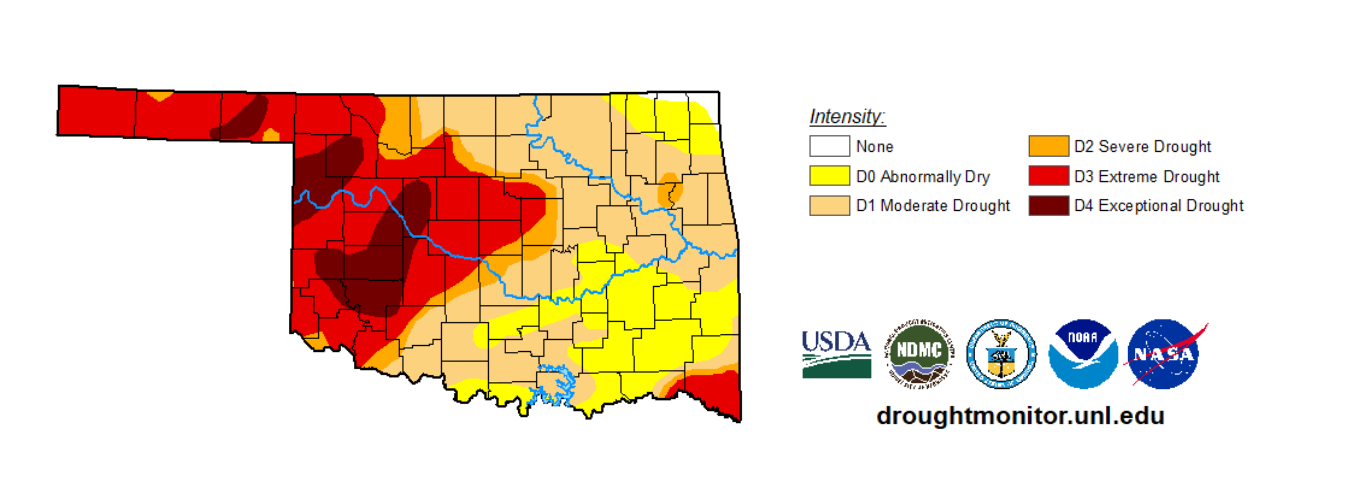
Figure 1A. U.S. Drought Monitor, Oklahoma, June 2, 2026.
| Date | None | D0-D4 | D1-D4 | D2-D4 | D3-D4 | D4 |
|---|---|---|---|---|---|---|
| Current | 0.69 | 99.31 | 80.76 | 45.54 | 38.42 | 9.21 |
| Last Week 05-26-2026 | 0.65 | 99.35 | 81.25 | 47.07 | 37.05 | 4.35 |
| 3 Months Ago 03-03-2026 | 0.00 | 100.00 | 99.43 | 44.99 | 12.97 | 0.00 |
| Start of Calendar Year 01-06-2026 | 19.15 | 80.85 | 72.77 | 19.38 | 6.92 | 0.00 |
| Start of Water Year 09-30-2025 | 64.08 | 35.92 | 4.86 | 0.00 | 0.00 | 0.00 |
| One Year Ago 06-03-2025 | 90.17 | 9.83 | 0.00 | 0.00 | 0.00 | 0.00 |
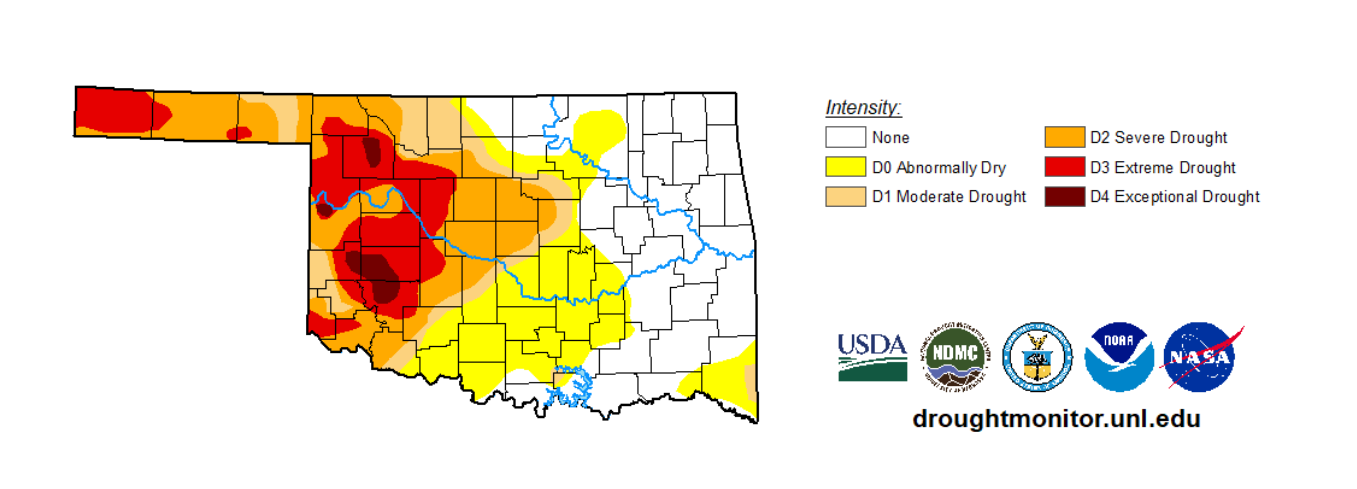
Figure 1B. U.S. Drought Monitor, Oklahoma, July 14, 2026.
| Date | None | D0-D4 | D1-D4 | D2-D4 | D3-D4 | D4 |
|---|---|---|---|---|---|---|
| Current | 35.70 | 64.30 | 43.37 | 35.01 | 15.54 | 1.55 |
| Last Week 07-07-2026 | 35.42 | 64.58 | 43.81 | 35.33 | 16.33 | 1.75 |
| 3 Months Ago 04-14-2026 | 0.00 | 100.00 | 98.77 | 76.60 | 26.25 | 0.00 |
| Start of Calendar Year 01-06-2026 | 19.15 | 80.85 | 72.77 | 19.38 | 6.92 | 0.00 |
| Start of Water Year 09-30-2025 | 64.08 | 35.92 | 4.86 | 0.00 | 0.00 | 0.00 |
| One Year Ago 06-03-2025 | 98.76 | 1.24 | 0.00 | 0.00 | 0.00 | 0.00 |
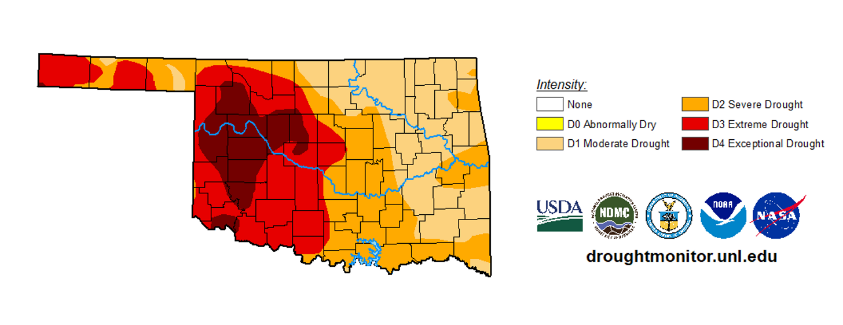
Figure 1C. U.S. Drought Monitor, Oklahoma, August 25, 2026.
| Date | None | D0-D4 | D1-D4 | D2-D4 | D3-D4 | D4 |
|---|---|---|---|---|---|---|
| Current | 0.00 | 100.00 | 100.00 | 70.53 | 39.97 | 12.06 |
| Last Week 08-18-2026 | 0.00 | 100.00 | 94.64 | 62.21 | 34.94 | 8.68 |
| 3 Months Ago 05-26-2026 | 0.65 | 99.35 | 81.25 | 47.07 | 37.05 | 4.35 |
| Start of Calendar Year 01-06-2026 | 19.15 | 80.85 | 72.77 | 19.38 | 6.92 | 0.00 |
| Start of Water Year 09-30-2025 | 64.08 | 35.92 | 4.86 | 0.00 | 0.00 | 0.00 |
| One Year Ago 06-03-2025 | 84.59 | 15.41 | 1.03 | 0.00 | 0.00 | 0.00 |
Pasture and range conditions in Oklahoma followed a similar pattern with the percentage poor to very poor decreasing from 33 percent in early May to 28 percent in mid-June before increasing to a current level of 58 percent of pastures and ranges rated poor to very poor. Typically, moving into September, there is much interest in planting some early wheat for potential grazing. The current dry conditions and warm soil temperatures make wheat planting unlikely thus far.
Adverse weather conditions combined with a barrage of news and uncertainty are keeping cattle markets down for the time being. Fed and feeder cattle prices will likely recover significantly if politicians will shut up and stop proposing actions that will not help cattle producers or beef consumers, in either the short run or the long run. Ever tighter cattle supplies and continued strong beef demand will reassert market fundamentals at some point. The August Cattle on Feed report showed historically low feedlot placements and marketings which will decrease further going forward. In Oklahoma, auction volumes decreased 31.7 percent from mid-July through the end of August, partly because of hot weather and weak cattle prices, and partly because the cattle are simply not there. Despite limited signs of heifer retention, poor production conditions and tremendous uncertainty due to a whirlwind of political rhetoric and industry dynamics suggest that no herd rebuilding is likely for the foreseeable future. Probably the best we can hope for is data that confirms that the liquidation has stopped. And that is by no means certain.
Water Use by Eastern Redcedar Trees
Mark Z. Johnson, Oklahoma State University Extension Beef Cattle Breeding Specialist
Lingering drought, concern about limited water supplies for human use and our natural resources leads to the topic this week: the water demands of the Eastern Redcedar tree. Eastern Redcedar encroachment has been a long-term problem in Oklahoma and these trees continue their rapid encroachment into the grasslands of the Great Plains and Midwest. Research done at Oklahoma State University has quantified Eastern Redcedar trees impact on the water cycle, soil water content, water use by trees and streamflow.
Key Findings and Implications
Eastern Redcedar trees use water every day, year-round, sapping soil water content. The average water uptake of each tree ranges between 0.5 – 21 gallons/day. Water use varies by tree size and stand density.
Encroachment of Eastern Redcedar trees not only leads to lower soil moisture but also altered water flow. Rainfall is intercepted by the Redcedar tree, preventing runoff and groundwater recharge. Only heavy rains break through the tree canopy to the ground. Rain captured by redcedar trees does not run off to replenish streams or groundwater.
When Redcedar trees are not controlled, they thrive in a wide variety of soils, have a high tolerance to drought, and are highly resilient. On a positive note, they are vulnerable to fire.
Bottomline: Controlling these trees is critically important. Soil water content is lower where Redcedar trees exist. These trees have a huge negative impact on ecosystems and resources. Prescribed burning of rangelands can be highly effective in controlling the encroachment of Eastern Redcedar trees.
Reference
How Eastern Redcedar Encroachment Affects the Water Cycle of Oklahoma Rangelands - NREM-2884
Weaning Calves During Hot, Dry Weather
Paul Beck, Oklahoma State University Extension Beef Cattle Nutrition Specialist
Many producers have considered starting to wean their calves early this year due to drought and declining forage quality. As Mark discussed in recent Cow-Calf Corner article from August 3, early weaning is an effective drought-management tool to reduce the nutrient requirements of the cowherd, preserve cow body condition, and reduce forage demand.
Weaning is a stressful event in a calf’s life and we need to consider the added stress caused by hot weather. At weaning calves are separated from their dams, moved to a pen from the pasture they have been their entire life, and are presented with new unfamiliar in feed and water sources. Processing, vaccination, transportation and commingling occur at the same time. Adding severe heat stress to this list must be avoided. Our objective is not to just get the calves weane…it is to get them weaned, eating, drinking and healthy during the most stressful period they will experience.
Heat-stressed cattle have reduced feed intake, spend more time standing and increase water consumption in an attempt to dissipate heat (Cow-Calf Corner, July 13, 2026). As heat load increases, respiration rate increases and cattle begin panting. More severe signs include drooling, open-mouth breathing, an extended tongue and isolation from the herd. Water requirements increase greatly during heat stress, and bawling calves lose more water through the respiratory tract than normal. Newly weaned calves that are already eating and drinking less than normal have little margin for another environmental stressor.
Choose your weaning day carefully. Avoid beginning the weaning process immediately before a major heat event if possible. Heat load accumulates over several days, and when we have hot nights over 70 degrees cattle are unable to dissipate the heat accumulated during the previous day. Cattle handling should be postponed when little nighttime cooling occurs. The Oklahoma Mesonet Cattle Comfort Advisor is a great resource to guide the decision for when to wean and process calves. It accounts for temperature, humidity, solar radiation and wind rather than relying only on the daytime high temperature.
Water is the top priority. Make sure calves can find the clean fresh water source quickly. Calves that are bawling, walking fence lines searching for mom and unfamiliar with water sources are at the greatest risk for heat stress. Clean, cool water is particularly important because cattle drink less as water temperatures increase above about 80°F.
Shade is important. Natural or constructed shade reduces solar heat load and lowers respiration rate and body temperature. Shade around the receiving and weaning area is particularly valuable when early weaning during hot weather in August and early September.
Keep cattle handling short and early. Get started with cattle processing early in the morning. Cattle are still carrying the greatest accumulated body heat load late in the day. Work calves in small groups, minimize time in holding pens and handle them quietly.
When severe heat is forecast, it is better to separate the parts of the weaning process over several days with time for the calves to rest and cool down during the day.
- If possible, separate the calves from their dams and fence-line wean for a few days before hauling to another facility for processing.
- Haul in the early morning then let the calves rest.
- Conduct cattle processing early in the morning on another day.
- Process calves in small groups, keep cattle in holding areas for less than 30 minutes during processing.
- Return calves to pens promptly after processing.
Hot weather does not necessarily mean we should delay a needed drought-management decision. It does mean we need to plan the weaning process carefully. Watch the forecast, provide abundant clean water, have adequate shade available, work calves early and quietly, and avoid stacking unnecessary stressors on the same day.