

Cow-Calf Corner | July 13, 2026
Beef Import Dynamics
Derrell S. Peel, Oklahoma State University Extension Livestock Marketing Specialist
Total beef imports for the first five months of 2026 are up 9.9 percent year over year. This is the smallest increase for the period since 2023 (Figure 1). For the month of May, beef imports were down 5.0 percent from one year ago, the first monthly year over year decrease since November 2025 and the largest monthly decrease since March 2023.
The decrease in May beef imports was led by a 41.5 percent year over year decrease in beef imports from Brazil. In fact, while Brazil remains the largest source of beef imports, imports from Brazil are down 6.8 percent year over year for the January to May period. Also, Uruguay, the number six source of beef imports, was down 45.7 percent year over year in May, but is up 5.2 percent for the year to date. Simultaneously, beef imports from Argentina are up as a result of the country-specific increased Tariff Rate Quota (TRQ) this year. Beef imports from Argentina are up 113.8 percent year over year so far this year, with Argentina currently accounting for 4.3 percent of total beef imports. This moves Argentina into seventh place, up from eighth last year among beef import sources. In Figure 1, Argentina accounts for 32.5 percent of the “Other” category in 2026.
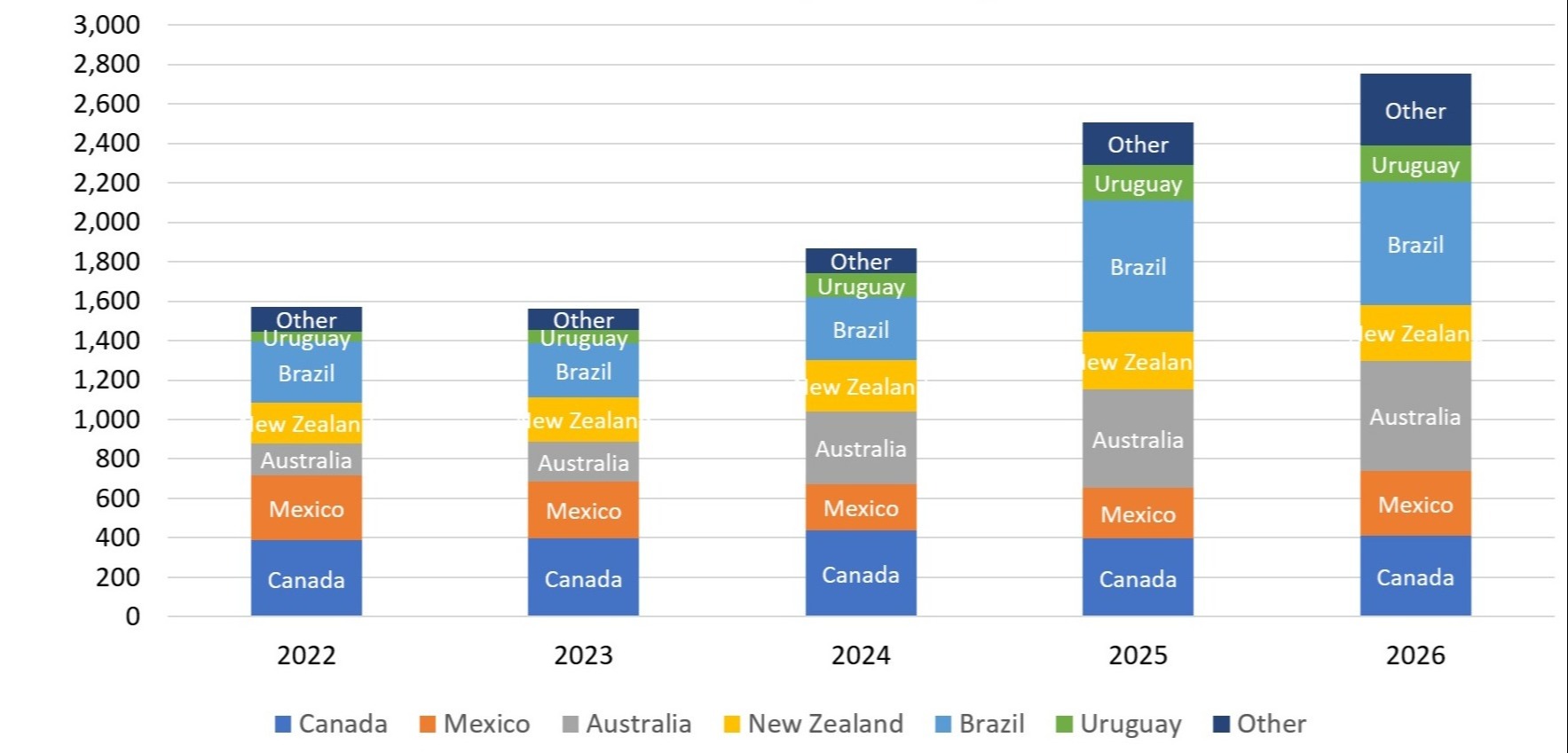 Figure 1. Beef Imports, January – May; Million Pounds, Carcass Weight
Australia is the number two beef import source, up 11.8 percent in May and 12.0 percent for the year. In the January-May period, Australia increased to a 20.3 percent share of total imports narrowing the gap with number one Brazil which decreased to 22.3 percent of the total. With 15.0 percent of total imports, Canada is the number three beef import source, up 12.3 percent year over year in May and up 4.0 percent for the year to date. Mexico is the fourth largest source of beef imports, up 27.4 percent for the year to date and accounting for 11.9 percent of total beef imports. The year-to-date quantity increase in beef imports from Mexico was the largest among all import sources and moved Mexico ahead of New Zealand in the first five months of the year. New Zealand is now the number five source of beef imports, down 3.6 percent thus far in 2026 and accounting for a 10.3 percent share of total imports.
Beef imports continue to increase in 2026, albeit at a slower rate than the previous two years. Demand for beef imports remains strong as U.S. beef production, especially nonfed processing beef, is still declining. Beef cow slaughter has decreased 45 percent since 2022, contributing to a 27.2 percent decrease in nonfed beef production. Beef imports are providing an important contribution to total beef supplies and especially supporting ground beef markets while U.S. cattle inventories are reduced.
As expected, increased beef imports from Argentina have been significantly offset by decreased imports from other sources – in this case Brazil and Uruguay. Changes in TRQs and tariffs change the mix of beef import sources but have relatively little impact on the total import quantity. Sharply higher beef imports from Mexico - likely the result, in part, of decreased imports of Mexican cattle - also illustrates the integrated nature of cattle and beef trade.
Selection for Hair Shedding and Heat Tolerance
Mark Z. Johnson, Oklahoma State University Extension Beef Cattle Breeding Specialist
The July heat in Oklahoma has resulted in some questions leading to this topic. Some operations in Oklahoma (and around the country) routinely clip cows each spring to peel off the winter haircoat. Shearing off the winter haircoat has many advantages but comes at a cost in the form of labor, time, facilities, clippers, clipper blades, risk of injuries, etc. Those operators who can afford the effort do so because slick-coated cattle have improved tolerance to heat, better reproductive rates and wean heavier calves. There is evidence indicating slick-coated cows carry fewer flies. If you have a fescue forage base, slick coated cows suffer less fescue toxicosis.
The Genetic Component of Hair Shedding
Can slick hair coats be achieved through selection? Yes! Hair shedding is moderate in heritability indicating selection pressure applied will lead to cattle that slick-off winter haircoats earlier each spring. Hair shedding scores can be taken monthly from March to July. In most regions of the U.S. it is recommended that the herd be evaluated during the month of May. This time period seems to correlate when most cattle have initiated the process of shedding and when most variation occurs within the herd. This could vary in different regions of the U.S.
Hair shedding scores are based on a scale of 1 to 5 with a 1 being completely slick in appearance. Percentage shedding is relative to the approximate amount of winter hair loss. While there is variability between shedding patterns among animals, cattle tend to shed from front to back and top to bottom. Hair shedding scores can be taken on both sexes and animals of all ages. It is recommended to take scores on yearlings during their first spring. The following table lists the scores, definitions, and descriptions. Pictures of cows of each hair shed score can be viewed at the reference link shown at the bottom of this article.
| Hair Shedding Score | Definition | *Description |
|---|---|---|
| 5 | Full winter coat (0% shed) | No hair shedding |
| 4 | Coat exhibits initial shedding (~25% shed) | Hair shed on neck and around tail head |
| 3 | Coat is halfway shed (~50% shed) | Hair shedding migrated from neck, rear of animal and back |
| 2 | Coat is mostly shed (~75% shed) | Hair shedding complete except for lower region of rib |
| 1 | Slick, short summer coat (100%) | Hair shedding is complete |
Producers can use hair coat shedding scores as a culling tool to reduce heat stress in their herds. Hair coat shedding is repeatable from year to year. Cattle that have a shedding score of 4 to 5 in May should be considered for culling in the southeastern U.S.
Data collected by seedstock breeders should be reported to their respective breed association for possible use in genetic evaluations. Angus Genetics International has implemented a Hair Shedding EPD. A lower numerical value for Hair Shed (HS) EPD in the Angus breed indicates earlier shedding of the winter hair coat each spring.
Reference:
BIF Guidelines Wiki: Hair Shedding
Mark Johnson discusses key takeaways from the 2026 Beef Improvement Federation Conference. Learn about the latest developments in beef cattle genetics, breeding strategies, and industry trends that can help producers improve herd performance and profitability on SunUpTV from June 6, 2026. Highlights from the 2026 Beef Improvement Federation Conference | Cow-Calf Corner
Beat the Heat: Protecting Cattle During Summer Heat Stress
Paul Beck, Oklahoma State University Extension Beef Nutrition Specialist
Summer heat stress reduces cattle performance, reproductive efficiency and animal welfare. Extreme heat stress may result in death. Heat stress is not determined by temperature alone. Humidity, direct sunlight, wind speed and the amount of nighttime cooling all influence the heat load cattle must manage.
Cattle accumulate heat during the day and normally release much of it overnight. Consecutive hot days become especially dangerous when nighttime temperatures remain above 70°F, limiting the amount of night cooling. Producers should monitor the Oklahoma Mesonet Cattle Comfort Advisor and begin preparations before cattle show severe stress.
Early warning signs include reduced grazing or feed intake, restlessness, increased standing and crowding around water. As heat stress progresses, breathing rate increases and cattle may begin drooling or foaming at the mouth. Open-mouth breathing, an extended tongue, labored breathing or isolation from the herd indicate severe heat stress and require immediate action.
Water and shade are the first priorities. Water consumption may approach 2 gallons per 100 pounds of body weight when temperatures exceed 80°F. A 1,200-pound cow could therefore require approximately 24 gallons daily. Check water supplies, flow rates and storage capacity before a heat wave. Keep troughs clean and, when practical, shaded because cattle drink less as water temperatures rise above 80°F. Crowding can limit access, so provide additional tanks before extreme heat arrives rather than waiting until cattle are already stressed.
Shade reduces the solar heat load and can lower respiration rates and body temperature and can increase feed intake and improve performance during the summer. Provide approximately 15 to 20 square feet of shade for calves and 30 to 40 square feet for mature cows. Structures should be high enough to allow airflow and large enough that cattle are not forced to bunch tightly underneath them.
Avoid working cattle, hauling or moving cattle during dangerous conditions. Work cattle early in the morning—not during the evening, when their internal heat load may still be near its daily peak. Use small groups, minimize time in holding pens and move cattle quietly. When nights provide little cooling, postpone nonessential cattle work. Flies cause cattle to bunch, increasing activity and heat load, so maintaining fly-control programs is important.
The best heat-stress strategy is preparation. Clean water, adequate shade, airflow and timely cattle handling can prevent a hot day from becoming an animal-health crisis.
OSU Extension beef cattle specialist Paul Beck discusses heat stress in cattle on SunUpTV. Cattle and Heat Stress