

Cow-Calf Corner |August 3, 2026
Ground Beef Prices Rising Fastest
Derrell S. Peel, Oklahoma State University Extension Livestock Marketing Specialist
Much has been said and written about rising beef prices, and especially ground beef prices, for many months. Since 2022, the year of record beef production, and the beginning of the current bull market, wholesale and retail beef prices have risen with strong beef demand and declining beef production. Choice wholesale boxed beef prices have increased by 44.1 percent from the 2022 average and all-fresh retail beef prices are up 29.8 percent. Total beef production has decreased 10.5 percent from the 2022 average to current levels.
Beef consists of many products, each in individual markets, and not all change at the same rate reflecting differences in supply and demand for each product. Across the range of beef products, Figure 1 shows monthly wholesale values for beef tenderloin and a representative ground beef formulation of a 7:1 mixture of 90 and 50 percent lean trimmings resulting in an 85 percent lean product. The trend lines for each price series confirm that ground beef prices have been rising faster than tenderloin (and most all other muscle cuts).
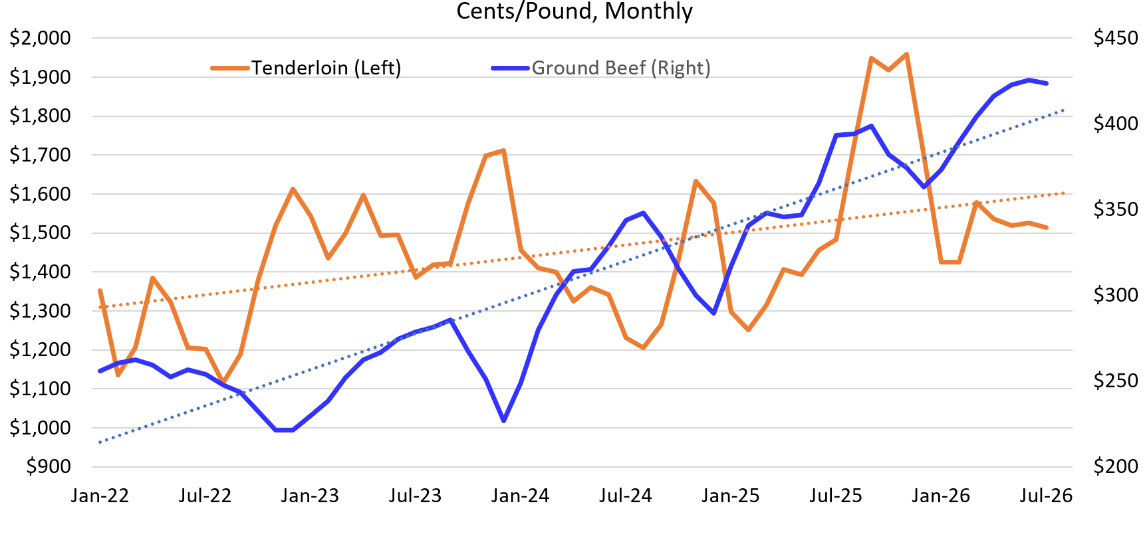 Figure 1. Tenderloin and Ground Beef Wholesale Prices
The relatively faster increase in ground beef prices is a function of demand and supply factors. In general, as beef prices increase, consumers are likely to rely even more heavily on ground beef to blunt the impact of higher beef prices, thus increasing ground beef demand relative to other beef products. In Figure 1, wholesale beef tenderloin prices have increased an average of 26.6 percent since 2022, and 85 percent lean ground beef prices are up 60.7 percent. On average prices for the highest value steak cuts including tenderloin, ribeye and strip loin wholesale prices are up 33.6 percent while prices for cuts including flank steak, tri-tip, top sirloin and top round are up an average of 42.7 percent.
Not only is the demand for ground beef demand higher, but the supply of ground beef has also decreased faster than for fed beef. Ground beef relies heavily on lean processing beef from cull cow and bull slaughter. Figure 2 shows that the supply of nonfed beef (cull cows and bulls) has decreased faster than the production of fed (steer and heifer) beef.
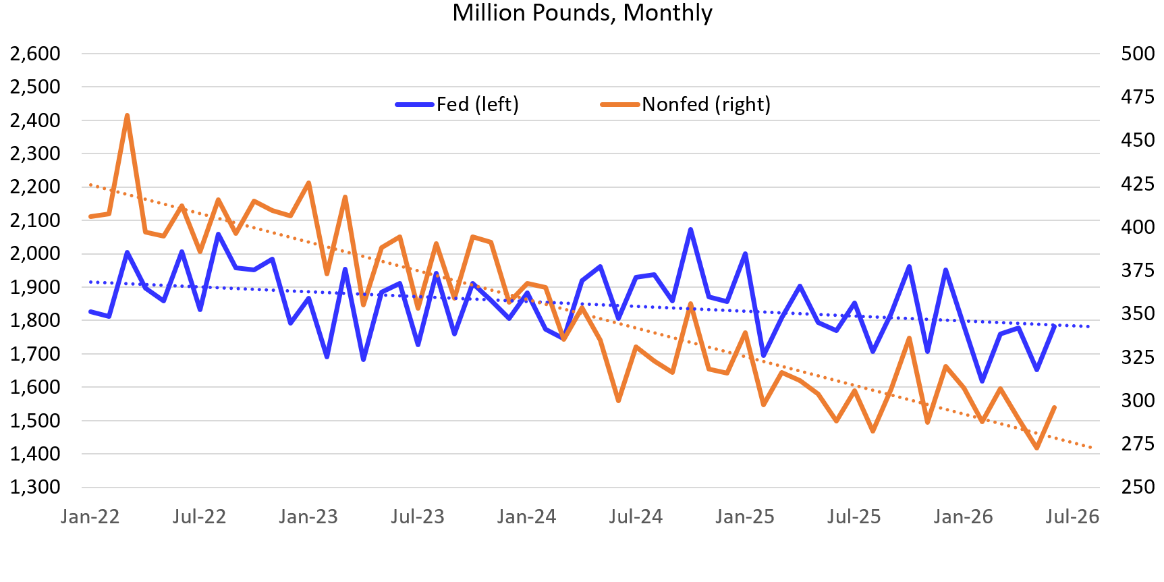 Figure 2. Fed and Nonfed Beef Production
The production of nonfed beef is down more sharply than fed beef because cow slaughter has decreased 30.5 percent since 2022 while fed slaughter is down 12.7 percent. Moreover, declining fed slaughter is partially offset by a sharp increase in steer and heifer carcass weights, while cow carcass weights have increased modestly. Going forward, nonfed beef production may decrease more slowly as the beef cow herd and cow slaughter stabilize. However, fed beef production is expected to continue decreasing with tighter fed cattle supplies expected through 2027 at least.
Dr. Peel discusses the continued decline in the U.S. cattle herd, signs that the herd may be trying to stabilize, and the cattle market’s reaction to news of a phased reopening of the Mexican border for livestock imports on SunUpTV from August 1, 2026, Cattle Markets React to Mexico Border News.
Benefits of Early Weaning Beef Calves
Mark Z. Johnson, Oklahoma State University Extension Beef Cattle Breeding Specialist
This article addresses the benefits of early weaning beef calves. As we work through the hot, sultry, “dog days” of summer, when perennial warm-season grasses can still look green even as their nutritional value declines, weaning calves now holds the potential to enhance the profitability and efficiency of cow-calf operations. Early weaning can improve the reproductive performance of cows while minimizing the impact on weaned calves when they are managed appropriately with regard to nutrition.
We typically wean beef calves at approximately seven months of age. Early weaning beef calves (sometimes as young as two to three months of age) provides major benefits, including improved cow body condition, higher rebreeding rates, and relief for drought-stressed pastures. These benefits to the cow herd result because weaning stops lactation, immediately reducing the cow’s dietary energy and protein requirements by 15 – 20%. Accordingly, cows regain weight and improve in body condition scores more quickly in preparation for the next calving season. Eliminating the suckling stimulus also triggers postpartum estrus and improves fertility/pregnancy rates.
Because early weaning reduces grazing pressure, it is beneficial for pastures and forages. A dry cow eats 10% to 25% less forage than a lactating cow, significantly stretching limited grass inventories. Early weaning prevents overgrazing during flash droughts or summer slumps common in Oklahoma, protecting the long-term health of the land.
Young calves convert concentrated feed into body weight more efficiently than mature cows convert poor grass into milk. Calves placed on a high-quality growing ration or an Oklahoma Gold program (see references below) can achieve excellent growth rates often exceeding what they would have done at side of the cow. Early weaned calves learn to eat palatable rations quickly. Stressful procedures like castration and dehorning should be performed well ahead of early weaning. Health problems when calves are weaned and kept on the ranch have been minimal. If at all possible, early weaned calves should be fenceline weaned, managed on the ranch or managed with only a short haul for some period after weaning.
References
- AFS-3278 The Use of Early Weaning in Practical Cattle Management
- AFS-3033 Oklahoma Supergold QA Late Season Supplementation Program for Stocker Cattle
- Can smaller cows produce high-performing calves? Mark Johnson shares a story that illustrates how smaller cows can ultimately produce calves that perform at a high level. Learn why cow size does not tell the whole story when evaluating potential calf performance, and hear Johnson’s perspective on the relationship between cow size and calf performance on SunUpTV from August 1, 2026. https://www.youtube.com/watch?v=7hswOBYhA6o
Reiterating the Importance of Record-Keeping
Kellie Curry Raper, Livestock Marketing Economist, Oklahoma State University
Records. Win-Loss records. Personal best records. Guiness World Records for…well, for nearly anything. Fun fact: My Arizona cousin once held the Guiness World Record for producing the World’s Heaviest Chile Pepper and held that record for several years. He has since been dethroned, but still….
We humans love a good “record” story. But we don’t always love keeping good records. This is true of a lot of cattle producers. But good records play a crucial role in cattle production.
Good record-keeping is another input into your operation. A good set of production and management records can enhance decision making by providing production benchmarks and by documenting the impact of management decisions, whether those decisions are related to herd replacements, animal health, reproduction, forage, or calf management. In the case of animal health records, tracking vaccinations and medical treatments helps document individual animal health, helps prevent duplication of treatment, and may also sometimes serve as a marketing tool. In the big picture, good records on the physical performance impact of decisions will help you see what is and isn’t working over time.
Good record keeping is good business. Cattle production can be a lifestyle, but it is also a business. The long-term sustainability of beef operations depends on being efficient and profitable. Tracking the physical performance impacts of management decisions is also the first step in tracking the economic impacts of those decisions. Some of those impacts are evident right away, while others take time to see. But good records are essential in both cases. It is important to take the next step of translating physical performance impacts into cost and profitability impacts for your operation. This feedback should be on a continuous loop!
Good record keeping helps others help you. Good records facilitate loan applications and financial reporting to loan officers and financial institutions. They are also key in the ability to gather information quickly and efficiently for government program paperwork or disaster relief applications with short deadlines.
Good record keeping can help you learn from others. Good records make benchmarking possible. That is, good records allow you to seek out information on operations similar to yours and compare physical performance, costs, and other important measures. These comparisons give you feedback on the effectiveness of your current management and are useful for goal setting and reassessment – an important practice for any successful business.
Extension personnel regularly promote the importance of specific management practices to producers, including record keeping, to improve cow-calf decision making and – ultimately - profitability, Management practices typically promoted for the cow-calf phase of beef production are those that positively affect health and performance in subsequent phases of production, that document information such as age, origin, feed ingredients, or medical treatments for use in herd management decisions, or that meet needs for specific marketing strategies. Recommended record-keeping practices generally include financial, production, and herd health records. And don’t forget forage as part of your production input record keeping!
The ability to examine the impact of calf health management practices is dependent on good records, including vaccination and medical records. Medical treatment records involve documenting dates, products and types of medical treatments administered to animals, number of animals treated, and the person who administered treatment. Ideally, records are also linked to a specific animal. These health records can aid in tracking the effectiveness of specific treatment protocols or vaccination types across the herd, in addition to documenting treatment frequency for specific animals – all useful information for both short term and long term herd management strategies. What worked? What didn’t? Were treatments more frequent this year than in past years? Although it is difficult to assign a particular value to record keeping, its contribution to management is an important one.
Why don’t producers keep medical and vaccination records? The two most cited reasons in the Oklahoma Beef Management and Marketing survey were doubts about the economic value of those records and uncertainty about how to go about it. As an economist, I’m trained to assign value to action (or inaction). While it proves difficult to assign a specific dollar value to the habit of good record keeping, there is no doubt that it makes an important contribution to your operation. As for how to go about it, your local Extension educator is a good resource and there are also tremendous resources online – and some even include a printable record book if you prefer paper. Record keeping is a critical task. If you are among the record-keeping group, consider what you are not yet tracking and strive for improvement. If you are currently not in that group, grab a computer, tablet or a notebook and get started!
Knowledge is power. What useful information are you missing out on that might improve decision making, outcomes, and ultimately the bottom line? What can you learn from comparing your operation’s data to others? Good record-keeping enables a mindset and culture of continuous improvement. That’s good for your operation - and good for the beef industry.
Rotational Grazing is More than Just Moving Cattle
Paul Beck, Oklahoma State University Extension Beef Cattle Nutrition Specialist
There is a quote from the 1922 USDA Yearbook of Agriculture that I often use: “The cheapest of all feed is pasture because it furnishes a balanced ration at a low cost and the cow does her own harvesting…but, in comparatively few cases is the fullest possible use made of pasture.” Interest in improved grazing management is not new, as this century-old quote shows, but it has remained an important topic throughout the more than 30 years I have worked with grazing systems.
Rotational grazing provides grazed plants time to recover from repeated defoliation when cattle are moved to the next paddock the previously grazed paddocks are rested until the next cycle. Systems can be simple, with weekly rotations, or more intensive, with cattle moved daily. A practical starting point is at least four paddocks, with approximately seven days of grazing followed by 21 days of rest. However, rest periods should be adjusted for forage growth and lengthened during hot or dry weather or shortened when forages is growing rapidly.
Cattle continuously grazing a moderately stocked pasture can select preferred plants from the entire grazing area, creating situations where pastures are simultaneously overgrazed in some areas and underutilized in others. This selectivity may improve individual performance because cattle can choose a diet higher in protein and digestible energy. Rotational grazing temporarily limits access to preferred areas and plant species, which may reduce diet selectivity and individual animal performance. However, under continuous grazing, preferred plants may eventually be repeatedly grazed, weakened and lost from the stand.
Recent research evaluating alfalfa interseeded into bermudagrass illustrates this benefit. After three years, alfalfa made up approximately 25% of the forage stand in rotationally grazed pastures, compared with only 10% under continuous grazing. Rest periods allowed the highly preferred alfalfa plants to recover between grazing events.
Rotational grazing can also improve drought preparedness, especially when combined with stockpiled forage, complementary annual forages and flexible stocking rates. Improved grazing control can increase forage-use efficiency, protect desirable plant species and reduce dependence on stored forage. However, grazing management does not eliminate the need to reduce grazing pressure when forage production declines. A resilient system uses rotational grazing to monitor forage conditions and make proactive adjustments before drought forces emergency destocking.
Rotational grazing requires investments in fencing, water development and labor, and it may reduce individual animal performance in some situations. Its potential benefits include better forage utilization, improved persistence of desirable species, increased production per acre, reduced hay use and greater flexibility during drought.
One producer summarized another benefit: when he checks cattle, he only has to search one-eighth of the ranch—and most days, the cattle come looking for him because they know fresh grass is next.
Paul Beck discussed the continuous vs high intensity rotational grazing on a Rancher’s Thursday webinar at OSU Extension: Continuous vs. High Intensity Rotational Grazing.