

Economic Contribution of Forest Sector in Oklahoma in 2024
Highlights
- The forest sector directly contributed approximately $4.95 billion in industry output and employed 8,972 people, generating more than $615 million in labor income (Table 1).
- The sector directly generated approximately $1.70 billion in value added to the economy through labor income, business income, property income and taxes (Table 1).
- Including direct, indirect and induced impacts, the forest sector contributed approximately $7.37 billion in total industry output and supported 19,808 jobs, while generating nearly $1.32 billion in labor income (Table 2).
- Every direct job in the forest sector supported an additional 1.21 jobs elsewhere in the economy, resulting in an overall employment multiplier of 2.21 (Table 3).
- Every dollar of industry output generated directly by the forest sector contributed an additional $0.49 in economic activity across the broader economy, resulting in an output multiplier of 1.49 (Table 3).
Key Definitions
- Industry output reveals the total value of production or service by industry in a snapshot of time.
- Employment includes all full-time and part-time employees and self-employed persons.
- Labor income includes wages, salaries, benefits of the employees, including their tax contributions to the government and income for self-employed individuals.
- Value added is the difference between total output and the costs of its intermediate inputs.
- Direct contributions include the forestry sector’s own production, value added, employment and labor income.
- Indirect contributions include economic activities in other sectors impacted by the forestry sector’s purchase of goods and services.
- Induced contributions are economic activities from the consumption of goods and services using incomes generated from direct and indirect contributions.
- Total economic contributions include direct, indirect and induced contributions.
Industry Analysis
- Primary paper and paperboard product industry and the secondary solid wood product industry were the two largest employers within the forest sector (Tables 1 and 2).
- Over one-third (33.4%) of all directly employed forest sector workers were employed in secondary solid wood products, accounting for 3,000 jobs (Table 1).
- The primary paper and paperboard products industry generated the highest labor income, value added and industry output of any forest sector industry, contributing approximately $254 million in labor income, $895 million in value added and $2.43 billion in direct industry output (Table 1).
- Primary paper and paperboard products and secondary paper and paperboard products were the highest-paying industries in the forest sector based on labor income per employee (Table 1).
- Forestry and logging combined accounted for approximately 15% of direct forest sector employment (1,355 jobs). These sectors also reported the lowest labor income per employee among the major forest sector industries (Table 1).
- When indirect and induced effects are included, primary paper and paperboard products remained the largest contributor to the forest sector economy, supporting 7,494 jobs and generating approximately $3.64 billion in total industry output (Table 2).
- Secondary solid wood products ranked second in total employment contribution, supporting more than 5,070 jobs and contributing more than $1.22 billion in total industry output (Table 2).
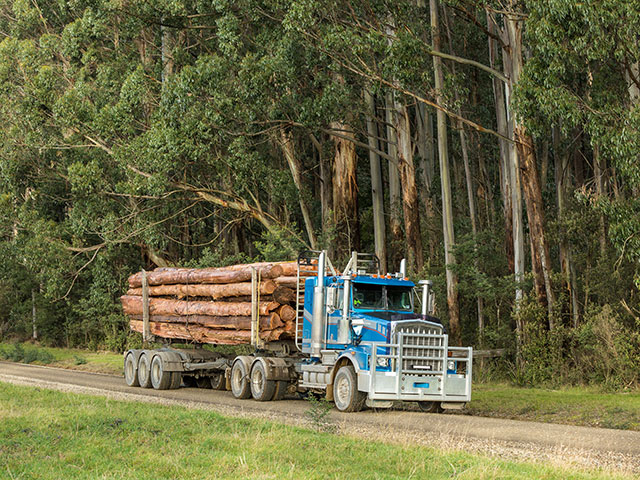
Figure 1. Forestry and logging combined accounted for approximately 15% of direct forest sector employment.
| Sector | Employment (jobs) | Labor Income (million $) | Value Added (million $) | Industry Output (million $) |
|---|---|---|---|---|
| Forestry | 256 | 6.21 | 12.98 | 13.54 |
| Logging | 1,099 | 20.97 | 26.90 | 45.59 |
| Primary Solid Wood Products | 1,098 | 71.31 | 288.16 | 874.37 |
| Secondary Solid Wood Products | 3,000 | 162.77 | 245.50 | 799.46 |
| Primary Paper and Paperboard Products | 2,284 | 253.90 | 894.47 | 2,247.76 |
| Secondary Paper and Paperboard Products | 1,235 | 99.89 | 230.29 | 785.34 |
| Total | 8,972 | 615.00 | 1,698.30 | 4,946.06 |
| Sector | Employment (jobs) | Labor Income (million $) | Value Added (million $) | Industry Output (million $) |
|---|---|---|---|---|
| Forestry | 280 | 7.50 | 15.47 | 17.94 |
| Logging | 1,229 | 27.34 | 38.62 | 66.90 |
| Primary Solid Wood Products | 2,679 | 182.23 | 478.78 | 1,257.97 |
| Secondary Solid Wood Products | 5,074 | 287.29 | 465.56 | 1,220.73 |
| Primary Paper and Paperboard Products | 7,494 | 604.19 | 1,517.77 | 3,643.15 |
| Secondary Paper and Paperboard Products | 3,052 | 210.74 | 425.63 | 1,159.32 |
| Total | 19,808 | 1,319.29 | 2,941.84 | 7,366.01 |
| Sector | Employment (jobs) | Labor Income (million $) | Value Added (million $) | Industry Output (million $) |
|---|---|---|---|---|
| Forestry | 1.09 | 1.21 | 1.19 | 1.33 |
| Logging | 1.12 | 1.30 | 1.44 | 1.47 |
| Primary Solid Wood Products | 2.44 | 2.56 | 1.66 | 1.44 |
| Secondary Solid Wood Products | 1.69 | 1.77 | 1.90 | 1.53 |
| Primary Paper and Paperboard Products | 3.28 | 2.38 | 1.70 | 1.50 |
| Secondary Paper and Paperboard Products | 2.47 | 2.11 | 1.85 | 1.48 |
| Total | 2.21 | 2.15 | 1.73 | 1.49 |
Note: Economic contributions, based on multi-industry contribution analysis, are reported in 2024 dollars. Ripple effects=SAM Multiple-1