

Plant Health Update, October 2025
The month of October 2025 was relatively busy for PDIDL diagnosticians. We received samples from pecan orchards and additional detections of pecan bunchy top disease were confirmed. This was mentioned in a previous newsletter article (EPP-25-16) which was published in May 2025. Symptoms of this disease include a proliferation of dense, bushy stunted shoots (Figure 1). Usman Rabiu Bello will officially report this disease in the future. He is a current PhD student in the Department of Entomology and Plant Pathology.
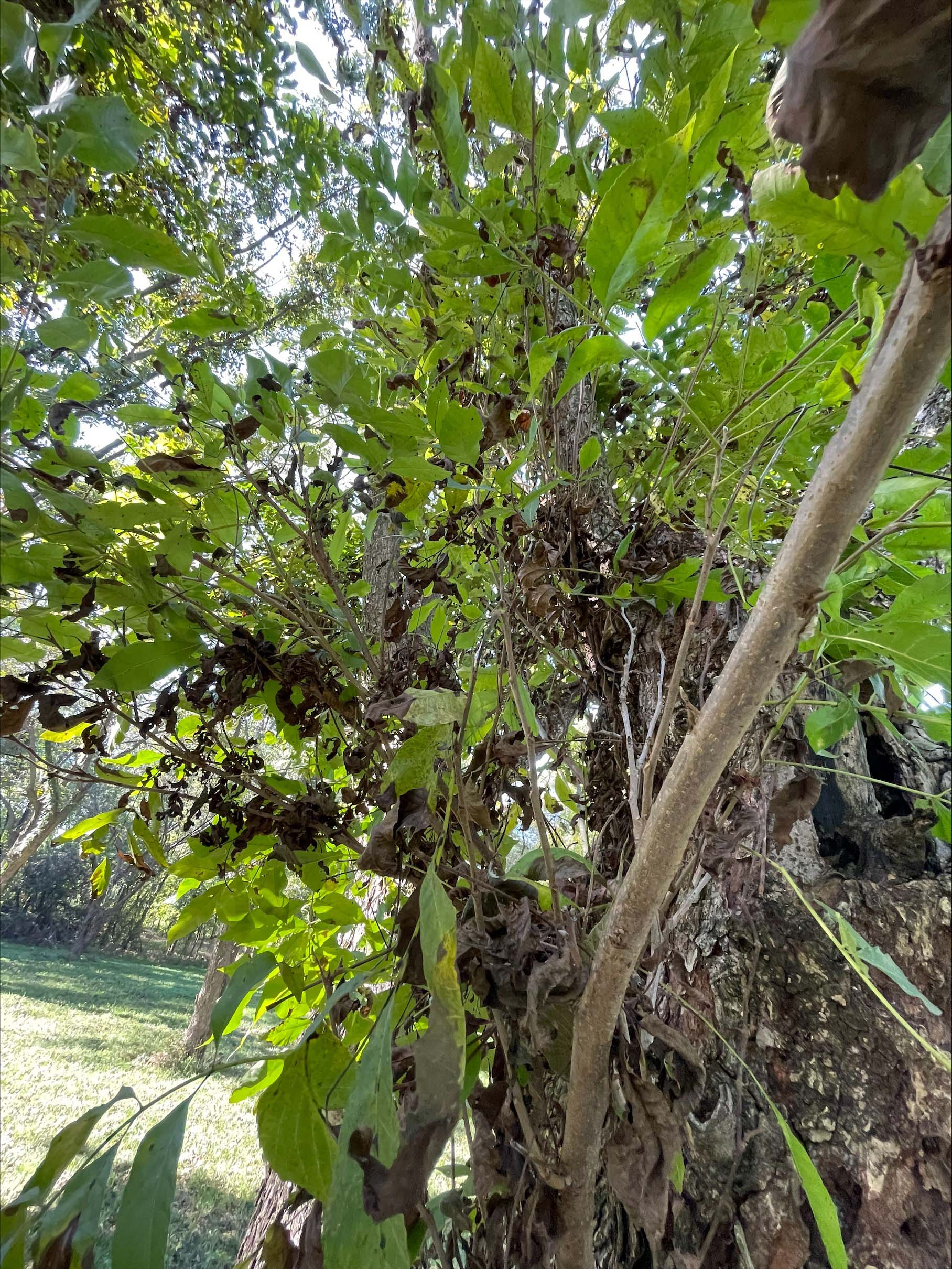
Figure 1. Dense, bushy, stunted shoots are present on this pecan tree due to pecan bunchy top disease. Image provided by Usman Rabiu Bello.
Another new find affecting specialty crops was found in a plant sample submitted by Bronika Thapa, a M.S. student in the Department of Horticulture and Landscape Architecture. Bronika is researching roselle (Hibiscus sabdariffa), a plant that is utilized in drinks, jams, sauces and teas and for medicinal purposes. She noted unusual leaf puckering, mottling and purple blotches on some of her roselle plants (Figure 2). PDIDL diagnosticians tested the leaves for viruses previously reported on this host, and all results were negative. Additional tests were run for other viruses known to occur in Oklahoma or affect related hosts such as hollyhock (Althaea rosea). Our lab found the roselle leaves to be infected with Tobacco ringspot virus using both serological and molecular testing methods. Additional leaf samples were collected and transferred to Dr. Francisco Ochoa Corona, a professor at the Institute for Biosecurity and Microbial Forensics and the Department of Entomology and Plant Pathology. Students in his lab will further investigate this detection and future publication is likely.
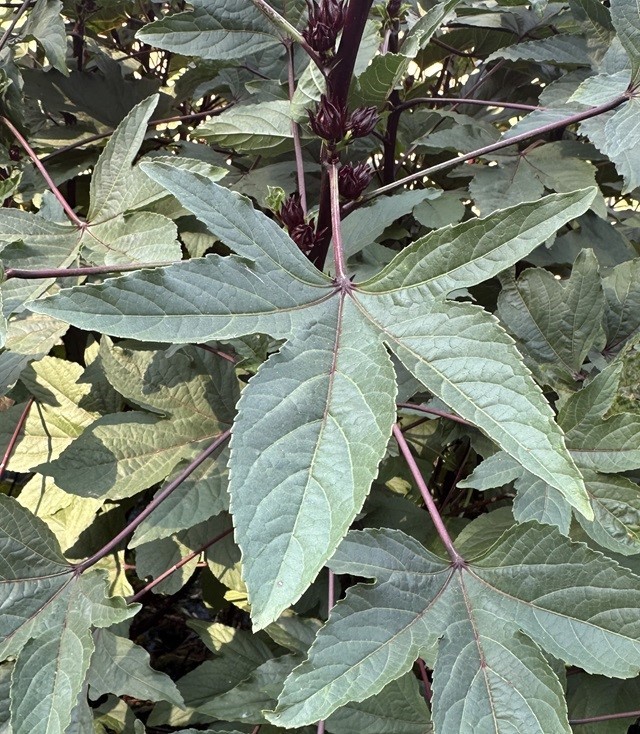
Figure 2a. Normal roselle leaf.
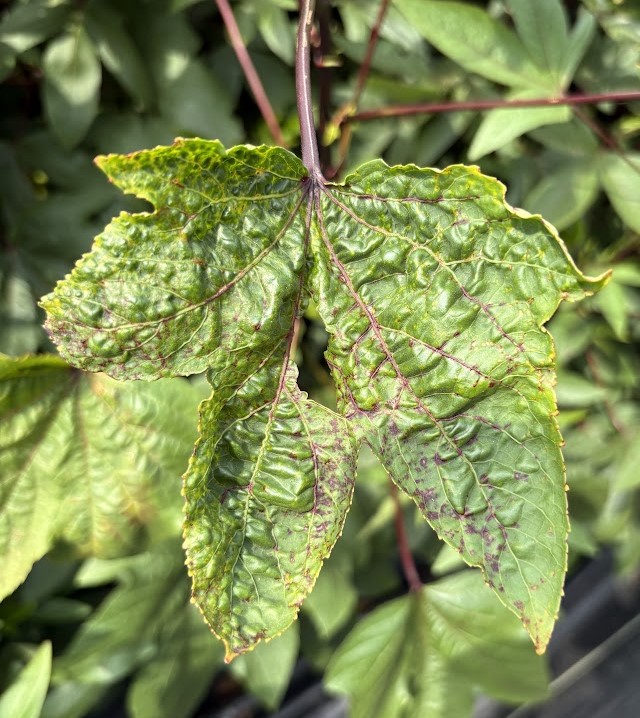
Figure 2b.
Figure 2. Normal roselle leaf (A) as compared with abnormal leaf (B). The abnormal leaf has symptoms of puckering, purple blotches, and mottling. Images provided by Bronika Thapa.
A new aggressive strain of a fungus called Neopestalotiopsis sp. (abbreviated Neo-p) was reported a few years ago affecting strawberry plants, mainly in the southeastern United States. In October 2025, the PDIDL received samples from a commercial strawberry producer in Oklahoma with this problem. The PDIDL confirmed that Neo-p was affecting the strawberry plants and consulted with diagnosticians in other states about identifying the lineage (strain). Recently, researchers have identified two aggressive lineages of this fungus. Oklahoma isolates of the fungus have tested negative for lineage 1. We are collaborating with researchers at Clemson University to have the Oklahoma isolates tested for lineage 2. We hope to provide an update on the final diagnosis in a future Plant Health Update.
Leaf spots are usually the first symptom that develops when plants are affected by Neopestalotiopsis disease of strawberry. As the disease progresses, the fungus moves into the crown of the plant. Infected plants may be stunted, exhibit wilting and in time, may die. Fruit infection can also occur, resulting in sunken lesions, often dotted with black spore masses. North Carolina State University has excellent photos of the disease.
The symptoms of Neopestalotiopsis disease are easily confused with other common strawberry diseases including Phomopsis leaf spot, Gnomonia leaf spot, and others. Samples should be submitted to the PDIDL for confirmation of the exact problem. Visit your local county extension office for information about submitting samples to the lab.
The most effective management practice to prevent Neopestalotiopsis disease is to purchase disease-free strawberry plants. However, the disease has become widespread, and it may be difficult to find disease-free plants. When purchasing new plants, it is suggested to place them in a quarantine area (away from other strawberry plants). Monitor them for a few weeks to verify they do not have symptoms that suggest Neopestalotiopsis disease (or other diseases) are present.
Other best management practices to reduce Neopestalotiopsis disease (and other strawberry diseases) are to avoid working around strawberry plants when they are wet. If individual plants develop symptoms, remove and destroy them (including crown, roots and some associated soil) before the symptoms spread to nearby plants. When possible, use drip or soaker hoses to irrigate plants to reduce splashing water that favors disease spread. Maintain proper plant spacing and remove weeds so strawberry plants have good airflow that promotes maximum leaf drying. If a strawberry planting is removed, do not replant strawberries in the site for at least 3 years. Other types of plants (non-hosts) may be planted on the site. At this time, resistant strawberry cultivars have not been identified.
There are no fungicides specifically registered for managing this disease. However, some fungicides registered for other strawberry problems can suppress Neopestalotiopsis disease. Commercial strawberry producers in other states have found Thiram SC (active ingredient thiram), Switch 62.5 WG (syprodinil + fludioxonil), Rhyme (flutriafol) and Tilt (propiconazole) are helpful at suppressing the disease. For home gardeners, products containing captan and myclobutanil are suggested. There are not many chemical options for organic growers currently. Copper containing fungicides are one option, but may not be that effective. When applying pesticides, always follow the label!
A summary of all submissions in October to the PDIDL by Oklahoma specialty crop growers is provided in Table 1. Look for additional plant health updates from the PDIDL in the next few weeks for our remaining 2025 submissions. If you have suggestions for future topics, please contact jen.olson@okstate.edu or call the PDIDL at 405-744-9961.
| Number | Host | County | DD | M | S | C | N | MD | DS | RS | O | Diagnosis/Identification |
|---|---|---|---|---|---|---|---|---|---|---|---|---|
| 1 | Bermudagrass | Cleveland | X | Environmental problems | ||||||||
| 2 | Bermudagrass | Cleveland | X | Unidentified mushrooms | ||||||||
| 3 | Cedar, Eastern Red | Cherokee | X | X | X | X | Environmental or cultural problem | |||||
| 4 | Choke Cherry | Oklahoma | X | X | X | X | Canker (Camillea tinctor) | |||||
| 5 | Cottonwood | Beaver | X | Rust | ||||||||
| 6 | Cypress, Alaska | Oklahoma | X | X | Environmental stress | |||||||
| 7 | Cypress, Arizone | Canadian | X | Girdling root suspected | ||||||||
| 8 | Elm, American | Oklahoma | X | X | X | X | Hypoxylon/Biscogniauxia canker | |||||
| 9 | Elm, Chinese (Lacebark) | Cleveland | X | Root rot suspected | ||||||||
| 10 | Fothergilla | Cherokee | X | X | X | X | Rhizoctonia and Cylindrocladium root rots | |||||
| 11 | Fruit tree | Beckham | X | Jerusalem cricket (Ammopelmatus sp.) | ||||||||
| 12 | Garden | Texas | X | Great crested grasshopper (Tropidolphus formosus) | ||||||||
| 13 | Garden | N/A | X | Russet mites | ||||||||
| 14 | Gomphrena | Oklahoma | X | X | X | Tospovirus detected | ||||||
| 15 | Hornbeam, European | Tulsa | X | X | X | x | Canker (Diplodia seriata) | |||||
| 16 | Iron plant | N/A | X | Armored scales | ||||||||
| 17 | Landscape | Tulsa | X | Hammerhead worm | ||||||||
| 18 | Lilac | Cherokee | X | X | X | X | Cutting rot (Phytophthora palmivora, Rhizoctonia) | |||||
| 19 | Limber pine | Blaine | X | Nantucket pine tip moth suspected | ||||||||
| 20 | Linden | Tulsa | X | Cercospora leaf spot | ||||||||
| 21 | Maple | Kay | X | X | X | Root damage or problems | ||||||
| 22 | Maple. Silver | Garfield | X | Leaf scorch | ||||||||
| 23 | Maple, Silver | Oklahoma | X | White grub (Family Scarabaeidae) | ||||||||
| 24 | Marigold | Oklahoma | X | X | X | No tospovirus detected | ||||||
| 25 | Oak | Tulsa | X | X | X | X | Powdery mildew | |||||
| 26 | Oak | Tulsa | X | X | X | X | Honey mushroom fungus (Armillaria tabescens) | |||||
| 27 | Oak | Payne | Hypoxylon/Biscogniauxia canker | |||||||||
| 28 | Oak | Cleveland | X | Antracnose | ||||||||
| 29 | Oak | Cleveland | X | Fusiform rust | ||||||||
| 30 | Oak | Cleveland | X | Environmental stress | ||||||||
| 31 | Oak | Cleveland | X | Environmental stress | ||||||||
| 32 | Oak | Cleveland | X | Spider mites, Lacebug damage | ||||||||
| 33 | Oak | Cleveland | X | Fusiform rust | ||||||||
| 34 | Oak | Cleveland | X | Fusiform rust | ||||||||
| 35 | Oak | Cleveland | X | Chewing damage, possibly lacebugs | ||||||||
| 36 | Oak | Cleveland | X | Immature insects, possibly leaf hopper nymphs | ||||||||
| 37 | Oak | Cleveland | X | Powdery mildew | ||||||||
| 38 | Oak | Cleveland | X | Fusiform rust | ||||||||
| 39 | Oak, Bur | Cleveland | X | Oak lace bugs | ||||||||
| 40 | Oak, Bur | Cleveland | X | Wound canker | ||||||||
| 41 | Oak, Bur | Cleveland | X | Fungal leaf spot suspected | ||||||||
| 42 | Oak, Bur | Cleveland | X | Oak lace bugs | ||||||||
| 43 | Oak, Bur | Cleveland | X | Oak lace bugs | ||||||||
| 44 | Oak, Bur | Cleveland | X | Hail damage and antracnose suspected | ||||||||
| 45 | Oak, Bur | Cleveland | X | Fungal leaf spot suspected | ||||||||
| 46 | Oak, Bur | Cleveland | X | Feeding damage from arthropods | ||||||||
| 47 | Oak, Bur | Cleveland | X | Undetermined injury | ||||||||
| 48 | Oak, Pin | Canadian | X | X | X | X | Hypoxylon canker, Leaf spot | |||||
| 49 | Oak, Pin | Mayes | X | Roundheaded wood borers | ||||||||
| 50 | Oak, Post | Tulsa | X | Shelf fungus (Pseudoinonotus dryadeus) | ||||||||
| 51 | Oak, Sawtooth | Grady | X | Basal trunk decay | ||||||||
| 52 | Oak, Willow | Kay | X | Environmental stress, Lichens | ||||||||
| 53 | Okra | Ottawa | X | Insect damage suspected | ||||||||
| 54 | Pear, ornamental | Payne | X | X | Leaf scorch (abiotic) | |||||||
| 55 | Pecan | Grant | X | Fall webworm | ||||||||
| 56 | Pecan | Cleveland | X | Pecan weevil | ||||||||
| 57 | Pecan | Pawnee | X | X | X | Pecan bunchy top detected | ||||||
| 58 | Pecan | Pawnee | X | X | X | Pecan bunchy top detected | ||||||
| 59 | Pecan | Pawnee | X | X | X | Pecan bunchy top not detected | ||||||
| 60 | Pecan | Pawnee | X | X | X | Pecan bunchy top not detected | ||||||
| 61 | Pecan | Pawnee | X | X | X | Pecan bunchy top detected | ||||||
| 62 | Pecan | Pawnee | X | X | X | Pecan bunchy top detected | ||||||
| 63 | Pecan | Pawnee | X | X | X | Pecan bunchy top not detected | ||||||
| 64 | Pecan | Pawnee | X | X | X | Pecan bunchy top not detected | ||||||
| 65 | Pecan | Pawnee | X | X | X | Pecan bunchy top detected | ||||||
| 66 | Pecan | Pawnee | X | X | X | Pecan bunchy top detected | ||||||
| 67 | Pepper, anaheim | Payne | X | X | No tospovirus detected | |||||||
| 68 | Pepper, habanero | Payne | X | X | X | No tospovirus detected | ||||||
| 69 | Pine | Pontotoc | X | X | Pine wilt not detected | |||||||
| 70 | Pine | Oklahoma | X | Seasonal needle drop | ||||||||
| 71 | Pine | Pontotoc | X | X | Pine wilt not detected | |||||||
| 72 | Pine | Oklahoma | X | Horntail wasp (Sirex sp.) | ||||||||
| 73 | Pistache, Chinese | Oklahoma | X | Branch dieback (unidentified cause) | ||||||||
| 74 | Pistache, Chinese | Cleveland | X | Environmental stress | ||||||||
| 75 | Plant identification | Choctaw | X | X | Carpetgrass (Axonupousi sp./spp.) | |||||||
| 76 | Red oak | Stephens | X | Wound canker | ||||||||
| 77 | Redbud, Eastern | Pontotoc | X | X | Bacterial leaf scorch (Xylella fastidiosa) | |||||||
| 78 | Redbud, Eastern | Payne | X | Burl, wound canker | ||||||||
| 79 | Rose | Oklahoma | X | X | Thrips and spider mites present | |||||||
| 80 | Rose | Cleveland | X | Rose rosette not found | ||||||||
| 81 | Roselle | Payne | X | X | X | Tobacco ringspot virus | ||||||
| 82 | Roselle | Payne | X | X | X | Stem canker and root rot (Phytophthora nicotianae) | ||||||
| 83 | Salvia | Oklahoma | X | X | X | X | Virus suspected | |||||
| 84 | Sedum | Washita | X | Root problem, possibly Rhizoctonia | ||||||||
| 85 | Spruce, Blue | Tulsa | X | X | X | X | Sudden needle drop (Setomelanomma holmiiI) | |||||
| 86 | Spruce, Blue | Marshall | X | Sudden needle drop (Setomelanomma holmiiI) | ||||||||
| 87 | Strawberry | Tulsa | X | X | X | X | X | Neopestatalotiopsis | ||||
| 88 | Strawberry | Tulsa | X | X | X | X | X | Neopestatalotiopsis | ||||
| 89 | Sumac | Canadian | X | Sumac speckled lanternfly | ||||||||
| 90 | Sycamore | Pontotoc | X | X | Leaf folder caterpillar (family Tortricidae) | |||||||
| 91 | Tomatillo | Payne | X | X | X | X | Tobacco ringspot virus | |||||
| 92 | Tomato | Payne | X | X | X | X | Phytoplasma disease | |||||
| 93 | Tomato | McClain | X | Fruit rot/Anthracnose (Colletotrichum sp.) suspected | ||||||||
| 94 | Tree | Okfuskee | X | X | X | Southern clam shell (Fomes fasciatus) | ||||||
| 95 | Tree | Okfuskee | X | Root problems | ||||||||
| 96 | Turfgrass | Logan | X | Fall armyworms (Spodoptera frugiperda) | ||||||||
| 97 | Turfgrass | Payne | X | Vagabond sod webworm | ||||||||
| 98 | Zinnia | Cleveland | X | Tospovirus suspected | ||||||||
| 99 | Zinnia | Oklahoma | X | X | No Tospovirus detected | |||||||
| 100 | Zinnia | Oklahoma | X | Tospovirus suspected | ||||||||
| 101 | Zinnia | Oklahoma | X | X | X | Tospovirus detected | ||||||
| 102 | Zinnia | Logan | X | Tospovirus suspected | ||||||||
| 103 | Zinnia | Oklahoma | X | X | Thrips damage |
KEY for Diagnostic Testing Methods
- DD - Digital Diagnosis
- M - Microscopy
- S - Serological tests
- C - Culture analysis
- N - Nematode analysis
- MD - Molecular diagnostic methods
- DS - DNA sequencing
- RS - Referral to specialist
- O - Other diagnostic tests