

Remain Vigilant in Scouting for Fall Armyworm in Pasture, Lawns, and Wheat
As we head into late summer fall armyworm activity continues to build. We have received reports of major fall armyworm activity in pasture and lawns this week. Mike Trammell, SE Area Agronomist, has gotten reports from many producers in the SE part of the state reporting pasture damage. In addition, we are getting reports from extension educators that homeowners are having increased activity in their lawns as well.
Fall armyworms (FAW), Spodoptera frugiperda, are surface dwelling "climbing cutworm" caterpillars, so named because they tend to occur in noticeable numbers in late summer and fall, and often “march” in large numbers (Fig. 1) from food source to food source. Infestations can occur in grass pastures (Fig. 2), lawns, alfalfa, double cropped soybean, sorghum, and winter wheat, just to name a few. In all, this pest attacks more than 350 plant species from 76 plant families. Its ability to feed on so many plants, reproduce prolifically, and migrate over long distances in its adult moth form lends to FAW being a serious economic pest.
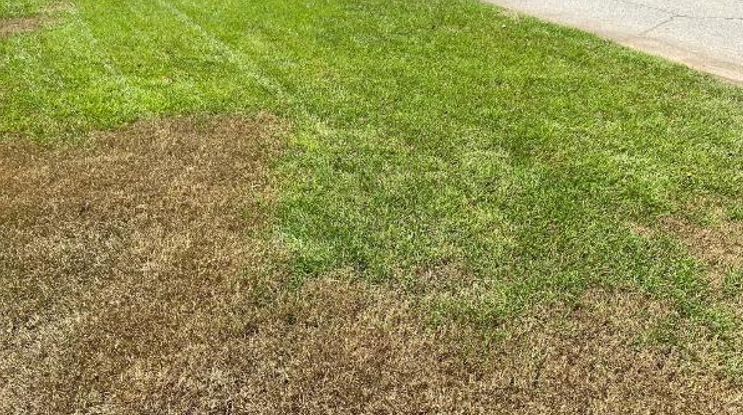
Figure 1. FAW damage in lawn. Photo, Turf Masters.
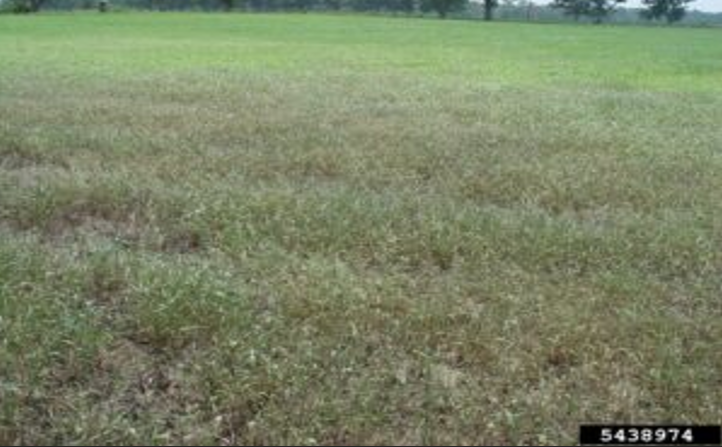
Figure 2. FAW damage in pasture. Photo, UGA Ext.
Fall armyworm feeding often goes unnoticed until they become 1 inch or more in length. By then, they are large enough to destroy a grass pasture, lawn, or crop overnight. Going through six instar developmental stages, entire larval development takes about two weeks. Around 90% of damage occurs in the final 2 instars, which lasts about 2-3 days (Fig 3). They seem to prefer tall fescue, but they will also feed on many pasture grasses including bermudagrass and other turf grass species. This time of year, damage may have appearances similar to drought. Therefore, regular monitoring is needed to determine insect activity and level of infestation.
They do not overwinter in Oklahoma, but we will not be rid of FAW until we experience a true "killing frost". Therefore, in some years this can occur as early as late October or stretch into November. Fall armyworm populations thrive in cool, wet weather. Based on current FAW activity and weather patterns it appears that this fall will be an especially busy year for FAW activity.
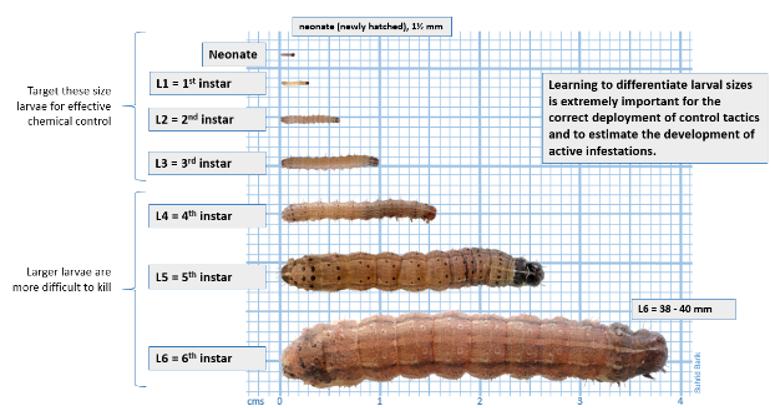
Figure 3. Developmental stages of Fall Armyworm larva. Ninety percent of damage occurs in the final two instars. Corteva AgScience.
Mature fall armyworms measure 1½ inches long when fully grown (Fig.3). Their body color can range from green to brown to black. When scouting, pay close attention to their head capsule and the presence of a prominent inverted white "y". In addition, a symmetrical square pattern of dots appears on the next to last body segment (Fig. 4).
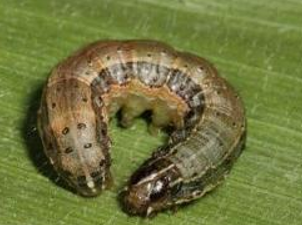
Figure 4. Characteristics of the fall armyworm. Note the inverted Y and symmetrical square dots on the next to last body segment. Photo, SANBI.
Small larvae do not eat through the leaf tissue, but instead, scrape off all the green tissue and leave a clear membrane that gives the leaf a "window- pane" appearance.
Once they reach the fourth instar, they can chew through the entire leaf. This is when most economic damage is done!!! When scouting, look for both types of chewing damage.
Green Pastures
For those wanting to put up grass hay, scout your fields by looking for caterpillars and “window paned” or chewed leaves (Fig 5 and 6). Get a wire coat hanger (Fig. 7), bend it into a hoop, place it on the ground, and count all sizes of caterpillars in the hoop. Take samples in several locations, along the field margin as well as in the interior. The hoop covers about 2/3 of a square foot.
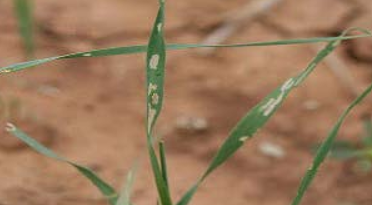
Figure 5. Window-paned chewed leaf. Photo, OSU.
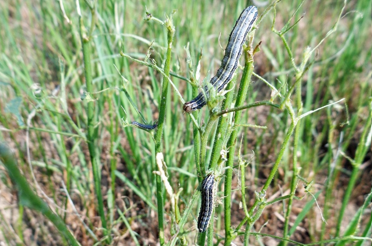
Figure 6. Chewed leaf in Pasture. Purdue Extension.
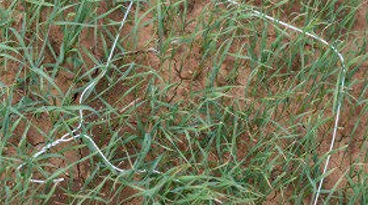
Figure 7. Bent coat hanger for scouting. Photo, OSU.
***Treatment threshold is an average of two or three ½ inch-long larvae per hoop sample (3-4 per square foot).
Fall armyworm are easier to control with an insecticide when they are small (less than ½ inches). For control guidelines and specific insecticide information, consult OSU Fact Sheet CR-7193: Management of Insect Pests in Rangeland and Pasture
Turf and Lawns:
Many insecticides are registered for control of FAW that can provide excellent control. For turf farms, golf courses and athletic fields, the pyrethroid insecticides, which include Astro® (Permethrin), DeltaGard® (Deltamethrin), Demand® (Lambda-Cyhalothrin[NW1] ), Scimitar® (Lambda-Cyhalothrin), Talstar® (Bifenthrin), or Tempo®(Cyfluthrin) are quite effective and available as ready-to-use formulations for homeowners from several home stores. Conserve™ (Spinosad), which is derived from a naturally occurring bacterium, is also an excellent product. Diazinon and Sevin® (carbaryl) are also labeled for some commercial uses to control FAW. Carefully read the label for use patterns, some products may be registered for all turf uses, while others may not.
FAW can be detected through close examination of the lawn, or by using a “soap flush.” A soap flush simply involves mixing about 1-2 tablespoons of lemon scented dishwashing soap into 1-2 gallons of water. Using a watering container, pour the soapy water over several small areas in your lawn and wait for 30 seconds to one minute. Any hidden larvae in the thatch will become irritated by the soap and come to the surface of the lawn. If 3-4 larvae are found per square foot, treatment may be warranted in commercial turf or golf courses.
For homeowners, carefully consider the need to control FAW. Some cool-season lawns may be able to recover from a FAW infestation this late in the year without treatment, and bermudagrass and zoysia lawns may be so slightly damaged and usually do not warrant treatment. There are many products labeled for armyworm control in lawns and gardens. If choosing between granular and liquid applications, keep in mind that granular products are a bit slower acting and require watering for activation. Carefully read and follow all label restrictions for application and use patterns. Specific control recommendations can be found in EPP-7306 Ornamental and Lawn Pest Control (For Homeowners).
Winter Wheat:
Based on temperature and precipitation patterns, we encourage our winter wheat producers to be extra vigilant for FAW pressure as we enter planting. One option to help wheat producers get started on the right foot and promote a healthy stand is to select an insecticide seed treatment that has efficacy against FAW. Seed treatments can provide protection for the first few weeks of emergence. One seed treatment product that provides protection from FAW larvae is Lumivia, which also provide protection against wireworms, cutworms, and grasshoppers.
Wheat producers should begin scouting for fall armyworms as soon as wheat emerges, particularly in the morning hours at the edges of wheat fields that share borders with pasture or road ditches. Look closely for signs of windowpaned leaves and the FAW themselves. Treat if 3-4 larvae are found per foot of row AND feeding damage is evident. The early instars are more susceptible to insecticides, so early detection is important for providing effective chemical control. While pyrethroid-based insecticides are low-cost, they are often ineffective when populations of fall armyworms are high. Instead, consider mixing a pyrethroid with another product that has chlorantraniliprole or diflubenzuron as an active ingredient which have a longer residual. Chlorantraniliprole products offer the advantage of being rainfast, as well as protection against bigger FAW. Products with diflubenzuron have a long residual but do not work well on larger FAW. The good news is first frost will help knockback FAW populations, until then producers are encouraged to have FAW scouting as part of their regular routine and to be on the ready to spray when threshold is met. When spraying, follow the insecticide label for proper rate and use. For dual-purpose or grazing systems, always check the product label for the pre-harvest interval (PHI), which specifies the minimum waiting period before livestock can graze the treated crop.