

Ag Insights December 2025
Wednesday, December 10, 2025
Sandbur Control
Josh Bushong, Area Extension Agronomist
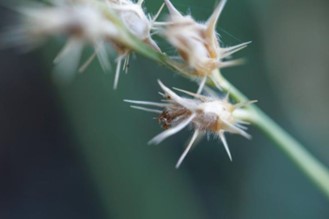 Sandburs are a common weed issue found in pastures, forage crops, and lawns. As the
name implies, sandburs are typically more of an issue in sandy soils. They are an
annual warm season grass, but with a mild winter can behave as a short-lived perennial.
Seeds can germinate all summer, but most will germinate in May and June.
Sandburs are a common weed issue found in pastures, forage crops, and lawns. As the
name implies, sandburs are typically more of an issue in sandy soils. They are an
annual warm season grass, but with a mild winter can behave as a short-lived perennial.
Seeds can germinate all summer, but most will germinate in May and June.
Sandburs can obviously be an issue with livestock in pastures and hay production but can also reduce forage quality and quantity. Since sandbur seeds can stay viable in the soil for 5 to 8 years, the main objective for suppression would be reducing seed development. Control will take several years of intensive management utilizing both cultural practices and herbicides.
Proper weed management starts with taking care of the soil, which starts with taking a soil sample. To give the desired crops a completive edge, soil pH and nutrient deficiencies will need to be corrected and maintained. Sandburs are more tolerant of acidic (low pH) soils than many warm season forages. Applying adequate nitrogen will be the most beneficial to improve the stand of the desired forage. Correcting phosphorus and potassium will also help improve root development and plant regrowth.
In addition to soil fertilization, other cultural suppression practices include managing stocking rates and prescribed burning. Proper stocking rates should be managed to retain adequate biomass for the crop to regrow at a faster pace and stay completive with sandburs. For Bermudagrass, leaving 2 to 3 inches is essential for good regrowth for both haying and grazing.
Prescribed burning can reduce sandbur seed production if executed at the right time and with high intensity. Fall burns will likely be better, unless there is sufficient fuel (old growth) for a hot spring burn. If the fire from the burn is not hot enough, it may actually stimulate germination. At first one would think that would be a bad thing. After the light burn a higher percentage will emerge the first year, which an herbicide would effectively control a larger percentage of the sandbur population in one application.
There are a few herbicides that can be used to assist in sandbur control. Unfortunately, most are only labeled in bermudagrass. There are no herbicides labeled for sandbur control in Old World Bluestem, crabgrass, and some native grasses. In most native grass pastures, herbicides with the active ingredient imazepic (Plateau, Panoramic, or Impose) will provide some control but will also cause some crop injury to the native grasses. This injury is often temporary and lessened if good growing conditions follow herbicide application.
For bermudagrass, the use of a preemergence (applied before sandburs germinate) herbicide like pendimethalin (Prowl H2O) will help reduce half to two-thirds of the largest and earliest flush of sandburs.
A newer product now available, called Rezilon, gives farmers another preemergent herbicide option. It is recommended to be applied well before sandbur germination. If sandburs have already emerged this product will not provide any control. Ideally it should be applied late-winter but can also be applied mid-season generally after the first cutting to prevent late-season sandbur emergence.
The first application of Rezilon needs to be applied by February. It can control and suppress weeds for up to 4 months, so depending on when the first application was made a second application might be needed in June or July. A rainfall event or irrigation of at least a half of an inch is needed to move the product from the soil surface to the sandbur seeds in the soil. For most effective control, a water incorporation needs to occur within three weeks.
If applying Rezilon after sandbur emergence or if there are perennial sandbur plants found, tank-mixing a postemergence product like glyphosate might be needed. Add Rezilon to the sprayer prior to adding the glyphosate to prevent tank-mix issues or reduced weed control. Rezilon is a suspension concentrate product that needs constant agitation in the sprayer to keep it in solution.
Rezilon doesn’t have any grazing restrictions, but grazing after an application and prior to incorporating rain can reduce weed control. There is not a haying restriction when applied at 3 ounces per acre. There is a 40-day haying restriction if more than 3 ounces are applied.
Postemergence (applied after bermudagrass and sandburs are actively growing) herbicide options include glyphosate (Roundup Weathermax), imazepic (Plateau), or nicosulfuron with metsulfuron (Pastura). Read and follow label directions for rates, application timings, and surfactants to limit crop injury and to achieve satisfactory sandbur control.
Lack of control is usually due to herbicide application timing. Sandbur growth stage is critical for some products. For instance, after sandburs reach 1.5 inches tall the expected control will be reduced with products like Pastora. If applied correctly, over 90 percent of the sandburs can be controlled with the postemergence herbicides. Keep in mind, sandburs will continue to emerge as the season progresses which may make it appear like the early herbicide application failed.
Herbicide products like MSMA are good options for cotton fields, golf courses, sod farms, and highway right-of-ways, but cannot be legally applied to lawns, pastures or hay ground. This is mostly due to the risk of animal poisoning from being an arsenic-based herbicide.
A multi-year strategy of combining cultural suppression practices and herbicides is necessary. For more information refer to OSU factsheet PSS-2596 Sandbur Control in Bermudagrass Pastures or visit your local OSU Extension office.
Answering the Supplementation Question
Dana Zook, NW Area Livestock Specialist
This time of year, inquiries about forage value and supplemental needs of cows are very common. Instead of the “holiday season” I refer to the months of September thru December as “feed season”. This isn’t the only time of year cattle producers are feeding, but it is when producers ask the most questions about their feeding program. As you might guess, the most common question from producers is “how many pounds of supplement should I feed my cows?”. In the livestock nutrition community, we call this Supplementation. In the simplest terms, supplementation is where we look at a forage source and determine if there are any nutrients lacking for the cattle (or other livestock) in question. Seems simple, right? It is VERY simple if I have all the facts. When I’m asked to answer the supplementation question when details are missing, it’s a little like making pumpkin pie from scratch without a recipe or a well-functioning oven. Okay, I enjoy baking and I know that pumpkin pie is easy to make but stay with me for a minute. How easy would it be to make a good pumpkin pie if you didn’t have all the right ingredients…or the recipe…or an oven? A decent OSU education in cattle nutrition only goes so far and leaving out facts (ingredients) makes it more like an educated guess. Guessing is not my favorite pastime in cooking or my job. This is especially true when I’m here to help livestock producers be more efficient and save money. So let’s look at the “Supplementation Equation” a little more closely to determine what facts are needed.
When I get a call asking for supplemental need of a cowherd, the most commonly guessed item is forage value. As a ruminant animal, forage value is the baseline for nutrition. Some producers graze dormant standing forage, and we have some really good book values to estimate the nutrient qualities for this. But most producers utilize hay for at least a portion of their feeding season. It is not smart to rely on book values or historical tests for hay quality; there is just too much variability within the season and from one year to the next. All harvested forages should be submitted for nutrient analysis. This requires a producer to collect a forage sample from their lots of hay and submit it to a certified lab for nutritional analysis. It takes a little time, but it provides very valuable information and gets us from closer to the actual supplemental need rather than a guess. Each OSU Extension office can submit forage samples for analysis through the OSU Soil, Water, and Forage Analytical Laboratory. Go ahead and analyze the sample for protein (CP%) and energy (TDN%) and these simple values can help an extension educator or specialist to know how much nutrition is available for the cattle. Forage is the foundation for cattle nutrition. Knowing the quality of the forage is an essential component to solving the supplementation question.
Secondly, having an idea of the cows’ stage of production and their breed/size is important. Cows in lactation may require several more pounds of supplement to meet their needs compared to gestating cows. Breed could play a role and knowing the weight of the cows is helpful. So, in its simplest form, details about the cows’ breed, size and stage of production along with forage quality make up essential details to answer the supplementation equation. In Extension we also have really cool tools that can also look at a variety of supplement options and tell you which option is the most cost effective. Supplementation is pretty easy when all the “ingredients” or facts are available to work with. This folks, is the bread and butter of my job and one of my most favorite things to discuss. So, give us a call! All our county OSU Extension offices can assist with supplementation questions. Consider sending in your hay values today or getting assistance evaluating supplements for your cows this fall. Happy feed season!
Taking Advantage of Grain Sorghum in Feeding Programs
Paul Beck, Oklahoma State University Extension Beef Cattle Nutrition Specialist
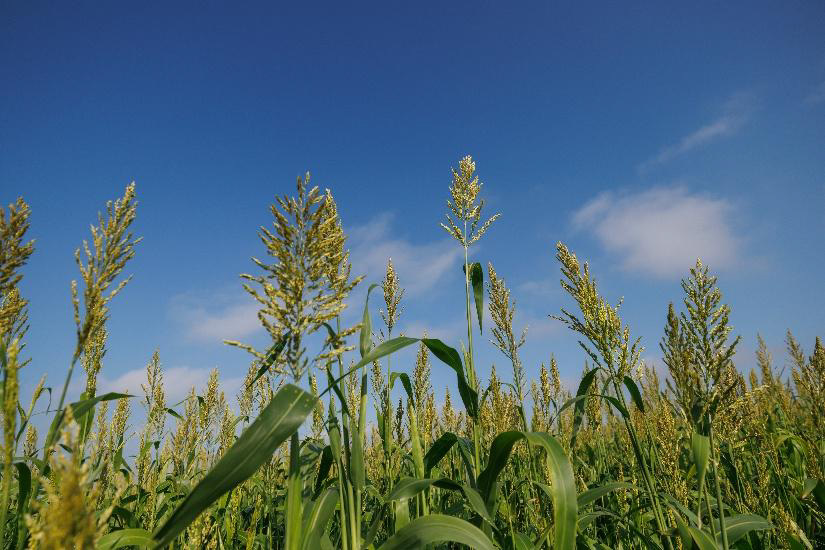 There are reports of grain elevators turning away grain sorghum this fall due to lack
of bin space. Many elevators are prioritizing storage for wheat and corn because of
poor export demand for grain sorghum and soybeans. This situation has widened the
local basis for grain sorghum, lowering its price but creating opportunities for livestock
producers willing to feed it.
There are reports of grain elevators turning away grain sorghum this fall due to lack
of bin space. Many elevators are prioritizing storage for wheat and corn because of
poor export demand for grain sorghum and soybeans. This situation has widened the
local basis for grain sorghum, lowering its price but creating opportunities for livestock
producers willing to feed it.
Unprocessed grain sorghum is one of the least digestible cereal grains for cattle. Sorghum has a hard outer seed coat and a dense endosperm where starch is tightly bound to proteins. This starch-protein matrix resists microbial digestion in the rumen, and when fed whole, much of the grain passes through undigested. Total tract starch digestibility of whole sorghum is typically 40 to 60 percent, with total digestible nutrients (TDN) of about 65 to 70 percent. This corresponds to an energy value roughly 70 to 75 percent that of whole corn.
According to the Nutritive Value of Feeds for Beef Cattle factsheet, whole corn averages 88% TDN, while unprocessed grain sorghum averages 70% TDN—only about 75 to 80% as good as corn. Processing sorghum by rolling or grinding increases TDN to about 86%, improving energy value by roughly 25%. That improvement can significantly impact both rate of gain and feed efficiency in backgrounding or finishing programs.
| Grain | TDN (% DM) | Relative Energy (Corn = 100) | Notes |
|---|---|---|---|
| Whole Corn | 85-88 | 100 | Moderate digestibility: some kernels escape mastication |
| Whole Grain Sorghum (milo) | 65-70 | 70-75 | Very hard seed coat and dense endosperm; many kernels pass undigested |
| Rolled Grain Sorghum (milo) | 80-855 | 85-90 | Rolling breaks the seed coat and improves microbial access |
Grain sorghum can be economical when priced at 90% of corn, but it must be processed to capture its full feeding value. In some areas of Oklahoma, sorghum is currently priced at only 75 to 80% of corn—making it an attractive, cost-effective feed option for supplementation and feeding programs this winter. If producers are looking at sorghum or milo as a potential feed option, reach out to your local county OSU Extension office for help.
From Global Stocks to Oklahoma Fields: Wheat Outlook
Alberto Amador, West Area Ag Economics Specialist
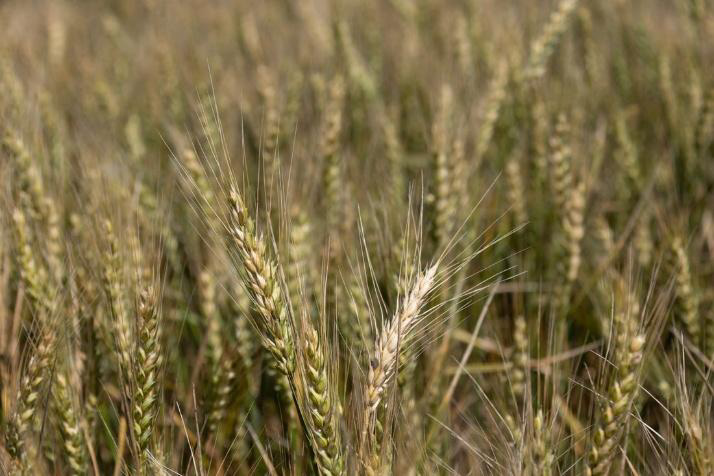 In recent days, we have seen notable fluctuation in crop markets. Multiple factors
are the cause of the shifts, including the latest USDA, WASDE projections released
after the government reopened. The report impacted almost all the grain future prices
the weekend it was published, although prices recovered following Monday. In this
occasion, we’ll focus on the wheat situation at different levels and the possible
future break-even price for West Oklahoma.
In recent days, we have seen notable fluctuation in crop markets. Multiple factors
are the cause of the shifts, including the latest USDA, WASDE projections released
after the government reopened. The report impacted almost all the grain future prices
the weekend it was published, although prices recovered following Monday. In this
occasion, we’ll focus on the wheat situation at different levels and the possible
future break-even price for West Oklahoma.
At a global level, despite projection from a Russian institution showing lower production for Russia this year, the overall global wheat supply forecast has increased due to higher yields in major exporters countries such as Australia, the U.S., Canada, and the EU (specially France). With an increase of 11.7 million tons (for a total of 1,090 million tons), Argentina shows the largest growth at 12%, according to the last USDA’s report. Regarding global trade, exports rose by 2.5 million tons (217 million tons) due to expected increases from Argentina, Australia, and Kazakhstan. Global ending stocks are also forecast higher by 3% (271 million tons), resulting in a stock to use ratio of 22% (excluding China), the highest level since 2020/21. This indicator basically shows the balance of wheat supplies and consumptions. A high stock-to-use level means that market is well supplied, which generally puts downward pressure on prices.
At national context, wheat expectation, according to the latest report, has changed due to increases in supply and expected ending stocks. The shift in supply is driven by higher production, up 58 million bushels (to 1,985 million bushels), reaching a record yield. Domestic consumption remains unchanged at 1,154 million bushels (972 for Food, 62 for Seed, and 120 for Feed and Residual), and exports forecast remains steady at 900 million bushels. However, the last wheat exports inspections surprised after totaling 17.4 million bushels, compared with trade expectations that ranged between 7.3 million and 14.7 million bushels.
For the 2025-26 marketing year, cumulative exports totals have reached 471.6 million bushels, roughly 20% more than last year’s pace. Exports performance is crucial for future prices behavior in the coming months. Back to the national balance sheet, wheat ending stocks’ projection has increased 7%, reaching 901 million bushels. Consequently, the average farm prices decreased 10 cents to $5.1 per bushel.
For Oklahoma, the Small Grain report released in September indicates lower production compared to last year, driven by a reduction in planted acres (250 acres) and harvested acres (100), while yield remains at 38 bushels per acre. The five years average basis for West Oklahoma during harvest months is: - $0.51 in June, and -$0.56 in July.
The break-even price above variable costs at 38 bu./acre is $4.7. Table 1 shows the returns after operating costs for different scenarios with yields between 30 and 40 bushels per acre and prices ranging from $5.1 and $5.7. Positive returns appear in almost all yield scenarios, except for 30 bushels at all price levels and 35 bushels at $5.1 per bushel. These return estimates do not include extra income (federal or insurance payment) and many input costs are subject to change.
| Yield Bu./Acre | $5.10 | $5.30 | $5.50 | $5.70 |
|---|---|---|---|---|
| 30 | -$22.94 | -$14.99 | -$9.03 | -$3.03 |
| 35 | -$0.12 | $6.83 | $13.78 | $20.78 |
| 38 | $12.80 | $20.37 | $27.91 | $35.51 |
| 40 | $20.34 | $28.28 | $36.22 | $44.22 |
Sesbania vesicaria: A Toxic Plant for Oklahoma Cattle Producers to Watch
Barry Whitworth, DVM
Senior Extension Specialist/BQA State Coordinator, Department of Animal & Food Services, Ferguson College of Agriculture, Oklahoma State University
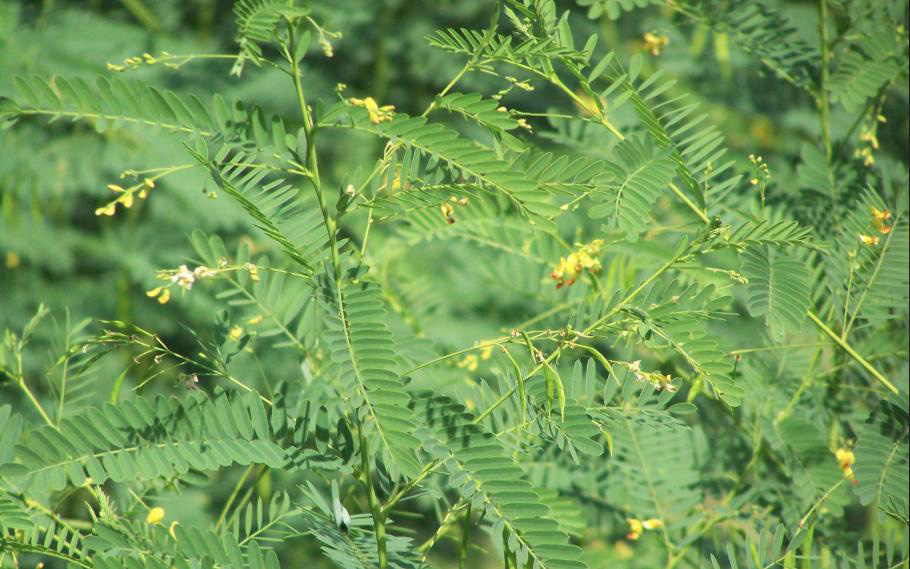 Driving around eastern Oklahoma, individuals may notice a tall, single-stemmed plant
known as bladderpod or bagpod. The scientific name is Sesbania vesicaria. Although the plant may appear desirable at certain times of the year, the seed pods
are toxic. Cattle producers should be scouting pastures for any plants.
Driving around eastern Oklahoma, individuals may notice a tall, single-stemmed plant
known as bladderpod or bagpod. The scientific name is Sesbania vesicaria. Although the plant may appear desirable at certain times of the year, the seed pods
are toxic. Cattle producers should be scouting pastures for any plants.
S. vesicaria is a legume that can grow up to six feet tall. It has pinnately compound leaves with numerous small, oval leaflets. Bladderpod produces bright yellow flowers with hints of red or pink. Following flowering, the seed pods develop. The seed pods are green to yellowish in color. By late summer or early fall, the pods turn brown and often rattle when shaken, signaling that the plant has reached its most toxic stage.
The plant is found in sandy soils in southeastern and central Oklahoma. It may appear in areas where it is not usually seen following wet summers or in areas that have flooded. Generally, bladderpod grows as scattered individual plants but, on occasion, will form dense stands.
Although many animals are susceptible, intoxication primarily occurs in cattle. The toxin is not well characterized but is thought to be a saponin contained in the seeds. The saponin causes gastrointestinal irritation. The hazard is more prominent during the winter when forage may be scarce and the pods are readily available. Cattle accustomed to the plant will seldom eat it; however, newly introduced cattle are more inclined to consume pods. Recently introduced cattle may eat large amounts of pods. About one pound of pods can kill a 500-pound calf. If cattle eat the pods slowly, the irritation will limit intake, which decreases the likelihood of intoxication.
Following ingestion of the seeds, clinical signs may appear within a few hours. Common clinical signs include anorexia, diarrhea, labored breathing, and colic. Mortality is usually high.
Animals suspected of ingesting bladderpod should be treated with activated charcoal to help absorb any remaining toxin and fluids to address dehydration. Prevention is much more effective than treatment. Producers should scout pastures for any bladderpod plants. Any plants found should be removed or mowed. Herbicide applications early in the growing season can eliminate the plant. Producers should maintain good forage cover to reduce weed establishment, as overgrazed pastures are more prone to Sesbania infestations.
Since Oklahoma experienced a very wet summer, S. vesicaria may be a problem this winter. Cattle producers need to be scouting pastures for any bladderpod plants. For more information about S. vesicaria, cattle producers should consult their veterinarian and/or local Oklahoma State University Cooperative Extension County Agriculture Educator.
Farm Management Resources on Your Smartphone
The e-Farm Management website showcases resources to help producers learn about financial management topics along with production, marketing, and risk management topics. This site includes videos, tools, and publications for farmers and ranchers to strengthen their farm management skills.
In the Conservation Compliance video, viewers learn about conservation provisions that require compliance from anyone participating in Farm Service Agency, Natural Resources Conservation Service, and Risk Management Agency programs. The video examines how compliance is determined by these agencies. Finally, viewers learn about how to regain eligibility if found not in compliance with these provisions.
To view this video and find additional information on farm and ranch conservation issues, visit Farm & Ranch Conservation Issues.
More information on this and other farm management topics may be found:
- by contacting your nearest Extension Educator
- on the e-farm management website or
- on the OSU Ag Econ YouTube Channel.