

July 2025 Hort Tips
Tuesday, July 1, 2025
Spider Mites can Cause Damage in Your Garden
While they aren’t exactly your typical spider, such as a black widow or brown recluse, spider mites can certainly have a detrimental effect on your garden.
Spider mites are typically active from spring to early fall, and frequently can become a severe problem in hot, dry weather. With summer now officially upon us, Oklahomans are more than familiar with hot, dry weather.
Often called red spiders, they are quite small and barely visible to the naked eye. While they begin their lifecycle with just six legs, they soon gain two more to become more spider-like in all other stages of their lifecycle. Spider mites are not insects but instead are related to spiders and ticks.
Tomatoes and marigolds are the favored plant hosts in Oklahoma. However, very few plants are completely immune from all species of spider mites.
Oklahoma features several different species of spider mites. While many of them are reddish in color, others are more brownish or pale greenish. Another distinguishing mark is two or more darker spots on the back.
Some species do follow along with traditional spiders by spinning a fine, irregular web over the infested parts of plants, but other species spin very little or no webbing. Webbing may be present around colonies on leaves, stems and fruit.
As gardeners stroll through their garden beds that have a light infestation, they may start noticing a pattern of small, pale spots on the leaves of infested plants. A heavier infestation has occurred when the spots begin to run together, causing the death of a leaf or needle or reduced fruit production. Unfortunately, this type of damage is often the only sign of an infestation.
There are several methods gardeners can use to control spider mites. Obviously, the first option is to try avoiding an infestation to begin with. This is achieved by selecting crops that are well adapted to the local climate and soil. In addition, pests can be kept in check by maintaining a healthy crop through cultural practices such as proper fertility and irrigation. Finally, preventing small infestations from becoming larger, more destructive infestations is ideal. Pest monitoring enhances the success of early pest detection and elimination. At first symptoms and signs of an infestation a strong stream of water can often be used to wash the mites off the plants and keep the infestation to a manageable level.
Of course, spider mite control also can be achieved with applications of insecticidal soaps or horticultural oils. Make sure you get good coverage on the plants, especially the feeding sites on the undersurface of leaves. Several applications may be necessary.
For more information about spider mite control, contact your Oklahoma State University Cooperative Extension county office.
Saving Your Summer Squash Harvest
Shelby Mendoza, Extension Assistant
It’s that time of year when home gardeners start giving away their summer squash to anyone who will take it—or they get creative by incorporating it into baked goods. If you’d like to preserve your summer squash to enjoy after the growing season ends, freezing is one of the easiest methods. However, there are a few key steps to take before freezing to ensure your squash stays fresh and flavorful.
Start by cleaning your harvest, removing any dirt or debris. Then, blanch the squash—this important step slows the enzymatic processes that can cause loss of flavor, color, and texture over time. Before blanching, slice the squash into approximately ½-inch pieces.
Bring a large pot of water to a boil. Once boiling, add the squash slices—but no more than 1 pound at a time. Allow the water to return to a boil, then continue boiling for 3 minutes. After 3 minutes, remove the squash and immediately plunge the pieces into cold water to stop the cooking process.
Once the squash has cooled completely, place the pieces in freezer bags, removing as much air as possible before sealing. For best quality, use within one year.
Fall Vegetable Gardening Starts Now!
Shelby Mendoza, Extension Assistant
While you’re still enjoying your current summer garden, now is the perfect time to start thinking about your fall vegetable garden! Some crops, like beans, corn, and cilantro, can be direct-seeded into your garden this July. Others—such as broccoli, cabbage, and kale—should be started indoors now, so they’ll be ready to transplant in August or September.
We know Oklahoma Julys can be tough, with high heat and little rain. To help your fall seedlings thrive, try watering more frequently to keep the soil moist and cool. Using shade cloth can also protect young plants from the harsh sun and reduce stress.
For more detailed advice, check out the OSU Extension Fall Gardening Fact Sheet. You can also watch this helpful Oklahoma Gardening segment with fall gardening tips to get inspired!
Fruiting Vegetables Not Producing?
Shelby Mendoza, Extension Assistant
Some home gardeners enjoy a bountiful vegetable harvest, while others see plenty of flowers but little to no fruit. If your fruiting vegetables aren’t producing as expected, several common factors could be at play:
- Excess Nitrogen Early On: Applying too much nitrogen fertilizer at the beginning of the season encourages leafy growth rather than fruit development. This delays flowering and reduces the plant’s energy for setting fruit.
- Water Stress in Cucurbits: Crops like summer squash, cucumbers, and melons are sensitive to inconsistent watering. Both overwatering and underwatering can cause flower drop or an imbalance in the ratio of male to female flowers. Since these plants are monoecious (bearing separate male and female flowers on the same plant), a low number of female flowers reduces the rate of fruit formation.
- High Temperatures Affecting Fruit Set: Many fruiting vegetables, including tomatoes and squash, experience reduced fruit set when daytime temperatures exceed 85–90°F. Pollen can become sterile at higher temperatures, preventing fertilization. Consistent nighttime temperatures above 70°F can also disrupt fruit development.
- Pest and Disease Issues: Several pests can interfere with fruit production by damaging
flowers, fruit, or the plant itself:
- In cucurbits, cucumber beetles, squash bugs, and squash vine borers cause direct damage and weaken plants.
- In tomatoes, pests such as tomato hornworms, aphids, whiteflies, spider mites, fruitworms, stink bugs, and cutworms stress the plants, cause flower and fruit drop, or damage fruit directly, leading to reduced yields.
To improve fruit production, gardeners should aim for balanced fertilization, consistent watering, and monitor closely for pests and diseases. Protecting plants from extreme heat with something like shade cloth can also help plants power through our hottest temperatures but expect fruit setting to still be low.
Mid-Summer Leaf Sampling: A Key to Smarter Fertilizer Decisions
Becky Carroll, Senior Extension Specialist
Although fertilizer applications are usually made in early spring, July is a critical time to determine what your pecan, blackberry, peach, apple trees, and grapevines really need. Tissue analysis is a reliable management tool used to assess the fertility needs of many fruit crops. Pecan, blackberry, and fruit trees are monitored by collecting leaf samples, while grapevines require the collection of leaf petioles.
Timing is Essential
- Sample pecan and tree fruits during July.
- Sample blackberries after harvest.
- Sample grapes at veraison (when berries begin to change color).
Pecan and fruit tree leaf samples should be collected according to the new Fact Sheet – HLA 6504. A Spanish version is available.
Grapevine petiole sampling procedures can be found July is Grape Petiole Sampling Time.
For blackberry sampling: after harvest, collect fully matured leaves from midway on the primocane (new vegetative shoots). A sample should include 60 or more leaves. Rinse them gently and allow them to dry before placing them in a forage or paper bag for submission.
Accurate results depend on proper sampling, so it's important to follow all instructions closely. Once samples are collected, submit them to your local county extension office. The cost for tissue analysis is $23. The extension office will send the samples to the OSU Soil, Water, and Forage Lab, and results will be returned to the extension educator, who will then share them with the grower.
If you need assistance interpreting the results, please don’t hesitate to contact me.
Fertilizer recommendations based on the tissue analysis will guide next spring’s applications. Many growers discover they’ve been applying unnecessary nutrients and can reduce fertilizer costs significantly. This inexpensive test can help identify deficiencies or excesses before problems arise.
July Pecan Management
Becky Carroll, Senior Extension Specialist
In July, pecans begin the rapid expansion and sizing stage. Water, crop load, and pest management are critical at this stage.
Collect Leaf Samples for Fertilization Recommendations: Proper leaf sample collection in July is helpful to determine fertilizer needs for pecan trees. Hidden deficiencies can reduce pecan production and tree health. Consult HLA-6504: Pecan Leaf Sample Instructions or HLA-6232: Fertilizing Pecan and Fruit Trees.
Graft maintenance: If any rootstock shoots are shading or competing with the graft, tip the shoots back to allow the graft to be the most dominant.
- If graft growth is long and top heavy, they can be blown out by windstorms. Securing the shoots loosely to a stake or pinching growing tips back when they get 20-30 inches of new growth can reduce breakage.
- If graft is growing too slow, remove native branches left on rootstock to encourage growth.
- Plastic bag and foil can be removed in late July. If using duct tape, cut through tape to allow expansion.
Insect Control: Install circle traps by mid-July to monitor pecan weevil adult emergence. Check EPP–7190: Monitoring Adult Weevil Populations in Pecan and Fruit Trees in Oklahoma for information on weevil trapping. Weevil may cause some nut drop during the water stage. At the gel or dough stage, weevil can begin to lay eggs in pecans. During this stage, protection from weevil is critical. Knowing the pecan development stage is important for knowing when to spray.
Observe trees carefully for aphids and second generation casebearer. Spray when necessary.
Maintain Weed Control: Mow areas not pastured and/or apply post emergent herbicides in tree rows.
Continue with Zinc Sprays until mid-month: Add zinc to insecticide or fungicide sprays. For mature trees, apply three foliar zinc applications at 6 lbs./acre. Other commercial zinc materials are available; follow label instructions or use rates that provide equivalent zinc amounts to the recommended zinc sulfate rates. For young trees - apply foliar sprays of zinc every 14 days until mid-July. Apply 2 lbs. of 36% zinc sulfate in 100 gallons of water.
Disease Control: Continue scab spraying if scab model indicates need. Oklahoma Mesonet Pecan Scab Advisory.
Irrigation: Apply supplemental irrigation as needed. During sizing, two inches of water a week will be adequate. Supplement rainfall with irrigation if needed.
For additional information, videos, and webinar recordings on specific management topics go to Oklahoma Pecan Management.
Brown Patch Disease of Cool Season Grasses
Brown patch is a disease that commonly shows up on cool season turfgrasses, especially tall fescue, but can occasionally appear on hybrid bermudagrass and zoysiagrass. Brown patch disease appears as brown patches up to three feet in diameter. First leaves take on a dark color, then wilt and turn brown.
Brown patch usually occurs in hot, humid weather when night temperatures are above 60o F and foliage remains wet for prolonged periods. Poor soil drainage, lack of air movement, cloudy weather, heavy dew, overwatering and watering in late afternoon favor prolonged leaf wetness and increased disease severity. The application of high rates of nitrogen and or deficiencies of phosphorus and potassium, especially when weather conditions are favorable for brown patch, can increase disease severity. Excessive thatch, mowing when wet and leaf fraying by dull mower blades can also enhance the severity of brown patches.
Control. Control starts with good management practices. Though there are varieties of turf-type tall fescue that are considered resistant to brown patch, even resistant varieties succumb when growing conditions are less than ideal for growth of strong plants (as described above) and environmental conditions are highly favorable for disease development.
When environmental conditions favor disease, avoid application of excessive rates of nitrogen. Fertilizer should be applied judiciously, and adequate amounts of phosphorus and potassium are essential to ensure the highest possible levels of plant resistance. In general, cool-season turfgrasses should not receive more than one pound of actual nitrogen per 1,000 square feet at any one time. Use very low rates or avoid applying nitrogen in late spring or summer to cool-season turfgrasses. In a typical home lawn situation, the last application of fertilizer in the spring should be applied no later than early May. Ensure adequate amounts of phosphorus and potassium by applying these nutrients based on soil test results.
Reduce prolonged leaf wetness by watering infrequently to a depth of 6 to 8 inches and at a time when the foliage is likely to dry quickly. Avoid watering in the late afternoon and evening and allow for better air movement by removing unwanted vegetation and selectively pruning trees and shrubs. Removal of morning dew reduces prolonged leaf wetness and exudates that favor disease development. This can be accomplished by dragging a hose across the turfgrass or by running the irrigation system for a short time. Good surface and soil drainage must be present to reduce disease incidence.
Make sure mower blades are sharp to reduce the amount of wounded turfgrass in which the fungus can enter the plant. Collect and promptly dispose of clippings on infected areas or when conditions favor disease development. Avoid mowing turfgrass when wet, and do not mow too low so that the turfgrass will be better able to resist the disease.
Applications of effective fungicides, when the first disease symptoms appear, will give good control of brown patch on highly maintained turfgrass. A preventative fungicide program should be considered in areas where the above conditions are difficult to control or change and when conditions are favorable for disease development.
For more information on managing cool-season grasses see leaflet L-442 Cool-Season Lawn Management Calendar and fact sheet HLA-6420 Lawn Management in Oklahoma.
The Heat is On … and Gardeners Should take Precautions
High temperatures have arrived, and the weather professionals are indicating it may stay that way for a while. While succulents can thrive in this hot weather, it’s vital for gardeners to use the proper precautions when working outside in the heat.
As the summer heat intensifies, it’s important to understand the difference between heat exhaustion and heat stroke. This knowledge could help gardeners avoid a medical emergency.
Signs of heat exhaustion include heavy sweating, weakness, dizziness, nausea and an elevated heart rate. If these symptoms aren’t addressed promptly, gardeners could then experience heat stroke, which is a life-threatening condition. Gardeners may be having heat stroke if they experience high body temperature, confusion, no sweating, rapid breathing, seizures and even loss of consciousness.
Gardeners who experience any of these symptoms should take their temperature. A temperature of 100 degrees Fahrenheit could indicate heat exhaustion, while a temperature of 104 degrees Fahrenheit is a sign of heat stroke.
In this type of situation, seeking immediate medical attention is imperative. The situation may call for emergency transportation to the nearest hospital.
To help prevent getting into a heat-related emergency, here are some tips to help prevent gardeners from overheating:
- First and foremost, stay hydrated. Drink 2 to 4 cups of water every hour when working outside in the heat. The body loses water through sweating and it’s important to replace those fluids.
- On the hottest days, try to get gardening activities done earlier in the morning or later in the evening to avoid sun exposure.
- Wear light-colored, light-weight clothing. A wide-brimmed hat will help shade your neck and face and help you feel cooler.
- If you must work outside during the heat of the day, take frequent breaks.
There are certain factors that can make a person more at risk for heat exhaustion or heat stroke. These include:
Age: children under the age of 4 years and adults aged 65 are at increased risk.
- Prescription medication: some medications used to treat high blood pressure or heart conditions can reduce the ability to stay hydrated. Dehydration can cause heat exhaustion and heat stroke.
- Obesity: The human body retains more heat when it is heavier. Obesity also makes it more difficult to cool down.
- High heat index: If the humidity is high, sweat doesn’t evaporate as quickly, making it harder for the body to cool down.
Gardeners who keep these symptoms in mind and follow the tips mentioned above are likely to get along just fine throughout the rest of the summer. And remember, it will start cooling down in just a few weeks.
Watering the Yard and Garden Efficiently
During the summer, watering the landscape and garden can be the primary focus of our activities. Irrigation systems, whether a simple hose-end sprinkler or an elaborate in-ground system, help us accomplish this great task with a little more ease. Obviously, some systems require a little more attention and effort than others. However, all should be closely monitored and managed so that they work efficiently and provide adequate coverage for the plants’ needs.
A minimum of 1 inch of water per week is usually required to maintain optimum growth of most plants. However, that will vary depending on the types of plants grown, the soil type, and weather conditions. During the hottest and driest part of the summer, 2 or more inches per week may be necessary. But how much water does your sprinkler(s) put out?
One way to find out how much water your system is discharging is to catch the water. Use straight-sided canisters such as tuna cans and place them randomly under the sprinkler pattern. About 6 cans work well. Turn the sprinkler(s) on and let them run for about 15 minutes. Turn off the water and measure the depth of water caught in each can using a simple ruler. Average all the measurements together and this will tell you how much the system is discharging and how long to run the sprinkler system. For example, you wish to place one inch of water when you irrigate. The average amount of water that was measured when running the system for 15 minutes was .25 inches. So, you will need to run your system for one hour to irrigate one inch.
Some plants require constant moist soil to maintain optimum growth and performance while others are quite drought tolerant and might even prefer drier soils. One way to make sure all the plants in the landscape are getting what they need is to group plants together based on their watering needs. Be careful not to plant together two plants that have completely different water needs or one of them will eventually suffer and die.
Fall Pecan Field Day
Becky Carroll, Senior Extension Specialist, Fruit & Pecans
Register Now
2025 Fall Pecan Field Day
September 25, 2025
Bixby, OK

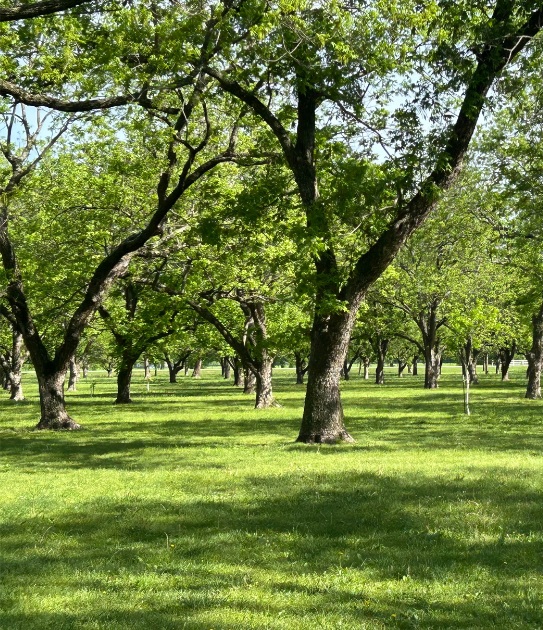
Hosted by Frazier Pecan Farm, Oklahoma State University Pecan Management, Tulsa County Extension, and the Oklahoma Pecan Growers Association
Join us for the Fall Pecan Field Day on Wednesday, September 25, from 9:30 a.m. to noon at Frazier’s Pecan Orchard, located at 15023 E 171st St S, Bixby, OK 74008. Check-in begins at 9:00 a.m., and the program will start promptly at 9:30 a.m. A complimentary lunch will be provided by AgCredit at the conclusion of the program.
Frazier’s Pecan Orchard had originally planned to host our annual meeting field day earlier this year, but rainy weather forced cancellation. We’re grateful to the Fraziers for graciously offering to host this Fall event instead.
Tentative Topics Include:
- Managing an older pecan planting
- Spray schedules
- Fertilization and leaf sampling
- Using clovers as cover crops
- Tree thinning vs. wisping
- Pecan weevil monitoring
- Disease updates for 2025
- Soil testing
- Crop thinning
- Drone use in orchard management
- Old cultivars: still productive and useful?
The field day is free of charge, but participants should pre-register by September 19 at 2025 Fall Pecan Field Day Form.
Make plans to attend and connect with other growers, researchers, and industry professionals for a morning full of practical insights and orchard management tips. Please bring a lawn chair and plan to stay for lunch, sponsored by AgCredit.
For more information contact becky.carroll@okstate.edu or (405) 744-6139.