

True Cheat
Common Name: True Cheat
Other Names: Cheat, Chess, Rye Brome
Species Name: Bromus secalinus L.
Plant Type: Grasses & Grass-like
Family Name: Poaceae
Examples of True Cheat Bromus secalinus L.
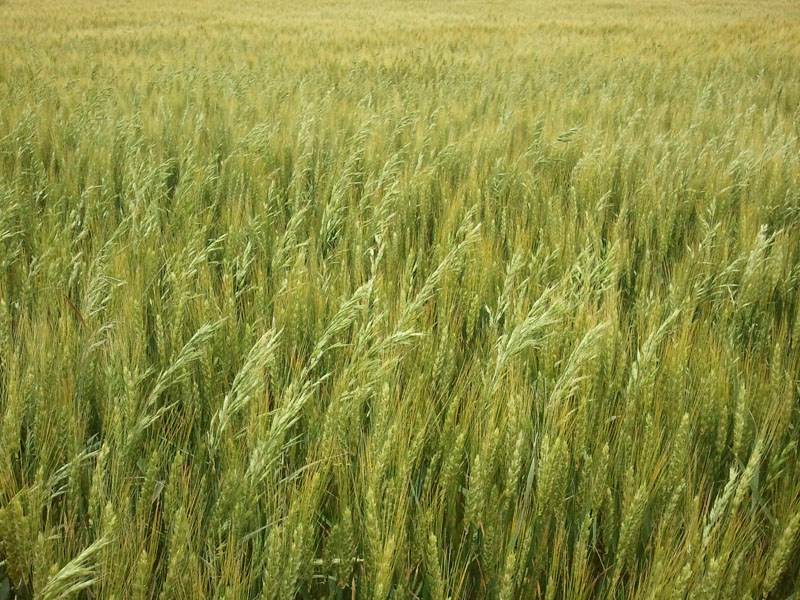
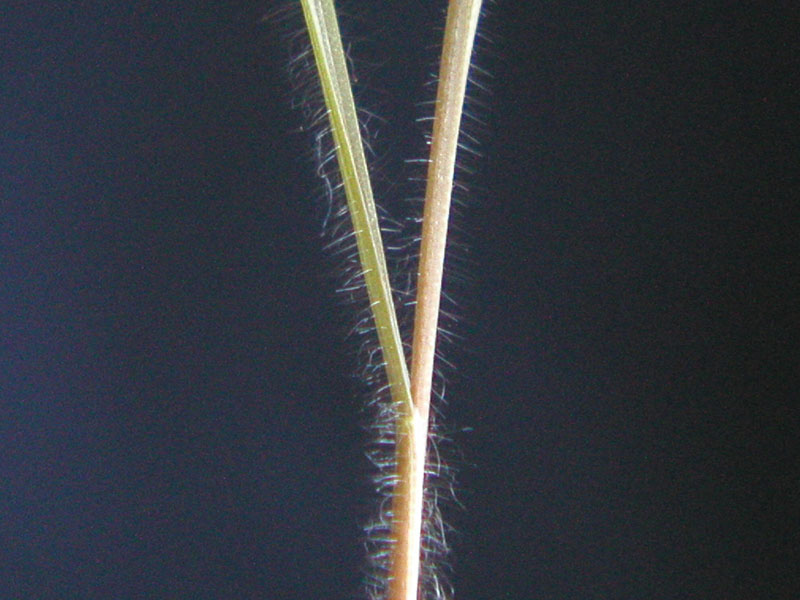
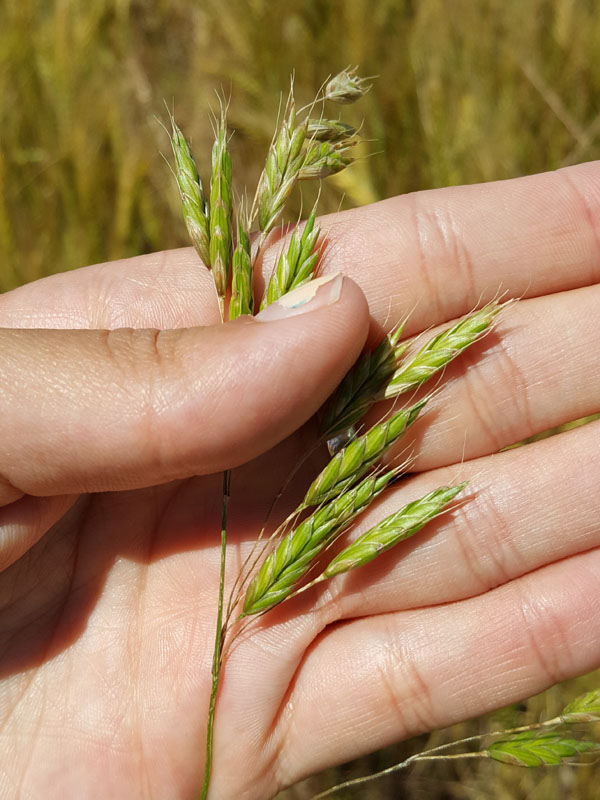
| Plant Facts | |
|---|---|
| Origin | Introduced, Europe |
| Duration | Annual |
| Season | Cool |
| Distribution in Oklahoma | Throughout the state, however is concentrated in the central part of Oklahoma |
ID Characteristics
-
Field Identification Characteristics
- The ligule and tiny auricles are typical of many of the bromes
- The spikes of cheat are smooth with shortened awns
- Margins of lemmas are deeply in-rolled, visible floret bases and rachilla internodes at maturity
-
Leaf and Stem Characteristics
- Sheath: Loose, smooth, flattened, slightly hairy on the margins
- Blade: Flat, sometimes folded, tapering to a point, may be rough to the touch
- Ligule: Membranous, fringed with hairs
- Culm: Flattened, may be upright or growing flat on the ground
-
Inflorescence Characteristics
- Inflorescence: Spike of 6-20 spiny, hairy burs; terminal, spikes sometimes partially enclosed in upper leaf
- Spikelet: Spikelets surrounded by bur; bur is round or oval, densely hairy, covered with 45-65 upward pointing spines
- Florets: 2, 1 sterile and 1 fertile; sterile floret is smaller than the fertile floret
- Lemmas: Narrow, pointed, smooth
- Awns: None; numerous spines
- Glumes: Unequal; first glume less than 1/3 length of spikelet, narrow, pointed; second glume longer, wider, pointed
| Habitat/Ecology | |
|---|---|
| Soil Type | It grows particularly well in sandy soils, as its name implies, but also occurs in heavier soils |
| Habitat | Around farmsteads, roads, waste places, cultivated fields, lawns and rangeland in poor conditions |
| Successional Stage | Mid |