

Rescuegrass
| Plant Profile | |
|---|---|
| FYUSE 3D Image | Common Name: Rescuegrass |
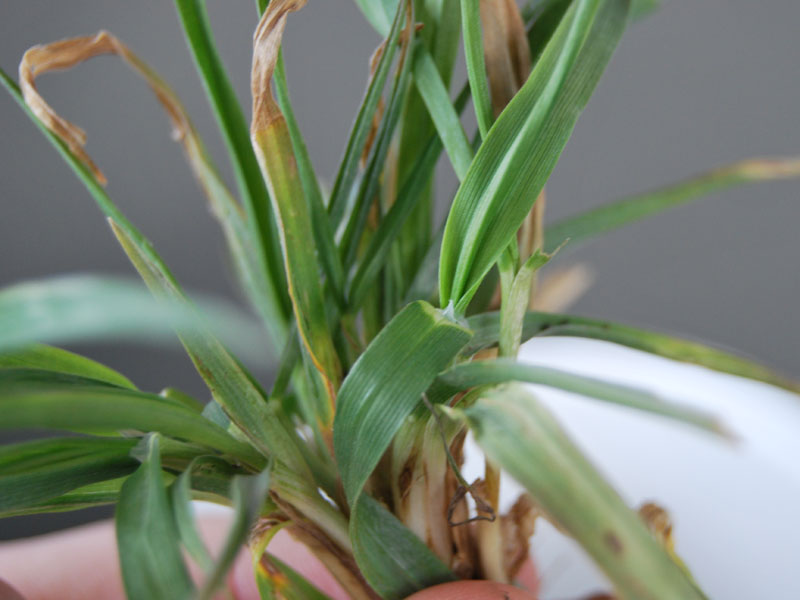
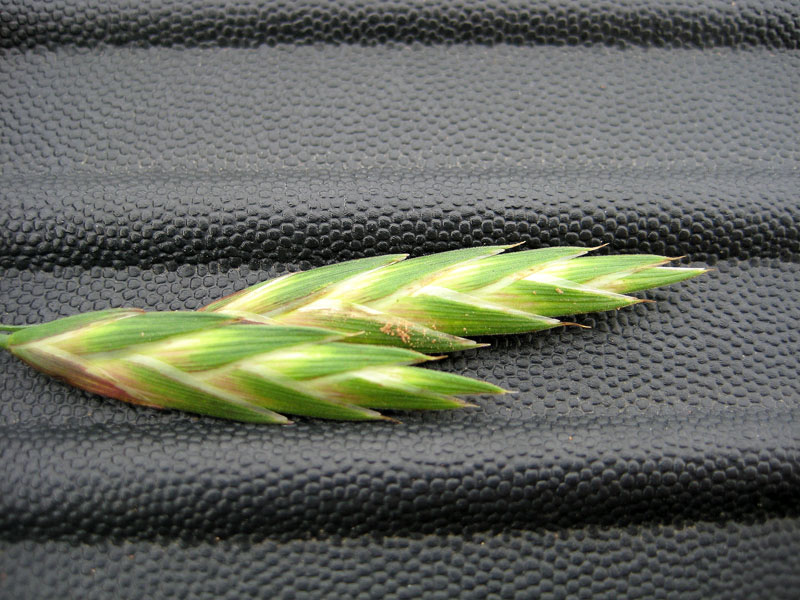
Examples of Rescuegrass Bromus catharticus

| Plant Facts | |
|---|---|
| Origin | South America |
| Duration | Annual or short-lived perrenial |
| Season | Cool |
| Distribution in the U.S. | Throughout most of the continental US; primarily in the southern half |
| Distribution in Oklahoma | Throughout the state |
ID Characteristics
-
Field Identification Characteristics
- Silvery, cellophane-like, jagged-edged ligule
- Flower spikelet is made up of 6-12 relatively large florets that are 12-20 millimeters long
- Florets have short awns at the tip and break apart at maturity
- Leaf is rolled in the bud, and flat, sparsely hairy
- Fused leaf sheaths
- Large, flat pale green seed heads
- Seed head lack awns
-
Leaf and Stem Characteristics
- Blade: Flat, sparsely hair
- Ligule: Membranous; jagged-edged, tall and rounded with hairs
- Sheath: Pilose; compressed and closed, forming a tube around the stem
- Plant Height: 10-60 centimeters
- Leaves: Cauline
-
Floral Characteristics
- Seed Head: Panicle
- Seed Fruit: Caryopsis, a dry single seed; the seed is tan, without hairs, and about half an inch in size
- Inflorescence Type: Panicles
- Florets Per Spikelet: 5-10
- Glumes: Unequal
| Habitat/Ecology | |
|---|---|
| Soil Type | Various; sand, loam, clay |
| Habitat | Pastures, golf courses, prairies, open fields, roadsides, waste areas, lawns, disturbed areas, right-of-ways, recreational fields and lawns |
| Successional Stage | Early, but invades all |