

Bermudagrass
| Plant Profile | |
|---|---|
| FYSUE 3d Image | Common Name: Bermudagrass |
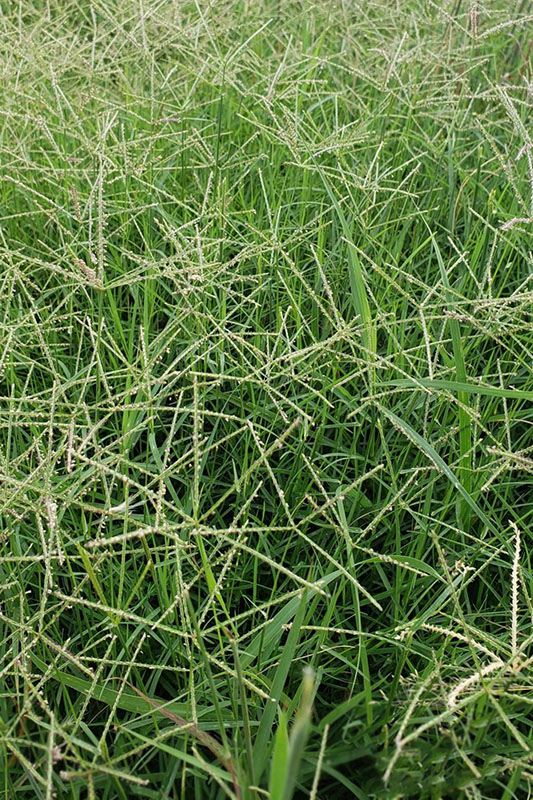
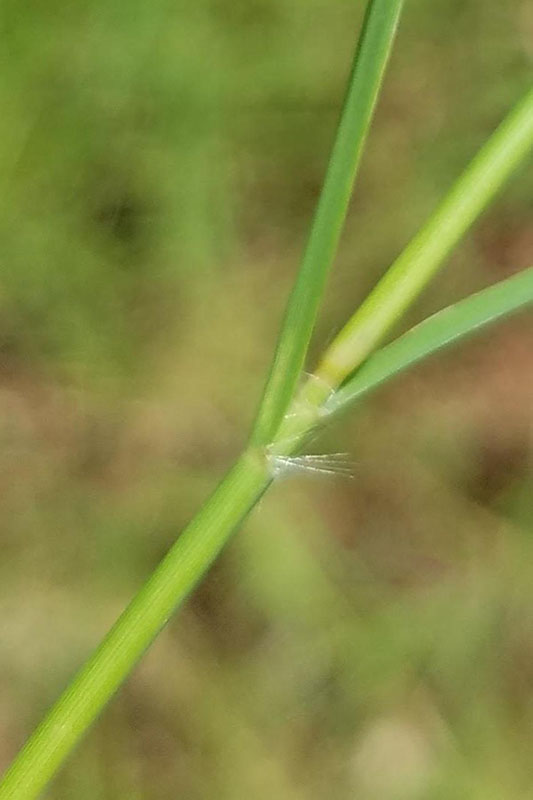
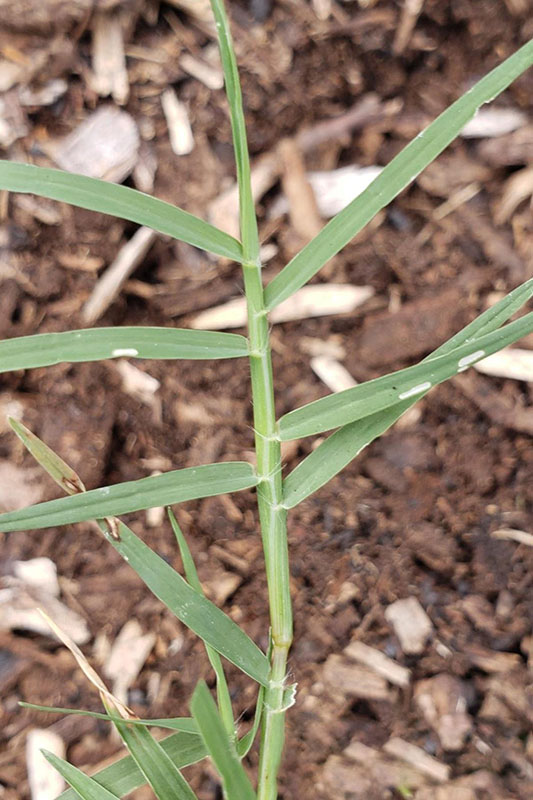
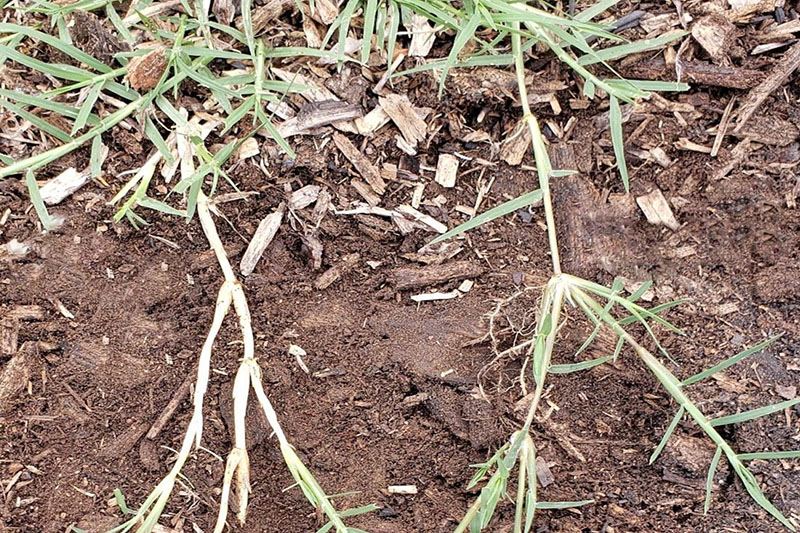
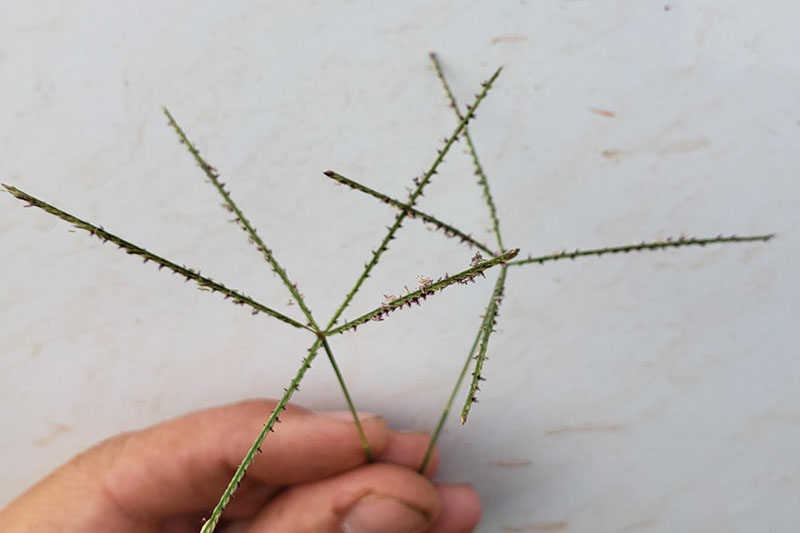
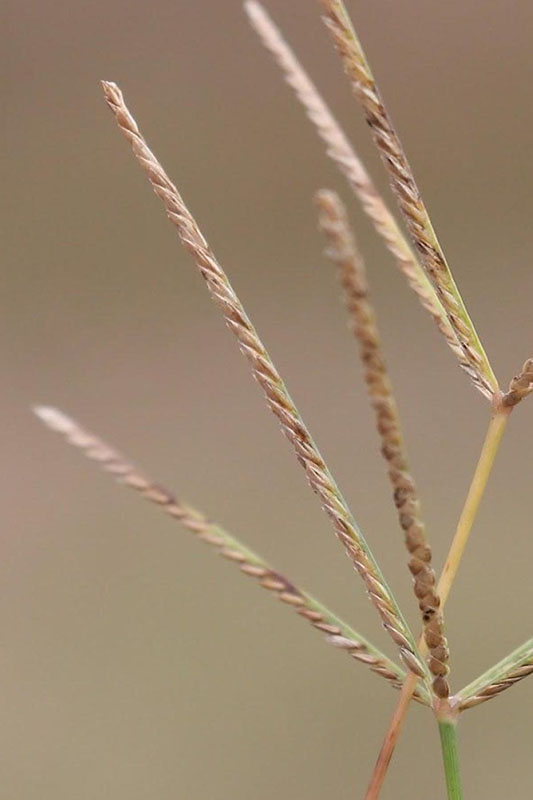
Examples of Bermudagrass Cynodon dactylon
| Plant Facts | |
|---|---|
| Origin | East Africa or India |
| Duration | Perennial |
| Season | Warm |
| Distribution in the U.S. | Southern U.S. |
| Distribution in Oklahoma | Throughout the state |
ID Characteristics
-
Field Identification Characteristics
Vegetative
- Leaves alternating on opposite side of stem
- Rhizomes (below-ground) & stolons (above-ground runners) have leaf scales
- Sod forming
- Hairy ligule
Floral
- Seedhead with 3-11 (usually 5) branches attached at the tip of stem; “windmill” branches
- Spikelets tiny with no awns attached directly to branch along one side
-
Leaf and Stem Characteristics
- Plant Height: 4-30 centimeters
- Ligule Type: Ciliate
- Sheath: Glabrous or pilose
- Leaves: Basal and cauline
-
Floral Characteristics
- Inflorescence Type: Digitate panicle with 1 sided, spicate branches
- Florets Per Spikelet: 1
- Glumes: Nearly equal
| Habitat/Ecology | |
|---|---|
| Soil Type | Variable; highest growth on sandy and silty soil |
| Habitat | Adapted to a variety of climatic and edaphic regimes, floodplain |
| Successional Stage | Early |
| Uses/Management | |
|---|---|
| Grazing | Highly preferred by cattle, good forage value. Used by other livestock, fair forage value for sheep. Used for pasture in spring and early summer. Forage quality decreases in summer. Anywhere from 8-12% protein content in the Oklahoma and Texas region. Aggressive response to nitrogen fertilization. |
| Wildlife | Not usually used by many species of wildlife. White-tailed deer will sometimes use it for forage in early spring. Larval host for many species of butterflies. Can decrease the value of wildlife habitat. |