

Cotton Comments | September 9, 2025
Current Situation
Cotton around the state looks good. Both irrigated and dryland have potential as we move into September. An open fall will be needed to help finish later planted cotton and warmer temps across the next few days should help with that. There are several things to keep in mind/be thinking about as we finish out the season that we will discuss in this newsletter.
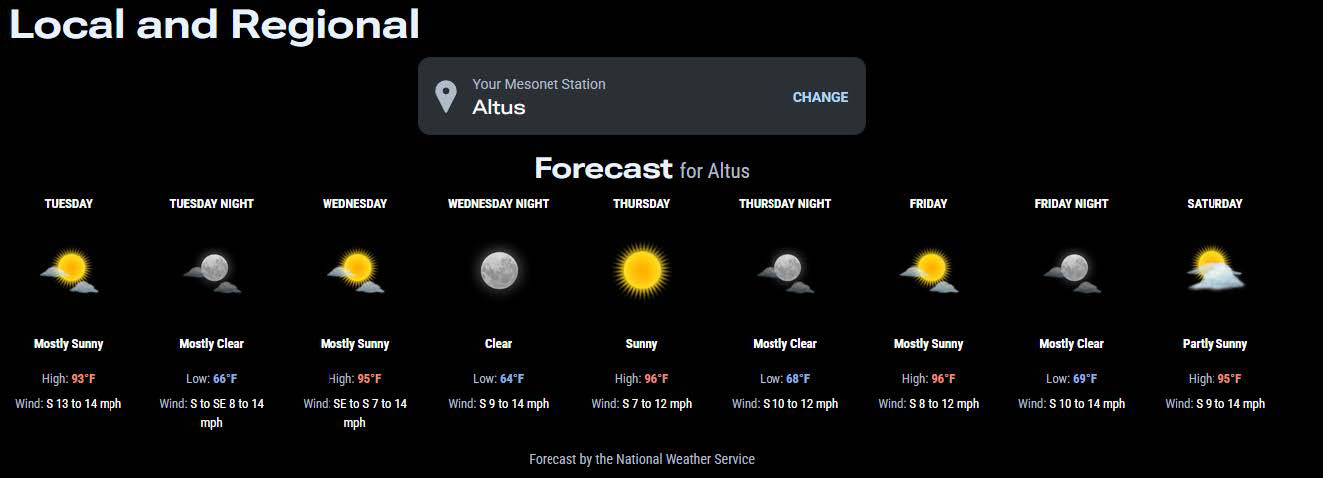
Weather Outlook
Warm temps across the next week or so should help us continue to accumulate DD60s for this crop and finish younger bolls. Looking further out, it looks like highs should stay in the mid 80s or higher which will definitely help finish later planted cotton.
Growing Degree Days (GDDs, DD60s)
I have received several questions in the past few weeks about where we are this year in relation to past years when it comes to DD60s. I included the past five growing seasons up this point in the year for reference. I have also included a guideline for cotton development based on DD60s. Mesonet.org has a great resource to check DD60s based on specific plant dates.
| Year (May 15-September 9) | DD60s |
|---|---|
| 2025 | 2450 |
| 2024 | 2665 |
| 2023 | 2561 |
| 2022 | 2714 |
| 2010 | 2330 |
| Growth Stage | Days | Heat Unit-DD60s |
|---|---|---|
| Plannting to Emergence | 4 to 9 | 50 to 60 |
| Emergence to First Square | 27 to 38 | 425 to 475 |
| Square to Flower | 20 to 25 | 300 to 350 |
| Planting to First Folwer | 60 to 70 | 775 to 850 |
| Flower to Open Boll | 45 to 65 | 850 to 90 |
| Planting to Harvest Ready | 130 to 160 | 2200 to 2600 |
Harvest Aid Decisions
As we near the end of the season and begin to make harvest aid decisions I wanted
to provide some refresher information on what to be looking for. There are several
ways to determine when it is time to apply harvest aids. The first is the open boll
method. When using this method, spray when 60 to 75% of harvestable bolls are open.
The second is the Nodes Above Cracked Boll (NACB) method. When using
this method, spray when the uppermost first position harvestable boll is 4 nodes about
the uppermost first position cracked boll (illustration below). To determine if a
boll is harvestable, slice the boll horizontally with a blade, and examine the seeds
for maturity. A mature boll will be difficult to slice, the seeds will have little
liquid or jelly, and it will have a dark seed coat (picture below). For more information
on defoliation, reference OSU Fact Sheet PSS-2182.
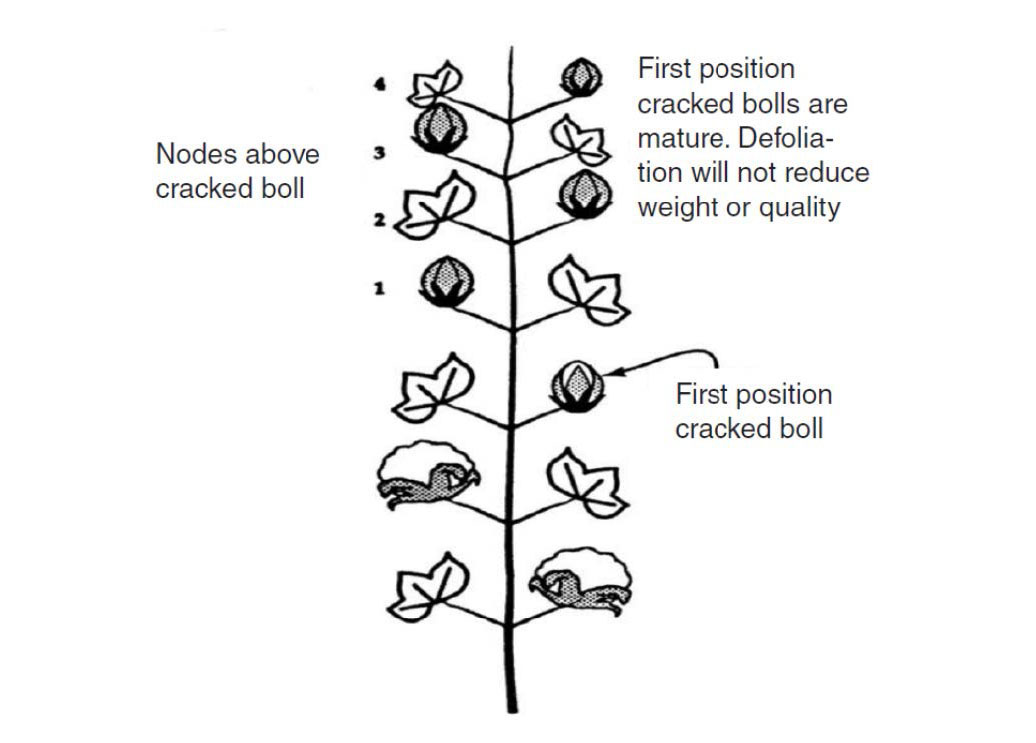
Figure 1. Determining nodes above crack doll. Source: Guthrie. D., Cothren, T., and Snipes, C. 1993, The Art and Science of Defoliation. Cotton Physiology Today Volume 4, No. 7, National Cotton Council, Cordova, TN.
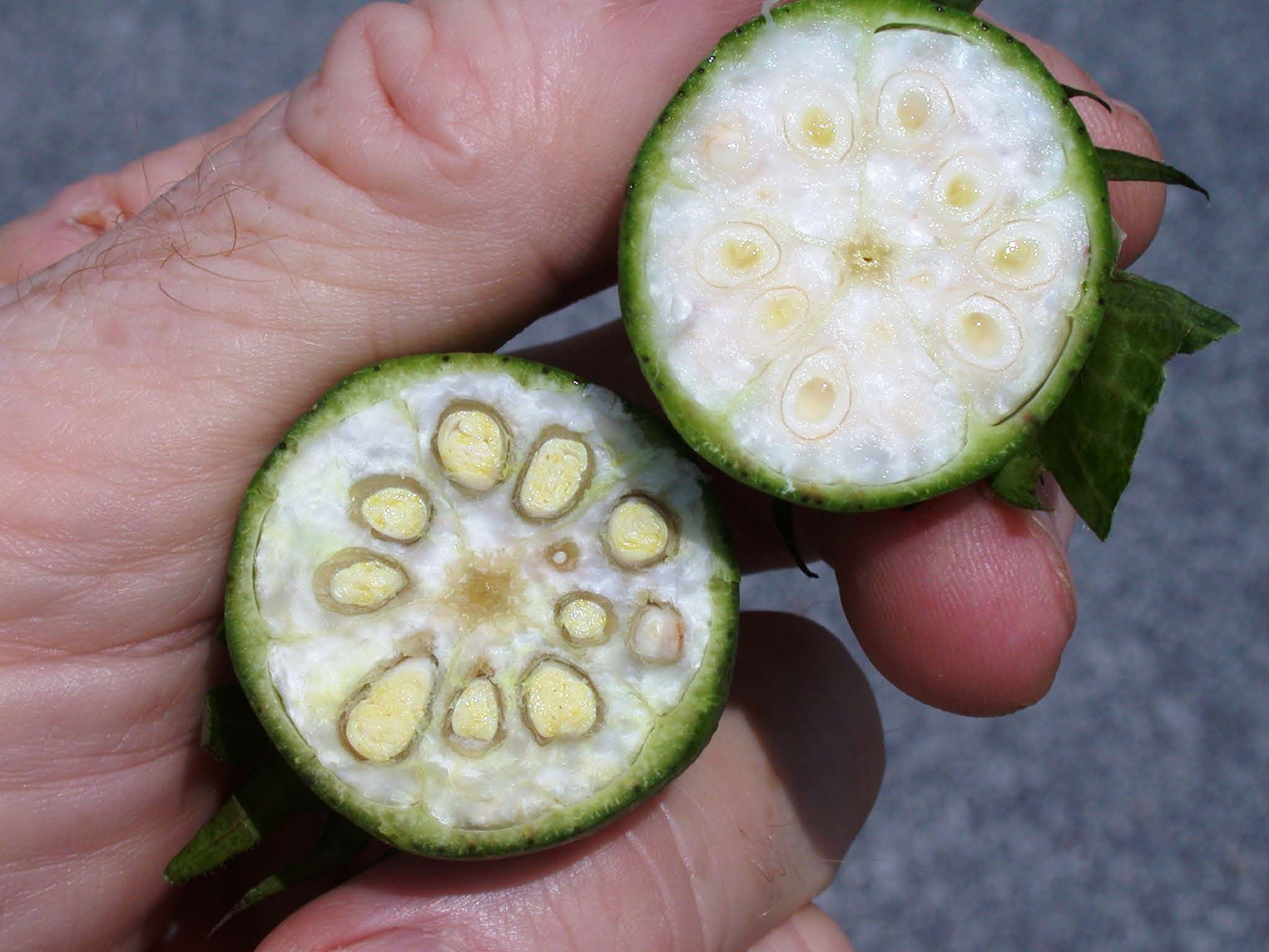
Mature seeds on left and immature seeds on right.
Photo Credit: University of Florida
Pest Considerations
As we move into the end of the season and bolls begin to crack, we need to keep an eye on aphids. After bolls crack, aphids can leave honeydew (sticky residue) on cotton which can end up on the lint. This can cause issues with harvesting, ginning, and quality. After cracked boll, the threshold for spraying aphids is when there are 10 present per leaf. Options for management include Sivanto Prime, Transform, Sefina and others.
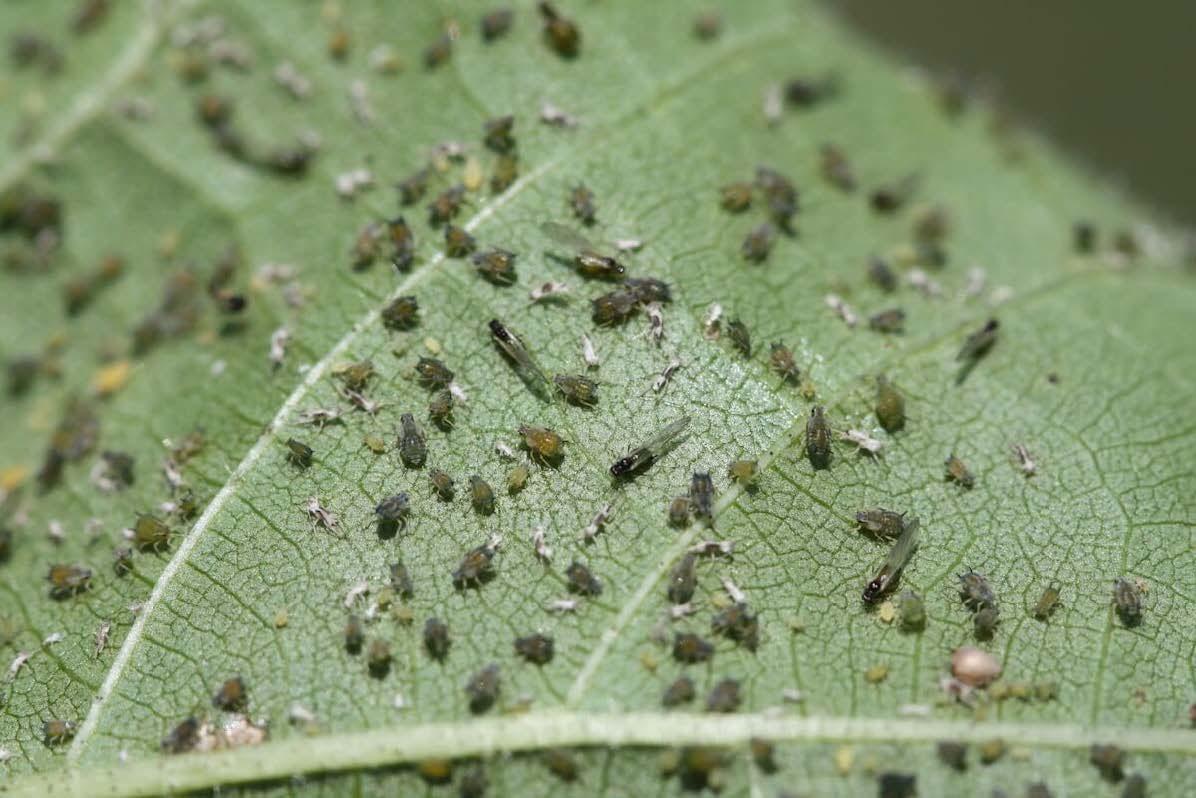
Aphids on bottom side of cotton leaf.
Photo credit: University of Tennessee