

Cotton Comments | May 30, 2025
Current Situation
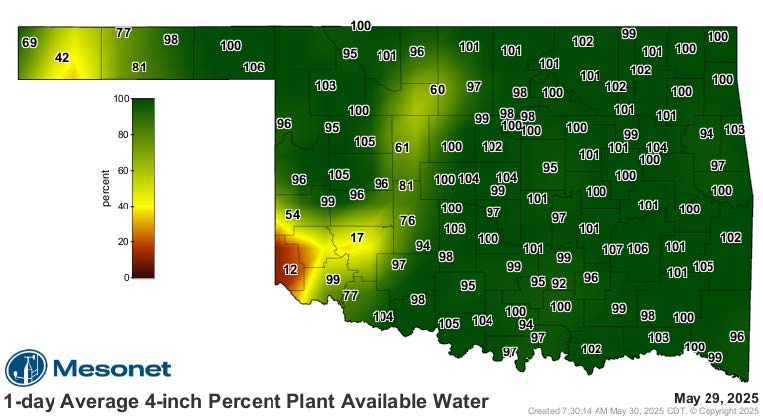
Much of the region saw rainfall following planting of the irrigated crop. Some acres of dryland have been planted as well. Good planting moisture and soil temperature have resulted in good stands for most of the area. Some acres did receive wind damage following strong winds over the weekend and some acres will be/ have been replanted. Moisture over the past few days should give this cotton a good start. Pest pressure is low so far but be looking for thrips in the coming weeks and as the wheat is being harvested. Weed pressure has been strong all spring. Palmer amaranth (pigweed, careless weed) are beginning to flush again following recent rains.
Glufosinate herbicides will be important this season to burn down pigweeds in-crop. Keys to successful glufosinate applications include: correct carrier volume (15-20 gallons per acre), the use of ammonium sulfate products in the tank-mix, high humidity (mornings tend to provide the correct conditions), small weed sizes (1-4 inch weeds), and correct nozzles (medium to coarse droplet size). Postemergence residual herbicides should also be considered when making a POST application to help keep weeds from coming up. These options include Dual Magnum, Outlook, Warrant and Zidua (Zidua must be applied through a directed spray, not broadcast).
Weather Update
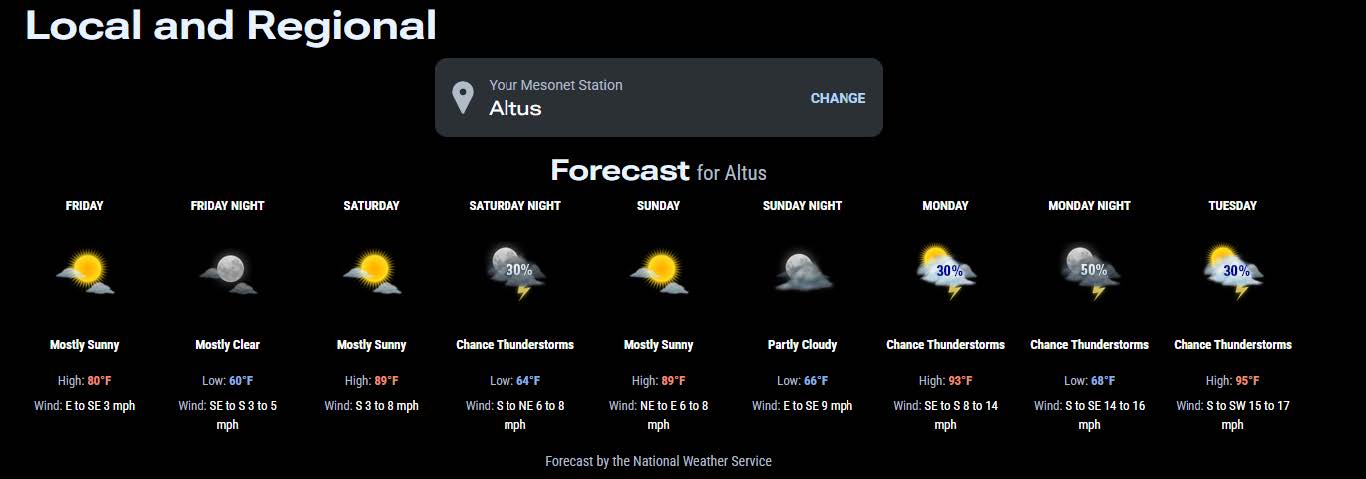
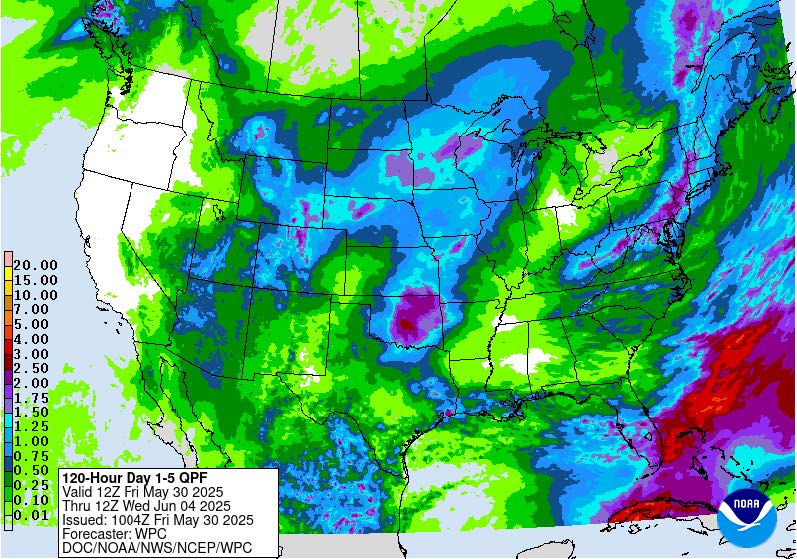
Good moisture has fallen over much of the cotton growing region. This will help give the cotton a good start. More moisture looks to be coming in the next few weeks and temperatures look to warm up as well, which will help the crop begin to grow.
Early Season Pest Considerations
Thrips are the biggest early-season pest concern for Oklahoma cotton production. Heavy thrips infestations can slow development for emerging plants and cause stand losses. Scouting fields from emergence to the five-leaf stage to monitor for thrips infestations is important to avoid losses. Be sure to monitor for thrips and damage caused by thrips (pictured below).
There are several options for thrips control currently available. Insecticidal seed treatments are a good way to get some early-season protection. AgLogic (aldicarb) is available for in-furrow applications at- plant. Over-the-top broadcast applications may be needed as well. Several options are available including acephate, Bidrin, and others. Thryvon cotton is a good tool for thrips control as well. If your cotton has the Thryvon trait be sure to continue scouting but control measures may not be justified.
| Crop Stage | Action Threshold |
|---|---|
| 1 true leaf | 1 thrips per plant |
| 2 true leaves | 2 thrips per plant |
| 3 true leaves | 3 thrips per plant |
| 4 true leaves | 4 thrips per plant |
| 5-7 true leaves | Treatment is rarely justified |
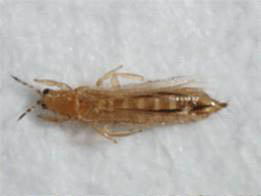
Photo credit: Texas A&M AgriLife Extension
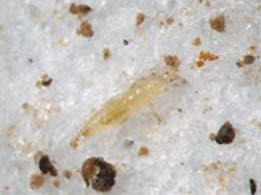
Photo credit: Texas A&M AgriLife Extension
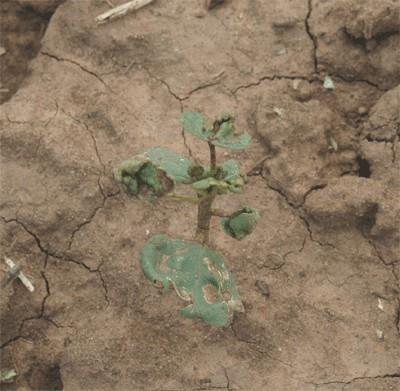
Photo credit: Texas A&M AgriLife Extension