

Cotton Comments | August 6, 2025
Current Situation
Most of the cotton in the state is in the peak-bloom stage with some dryland and late
planted irrigated just beginning to bloom in the last week to ten days. Widespread
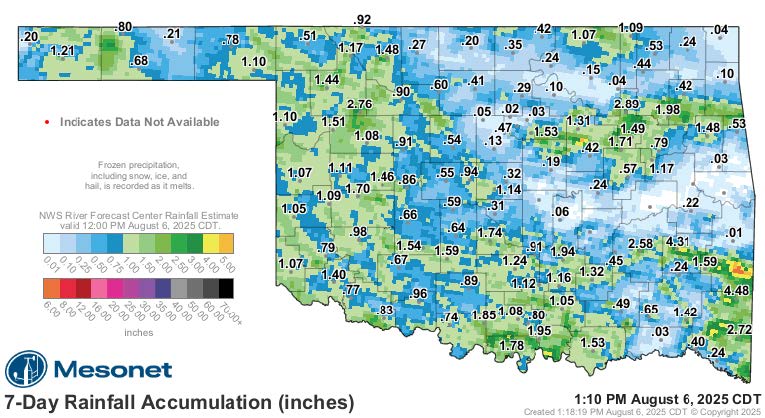
rainfall this past Sunday morning (August 3) gave some relief for irrigation and was
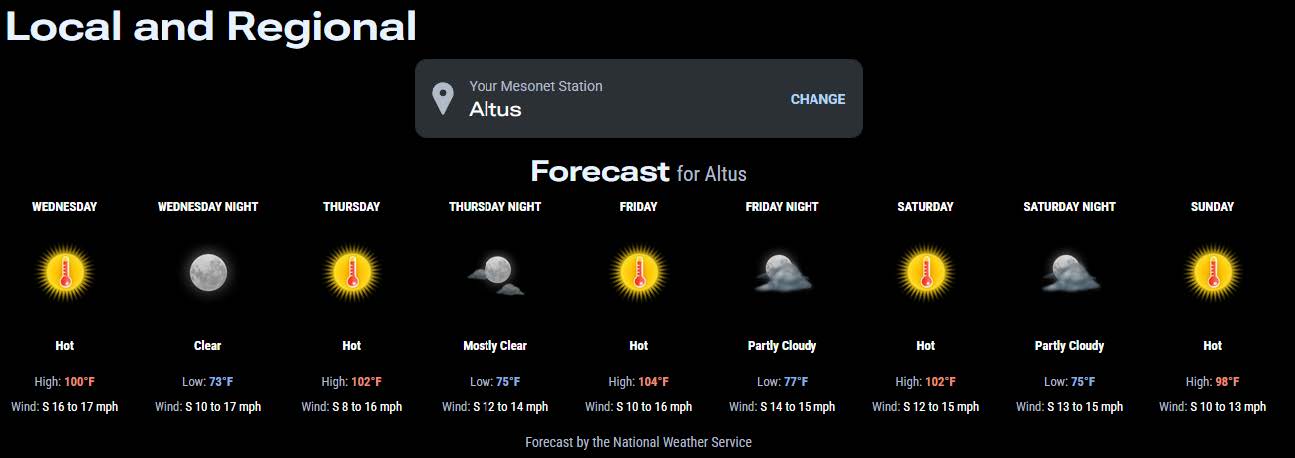
very beneficial to both irrigated and dryland crops. Forecast for the next few days
looks to be hot and windy followed by some lower highs early next week. The crop is
progressing well with a fair amount of good looking cotton. As we continue to set
and fill bolls, irrigation/rainfall will be needed to continue the development of
this crop.
Pest Situation
Stinkbugs are becoming an issue for cotton across the state. As bolls set, scouting is crucial to avoid excessive stinkbug damage. Current thresholds are 20% damaged bolls, although, in irrigated/high-input situations these thresholds may need to be lowered to avoid yield and quality losses. When scouting for stinkbugs, be sure to look in the inside of several bolls from different areas of the field for stained lint and internal warts on the bolls. If action is required, several options are available for stinkbug control including Bidrin, Acephate, and others. Some late planted cotton has been damaged by cotton fleahoppers in the past few weeks. Even though we are past first bloom, cotton can still be injured if infestations are severe enough. There are not any thresholds set for damage after bloom, therefore, if the amount of damage is unacceptable to the grower treatment applications may be necessary. Acephate, Transform, Sivanto Prime, and some others are labeled for fleahopper control. Just keep in mind the possibility of flaring some secondary pests, such as aphids and spider mites, when using a broad-spectrum insecticide.
As worms move out of corn and sorghum and into cotton it will be important to scout for worm damage as well. Feeding can be found in blooms or on bolls. In trials at the Southwest Research and Extension Center this year, extensive damage has been observed in non-BT cotton but has not been observed in two or three gene BT cotton. This is good news as it indicates our traits are still effective on these pests. Nevertheless, it is still important to scout and make sure failures are not occurring. If damage occurs, applications should be made when 6% or more of boll and/or squares are damaged. Options for worm control include Vanatcor, Besiege, Steward, and others.
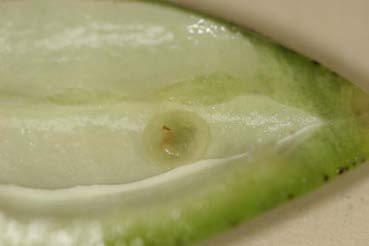
Internal wart. Photo credit: NC State University
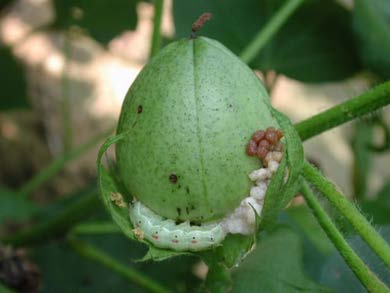
Cotton bollworm and damage. Photo Credit: Kansas State University
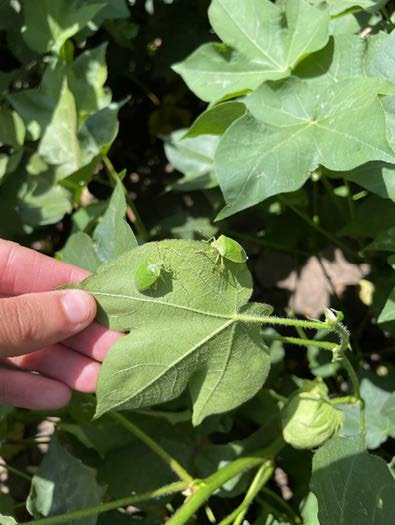
Green stinkbugs in cotton. Photo credit: Dr. JennyDudak, Oklahoma State University
Plant Growth Regulators (PGRs)
Plant growth regulators may be necessary this year. PGRs have been going out all season. With recent rainfall and favorable growing conditions cotton may begin to grow excessively and need a PGR application. There are several factors to consider when making PGR applications so attached is an OSU fact sheet on using PGRs in cotton PSS-2189.
| Factor | Considerations |
|---|---|
| Variety | Generally, early maturing varieties require a less aggressive PGR strategy than late-maturing varieties. However, the actual approach will be governed by many factors listed below. Most seed companies offer PGR guidelines for all their variety offerings. |
| Fruit Retention | Whether squares or bolls, fruit retention is the most effective plant growth regulator for cotton. Environmental conditions or insect feeding that result in fruit shed may necessitate earlier applications or increased rates. |
| Weather Forecast | If conditions favoring excessive vegetative growth are forecasted, a PGR application may be required or rates may need to be increased. The timing and rate should also consider variety and fruit retention. |
| Irrigation | Growth potential is greater in irrigated cotton, thus PGR applications to irrigated cotton are common. Applications in non-irrigated cotton are not as common but may be needed if favorable conditions (heat and moisture) persist, or if the crop experiences a large fruit shed. This is especially true for late-maturing varieties, which are commonly selected for dryland production. Rates in non-irrigated cotton are often lower to avoid premature cutout if a forecasted rain event deteriorates or precipitation totals are lower than predicted. |
| Nitrogen | If adequate or excessive fertility levels are present, whether residual or applied in-season, a more aggressive PGR approach may be required. Excessive nitrogen can result in rank vegetative growth, slow the initiation of fruiting and delay maturity. Excessive nitrogen in combination with optimum moisture conditions and warm temperatures can result in particularly vigorous vegetative growth. |