

Cotton Comments | April 7, 2025
Current Situation
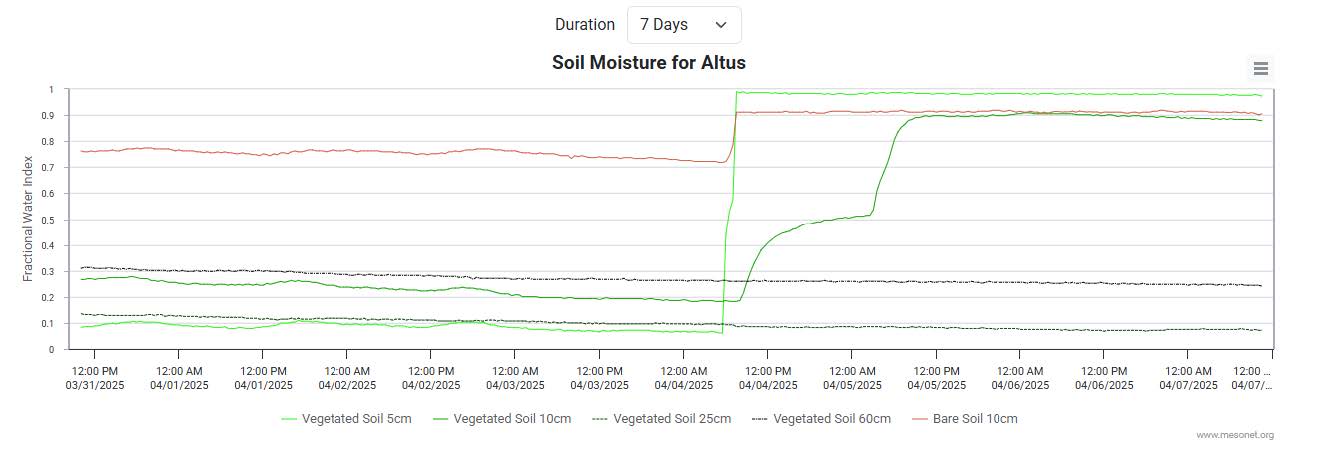
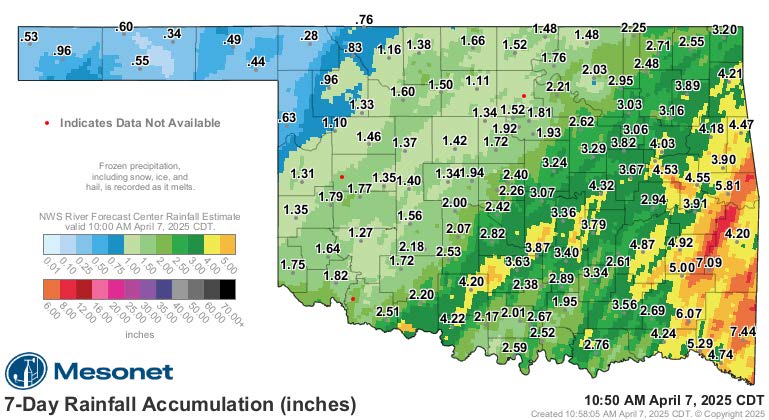
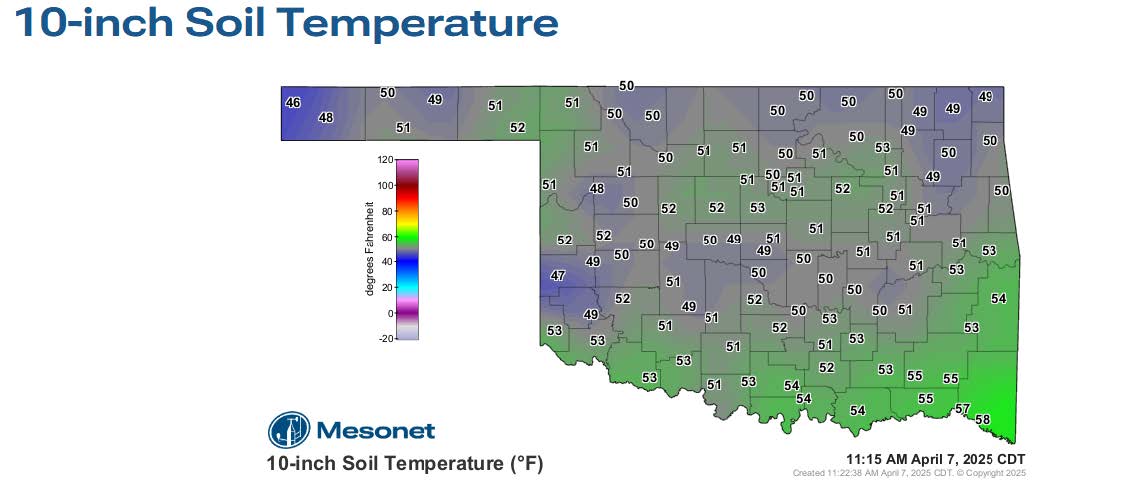
Rain fell across the state over the past weekend, and it was much needed. The most current drought monitor still has the cotton growing regions of the state in some level of drought. Wheat crops and early-planted corn will benefit from this rainfall and soil profiles will benefit as we near cotton planting. Soil moisture up to 10cm showed improvement following the most recent rain event.
U.S. Drought Monitor Oklahoma
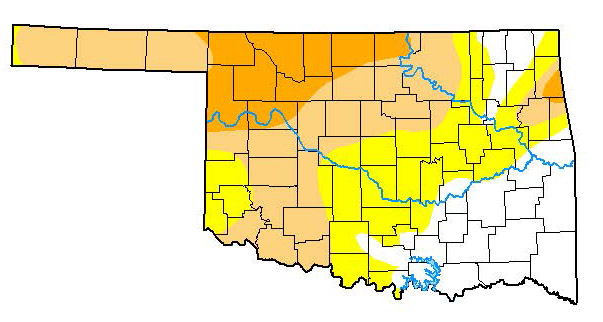
Figure 1a. April,1, 2025 (Released Thursday, Apr. 3, 2025) Valid 8 a.m. EDT
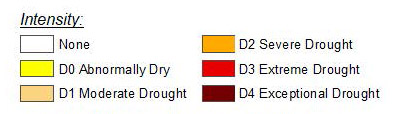
Figure 1b. The Drought Monitor focuses on broad-scale conditions. Local conditions may vary. For more information on the Drought Monitor, go to About U.S. Drought Monitor Webpage.
| Time | None | D0-D4 | D1-D4 | D2-D4 | D3-D4 | D4 |
|---|---|---|---|---|---|---|
| Current | 24.54 | 75.46 | 47.52 | 14.10 | 0.00 | 0.00 |
| Last Week 03-25-2025 |
23.05 | 76.95 | 47.52 | 14.10 | 0.00 | 0.00 |
| 3 Months Ago 12-31-2024 |
70.28 | 29.72 | 5.52 | 0.33 | 0.00 | 0.00 |
| Start of Calendar Year 01-07-2025 |
70.28 | 29.72 | 5.52 | 0.33 | 0.00 | 0.00 |
| Start of Water Year 10-01-2024 |
22.82 | 77.18 | 61.31 | 37.39 | 11.50 | 0.00 |
| One Year Ago 04-02-2024 |
62.14 | 37.86 | 8.47 | 0.00 | 0.00 | 0.00 |
Author: David Simeral Western Regional Climate Center
| Logo | Entity | |
|---|---|---|
 |
United States Department of Agriculture | |
 |
National Drought Mitigation Center Univeristy of Nebraska | |
 |
United States of America Department of Commerce Seal | |
 |
National Oceanic and Atmospheric Administration U.S. Department of Commerce |
Planting Considerations
Many factors need to be considered when determining when to plant cotton. Water and temperature are two of the main drivers in achieving a good cotton stand. While soil moisture can be variable around the state it is important to remember that planting in good moisture is essential for uniform germination. Temperature can be tricky to gauge. Although day-time temperatures may be in the 90s, if nighttime temperatures are falling into the 50s the growth of the plant can be slowed/delayed.
Optimal temperatures for cotton planting and early development are when the highs are at least in the low to mid 80s and the nighttime lows are in the 60s or higher. Optimum soil temperatures for cotton germination are when the 10 day 8-inch soil temperature average is 65 degrees Fahrenheit or higher. If planting in cooler temperatures be sure to contact your seed company to get cool-germ information. Also be sure to look at the forecast when planting to monitor temperatures for the days following planting. For more information on cotton planting considerations please refer to OSU Extension Fact Sheet PSS-2187.
Early-Season Pest Considerations
Many pests can impact our crops early-season. Being proactive to have a plan in place to manage these pests is the best plan of action. When doing this consider each farm individually as pest pressures can vary drastically from farm to farm. Weed pressure, disease presence, and neighboring crops vary on every farm.
When considering weed management, knowing which weeds cause the most issues on an individual farm will help determine the herbicide program. Soil-residual herbicides are key to any cotton weed management program. Many options are available for at-plant residual herbicides. The use of these herbicides will provide a few weeks of weed control to help the plant get started without weed competition. These herbicides need to be incorporated into the soil so it is best to plan these applications in front of a rain or use over-head sprinkler irrigation to move them into the soil. Most of these herbicides require between 0.5 and 1 inch of rainfall/irrigation to be properly incorporated. Postemergence soil residual herbicides are also key to making a weed management program successful. When we use them, we are able to "Overlay" or "Overlap" residuals to make sure we have a constant residual barrier.
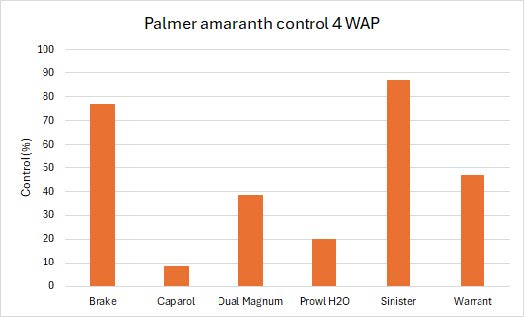
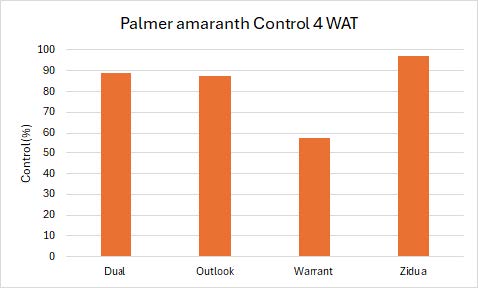
Postemergence residuals include Dual Magnum, Outlook, Warrant, and Zidua (applied on fertilizer or through hoods). Below is some data on residual herbicides conducted at the Southwest Research and Extension Center in 2024. It is important to note that Zidua cannot be sprayed over-the-top of cotton, it must be a directed application. These evaluations were conducted at 4 Weeks After Planting (WAP) and 4 Weeks After Treatment (WAT). If you would like more information on these herbicides feel free to contact Maxwell Smith with OSU Extension.
Preemergence (At-Plant) Soil Residual Herbicides
Postemergence (POST) Soil Residual Herbicides
Thrips can pose a risk to cotton plants from emergence to about the 5-leaf stage. Several options are available to manage these pests. Insecticide seed treatments are a great option to help manage thrips without making a sprayer application. Contact your seed company about these options. Thryvon cotton is a newer technology that provides early-season pest protection, especially thrips. Several companies have this option available so contact your seed company to learn what options are available for your farm. AgLogic (aldicarb) is available for in-furrow applications and can provide management of early season pests. Scouting for thrips is key when the cotton plant is getting established to avoid setbacks from damage. If thrips are causing damage to young plants several foliar options are available for control. If you would like more information on any of these options feel free to contact Maxwell Smith at OSU Extension.
Nematode presence in Oklahoma cotton fields has become more recognized. If you have these issues on your farm or suspect you have these issues, there are several management options available. Resistant varieties, in-furrow applications, and cropping systems options are available. It is important to know which species of nematode you are dealing with. If you have these issues or suspect you have these issues, contact Maxwell Smith or Maira Duffeck with OSU Extensions to discuss management options.
Upcoming Events
There is a Pre-season cotton CEU Meeting in Altus on April 17. For more information on this contact the Jackson County Extension Office.
Demo plots of Thryvon cotton and the use of AgLogic will be placed around Southwest Oklahoma this growing season. If you would like to look at these contact Maxwell Smith at OSU Extension.
For more information on Cotton management visit the OSU Cotton website.