

Cow-Calf Corner | November 2, 2026
Heifer Dynamics
Derrell S. Peel, Oklahoma State University Extension Livestock Marketing Specialist
Two components are necessary for cyclical herd rebuilding: decreased beef cow culling and increased heifer retention. Decreased cow culling is mostly about slowing herd liquidation and stabilizing cow inventory at the cyclical low. From that point, increased heifer retention provides the means to expand beef cow inventories. The first part of that process is in place. Beef cow culling dropped from a record high of 13.19 percent in 2022 to a projected record low of 7.35 percent in 2026. Current projections are for 2026 beef cow slaughter to be down over 48 percent from the 2022 levels.
However, the heifer retention component has been very slow to develop. Both the January and July 2026 Cattle reports showed a slight increase in beef replacement heifers…but not enough to suggest herd growth. In fact, four years of decreased cow culling means that more old cows in the herd will have to be replaced relatively soon. It appears that a minimum of 200,000 head of beef replacement heifers are likely to be needed in the next year just to maintain the current herd. The January data showed an increase of 41.7 thousand head and the July report showed a 100 thousand head increase in beef replacement heifers…neither is enough to indicate herd rebuilding.
Between the semi-annual inventory data, the best indication of heifer dynamics is weekly and monthly slaughter data. Through the first three quarters of 2026, heifer slaughter is down over 11 percent year over year; down more than twice as much as steer slaughter is down. Figure 1 shows that heifer slaughter is decreasing faster recently. The sharp drop in monthly heifer slaughter (orange line) in the last couple of months may be a stronger indication of heifer retention.
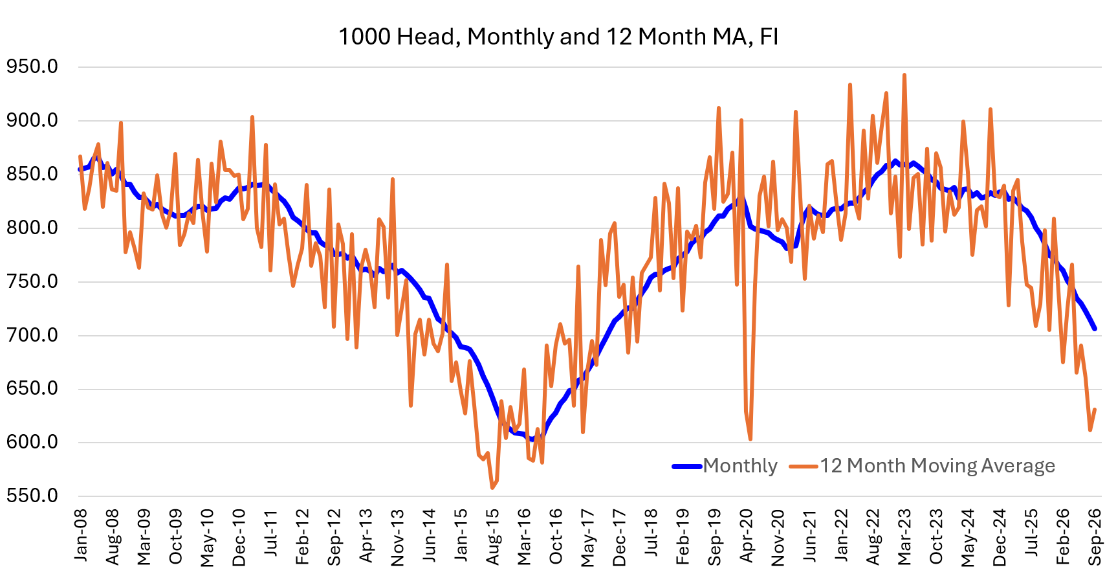
Figure 1. Heifer Slaughter
Both beef and dairy heifers are included in heifer slaughter data. The decrease in heifer slaughter could reflect heifer retention in either or both sectors. The July inventory data showed an increase in both beef and dairy replacement heifers. There are indications that both sectors are trying to retain replacement heifers, and both could be contributing to decreased heifer slaughter.
Additionally, heifer slaughter is down, in part, simply because there are less cattle being slaughtered and less cattle to slaughter. Figure 2 provides a relative comparison of heifer slaughter as a percent of total fed cattle slaughter. A decrease in this percentage indicates that heifer slaughter is decreasing faster than the general decrease in cattle slaughter. On average, heifer slaughter has been 37.8 percent of fed slaughter for the past twelve months, down from the peak of 40.1 percent in late 2023.
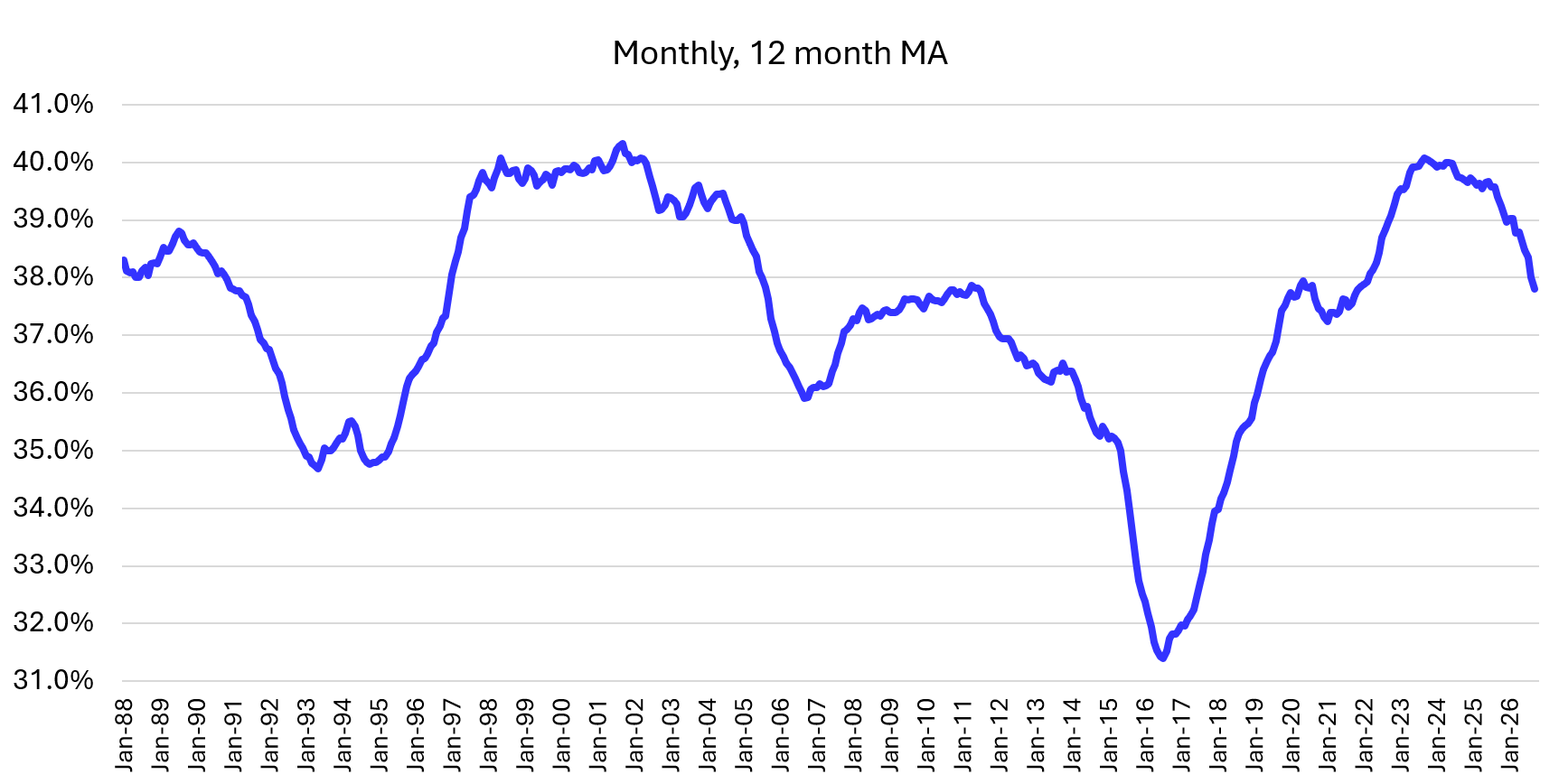
Figure 2. Heifer Slaughter as Precent of Fed Slaughter
All in all, there are indications of a modest increase in heifer retention in 2026, perhaps accelerating late in the year. Nevertheless, prospects for herd growth going into 2027 remain limited with growth beyond 2027 yet to be confirmed.
Mineral Supplementation in Cow-Calf Operations
Mark Z. Johnson, Oklahoma State University Extension Beef Cattle Breeding Specialist
Proper mineral and vitamin nutrition contributes to strong immune systems, improved reproductive performance, and calf weight gain. A properly balanced mineral program requires consideration of previous cow and calf mineral nutrition and current diet. Diets with mineral imbalances may cause poor animal performance, resulting in reduced profitability. Much like other nutritional requirements, mineral needs are dependent on forage mineral content, animal age, and stage of production. Knowing the animal’s requirement is only one component in evaluating an animal’s mineral status. Mineral needs also tend to be area specific and change with soil type, fertilization rates, rainfall, and other factors. An understanding of the need for minerals is necessary for making decisions about what and how much mineral to feed.
As a general rule, Oklahoma forages do not have severe mineral deficiencies or high levels of mineral antagonists compared to forages in many other states. Mineral antagonists are those minerals that, when in high enough amounts, may block the availability of other minerals to the animal. That being said, forage mineral concentration is extremely variable and site-specific mineral problems in Oklahoma have been identified.
Several general principles are evident relative to supplementing minerals to grazing beef cattle in Oklahoma. Almost all forage requires salt supplementation as a source of sodium. Summer native range and prairie hay require phosphorus supplementation. Most grasses common to Oklahoma are marginal to deficient in copper and zinc. It is apparent that good quality legume-based forages require very little if any mineral supplementation with the exception of zinc and salt, depending on the amount of this type of hay provided in the total diet. Lush growing forage and forage with a substantial legume component contains significantly higher concentrations of most minerals.
The most common methods of providing supplemental minerals to cattle is through a protein/energy supplement or through a free-choice mineral supplement. Animal to animal variation in intake is greatest with free-choice mineral supplements. Some cattle consume no supplement, while others may consume as much as four or five times the intended daily amount. This variation is reduced considerably when minerals are incorporated into protein/energy supplements that are provided on a regular basis.
Best Management Practices
When feeding free-choice mineral supplement, keep mineral available year-around. Over time, this tends to reduce variation in daily intake. Typical loose, free-choice mineral mixes are designed for a 3-ounce to 4-ounce daily consumption per head. Consumption rates naturally fluctuate with the season (e.g., dropping from ~4.5 oz/day in April down to ~2 oz/day by June). Mineral feeder placement is important. Place mineral feeders near water sources, shaded areas, or loafing spots to encourage consistent daily intake. Keep white salt separated from free-choice mineral blends. Anaplasmosis control can be administered through free-choice mineral containing Chlortetracycline (CTC). This requires a valid Veterinary Feed Directive (VFD) from your veterinarian. Fly control can also be administered using a feed-through Insect Growth Regulator (IGR) incorporated into the mineral mix, which passes through the digestive tract into fresh manure to disrupt the horn fly life cycle. It is possible to use CTC and IGR in the same mineral formulation. Producers can utilize forage and water testing (such as through Oklahoma State University's Soil, Water and Forage Analytical Laboratory) or OSU cattle calculator software to evaluate specific herd needs. More detailed information on Vitamin and Mineral supplementation can be found in the fact sheets re ferenced below.
References
Choosing the right mineral supplement can be challenging for beef cattle producers. Dr. Dave Lalman, OSU Extension beef cattle specialist, shares practical tips on how to determine exactly what to supplement when using mineral feeders and explains how forage quality, cattle requirements, and management goals influence mineral needs, and why a one-size-fits-all approach may not be effective on SunUpTV from January 24, 2026.
Using Pelvic Area Measurements to Select Heifers Can Minimize Calving Difficulty
Paul Beck, Oklahoma State University Extension Beef Cattle Specialist
Calving difficulty is a major issue for beef producers and is a primary problem that comes to mind when we are calving out first calf heifers. Difficulty during calving reduces calf vigor and sucking behavior. This in turn reduces colostrum intake and passive immune transfer resulting in increased calf death loss of 4 to 8-times greater than in uncomplicated births. Calving difficulty also has large impacts on the cow, reducing the cow’s milk production and subsequent reproduction performance and increases the potential of losing the cow.
The factors that affect calving difficulty include:
- Calf birth weight – which is related to the length of gestation and the sex of the calf.
- Body condition of the cow at calving – cows can be too thin or too fat as discussed in a previous Cow-Calf Corner article ‘Supplementing Bred Heifers and Calving Difficulty’
- Inadequacies in heifer development that leads to calving heifers that are too small.
- Pelvic area of the cow – the size of the birth canal limits the size of the calf that can be delivered.
- Abnormal presentation of the calf at birth.
The biggest cause of calving difficulty is a large calf at birth combined with cows with small birth canals. Pelvic area affects calving difficulty, independent of cow weight. Heifer weight and age and external dimensions of width of hooks and length of rump are not always good indicators of pelvic area or predictors of calving difficulty, so pelvic measurements are a good tool to cull heifer with a higher potential for calving difficulty.
Based on research from the University of Nebraska (Deutscher, 1987, G87-895 Pelvic Measurements for Reducing Calving Difficulty) Pelvic measurements obtained before breeding of a heifer at 12 months of age can be divided by a factor or 2.1 to estimate the calf birth weight the heifer can deliver as a 2-year old at calving without substantial difficulty (Table1). For instance, a 600-pound heifer with a 160 cm2 pelvic area is expected to be able to deliver a 76-pound calf when she calves as a 2-year-old (160/2.1 = 76-pound calf). Pelvic area increases with the growth of the heifer. Pelvic area can also be measured during pregnancy checks, for an 18-month old heifers we use a factor of 2.7. So, an 800-pound heifer with a pelvic area of 205 cm2 at 18 months of age would be expected to deliver the 76 pound calf as a 2-year old (205/2.7 = 76 pound calf). The following table from Deutscher’s 1987 University of Nebraska factsheet shows the pelvic area/birth weight ratios for differing heifer weights and ages to determine the calf birth weight she should be able to deliver.
| Time of Measurement | Heifer Ag, mo. | Heifer Wt, Ib | Pelvic Area cm2 | Pelvic Area/Birth Wt Ratio | Estimated Calf Birth Wt, Ib |
|---|---|---|---|---|---|
| Before breeding | 12-13 | 600 | 140 | 2.1 | 67 |
| Before breeding | 12-13 | 600 | 160 | 2.1 | 76 |
| Before breeding | 12-13 | 600 | 180 | 2.1 | 87 |
| Pregnancy exam | 18-19 | 800 | 180 | 2.7 | 67 |
| Pregnancy exam | 18-19 | 800 | 200 | 2.7 | 74 |
| Pregnancy exam | 18-19 | 800 | 220 | 2.7 | 82 |
From: Deutscher, 1987, G87-895 Pelvic Measurements for Reducing Calving Difficlty, G87-895 Pelvic Measurements for Reducing Calving Difficulty
Pelvic area is only part of the equation, to reduce calving difficulty in heifers we need to:
- Use proven calving ease bulls to breed heifers.
- Grow and develop heifers to targeted weights before calving.
- Calve heifers at a minimum body condition score of 5.
- Measure pelvic area and cull heifers with abnormally small pelvic areas.
Dr. Dan Stein Extension Beef Cattle Reproduction Specialist from the OSU Department of Animal and Food Sciences discussed ‘Strategies to Consider when Implementing a Heifer Development Program’ on a Rancher’s Thursday Lunchtime Webinar from December 21, 2023.
Resources
- D. Stein. Strategies to Consider when Implementing a Heifer Development Program. Rancher’s Thursday Lunchtime Webinar Series.
- G. Deutscher. Pelvic Measurements for Reducing Calving Difficulty. University of Nebraska Lincoln Factsheet G87-895.
- D. Patterson and W. Herring. Pelvic Measurements and Calving Difficulty. University of Missouri Extension Publication no. G2017.
OSU Livestock and Range Field Day November 5
Paul Beck, Oklahoma State University Extension Beef Cattle Nutrition Specialist
Oklahoma State University will host the 2026 Livestock and Range Field Day on Thursday, November 5, from 9 a.m. to 2 p.m. at the OSU Range Cow Research Center – North Range, located three miles north of Highway 51 on Highway 86, near Orlando, Oklahoma.
This field day will feature updates from OSU faculty, Extension specialists, and graduate students on current research and practical management strategies to improve the efficiency and profitability of beef cattle and forage production.
With hay supplies and feeding costs remaining important concerns for cattle producers, David Lalman and Madilyn Brummer will discuss reducing hay waste, while Marty New will revisit hay storage practices. Brian Pugh will review 30 years of research and observations on stockpiling bermudagrass for fall and winter grazing.
Other presentations will address tracking free-choice liquid supplement consumption, managing livestock grazing distribution across pastures, and recognizing pasture mealybug problems. Jonathan Cammack will provide an update on New World screwworm, an emerging concern for the U.S. livestock industry.
David Lalman and graduate students will also discuss controlling costs versus capturing value in defining cow efficiency. Paul Beck and Cody Gruber will present research evaluating the effects of summer cover crop grazing on subsequent winter wheat production.
The field day offers producers an opportunity to learn about ongoing OSU research and visit with faculty, specialists, and graduate students working on problems facing Oklahoma livestock producers.
For additional information, contact the OSU Field and Research Service Unit at (405) 744-9607 or agfielddays@okstate.edu.