

Cow-Calf Corner | August 10, 2026
Cattle and Beef Market Summer Struggles
Derrell S. Peel, Oklahoma State University Extension Livestock Marketing Specialist
Cattle and beef markets suffered through a significant correction in July. Led by Live and Feeder futures, feeder and fed cattle markets were dragged lower through July; with USDA news of planned opening of the Mexican border adding additional pressure at the end of the month. Cattle markets are attempting to recover in August but the struggles continue with extended summer heat causing deterioration of pasture conditions and limiting summer activities.
Widespread drought earlier in the year moderated significantly into July. Figure 1 and 2 shows that, compared to the peak drought level in April, conditions have improved, especially in the southeast and Mississippi delta. However, significant drought remains in much of the Great Plains and the West and remains a threat in numerous other regions. Average U.S. drought conditions were most improved by late July and have begun to deteriorate again with widespread extreme temperatures the past two to three weeks.
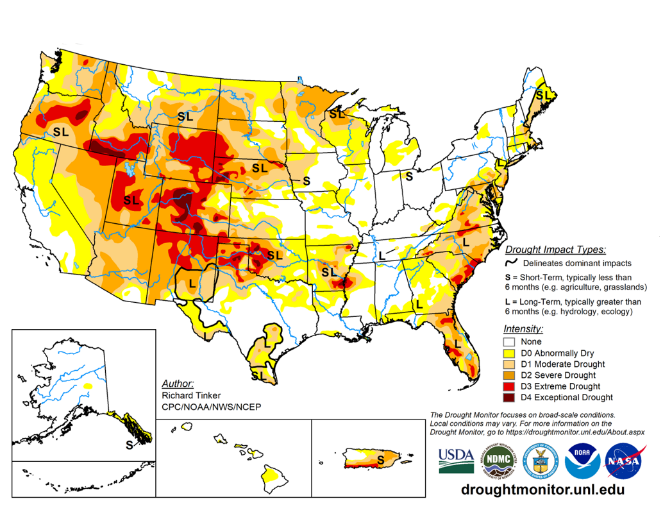 Figure 1. U.S. Drought Monitor - August 4, 2026 (Released Thursday, Aug. 6 2026) Valid 8 a.m. EDT
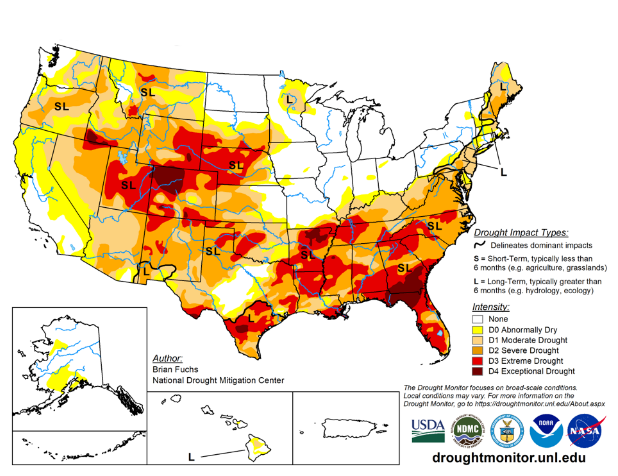
Figure 2. U.S. Drought Monitor - April 21, 2026 (Released Thursday, April 23, 2026) Valid 8 a.m. EDT
Generally matching the drought maps, U.S. pasture and range conditions improved through June and have deteriorated since. The latest reported pasture and range conditions were 46 percent in poor and very poor condition for the country, well above the five-year average of 37 percent. (Figure 3). The worst range conditions are reported in the Great Plains region from Kansas north and including the plains areas of Colorado, Wyoming and Montana where 53 percent of range and pastures are in poor to very poor condition compared to a five-year average of 31 percent. The western region of the country has current conditions at about 40 percent poor and very poor, close to average for this time of year; and the Southern Plains also has conditions about average with roughly 36 percent in poor to very poor condition. The Southeast region showed the most improvement early in the year with the percentage of poor to very poor pasture conditions dropping from 36 percent in May to a low of 21 percent in late July but have increased in the most recent weekly data.
The latest drought monitor and August weather outlook point to hotter and drier-than-normal conditions. In this Mesonet Weather Report, state climatologist Gary McManus discusses the latest drought conditions along with the August temperature and precipitation outlooks on SunUpTV from August 8, 2026.
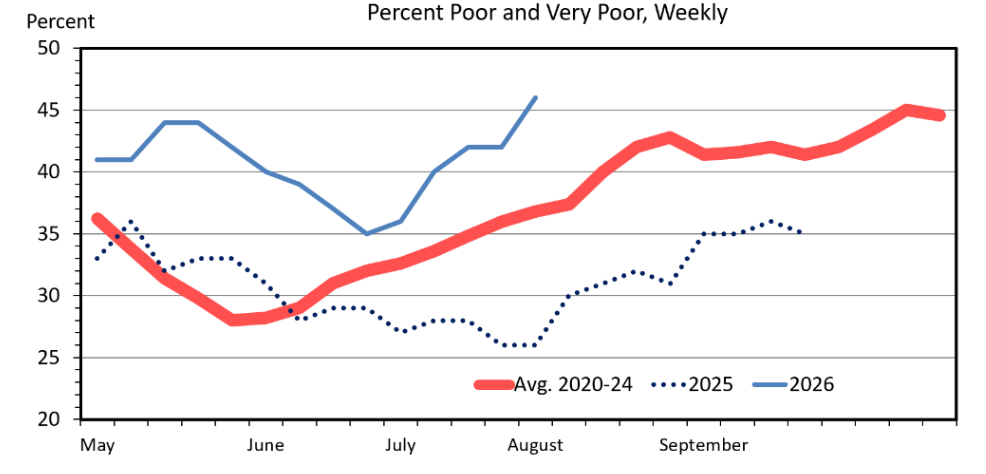 Figure 3. U.S. Range and Pasture Condition
Hot summer temperatures have also taken a seasonal toll on beef demand after the Independence Day holiday. Choice boxed beef prices have decreased through the summer doldrums matching one year ago in typical seasonal changes (Figure 4). Wholesale beef values have turned slightly higher in the past week with sputtering attempts at a last kick higher for Labor Day demand. Prolonged triple digit heat in many regions is making that more difficult. After a brief August boost, average boxed beef prices typically decrease to the end of the year although tenderloin and ribeye prices move seasonally higher to the end of the year. Strong boxed beef prices in the second half of 2025 may be hard to match this year, even with good demand.
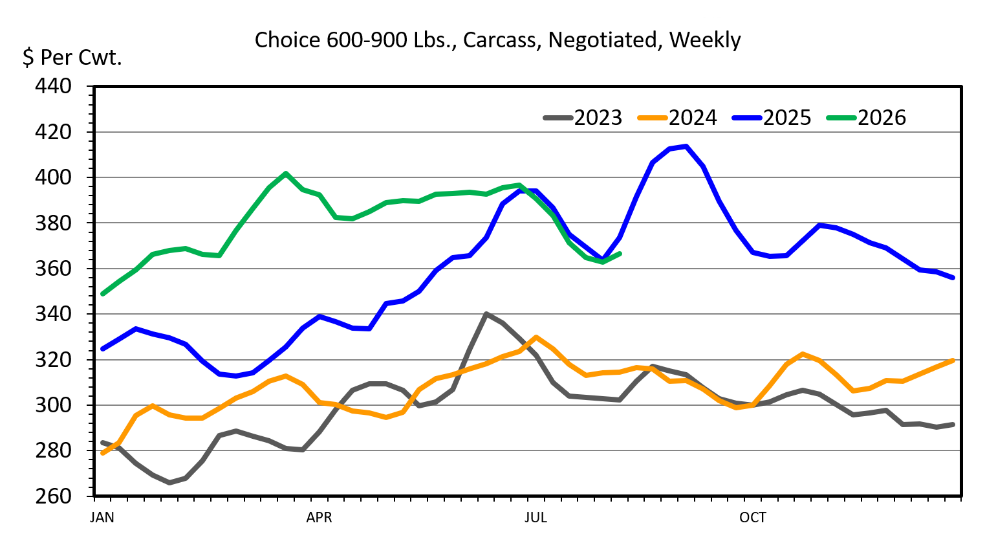 Figure 4. Boxed Beef Cutout Value
Cattle and beef markets are expected to continue recovering from the summer correction, but the persistent summer doldrums may make it a slow grind for the next few weeks.
Amy Hagerman, OSU Extension agricultural policy specialist, provides a drought assistance update and discusses details on program changes affecting row crop and forage producers on SunUpTV from August 8, 2026.
Consumer Demand for Beef
Mark Z. Johnson, Oklahoma State University Extension Beef Cattle Breeding Specialist
The past several years of lower cow inventories, fewer fed cattle, higher values of live cattle and profitability across the sectors of beef production, and particularly, high retail beef prices lead many of us to ask: “Is there a price point at which consumers are no longer willing and able to enjoy beef?”
As of now, beef demand remains exceptionally resilient and strong. According to the USDA Economic Research Service, wholesale beef prices were 19.7% higher in March 2026 than in March 2025 and are predicted to increase by 7.8% in 2026. Still consumers continue choosing beef. In fact, despite those higher prices, consumers increased both their spending and purchase volume during that same period with beef sales outpacing competing proteins like chicken and pork.
According to consumer survey data:
- The majority of U.S. beef purchasing decisions are based on taste and eating satisfaction. Increasingly, nutritional benefits and health play a role in these decisions, which is also working to beef’s advantage.
- Over the past five years, the willingness of consumers to pay for beef at retail has increased faster than inflation. For example, in 2020 consumers were willing to pay $7.26/pound for ground beef at retail. This price point of their willingness to pay increased to $9.18/pound in 2025.
- Since 2020, the percentage of consumers who regularly consume animal proteins has increased. Currently more than 85% of Americans identify as meat eaters, while the share of consumers identifying a vegetarian or vegan has declined from 14% to 7%.
- Oklahoma is one of the states with the highest percentage of consumers who self-declare as regularly consuming meat.
- As income increases consumers are more willing to pay for beef.
- GLP-1 users are less sensitive to the price of beef.
- On average, consumers in the U.S. work about 13 minutes to pay for one pound of retail beef. For comparison, U.S. citizens work about 100 days each year to pay their annual federal, state and local taxes.
Consumer demand is critically important to the price of beef as well as live cattle of all types. In spite of historically low inventories of live cattle, a higher percentage of the U.S. weekly harvest mix is reaching the premium quality grades (Prime and upper two-thirds of Choice) than ever before. Consumers have responded favorably to improving beef quality. Greater supply of marbling-rich beef has allowed more consumers to try the premium quality product. Consumers like it and are willing to spend more to enjoy it. The phenomenon has increased demand across the entire beef industry.
References
- Meat Demand Monitor - February 2020-December 2025 Summary Report
- Meat Demand
- U.S. Department of Agriculture
- Increased Beef Carcass Quality. Mark Z. Johnson, Oklahoma State University Extension Beef Cattle Breeding Specialist. April 6, 2026 Edition of the Cow-Calf Corner Newsletter.
Blue-Green Algae
Barry Whitworth, DVM, Oklahoma State University Senior Extension Specialist
According to the Mesonet Ticker, Gary McManus writes that the Climate Prediction Center placed Oklahoma in the dreaded “rapid onset of drought risk” area. He also expects temperatures to be above normal for the next few weeks. With the very hot and dry weather occurring across parts of Oklahoma, livestock producers should be closely monitoring their ponds for blue-green algae issues.
Blue-green algae is not really an algae but a bacterium which is referred to as cyanobacterium. The most common species found in the Midwest are Microcystis, Oscillatoria, and Anabaena. The bacterium is found in most bodies of water; however, they become a problem during times of rapid growth which is fueled by high nitrogen and phosphorus content and warm sunny weather. Most issues with cyanobacterium occur in summer and fall months, but high toxin release may occur anytime of the year. Cases have been found in Oklahoma as early as March.
The overgrowth of the bacterium leads to the death of the organism which then floats to the top and forms a “scum” on top of the water. The scum appears blue-green in color but the color of the scum can vary. These “scum” layers can be moved about the pond by wind movement. Sometimes this causes certain areas in the pond to be concentrated with the toxic levels of dead bacterium. Rain or wind disturbance can break up the “scum” and reduce the chance of toxicity, but this is not always the case.
All livestock, pets, wild animals, and humans are susceptible to blue-green algae toxicity. The amount of water consumed needed to cause toxicity depends on the species of animal, concentration of the toxins in the water, and how much water is ingested. Ingestion of 1 quart of highly concentrated water is lethal to cattle.
Most producers do not recognize a problem with blue-green algae until they find dead livestock in the pond or in close proximity to a body of water. Most cattle that ingest contaminated water will die, but occasionally producers may find sick cattle. The clinical signs of blue-green algae toxicity will depend on the type of toxin ingested. The two types of toxins associated with blue-green algae are neurotoxin (affect the nervous system) and hepatotoxin (affect the liver). If seen early, cattle affected by a neurotoxin will show muscle tremors, reluctance to move, and breathing problems. This will lead to convulsions and death. If cattle consume water with liver toxin bacteria, they will have weakness, pale mucous membranes, gastroenteritis, nervous signs, and death. Animals that survive will lose weight and become poor doers. These survivors may also develop photosensitization. Animals with photosensitization are prone to sunburns on light colored skin areas.
Typically, diagnosis is based upon exposure to blue-green algae along with clinical signs or sudden death. If a producer suspects blue-green algae is the cause of death in cattle, he/she should immediately collect a water sample where large amounts of the algae are present. The reason for quickly obtaining a sample is that the toxin could be dispersed by the wind. Then the producer should contact a veterinarian to conduct a necropsy. A necropsy will rule out other causes of death. A veterinarian will most likely take tissue samples for more testing and rumen contents may be taken to examine for presence of blue-green algae. The water sample will need to be submitted for analysis. More information for guidance about necropsy or water sampling may be found at the Oklahoma Animal Disease Diagnostic Laboratory at (405) 744-6623 or view online.
Since there is no known antidote, treatment is usually unrewarding. For this reason, producers need to focus on conditions that favor the development of blue-green algae. Algae bloom in sunny, warm weather. Excessive blooms are associated with ponds located in areas that catch runoff water high in nutrients. Producers should be inspecting ponds anytime these conditions are present. They should be prepared to provide alternative water sources in times of crisis.
Blue-green algae toxicity is not a new problem for Oklahoma livestock. When weather conditions favor algae build up, producers should closely monitor their ponds for signs of blue-green “scum” on the water. If found, producers need to take action to reduce the problem. An excellent fact sheet is available from Oklahoma State University Extension Service on blue-green algae and how to best manage the problem. If a producer has questions about blue-green algae, they should contact their local veterinarian or their Oklahoma State University County Extension Agriculture Educator.
References
- Meehan, M., A., Galbreath, J., and Mostrom, M. (2026). Cyanobacteria (blue-green algae) Poisoning [Fact Sheet]. North Dakota State University Extension.
- Morgan SE. Water quality for cattle. Veterinary Clinics of North America Food Animal Practice. 2011;27(2):285
- Newcomer B. W. (2022). Toxicologic Insults to the Bovine Liver. The Veterinary clinics of North America. Food animal practice, 38(3), 421–432.
- Osweiler, G. D., Carson, T. L., Buck, W. B., Van Gelder, G. A. (1985). Toxic Blue-Green Algae. Clinical and Diagnostic Veterinary Toxicology (3rded) (pp-451-452). Kendall/Hunt.
Prussic Acid or Nitrates?
Paul Beck, Oklahoma State University Extension Beef Cattle Nutrition Specialist
Drought, high temperatures, and other stresses can create forage toxicity concerns for cattle producers. Two of the most commonly discussed problems I am asked about this time of year are prussic acid and nitrate toxicity. They can occur in some of the same forage species and produce similar symptoms in affected cattle , but they are not the same problem and require different management.
Sorghums, sorghum-sudan hybrids, sudangrass, Johnsongrass, and corn can all be associated with these toxicities. Prussic acid is primarily a concern with plants in the sorghum family, while nitrate accumulation can occur in a much wider range of grasses, crops, and weeds. Pigweed, Johnsongrass, corn, sorghums, and Sudan grasses are among the more common nitrate accumulators. Pearl millet and corn do not produce prussic acid but can accumulate nitrates.
The two toxins interfere with oxygen delivery in different ways. Prussic acid, or cyanide, is rapidly absorbed and hemoglobin from releasing oxygen to tissue. Blood from an affected animal may remain bright cherry red because it is highly oxygenated. With nitrate toxicity, nitrate is converted in the rumen to nitrite. Excess nitrite converts hemoglobin to methemoglobin, which does not carry oxygen. Blood from cattle severely affected by nitrate is dark chocolate brown.
Plant stress is important for both problems, but the risk patterns differ. Prussic acid is especially concerning following drought stress and frost. Young plants and new regrowth contain more prussic acid than mature plants, and concentrations are generally higher in leaves than stems. Producers should avoid grazing fresh regrowth after harvest or frost-damaged susceptible plants for at least seven days or until the plants are completely dry and brown. Prussic acid volatilizes so will decrease with wilting and dry hay does not usually retain prussic acid when baled.
Nitrate accumulation occurs when plant growth is slowed while nitrate uptake continues. Drought, high temperatures, cloudy weather, disease, and herbicide injury can contribute to accumulation. Unlike prussic acid, nitrate concentration is generally greatest in the lower portion of the plant stem. Nitrates do not volatilize and will remain in the plants after wilting and baling.
Both toxicities can act rapidly. Signs may include anxiety, weakness, rapid or labored breathing, staggering, tremors, collapse, and death. With prussic acid poisoning, the progression can be so rapid that dead cattle are often the first indication of a problem. Nitrate toxicity can also result in abortions as oxygen supply to the fetus is compromised.
The most important management tool is testing when there is reason for concern. County Extension offices may have screening tests available, and suspect samples can be submitted to a laboratory for quantitative analysis.
Although “stressed forage” does not automatically mean toxicity knowing the forage species, the type of stress, where the toxin accumulates in the plant, and having the forage tested can prevent costly mistakes.
Resources
- Prussic Acid Poisoning, Oklahoma State University, PSS-2904.
- Nitrate Toxicity in Livestock, Oklahoma State University, PSS-2903.
- Nitrate toxicity and prussic acid poisoning can pose serious risks for cattle under certain conditions. In this video, Paul Beck, OSU Extension beef cattle specialist, explains the conditions that can increase the risk of nitrate toxicity and prussic acid poisoning in cattle on SunUpTV from August 1, 2026.