

Cow-Calf Corner | April 6, 2026
Mexican Border Basics
Derrell S. Peel, Oklahoma State University Extension Livestock Marketing Specialist
Prior to the border closing in November 2024, U.S. imports of Mexican cattle had averaged 1.18 million head annually in the previous decade (Figure 1) and 1.12 million head per year in the previous 35 years. Mexican cattle imports equaled 3.4 percent of the total U.S. calf crop from 2015-2024 and 3.1 percent since 1990. The brief border opening in 2025 allowed about 230,000 head to cross, 0.7 percent of the 2025 calf crop.
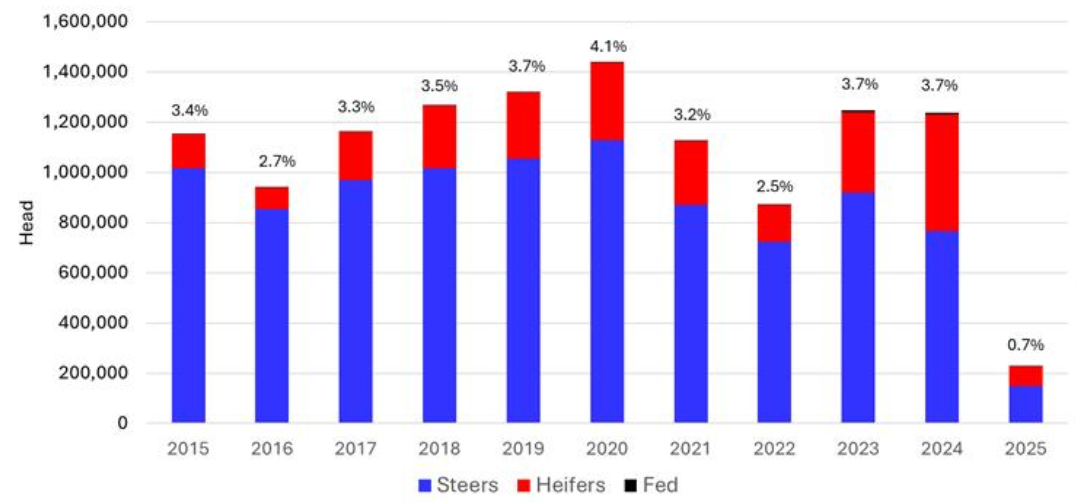
Figure 1. Cattle Imports from Mexico - Percent of Calf Crop
Figure 2 shows the average seasonal pattern of Mexican cattle imports from 2019-2023. The typical pattern is bimodal with peaks in March and again in November/December. Calves carried over from the previous year are typically exported in the first half of the year with relatively few exported in the heat of the summer. New crop calves start to be exported in the final months of the year, carrying over into the next year.
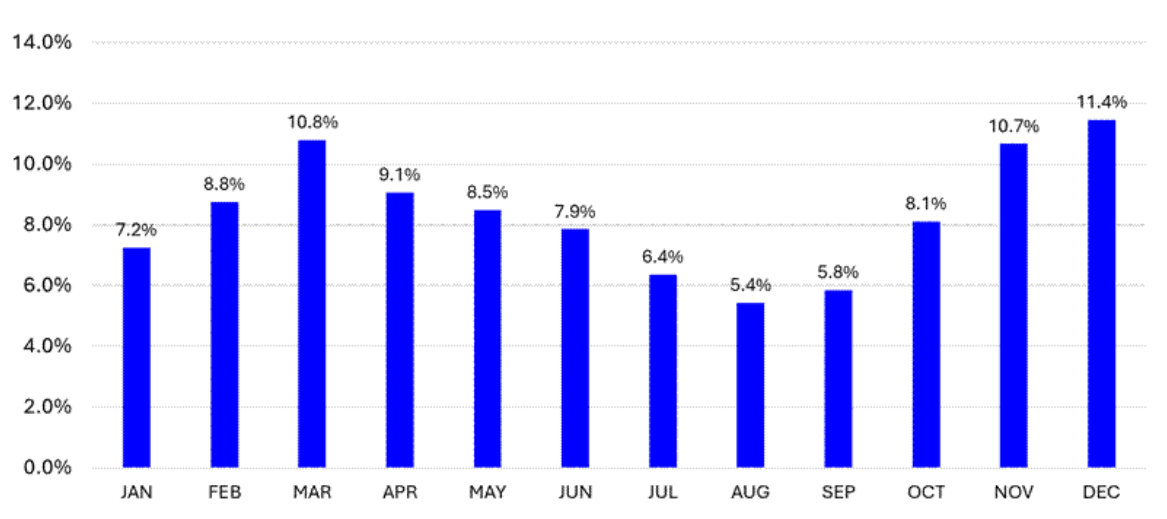 Figure 2. Seasonality of Mexican Cattle Imports - Percent of Annual Imports, Average Monthly, 2019-2023
Figure 3 shows the distribution Mexican cattle imports by port in 2023, the last year with a fully open border. The largest port is Santa Teresa, New Mexico, which accounted for nearly 43 percent of cattle crossing. Along with the Columbus port, New Mexico accounted for over 53 percent of total cattle imports. The ports at Nogales and Douglas in Arizona represented another 27.5 percent of cattle crossings. The six ports in Texas accounted for a total of 19.2 percent of total Mexican cattle imports. The largest Texas port is Presidio/Ojinaga with 7.7 percent of the total.
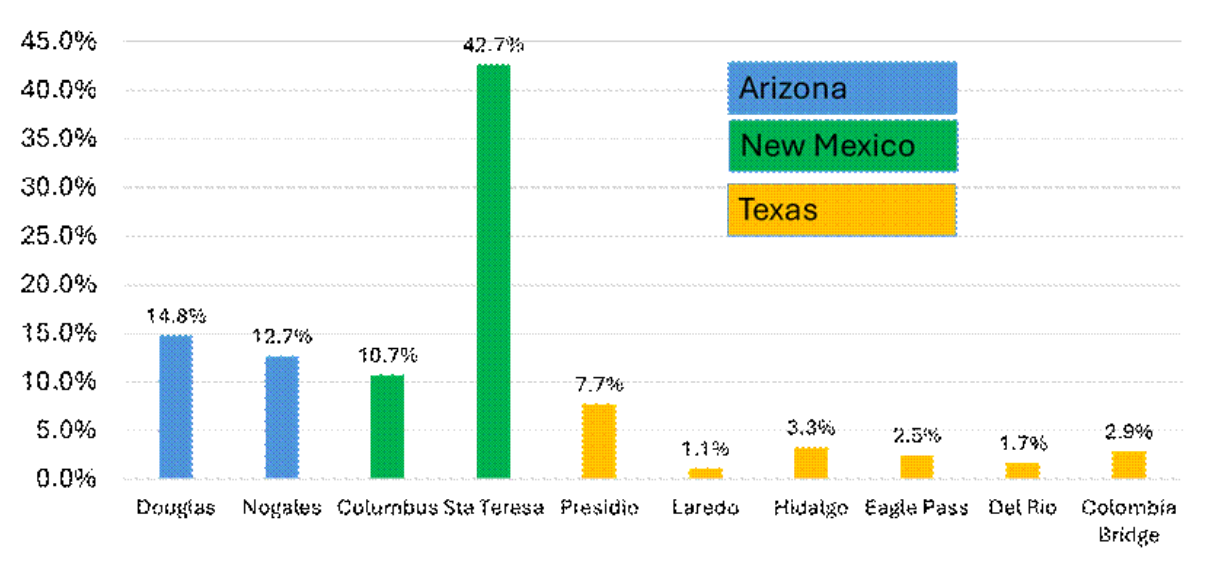
Figure 3. Mexican Cattle Import Percentage by Port, 2023 - 1.246 Million Head
Rumors are currently swirling that the border could open soon, probably with the phased plan to open ports from west to east over time. How much and how fast can cattle imports recover? How fast is…not very. It will take several weeks for border facilities to restaff and have USDA-APHIS personnel in place to inspect and clear paperwork for crossing cattle. It takes time (and cost) for Mexican producers to prepare cattle and the paperwork needed for crossing. It’s not clear how aggressive Mexican producers will be initially until they have a sense of how stable the border situation might be. By the time that cattle can begin crossing it will be close to the heat of summer, which is likely to limit crossings. If it starts relatively soon numbers of cattle imports could begin to recover significantly by fall.
Exactly what that recovery looks like, and the numbers expected is uncertain. Mexico has continued to adapt since the border has been closed, utilizing previously exported cattle in domestic markets. Mexico has developed significant cattle feeding and packing infrastructure in the past 25 or so years. More infrastructure investment is underway. Mexico is the eighth largest beef producing country and the seventh largest beef consuming country. Mexico is the number eleven beef exporting country and beef exports have grown more than 10 times in the past 20 years.
U.S. imports of Mexican cattle are part of an increasingly integrated cattle and beef trade relationship between Mexico and the U.S. Mexican cattle imports have been important for many decades. In the 1980’s Mexico became a significant beef export market for the U.S and is currently the number three beef export market (Figure 4). More recently, after 2010, Mexico has become a significant source of U.S. beef imports, currently the number four source of beef imports (Figure 4). Cattle and beef trade between the U.S. and Mexico are interrelated markets so the current disruption in cattle movement across the border may have a variety of impacts in the future.
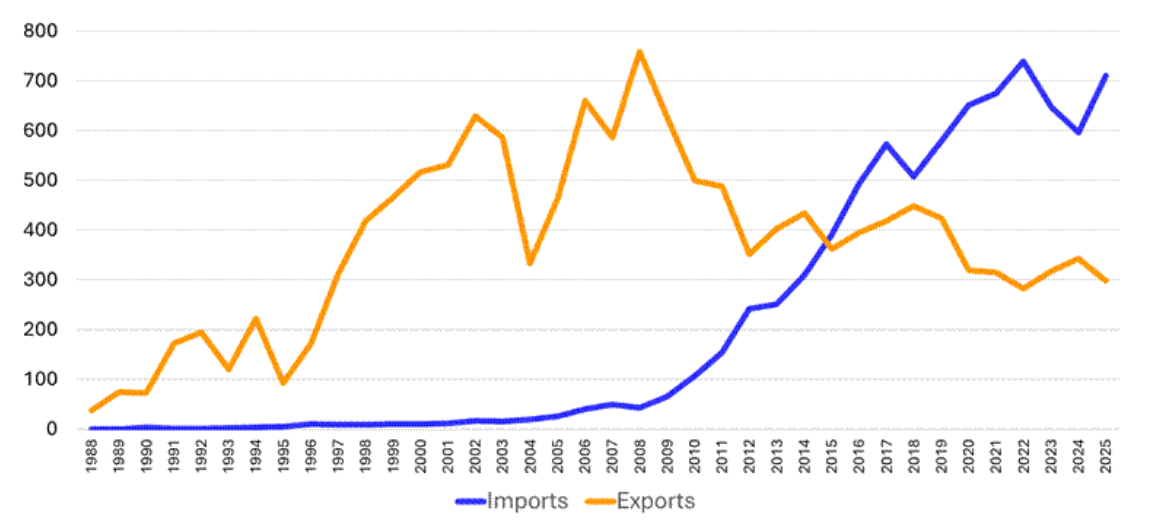 Figure 4. U.S. Beef Trade with Mexico - Annual, Million Pounds, Carcass Weight
Increased Beef Carcass Quality
Mark Z. Johnson, Oklahoma State University Extension Beef Cattle Breeding Specialist
The percentages of USDA Select and Prime grade beef carcasses continue to shift in the direction of higher quality, more marbling-rich beef. Through the early part of 2026, Select grade percentages dropped into the single digits, while the percentage of Prime is reaching new highs. During the month of March the percentage of carcasses grading USDA Select was approximately 8% of the harvest mix, down about 4% from a year ago. The percentage of Prime advanced to 15%, up roughly 4% from March, 2025. The 73 – 74% of carcasses grading Choice are basically unchanged from last year and the previous five year average. Quality grades lower than Select have declined to less than 3% of the harvest mix.
As recently as 2010, Select grading beef represented 30% of the quality grade mix. While Prime and Choice accounted for less than 65% that year. In 2025, Select was down to 13% of all graded beef carcasses, while Prime and Choice exceeded 84%.
Why?
Increased additive genetic potential for marbling is the foundation of the increase in beef carcass quality. Without question, increased days on feed and pushing cattle to historically higher finished weights contribute to tapping this genetic potential for marbling.
What is the Impact?
Consumers have responded favorably to improving beef quality. Since the turn of the century, beef demand has continued upward. The Cattle-Fax Beef Demand Index hit another record in 2025, up roughly 50% compared to 1998-1999. The beef industry is experiencing greater demand for Prime and the upper two-thirds of Choice. Greater supply of Prime and upper two-thirds of Choice has allowed more consumers to try the higher quality product. Consumers like it and are willing to spend more to enjoy it. The phenomenon has increased demand across the entire beef industry.
OSU Extension Hosting New Grazing School Program
Mike Trammell, Oklahoma State University Extension Southeast Area Agronomy Specialist
Brian Freking, Oklahoma State University Extension Southeast Area Livestock Specialist
We’re excited to announce a new extension program for this year. The Oklahoma Grazing School will be held May 11–12, 2026, in Lane, Oklahoma.
The Oklahoma Grazing School is co-designed with input from university researchers, Extension specialists, NRCS and local conservation district personnel, and experienced ranchers. This two-day workshop will provide hands-on, research-based training on sustainable and profitable grazing practices.
Key topics will include:
- Grazing basics and grazer’s math
- Grazing system design (rotational-management intensive grazing)
- Forage selection, establishment, and pasture renovation
- Soil health and fertility
- Electric fencing and water delivery systems for managed grazing systems
- Forage quantity estimates and carrying capacity determination
- Matching livestock with forage resources
- Economics of grazing systems
- Integrating technology (e.g., grazing apps)
- Mixed species grazing
The format will blend classroom instruction, field demonstrations, and peer-to-peer learning. Participants will receive printed material, access to digital resources and continued support through an online support community.
The Oklahoma Grazing School will take place at the OSU Wes Watkins Agricultural Research and Extension Center in Lane, Oklahoma (10777 State Hwy 3, Lane, OK 74555).
Registration is due by May 1, 2026, and can be completed online at OSU Extension – Oklahoma Grazing School.
The registration fee is $250, which covers course materials, a grazing stick, two lunches, breaks, and one dinner. Enrollment is limited to the first 50 participants.
Persons with disabilities who require alternative means for communication or program information or reasonable accommodation need to contact Michael Trammell at michael.trammell@okstate.edu or (580) 332-7011 at least two weeks prior to the event.
For registration questions, please contact Ag Conferences at (405) 744‑6489 or agconferences@okstate.edu.