

Cow-Calf Corner | March 17, 2025
There is No Such Thing as a Free Cow Lunch
Derrell S. Peel, Oklahoma State University Extension Livestock Marketing Specialist
Cow-calf producers are enjoying record calf prices but maximizing profits still requires managing costs. In fact, one of the reasons given for the slow start to heifer retention is that high costs of production means that producer returns are not yet high enough to initiate herd rebuilding. While producers may not be able to influence the general input market conditions and prices, Figure 1 shows that the variable costs of production per cow vary tremendously across producers, with profitability differences largely due to cost management (KSU, 2021). Low profitability producers have a total variable cost of production 37.1 percent higher than the top third of profitability among producers. Total feed (pasture + non-pasture) costs ranged from 69.1 percent (top third of profitability) to 66.3 percent (bottom third of profitability) of total variable costs but total feed costs for low profitability producers were 31.6 percent higher. The top third of profitability included higher pasture costs but significantly lower non-pasture feed costs and, thus, lower total feed costs.
$/Cow, KSU, 2016-2020 Average
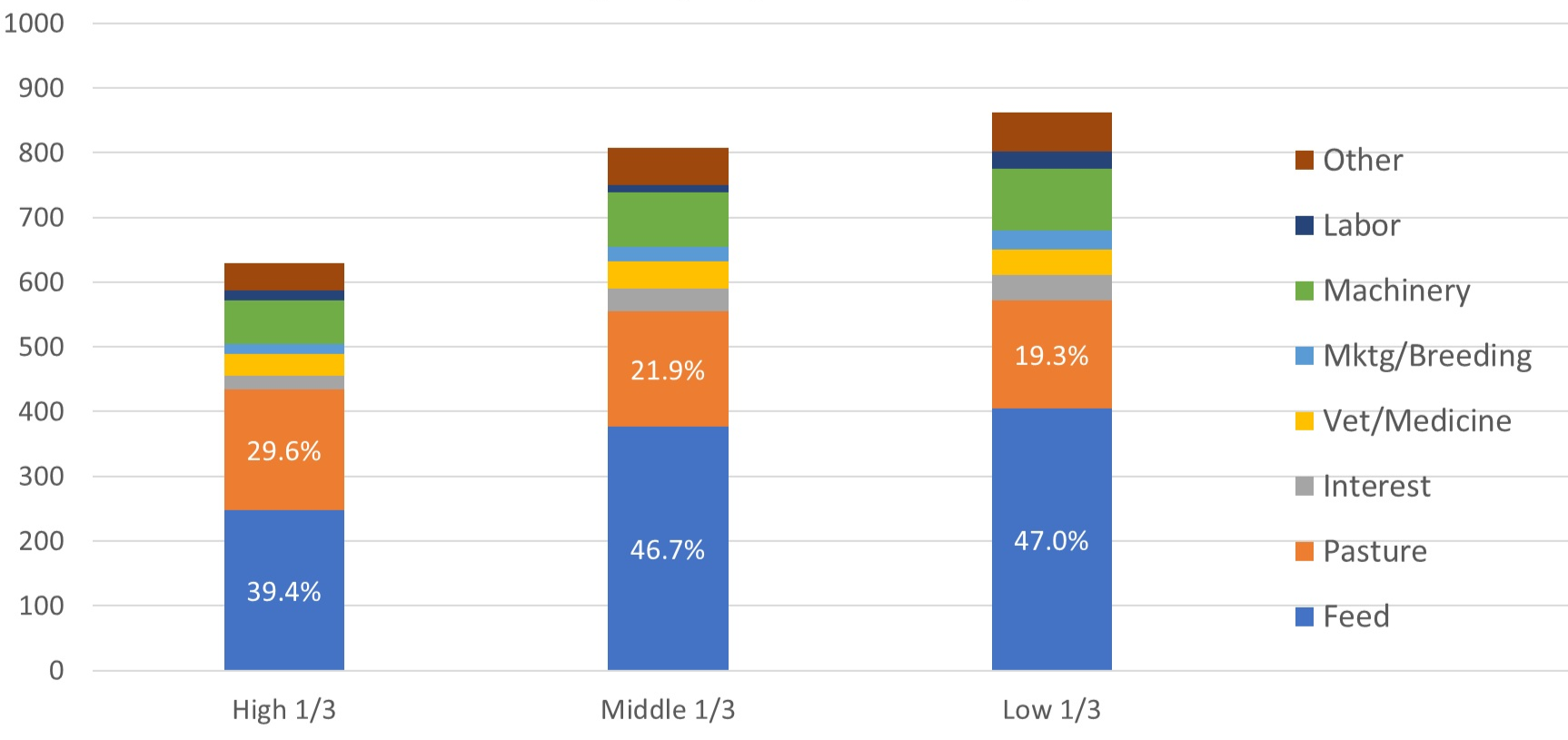
Figure 1. Cow-Calf Variable Production Costs by Profitability Level
Non-pasture feed costs in Figure 1 include harvested forages (hay) and purchased supplement feed. Hay costs are frequently overlooked or undervalued, especially for producers who make their own hay. In Oklahoma, other (non-alfalfa) hay is primarily used for beef cattle production. Figure 2 provides a broad measure of hay use calculated as tons of other hay per beef cow per year. This quantity has increased from less than one ton of hay per cow prior to 1980 to an average of about 2.4 tons of hay per beef cow in the last decade.
The quantity of other hay per cow currently averages 4,800 lbs. per year, which implies roughly 160 days of hay feeding per cow at 30 lbs./cow/day if all the hay was fed. However, a significant quantity of hay is lost to storage and feeding wastage. Round bales are especially prone to storage and feeding losses of 20 to 40 percent or more if not managed carefully. Additionally, it is noted that average cow size has increased over time. Whether this is a good thing is a different question that should be addressed as a separate consideration. Nevertheless, in many cases, stocking rates have not been adjusted over time to reflect larger cows, leading to overstocked pastures and the need to feed more hay.
Tons Per Beef Cow
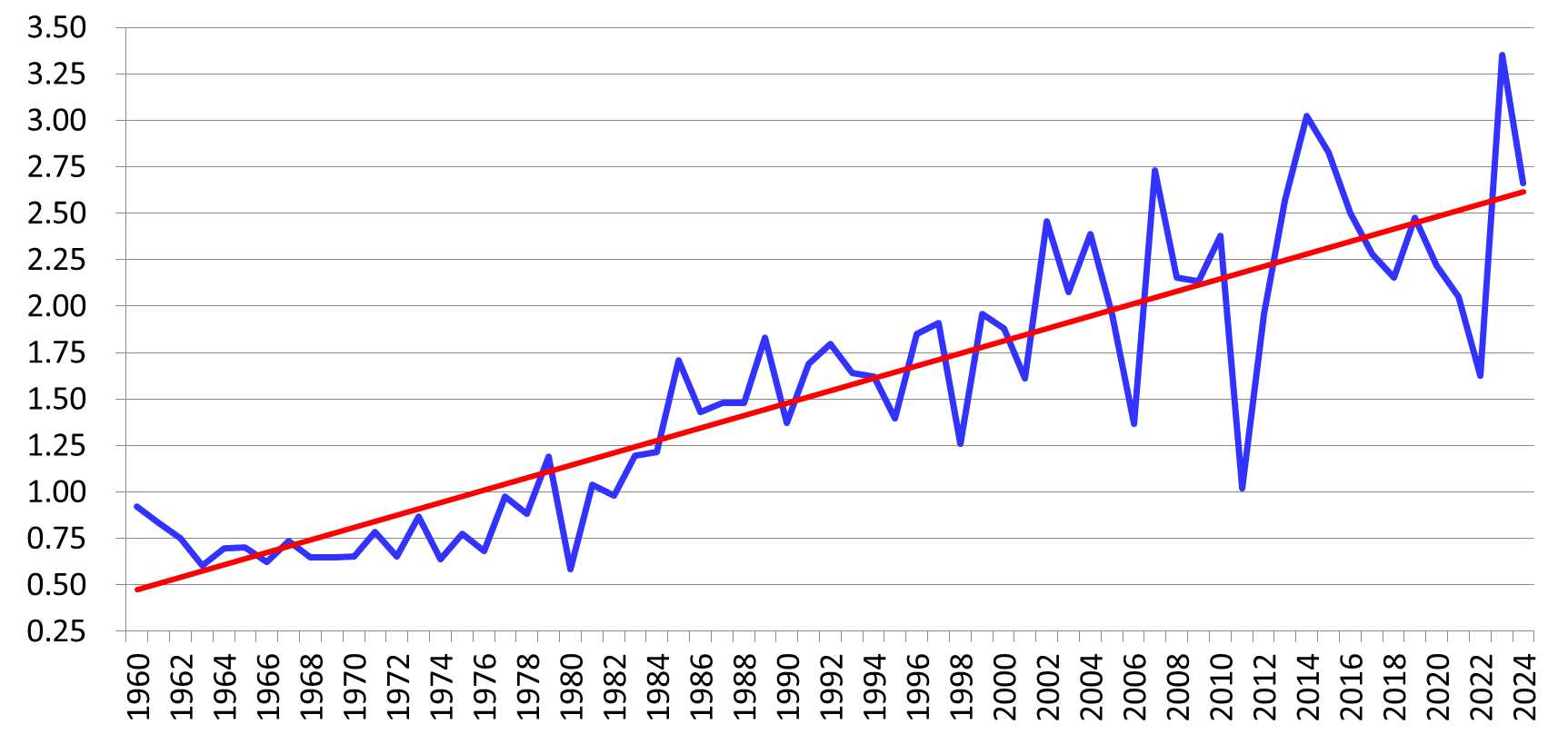
Figure 2. Other Hay Use Oklahoma
Economists often say there is no such thing as a free lunch. However, grazing and hay management provide considerable opportunity for cow-calf producers to manage and reduce cow-calf cost of production. Cows are the most efficient forage harvesting machine in cow-calf operations and provide an opportunity to reduce total feed costs by extending grazing time and reducing hay needs. Hay costs roughly twice as much as grazing per pound of forage consumed by cows. There is no free lunch for cows but having the cows do most of the work with grazing is as close as you can get. March is an excellent time to plan grazing for the coming growing season with an eye to reducing hay needs next fall and winter.
Reference: KSU, 2021
Differences Between High-, Medium-, and Low-Profit Cow-Calf Producers - 2016-2020 | AgManager.info
Bulls and Breeding Soundness Examinations
Mark Z. Johnson, Oklahoma State University Extension Beef Cattle Breeding Specialist
A significant portion of reproductive failures in cow-calf enterprises are due to the fertility of the herd bull. With turnout just around the corner, it’s time to focus on your bull battery. Most spring calving cow-calf operations are 30-60 days from the start of the breeding season. There are some important management considerations to keep in mind during this pre-turnout period: 1) have a veterinarian conduct a breeding soundness exam (BSE) on all potential herd sires, 2) monitor body condition score of your bulls on inventory to make sure they are in Body Condition Score of 6 by turnout, 3) and slowly transition the newly purchased young bulls to a forage based diet.
Bull breeding soundness is one of the most economically important traits for cow-calf producers. Accordingly, a BSE is recommended to measure a bull’s potential to achieve satisfactory conception rates. The BSE should include examination of the reproductive anatomy, scrotal measurement, sperm motility, sperm morphology (physical characteristics), locomotion, eyesight and body condition score. A bull that passes the BSE appears to be sound for breeding purposes as best as science can determine at that point in time. Bulls should have a BSE 6-8 weeks prior to turn out. If a bull fails the BSE, this allows producers to have enough time to replace the animal with a sound bull for the breeding season.
Each year cow-calf operations purchase yearling bulls to replace sub-fertile bulls or poor genetics. If new bulls have been developed on grain-based, high energy diet they have the potential to be over-conditioned. New bulls should be gradually transitioned to a lower energy, forage-based grazing system over the 30-60 days before being turned out on cows. This period can allow the bull to shed excess fat and reach an optimum body condition for the breeding season. These bulls should be kept in a large enough pen or pasture so they can get daily exercise. When multiple bulls are used in a single pasture, they should be exposed to each other prior to turnout to minimize bull interactions once they join the cowherd. Bottomline: it’s time to plan for your next breeding season.
Protecting Your Ranch and Livestock from Wildfires
Paul Beck, OSU Cooperative Extension Beef Cattle Nutrition Specialist
Wildfires are a threat to ranchers this spring with dry conditions and high winds creating the perfect conditions for devastating events such as the fires across Oklahoma last weekend. Protecting your livestock and property requires preparation, quick action, and resilience. Here are key strategies to help you stay ahead of the flames.
Prepare ahead of time by creating defensible spaces around pastures and buildings by clearing brush, dead trees and other flammable debris from around homes barns and equipment. Mow or tightly graze firebreaks along property lines and roads to slow the spread fire. Build lots, corrals, fences, and ranch buildings from fire resistant materials to reduce the fire risk.
Livestock evacuation and safety are important considerations in your disaster planning. Identify safe areas like large open pastures with short grass or crop fields with green growing grass or tilled soil. Ensure trucks and trailers for livestock transport are in good condition and have a evacuation plan in place. Stock emergency water, feed and first aid supplies.
In conditions with high winds and low relative humidity that have put us in a Fire Weather Warning in much of Texas and across Oklahoma any fires that develop will spread rapidly. Stay informed by monitoring local weather and fire updates on the radio and weather apps.
Coordinate with neighbors and be sure people know your location, mutual aid in these situations can be lifesaving. Finally assess damage quickly to document losses for insurance and recovery aid.
Being proactive can mean the difference between safety and disaster. Work with your local fire departments and extension services to improve your wildfire response plan. A well-prepared ranch is a safer ranch. All cattle operations will benefit from a written emergency action plan customized to the operation. The National Beef Quality Assurance Manual available on the Beef Quality Assurance website is a great resource in putting a plan together.