

Cow-Calf Corner | July 14, 2025
Less Beef Meets Summer Beef Demand
Derrell S. Peel, Oklahoma State University Extension Livestock Marketing Specialist
The summer doldrums between Independence Day and Labor Day usually means slack beef demand. Indeed, the Choice boxed beef cutout dropped from the end of June to a current weekly average of $386.75/cwt., down from the recent high of $394.19/cwt. However, boxed beef prices remain 19.1 percent above this time last year and have averaged 12.6 percent above one year ago each week in the first half of the year (Figure 1).
Higher average boxed beef prices reflect generally strong beef demand coupled with declining beef production, especially in the second quarter of the year. Total beef production is down 1.7 percent year over year through the first half of the year but is down 4.8 percent in the second quarter. Fed (steer + heifer) slaughter was down 6.3 percent in the second quarter leading to a 4.1 percent year-over-year decrease in fed beef production. Total cow slaughter continued lower, down 11.0 percent in Q2 leading to an 8.5 percent drop in nonfed beef production for the period.
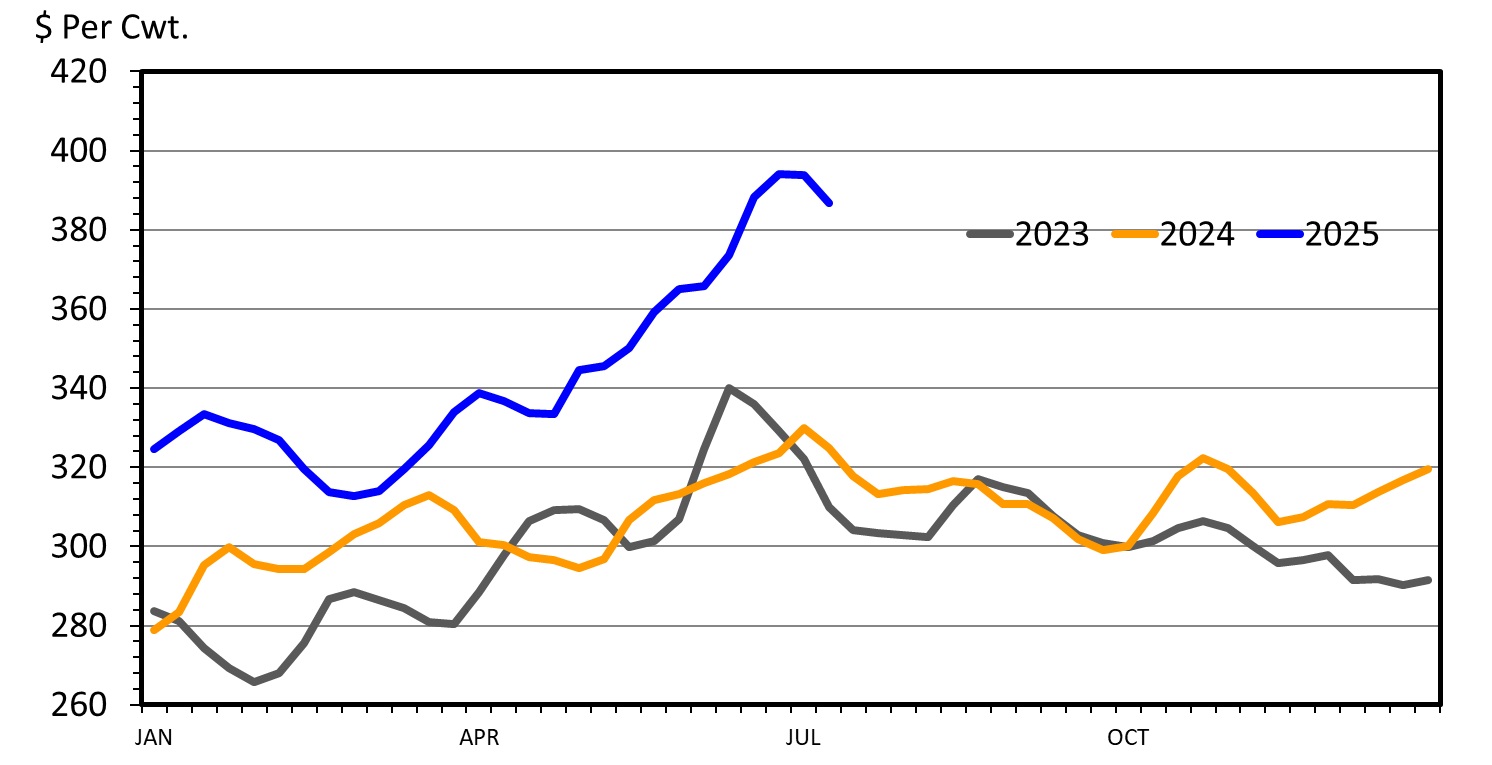
Figure 1. Boxed Beef Cutout Value; Choice 600-900 Lbs., Carcass, Negotiated, Weekly
Despite typical mid-summer seasonal weakness, all beef primals are priced above year ago levels with the Rib primal up 7.0 percent, Loin primal up 19.3 percent; Chuck primal up 20.2 percent and the Round primal up 16.4 percent year over year. Brisket, Short Plate and Flank primals are also sharply higher year over year. Prices for both lean and fatty trimmings continue to push higher with declining beef production.
Cattle prices dropped in late June but bounced this past week on stronger Feeder and Live cattle futures. Oklahoma auction feeder prices were higher for all weights with calves up $10-$15/cwt. and feeder cattle up $5-$15/cwt. The 5-market fed cattle price averaged over $235/cwt., pushing up close to the mid-June highs. Boning cows (average dressing) averaged $165.84/cwt.
Is It Time to Pull Bulls?
Mark Z. Johnson, Oklahoma State University Extension Beef Cattle Breeding Specialist
The old rule of subtracting three months and adding seven days to the current date on the calendar is good to remember when deciding if it’s time to pull herd bulls from breeding pastures. If we pulled bulls today, on 07/14/2025, we could expect calving to potentially last until 04/21/2026. Short breeding seasons equate to short calving seasons. Short calving seasons offer the benefit of a more uniform and accordingly more valuable calf crop at weaning. Short breeding seasons are the goal; however, most breeding seasons fall into a range of 45 – 90 days. There are several factors to consider when making this management decision.
- Bull management and proper care can be accomplished more effectively after bulls are removed from cows. Younger bulls that are still growing will benefit by going back into a dry lot management scenario where it is easier to provide supplemental feed and gain back body condition lost during breeding season. This is the equivalent of re-charging a battery to get them on track for the next breeding season. If using multiple bulls in a pasture, it is logical to leave an older bull (or bulls) on the job while pulling out the younger bulls.
- When is the date of your latest calf born? Typically, cows need 60 – 75 days post-partum to be prepared to breed back. Two year old cows nursing their first calf are typically the greatest rebreeding challenge.
- Pregnancy checking can be done sooner when bulls are pulled earlier. Identifying and culling open cows in a timely fashion saves forage and capitalizes on cull cow value now as opposed to lower values moving later into fall.
- What is your plan for open cows at pregnancy check? Cull open cows are at record high prices. That being said, a bred cow has more value than an open cow. Do you have a fall calving herd to roll opens into?
- If a high percentage of cows return to heat after 40 days of breeding, have bulls rechecked for fertility and cows and bulls examined for reproductive diseases by your veterinarian. Change bulls, if necessary, and re-evaluate the previous year’s nutrition program.
Practical Considerations for Bovine Castration
Rosslyn Biggs, DVM, Oklahoma State University Cooperative Extension Beef Cattle Specialist
Approaches to castration should be made with operational objectives and animal welfare in mind. Producers should consult with their herd veterinarian for a castration protocol that includes consideration for animal age, facilities available, castration method, and pain control.
Calves castrated at younger ages—ideally under three months—generally experience less stress, recover quicker, and have fewer complications. Unless a bull calf is being kept for potential breeding purposes, delaying castration is unnecessary. If castration must be done on older animals, it is critical to use appropriate pain control and consider surgical methods carefully.
Good restraint for bovine castration is essential. Well-designed working facilities with secure head catch and squeeze are good choices in most instances. For smaller calves, restraint can be done in a calf cradle or on the ground with proper equipment. Beef Quality Assurance guidelines should always be followed.
The primary methods used to castrate are surgical removal or elastrator band. The decision on technique should be made in coordination with the herd veterinarian and consider animal well-being and the recovery environment. If banding is chosen, animals should be vaccinated for tetanus prior to the procedure.
Local anesthetic utilized at the time of castration can decrease the initial pain of castration and help provide additional pain control for up to 5 hours after the procedure. Sedatives may also be combined with local anesthetics for broader pain control during castration. Non-steroidal anti-inflammatory drugs (NSAIDS) may also be added to the plan to provide immediate pain control along with longer activity. Certain NSAIDS with a single dose can provide up to 48 hours of pain control. NSAID formulations include oral, injectable, and topical applications. For those that band calves, there are now bands impregnated with the local anesthetic, lidocaine, and provide pain control for more than two weeks after banding.
Research in providing pain control has been shown to promote weight-gain and feed intake following castrations and in calves older than seven days decrease the instance of respiratory disease. Pain medications require veterinary prescription.