

Cow-Calf Corner | December 8, 2025
Little Indication of Heifer Retention in 2025
Derrell S. Peel, Oklahoma State University Extension Livestock Marketing Specialist
As 2025 wraps up there is still little indication of significant heifer retention for herd rebuilding though some retention may be beginning slowly. The July Cattle report showed the smallest beef replacement heifer inventory in the history of the report back to 1973, although no comparison to last year was possible (the report was not available last year). The October Cattle on Feed showed that the percentage of heifers in feedlots was unchanged from July and still above average as it has been since late 2018.
It is true that heifer slaughter is down 6.6 percent so far this year and is falling faster than steer slaughter, which is down 4.4 percent for the year to date. Figure 1 shows average monthly heifer slaughter since January 1978. Average heifer slaughter peaked most recently in January 2023 and has declined 9.0 percent as of October 2025. Heifer slaughter is quite variable and does decrease during periods of herd expansion. However, at this point the decrease in heifer slaughter is not enough to indicate significant heifer retention.
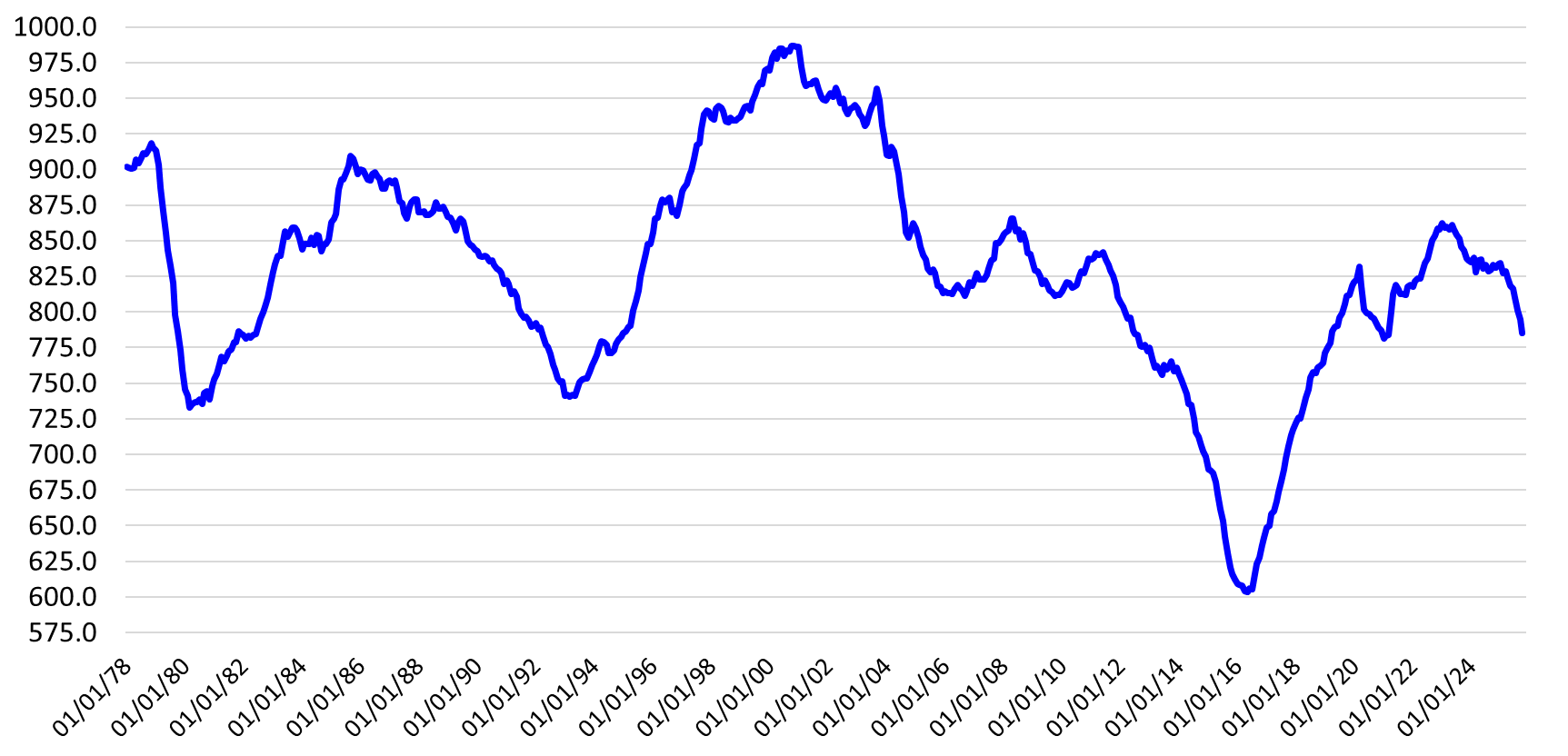
Figure 1. Heifer Slaughter, 12 Month MA
Figure 2 shows the ratio of steer to heifer slaughter over the same 49-year period. The obvious spikes in the ratio (dotted circles) correspond to herd expansions in the years 1979-1982; 1990-1996; 2004-2006; and 2014-2019. The ratio increases when heifer slaughter drops relative to steer slaughter during herd rebuilding. The current steer:heifer ratio has begun to increase but appears to indicate only the slightest beginning of heifer retention. Additional heifer retention may build in 2026 but the pace appears to be slow.
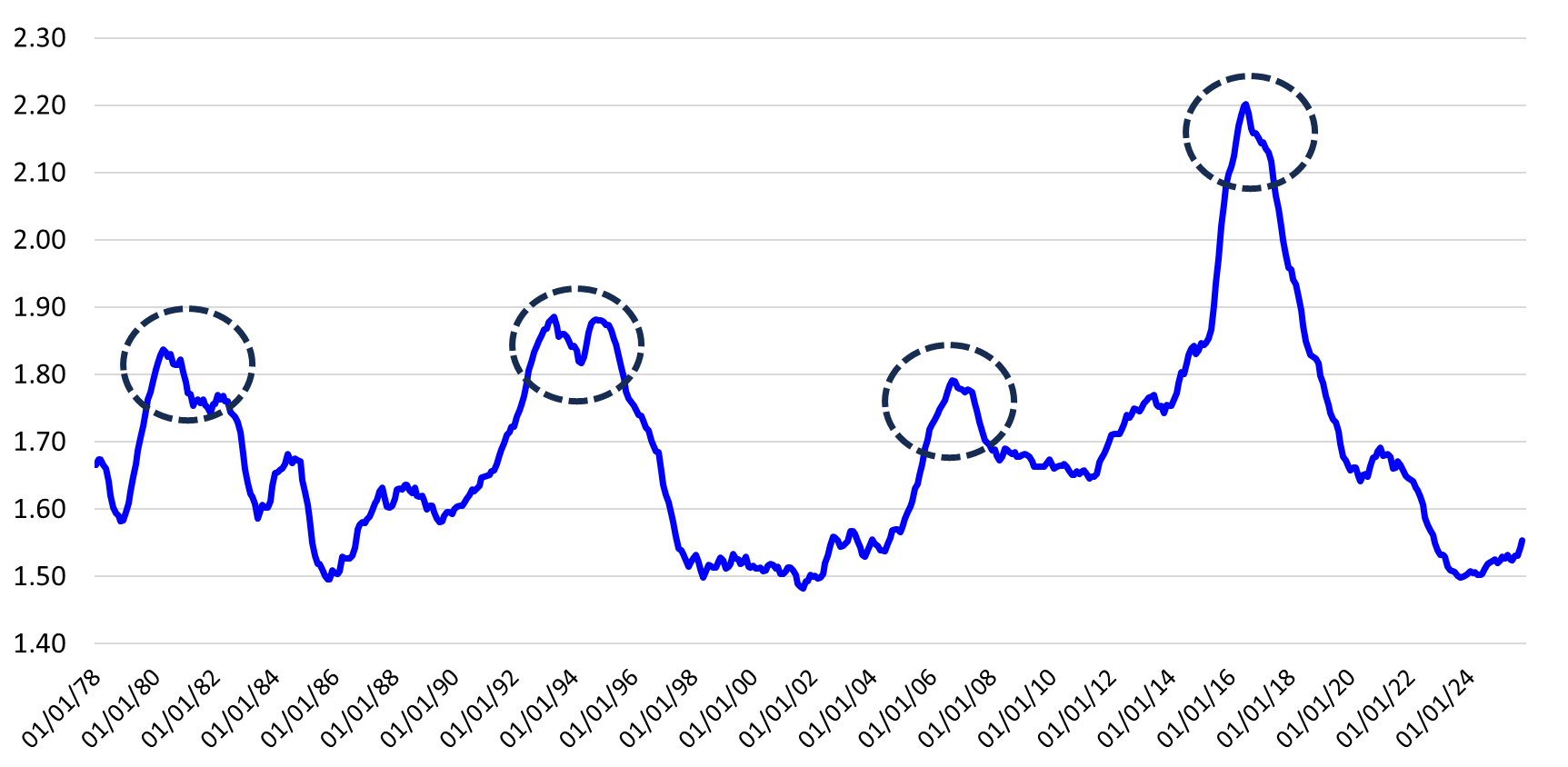
Figure 2. Steer:Heifer Slaughter Ratio, 12 Month MA
OSU Extension livestock marketing specialist Derrell Peel explains how political and global factors disrupted livestock prices this season — and why a rebound is expected in the new year on SunUpTV from December 6, 2025.
Selection Decisions and Breeding Value, Build Back Better – Replacement Heifer Series – Article 5
Mark Z. Johnson, Oklahoma State University Extension Beef Cattle Breeding Specialist
Selection of cattle is the process by which we determine which animals become parents, how many offspring they will produce and how long they will remain in our breeding herd. When we select replacement heifers or herd bulls we are practicing selection. When we cull old, open cows or ornery herd bulls we are practicing selection. The focus of this article is on replacement selection. Specifically, the best way to determine which animals will become the parent stock in our commercial cow-calf operation.
After we have analyzed our production system, identified our breeding objectives and determined the traits on which to apply selection pressure, the goal is to identify the animals with the best genes and let them reproduce. The animals with the best genes are said to have the best Breeding Value (BV). BV, based on the additive genetic effect of individual genes (across the genome), serves as the best indicator of an animals genetic value as a parent. BVs are trait specific. Since BVs are based on the effects of individual genes, they represent the part of genotype which can be passed from parent to offspring. Successful selection is based on identifying the animals with the best BVs (for traits of primary economic importance) to become our next generation of parents. Using Expected Progeny Differences (EPDs) in sire selection or Genetic Merit Scorecards on groups of commercial heifers are examples of modern tools available to assist us in determining the BV of potential parent stock in cow-calf operations.
Heritability is important to define relative to selection. Heritability is the relationship between phenotypic values and breeding values for a trait in a population. More precisely, heritability is the proportion of phenotypic variation that can be explained by additive genetic variation for a given trait. Quantitative, polygenic traits in beef production can be lumped into three categories. These include: Reproductive traits (for example: heifer pregnancy percentage or rebreeding intervals in the cow herd). Reproductive traits are low in heritability. Scientific literature indicates the heritabilities of reproductive traits fall into a range between 0 to 20%. Growth Traits (for example: weaning weights or yearling weights), are moderate in heritability typically falling into a range between 20 to 40%. Carcass traits (such as marbling, fat thickness or ribeye size) are highly heritable (40% or higher).
For example, the Sire Summary of the American Angus Association currently estimates the heritability of carcass marbling to be 48%. This can be interpreted to mean that the additive genetic variation of marbling accounts for 48% of all the variation we observe in marbling phenotypes.
In summary, selection should be based on identifying animals with the best BV for traits of primary economic importance. Effective selection decisions lead to building additive genetic potential. Additive genetic change is cumulative and permanent. While genotypic value represents the overall effect on an individual animal’s genes, BV represents the only part of genotypic value that can be transmitted from parent to offspring. Finally, heritability estimates for a given trait serve as an index of how easily the trait can be changed through selection.
The other part of genotype is Gene Combination Value (GCV). Since it is the result of genes paired at loci across the genome, and only one gene from each locus is transmitted by parents, it represents the part of genotype which can’t be passed from parents to offspring. GCV will be discussed in more detail next week.
Dr. Mark Johnson, OSU Extension beef cattle breeding specialist, continues his Build Back Better series with an in-depth look at genotypes, selection, and mating. Learn how genetic selection and mating strategies can strengthen your herd’s long-term performance and profitability on SunUpTV from Dec 6, 2025.
Reference
Heritabilities and Genetic Correlations
Beef × Dairy Crossbred Management to Enhance Profitability, Resource Efficiency and Sustainability in Beef Systems
Paul Beck, OSU Cooperative Extension Beef Cattle Nutrition Specialist
The U.S. beef cow herd is at historic lows, increasing the need for reliable sources of high-quality beef reducing feeder cattle availability and making challenging break evens for cattle feeders. One of the most promising solutions is the growing use of beef × dairy crossbred calves, made possible by advances in reproductive technology that allow dairy producers to create replacement heifers from elite cows and breed the remainder to beef sires. The resulting crossbreds consistently show better growth, efficiency, carcass quality and health than traditional dairy-type calves, providing value for dairies and cattle feeders.
To help producers understand how to best manage these calves and evaluate their economic potential, our team launched a coordinated research and Extension program following beef × dairy steers from birth through harvest. Studies at both research and commercial scales evaluated how preweaning nutritional level, post-weaning management programs and finishing systems affect gain, feed efficiency, carcass traits, profitability and greenhouse gas emissions. Economic modeling showed that dairy-beef steers can be as profitable as native beef, even with slightly higher feed costs. A Life-Cycle Analysis showed that calf-fed management reduced carbon footprint by 4.6 to 11.3% compared with yearling-fed systems. When emissions of the dairy cow were allocated primarily to milk production, the overall greenhouse gas intensity of dairy-beef systems was lower than that of native beef.
Extension outreach played a major role in delivering these findings to producers. Information was shared through field days, fact sheets, the Ranchers Thursday Lunchtime Webinar Series and regional programs such as the Five States Beef Conference. More than 10,000 producers, educators and industry professionals have participated in program events or used the online resources. Peer-reviewed publications, public datasets and media coverage further expanded the program’s reach.
The results are already influencing production decisions. Follow-up evaluations show improved producer confidence and adoption of recommended feeding and management strategies, especially in feedlots across Oklahoma and Texas. The work has improved cooperation between the beef and dairy sectors and increased understanding of how to raise crossbred calves efficiently while reducing their environmental footprint.
This research and Extension effort positions beef × dairy crossbreds as a practical, sustainable way to meet future beef demand. This work was supported in part by the intramural research program of the U.S. Department of Agriculture, National Institute of Food and Agriculture Critical Agricultural Research and Extension (CARES) Award No. 2022-68008-37102.
A Rancher’s Thursday Webinar Series presentation from May 2, 2024 covered effective post-weaning management of beef × dairy crossbreds.