

Logan Barber's Report
View Logan Barber's 2025 OSU Extension Internship Report below.
Homesteading Made for Everyone
When I first started brainstorming ideas for my internship project, I knew I wanted to create something that would remain useful long after my time here ended. The challenge was finding a topic that was both practical and meaningful. After talking with Stephanie, the agricultural educator and my supervisor, I learned that Carter County receives many calls about homesteading. That sparked a question—how could I create something that would truly help people? I personally connect with homesteading because I am passionate about self-sufficiency and sustainable living, so it felt like a perfect fit. I decided to focus my project on teaching that homesteading isn’t about owning land or having a big budget—it’s about the mindset you bring into it. It’s not the acres you have or the money you spend, but the intentional changes you make in your lifestyle to become more self-sufficient.
The first major part of my project was creating a video series covering how to start a homestead. I produced eight videos, ranging from “What Is Homesteading?” to “Starting a Garden” to “Earning Income from Your Homestead,” and more. My plan included researching content, creating scripts, designing visuals, and recording voiceovers. Initially, I attempted a combination of face-to-camera video with PowerPoint slides, but many videos wouldn’t upload, some had poor lighting, and others were low quality. I spent hours troubleshooting and trying different formats, but ultimately I made the difficult decision to start over completely. This time, I used full PowerPoint presentations with recorded voiceovers, incorporating animations, viewer-friendly bullet points, and interactive graphics to keep the videos engaging. Although it was frustrating to redo the work, the end result was much more polished and user-friendly. I also found that designing the videos this way allowed me to better highlight key concepts and keep viewers’ attention.
I also wanted to create something tangible that participants could take home if they came into the office asking about homesteading. That’s when I decided to design a homesteading workbook. It included information on various aspects of homesteading, such as gardening logs, transplanting seedlings, preservation logs with storage timelines, and QR codes linking to the video series. I included additional resources so participants could continue learning beyond the workshop. I intentionally designed the workbook to complement the videos and address different learning styles—some people learn best by listening, while others prefer reading and writing. By offering both, I aimed to make the information accessible to more people.
The final part of my project was the workshop itself. I wanted it to combine the videos, the workbook, and hands-on activities, so participants could practice skills while learning. I planned five activities: making biscuits, butter, cleaner, body scrub, and starting a salsa garden. I began the workshop with a short PowerPoint introducing what homesteading is, and I highlighted the video series to encourage continued learning afterward. Everything participants made could be taken home, giving them a tangible reminder of the skills they learned.
Seventeen people attended the workshop, including familiar faces from previous workshops and new participants, which was exciting to see. I think the workshop was the most rewarding part of my project because I was able to give people the confidence to see that homesteading is for everyone. Homesteading skills don’t always require huge changes—sometimes they’re just small, intentional steps we can take in our day-to-day lives.
At the beginning of the workshop, I had everyone complete a pre-survey about what they already knew about homesteading. At the end, they completed a post-survey on what they had learned. Many participants admitted they had no idea homesteading could be done in a suburban neighborhood—or even in an apartment—before attending. Every participant reported they planned to use something from the workshop, and several said they were excited to watch the YouTube videos to continue learning. Some participants shared specific plans, like keeping a small herb garden or trying out a homemade body scrub recipe at home. Seeing this immediate application of knowledge was incredibly rewarding and confirmed the practical impact of my project.
As of now, my videos have around 100 views on YouTube. Alysa Shoemaker, an intern in Pontotoc County, used one of my videos in her own workshop, and Cheryl Newberry shared the videos in her newsletter. This allowed my project to reach audiences beyond my county, spreading resources and knowledge to other communities. Seeing my project grow and be utilized in this way has been both exciting and fulfilling.
Reflecting on my project, I am extremely proud of what I accomplished. If I could start over, knowing what I know now, I would expand the workshop approach. I would keep the Homesteading 101 workshop but also host smaller, topic-focused sessions that align with individual video topics. Each session could feature a guest speaker who specializes in that area, giving participants more in-depth knowledge and hands-on practice. I believe this would make the project even more impactful and help participants continue building skills after the initial introduction.
My experience at the Carter County Extension Office is something I will carry with me forever. I am forever thankful for the support from the educators and staff. Everyone was so helpful to me in creating this project. I am grateful for what I learned from this project and everything that came out of it. I hope it is something that Carter County Extension can continue to use and is a resource that is beneficial to many people. This project truly taught me how to adapt and overcome. As well as how to make a learning experience something anyone can use. This will be beneficial to me in the future as I pursue a career as an agricultural educator.
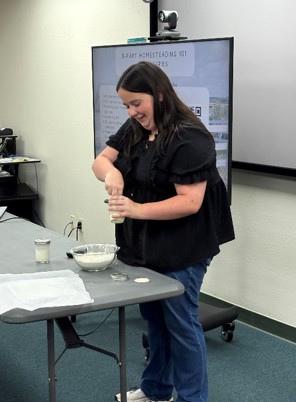
Figure 1. A demonstration on how to make the homemade biscuits.
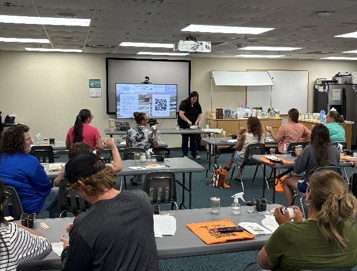
Figure 2. Participants making their butter in a classroom.
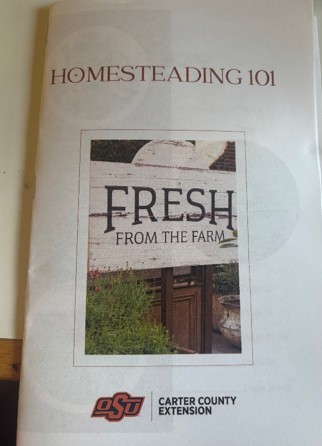
Figure 3. The front page of a Homesteading 101 Workbook.
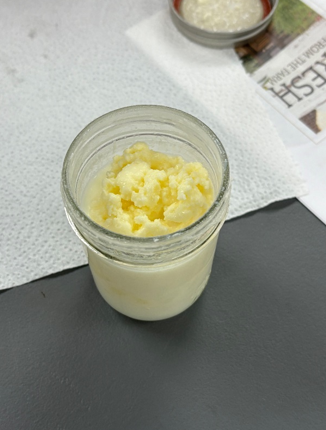
Figure 4. A jar of butter made by one of the participants.