

Well Water Basics
Introduction
Thousands of Oklahoma residents rely on private wells as their primary source of drinking water, especially in rural areas not served by municipal or rural water systems. Many private wells are also a critical resource for agricultural operations. While the principles of proper maintenance and protection apply to all wells, this fact sheet is focused on ensuring the safety and quality of water for human consumption. Contact your county Extension office for more information on specific agricultural topics like water for livestock or irrigation.
Unlike public water systems, which are regulated by federal and state agencies, the quality and safety of private well water is the sole responsibility of the well owner. This guide provides a basic understanding of well construction, guidelines for wellhead area management, instructions for conducting routine water testing, tips for proper well maintenance, and record keeping.
Well Construction
Well drilling and pump installation in the state of Oklahoma is overseen by the Oklahoma Water Resources Board (OWRB). OWRB maintains a list of licensed contractors, as well as an interactive map of all wells in the state. The list includes a unique identification number for each well. Property owners can use this number to find background information on an existing well. When installing a new well, owners should request this number from the driller for their own records.
Historically, wells were hand-dug. Later, heavy equipment such as excavators and backhoes was used. These early wells were 2 to 5 feet in diameter, 10 to 100 feet deep, and lined with rocks or bricks -- if at all. Many of these older wells can still be found today, but they are susceptible to contamination from surface runoff due to their shallow depth, large diameter, and lack of a protective barrier.
In contrast, modern wells are machine-drilled and can be hundreds of feet deep. Figure 1 illustrates the common components of a modern water well. Although modern wells have a much smaller diameter and sealed casing that provides better protection against potential contamination, they are not guaranteed to be safe. Proper management of the area surrounding the well cap, or wellhead, is a key aspect of responsible well ownership.
Wellhead Area Management
Wells provide access to groundwater, typically a reliable and high-quality water source. However, wells also create a pathway for contaminants in surface runoff to enter the aquifer. Some contaminants, such as arsenic, are naturally occurring. Others are associated with environmental disturbances, or human activities such as oil and gas exploration. Whatever the source, many of these cause health problems ranging from temporary flu-like symptoms to long-term illnesses including anemia or cancer. Well owners can help safeguard their drinking water supply by following certain land management practices in the area around their wellhead. To prevent contamination of the aquifer from their property, well owners should:
- Maintain minimum well-to-well spacing of 660 ft (alluvium and terrace aquifers) or 1,320 ft (bedrock groundwater aquifers) between irrigation or domestic water wells (Use OWRB Groundwater Well Search to determine which standard applies).
- Do not store chemicals (e.g., fertilizers, pesticides, insecticides) near well heads.
- Keep at least a 75-foot separation between water wells and septic systems; 100 feet if the well is downslope of the water well or septic drain field
- Locate and plug abandoned wells
Although helpful, these steps cannot provide total protection from contaminants. Well owners must regularly test their well water to be fully aware of drinking water quality.
Well Water Testing
Well water testing should be done regularly to help protect the health of household members. At minimum, water should be tested every year for nitrates, total dissolved solids (TDS), pH, and fecal coliform (i.e., E. coli bacteria from human or animal waste). Additional testing should be done if any of the following are applicable:
- Contamination is suspected (e.g., after a chemical spill or a fooding event)
- The water’s color, taste, or odor changes
- The pump or well undergoes maintenance
- A household member becomes pregnant
- Children move into the home
- Someone drinks the well water and experiences a suspicious illness
Certified test results for a wide variety of drinking water contaminants are available from the Oklahoma Department of Environmental Quality (ODEQ) laboratory or other ODEQ-certified testing facilities in the state. Both options require payment, with the cost dependent upon the number and type of tests performed.
For a lesser cost, OSU Extension offices can assist in submitting well water samples to the Soil, Water, and Forage Laboratory (SWFAL) at Oklahoma State University, which can test for some, but not all, common well water contaminants. SWFAL results are non-certified and should be used for information only, or as a screening tool. Whatever lab is selected, well owners should refer to the individual testing laboratory for sampling instructions.
Although private water wells are not required to meet Federal Drinking Water standards, well owners can use these guidelines as an important reference to help determine whether their drinking water is safe to consume. Additional information on the home water testing process and how to interpret the results is provided by ODEQ.
Well Maintenance and Record Keeping
The annual water quality test reports are a critical component of responsible well maintenance. It is important for well owners to maintain copies of these, and other detailed records, in case any issues with well water quality or operation arise. Separate files should be kept for each well owned and should include:
- Map of property with detailed description of well location
- Well construction log, including contractor information, materials and design
- Maintenance and warranty information for key well components (pump, pressure tank, associated water treatment systems, etc.)
- Annual inspection reports
- Annual water quality test results
- Well identification number
An annual inspection by a licensed, or certified, water well systems professional is recommended to prevent significant maintenance issues from going unnoticed. Well owners can also perform simple visual inspections to catch early warning signs. At the wellhead, the casing should be in good condition and extend at least 12 inches above ground. The well cap should be secure, properly sealed, and free of cracks or damage. All electrical conduit connections should be tight and intact. Any above-ground pumping equipment should be free of leaks, rust, or ventilation issues. Finally, all wiring, pipes, joint seals, gauges, pressure relief valves, and the water meter, if present, should be in good condition and in working order. These regular checks and record-keeping help ensure the well is operating correctly, increasing its lifespan, avoiding costly repairs and helping protect water quality.
Summary
This document is not a comprehensive owner’s manual. Oklahomans should understand that private water well ownership comes with a major responsibility to not only provide safe drinking water for their household, but also to help protect this resource for the entire state. That is a complex task, but hopefully, the resources provided here encourage well owners to know they are not alone in their efforts.
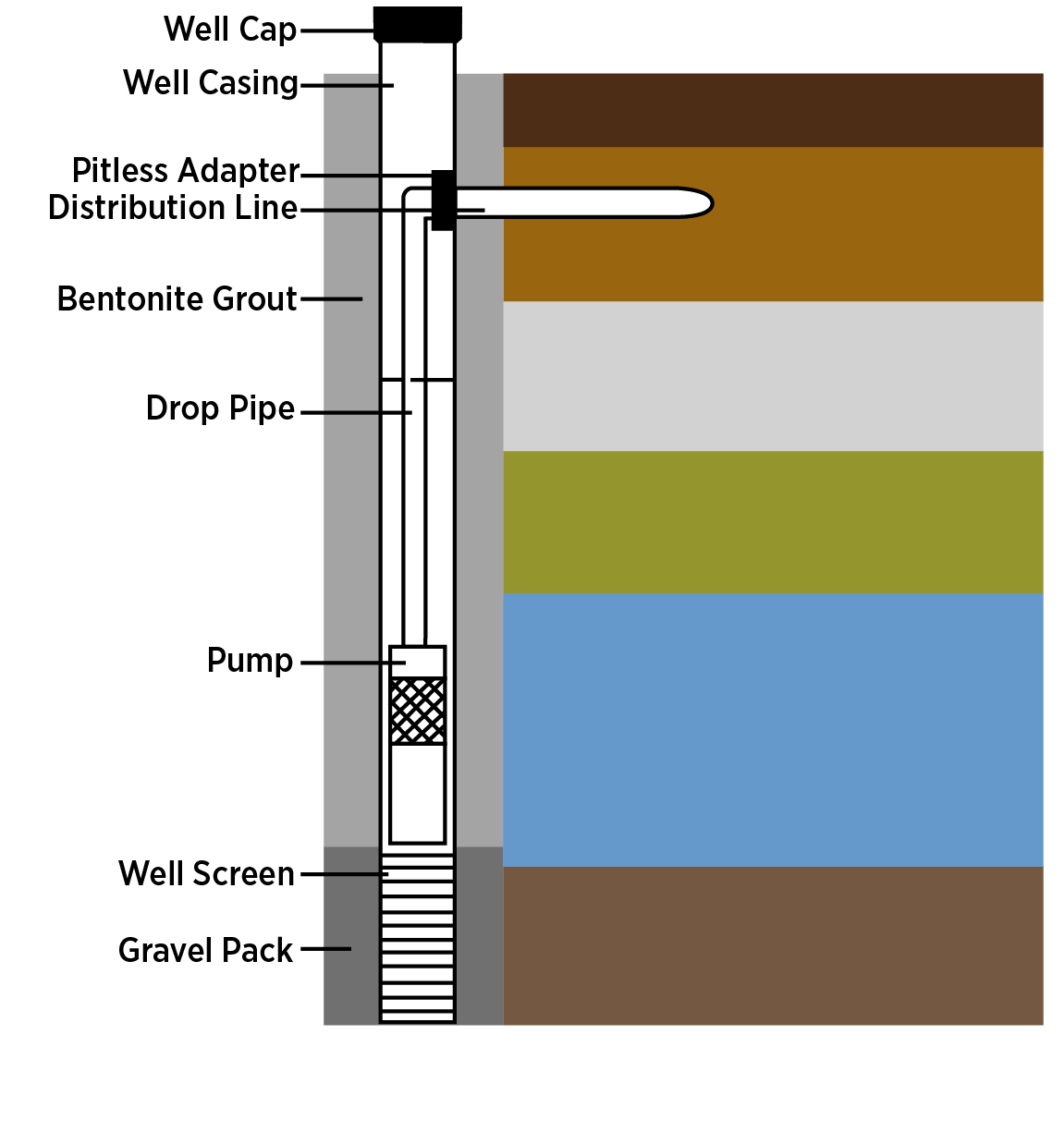
Figure 1. Common well components; source: Well Owner
For More Information
- OSU Extension Offices
- Licensed well driller/pump installers
- Groundwater Well Record Search
- Plugging Abandoned Wells
- ODEQ Water Test Request
- ODEQ Certified Labs
- US Drinking Water Standards
- ODEQ Home Water Testing
- ODEQ Private Water Well Analysis
References
- Water Well Basics: https://wellowner.org/resources/basics/
- Domestic Wells – Introduction and Overview © 2022 by John Drage. All Rights Reserved: https://books.gw-project.org/domestic-wells-introduction-and-overview/chapter/dug-wells/
- “Water Well Basics” by Diane E. Boellstorf, Drew M. Gholson, Mark L. McFarland, and John W. Smith. https://twon.tamu.edu/ wp-content/uploads/sites/3/2021/06/esc-013_water-well-basics.pdf