

Selecting Shrubs for the Landscape
Shrubs serve an important role in landscaping. They can be used as hedge borders, focal points, along the foundation of a home to “tie” it to the ground by softening strong architectural lines, and to fill large areas. Shrubs screen and separate private areas, create garden rooms, and absorb noise. Many are evergreen, providing a backbone for the winter landscape.
Unlike annual flowers, or even some herbaceous perennials, shrubs are usually planted with permanence in mind. As such, it is important to carefully select plants to ensure long-term success. It is important to consider the plant’s adaptability to the proposed planting site, as well as its mature size. For best results, choose a plant that is best adapted to the climatic zone or region and will fit in the space designated for planting, even after it reaches full size.
When selecting shrubs for the landscape, it is also important to consider each plant’s ornamental characteristics. Consider plant height, width, and shape; foliage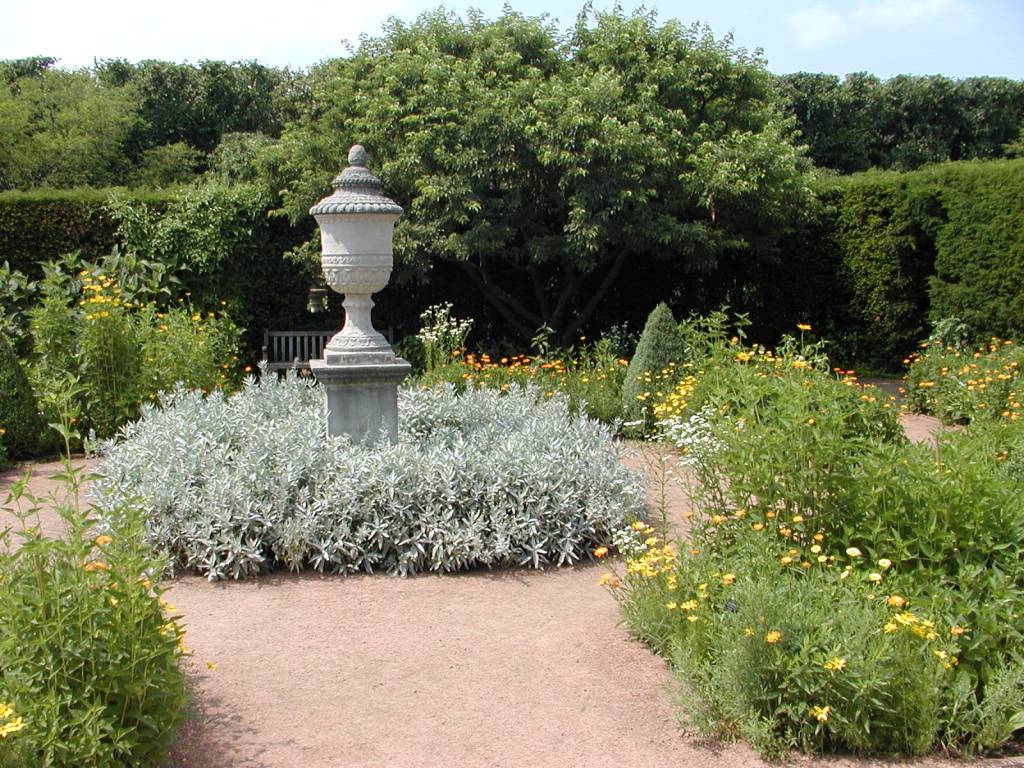
color and texture, including fall color; bark attributes; and flowering and fruiting habits, to obtain the right shrub for your landscape design.
Shrubs can be used as living fences to delineate space and create garden rooms.
Ornamental Characteristics of Shrubs
Many shrubs are planted for their showy floral displays. You can develop a long season of bloom by planting various types of shrubs. The time any shrub remains in bloom varies from a few days to a few months; however, the time of year a shrub blooms remains the same year after year. Use a variety of shrubs that bloom in sequence to develop a planting with a long blooming period. Most landscapes have lots of flowers in spring, with few in summer or fall. Prolong the ornamental season through careful shrub selection. Choose shrubs known to bloom at alternate times of year, or choose plants that provide other ornamental traits during hot weather and into the fall such as colorful bark, fall foliage, or fruit.
A number of ornamental shrubs produce attractive fruit following flowering. Some have black or dark purple fruit that often go unnoticed, unless sited for contrast. Brightly colored fruit make a better show than dull colors. The time fruit is ornamental should be a consideration. Fruit persisting into winter provides color in the winter landscape. A shrub may produce beautiful fruit, but too few to be noticed, so their ornamental value is low. Within limits, the larger the fruit the more ornamental it may be. Conversely, large fruit can be a problem to clean up.
For shrubs such as holly and yew, male and female flowers are produced on separate plants and fruit is only produced on the female plants. A plant with this flowering and fruiting habit is called dioecious. When female, fruiting plants are desired, a male plant must also be grown to ensure pollination. Usually one male shrub pollinates several female plants.
Foliage color, other than green, can occur in fall, in spring, or from spring to fall. The foliage of shrubs with showy spring color often fades to green or off green by summer. Colored foliage or variegated shrubs can be less vigorous than the natural form with green foliage. Shrubs with colored or variegated foliage may need different light intensity. Sunlight is often necessary for good fall color development or summer foliage coloration. For example, barberry cultivars with purple leaves in the sun may have nearly green leaves in the shade.
Bark is another ornamental feature. The bark may be highly colored or have interesting texture. Shrubs with evergreen foliage, brightly colored bark, or striking bark textures and patterns can provide winter color and interest.
Attracting wildlife may be a reason for selecting a particular shrub. Some shrubs produce fruits eaten by birds and others provide shelter; while some yield flowers that attract butterflies.
Some shrubs have safety concerns that should be considered. Don’t plant shrubs with poisonous berries near public walkways. Keep in mind that plants with poisonous parts or spiny foliage or stems should be avoided in high traffic areas. On the other hand, spiny shrubs/hedges may provide “traffic control” and security for an area.
Select shrubs hardy enough to survive the winter and durable enough to endure the Oklahoma summer heat.
Avoid shrubs with serious pest problems. The large selection of available shrubs makes it unnecessary to use those notorious for annual infestations of insects or diseases. Pests attack most shrubs during their lives, but most can be easily controlled or ignored. Shrubs to avoid are those with serious pest problems that render the plants aesthetically unacceptable.
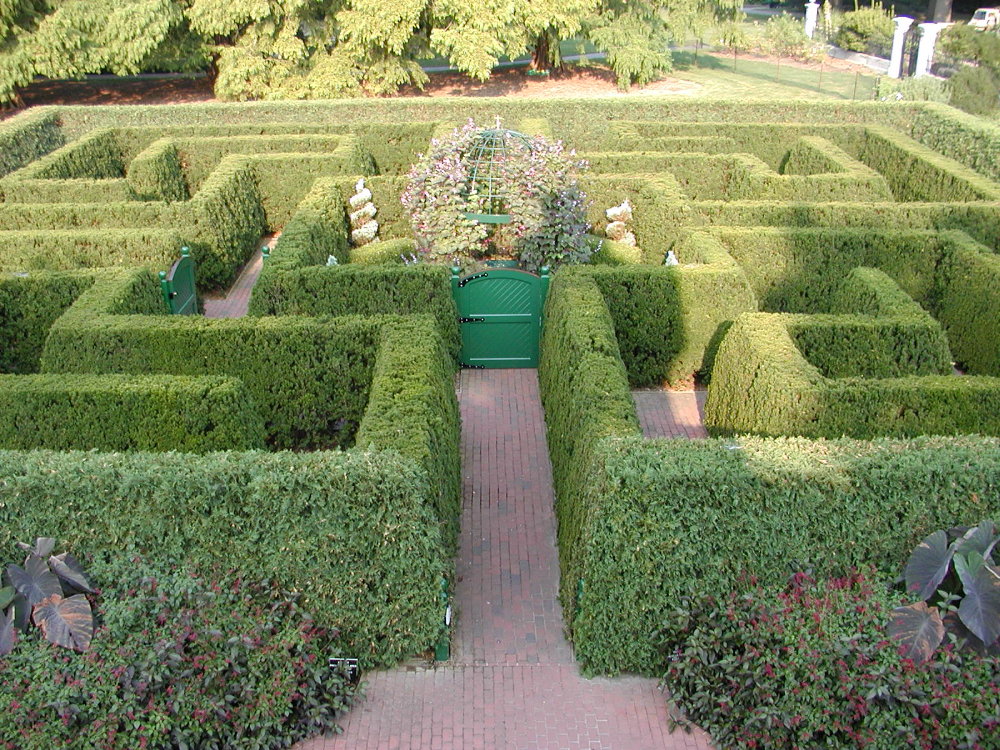
Shrubs pruned in a formal fashion can be used to create
fun and creative garden designs.
Shrubs for a Purpose
Tolerates or Prefers Dry Locations
Most or all of the shrubs listed below will still require vigilant irrigation for at least the first growing season. However, upon establishment, plants below are known to tolerate or even prefer dry sites. Tolerance to dry or xeric conditions will widely differ amongst these species.
- Abelia, Glossy (Abelia x grandiflora)
- Althea or Rose of Sharon, (Hibiscus syriacus)
- Aralia, Fiveleaf (Eleutherococcus sieboldianus)
- Aucuba, Japanese (Aucuba japonica)
- Barberry, Japanese (Berberis thunbergii)
- Barberry, Mentor (Berberis x mentorenesis)
- Beautyberry (Callicarpa americana)
- Bluebeard or Blue-mist shrub (Caryopteris x clandonensis)
- Blueberry, Highbush (Vaccinium corymbosum)
- Bush-Honeysuckle, Southern (Diervilla sessilifolia)
- Chokeberry, Black or Red (Aronia melanocarpa or A. arbutifolia)
- Cinquefoil, Bush (Potentilla fruticosa)
- Coralberry, Indiancurrant, or Buckbrush (Symphoricarpos orbiculatus)
- Coralberry, Chenault (Symphoricarpos x chenaultii)
- Cotoneaster, Rock (Cotoneaster apiculatus)
- Cotoneaster, Spreading (Cotoneaster divaricatus)
- Cotoneaster, Willowleaf (Cotoneaster salicifolius)
- Devil’s-walkingstick (Aralia spinosa)
- Dogwood, Gray (Cornus racemosa)
- Dogwood, Roughleaf (Cornus asperifolia var. drummondii)
- Firethorn (Pyracantha coccinea)
- Holly, Chinese (Ilex cornuta)
- Holly, Yaupon (Ilex vomotoria)
- Honeysuckle, Morrow (Lonicera morrowii)
- Honeysuckle, Tatarian (Lonicera tatarica)
- Honeysuckle, Winter (Lonicera fragrantissima)
- Hydrangea, smooth (Hydrangea arborescens)
- Indian Hawthorn (Rhaphiolepis spp.)
- Juniper (Juniperus spp.)
- Nandina or Heavenly Bamboo (Nandina domestica)
- Ninebark, (Physocarpus opulifolius)
- Paradise Ponciana or Bird of Paradise (Caesalpinia gilliesi)
- Pearl Bush (Exochorda racemosa)
- Photinia (Photinia spp.)
- Plum, American (Prunus americana)
- Plum, Sandhill (Prunus angustifolia)
- Privet (Ligustrum spp.)
- Quince, flowering (Chaenomeles speciosa)
- Rose, rugosa (Rosa rugosa)
- Saint Johnswort (Hypericum spp.)
- Serviceberry, Shadblow (Amelanchier canadensis)
- Siberian Peashrub (Caragana arborescens)
- Spirea, Anthony Waterer (Spiraea x bumalda 'Anthony Waterer')
- Spirea, Vanhoutte (Spiraea x vanhouttei)
- Sumac, Fragrant (Rhus aromatica)
- Sumac, Smooth (Rhus glabra)
- Witchhazel (Hamamelis spp.)
- Yucca (Yucca spp.)
Tolerates or Prefers Wet Locations
Plants listed below will only tolerate flooding for short periods of time (normally only a few days). Very few will actually survive long-term submersion of their root systems.
- Beautyberry, Purple (Callicarpa dichotoma)
- Buttonbush (Cephalanthus occidentalis)
- Chokeberry (Aronia spp.)
- Cinquefoil, Bush (Potentilla fruticosa)
- Devilwood, False holly or Osmanthus (Osmanthus heterophyllus)
- Dogwood, Redosier (Cornus sericea)
- Dogwood, Roughleaf (Cornus asperifolia)
- Dogwood, Silky (Cornus amomum)
- Elder, American or Elderberry (Sambucus canadensis)
- Holly, Deciduous or Possumhaw (Ilex decidua)
- Holly, Inkberry (Ilex glabra)
- Summersweet (Clethra alnifolia)
- Sweetshrub, California (Calycanthus occidentalis)
- Sweetspire, Virginia (Itea virginica)
- Viburnum, European or Snowball (Viburnum opulus)
- Waxmyrtle, Southern (Morella cerifera)
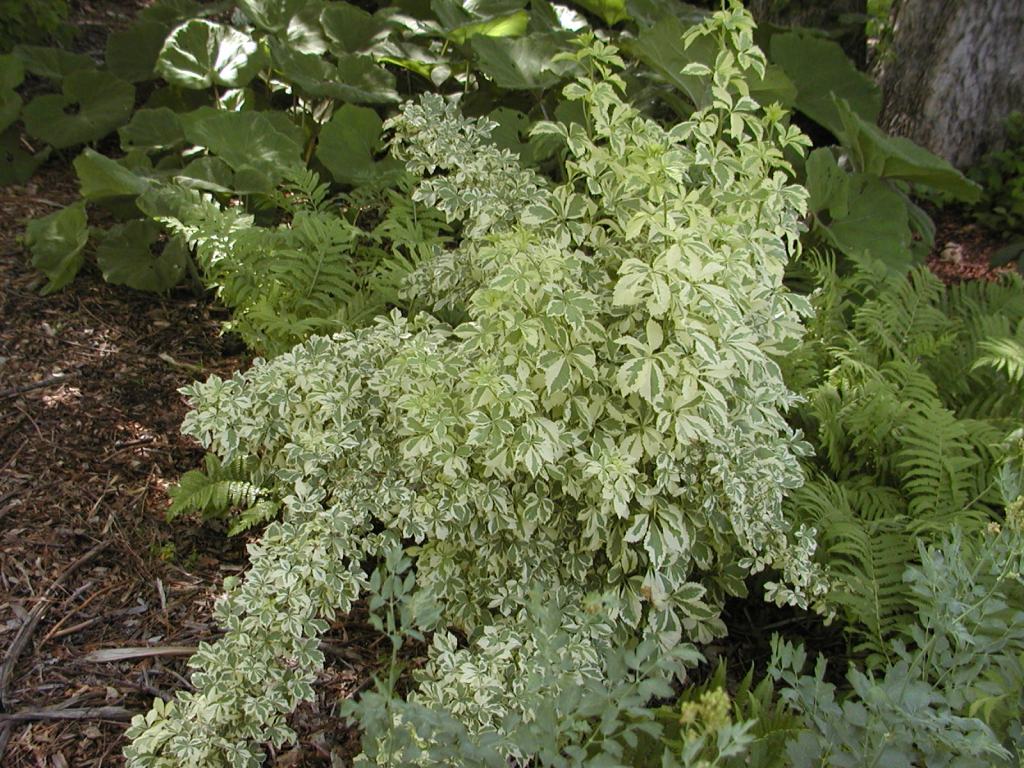
Shrubs with variegated foliage, like this five-leaf aralia, really stand out in shady areas
Tolerates or Prefers Shade
The following plants will perform well under shady conditions.
- Abelia, Glossy (Abelia x grandiflora)
- Aralia, Fiveleaf (Eleutherococcus sieboldianus)
- Aucuba, Japanese (Aucuba japonica)
- Azalea (Rhododendron spp.)
- Barberry, Japanese (Berberis thunbergii)
- Barberry, Mentor (Berberis x mentorenesis)
- Boxwood, Common (Buxus sempervirens)
- Buttonbush (Cephalanthus occidentalis)
- Camellia (Camellia spp.)
- Coralberry or Snowberry (Symphoricarpos spp.)
- Currant, Golden (Ribes aplinum 'Aureum')
- Dogwood, Redosier (Cornus sericea)
- Euonymus (Euonymus spp.)
- Fothergilla (Fothergilla spp.)
- Holly (Ilex spp.)
- Honeysuckle, Winter (Lonicera fragrantissima)
- Hydrangea (Hydrangea spp.)
- Jasmine, Winter (Jasminum nudiflorum)
- Jetbead, Black (Rhodotypos scandens)
- Kerria, Japanese (Kerria japonica)
- Mockorange (Philadelphus spp.)
- Mahonia, creeping (Mahonia repens)
- Mahonia, Leatherleaf (Mahonia bealei)
- Nandina, Heavenly bamboo (Nandina domestica)
- Pine, Mugo (Pinus mugo var. mugo)
- Privet (Ligustrum spp.)
- Spirea, Vanhoutte (Spiraea x vanhouttei)
- Sweetspire, Virginia (Itea virginica)
- Weigela, Old fashioned (Weigela florida)
- Yew, (Taxus spp.)
- Viburnum (Viburnum spp.)
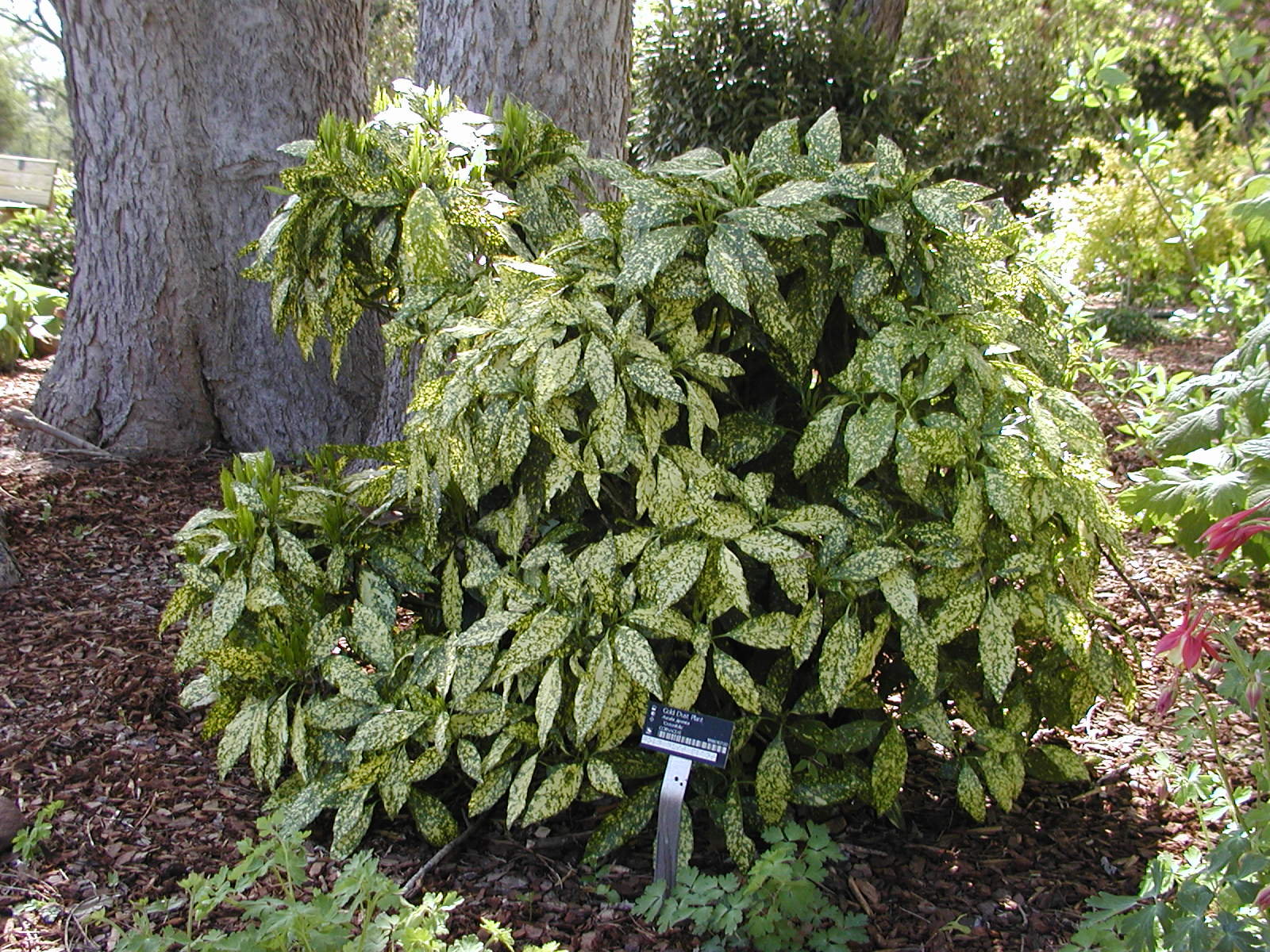
Aucuba or Gold Dust plant is excellent for heavily shaded areas.
Shrubs with variegated leaves
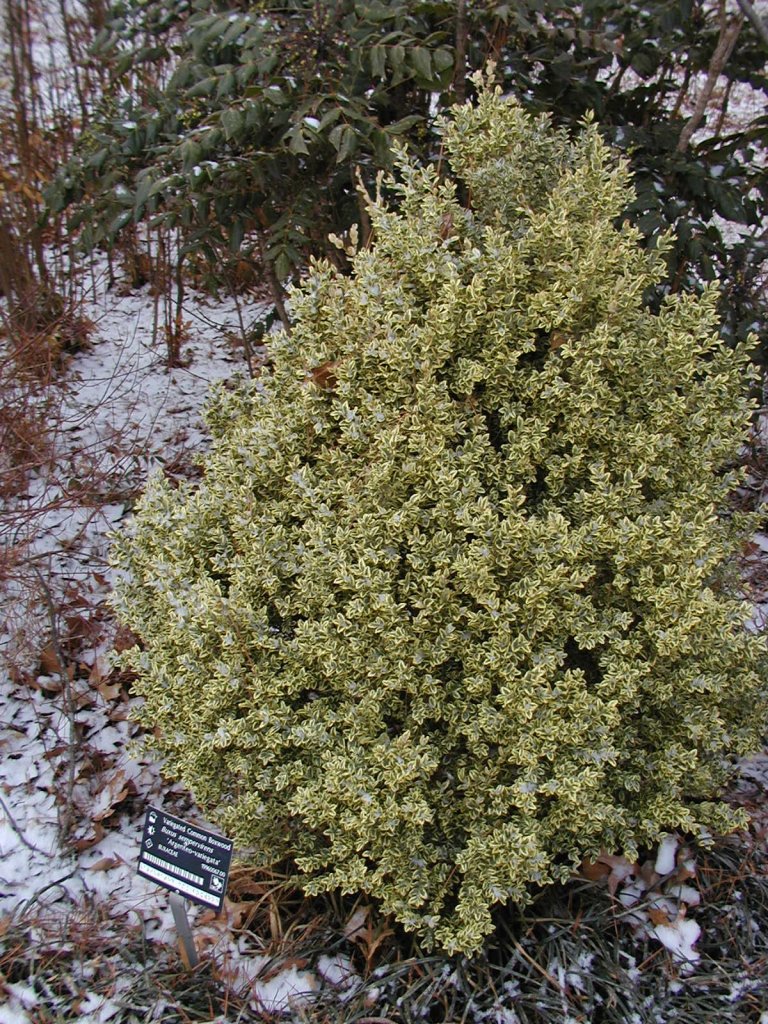
Common Boxwood
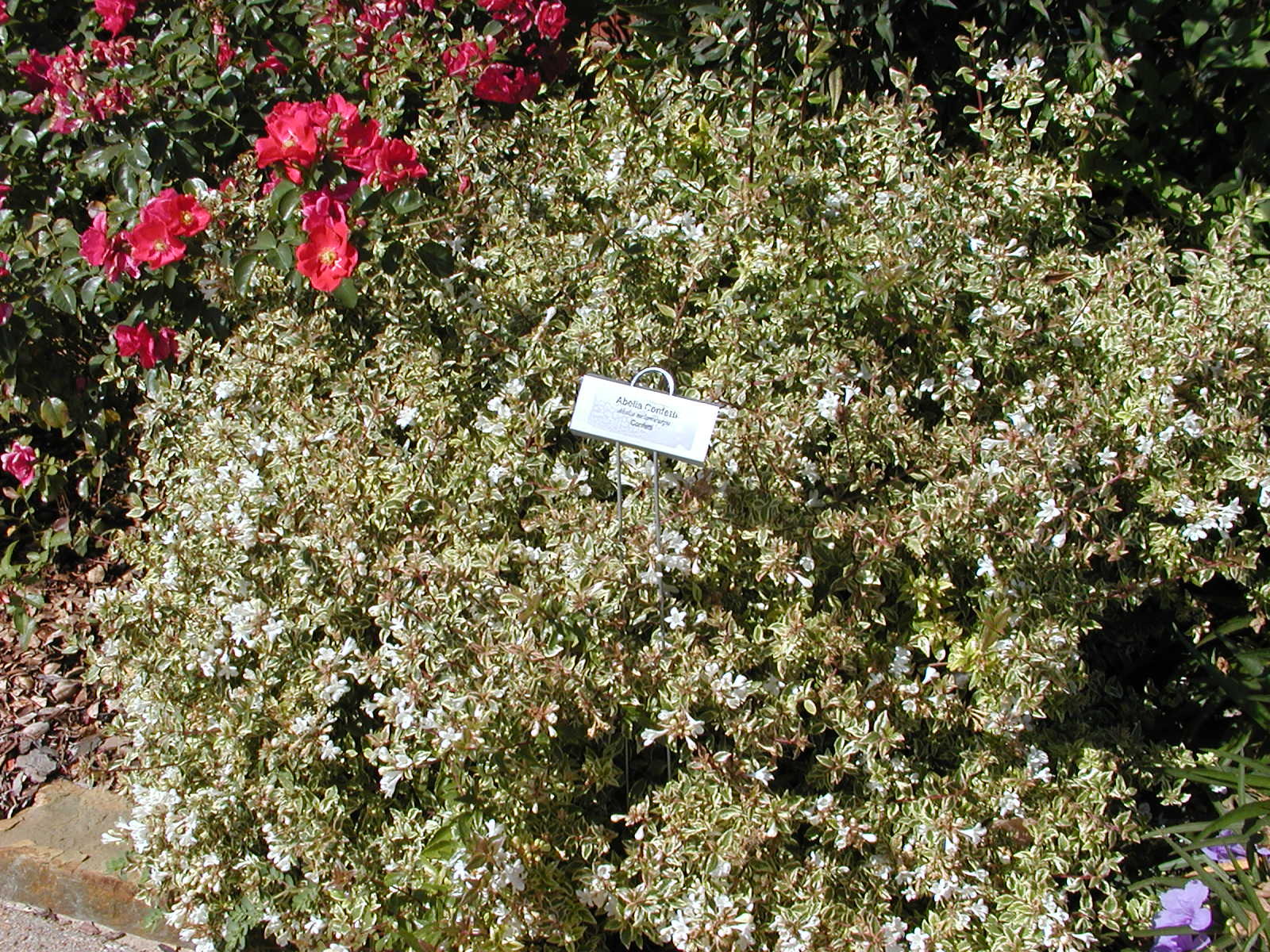
Abelia 'Confetti'
Tolerates or Prefers Alkaline Soils
Many of the plants listed below will thrive and remain green despite growing in high pH soils. However, when pH values exceed pH 8.0 or higher, it may be difficult to grow some of the species below.
- Althea or Rose of Sharon (Hibiscus syriacus)
- Barberry (Berberis spp.)
- Beautyberry, Purple (Callicarpa dichotoma)
- Beautybush (Kolkwitzia amabilis)
- Bluebeard or Blue-mist Shrub (Caryopteris x clandonensis)
- Boxwood (Buxus spp.)
- Buddleia or Butterfly Bush (Buddleia davidii)
- Bush cinquefoil (Potentilla fruticosa)
- Carolina Allspice or Sweetshrub (Calycanthus floridus)
- Chokeberry (Aronia spp.)
- Cotoneaster (Cotoneaster spp.)
- Crapemyrtle (Lagerstroemia indica)
- Dogwood, Redosier or Red Twig (Cornus sericea)
- Euonymus (Euonymus spp.)
- Firethorn (Pyracantha spp.)
- Forsythia (Forsythia x intermedia)
- Honeysuckle (Lonicera spp.)
- Juniper (Juniperus spp.)
- Lilac (Syringa spp.)
- Mahonia (Mahonia spp.)
- Mockorange (Philadelphus spp.)
- Nandina (Nandina domestica)
- Ninebark (Physocarpus spp.)
- Pine (Pinus spp.)
- Privet (Ligustrum spp.)
- Snowberry (Symphoricarpos albus)
- Spirea (Spiraea spp.)
- Viburnum (Viburnum spp.)
- Yew (Taxus spp.)
- Yucca (Yucca spp.)
Tolerates Salty Soils
Plants below have varying degrees of tolerance to saline soils. While some may survive salty soils, the homeowner should still expect the possibility of burned or scorched leaves with overall stunting of the plant a possibility.
- Bayberry, northern (Myrica pensylvanica)
- Blueberry, highbush (Vaccinium corymbosum)
- Bush-Honeysuckle, southern (Diervilla sessilifolia)
- Chokeberry, black (Aronia melanocarpa)
- Chokeberry, red (Aronia arbutifolia)
- Cinquefoil, bush (Potentilla fruticosa)
- Cotoneaster, rock (Cotoneaster apiculatus)
- Cotoneaster, spreading (Cotoneaster divaricatus)
- Cotoneaster, willowleaf (Cotoneaster salicifolius)
- Holly, inkberry (Ilex glabra)
- Holly, Japanese (Ilex crenata)
- Hydrangea, bigleaf (Hydrangea macrophylla)
- Hydrangea, oakleaf (Hydrangea quercifolia)
- Hydrangea, panicle (Hydrangea paniculata)
- Hydrangea, smooth (Hydrangea arborescens)
- Juniper, shore (Juniperus conferta)
- Lilac, littleleaf (Syringa microphylla)
- Lilac, Manchurian (Syringa patula 'Miss Kim')
- Lilac, Meyer (Syringa meyeri 'Palibin')
- Privet, Amur (Ligustrum amurense)
- Rose, rugosa (Rosa rugosa)
- Viburnum, Arrowwood (Viburnum dentatum)
- Viburnum, blackhaw (Viburnum prunifolium)
- Viburnum, siebold (Viburnum sieboldii)
- Yew, Anglojap (Taxus x media cultivars)
- Yew, Japanese (Taxus cuspidata)
Winter Interest
Many plants have ornamental merit during the cold months. There are a number of other attributes to seek out in addition to flowers; many plants have characteristics that set them above other plants, such as the colorful bark of redosier dogwood, the colorful fruit of deciduous holly that persist into the winter, and the unusual branching habit of Harry Lauder's walkingstick.
Showy Bark/Branches or Unusual Form:
- Beautybush (Kolkwitzia amabilis)
- Dogwood, redosier (Cornus sericea)
- Dogwood, yellowtwig (Cornus sericea 'Flaviramea')
- Euonymus, Winged or Burning bush (Euonymus alatus)
- Harry Lauder's walkingstick (Corylus avellana 'Contorta')
- Honeysuckle (Lonicera spp.)
- Kerria, Japanese (Kerria japonica)
Interesting Stems or Bark
Harry Lauder's Walkingstick
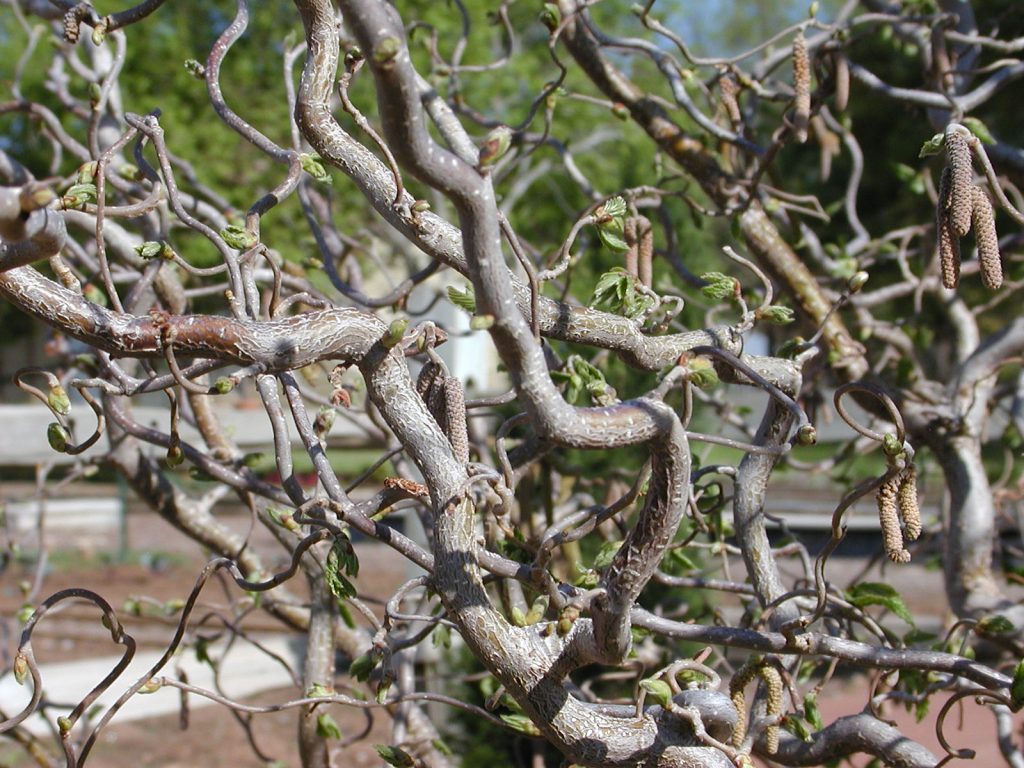
Harry Lauder's Walkingstick
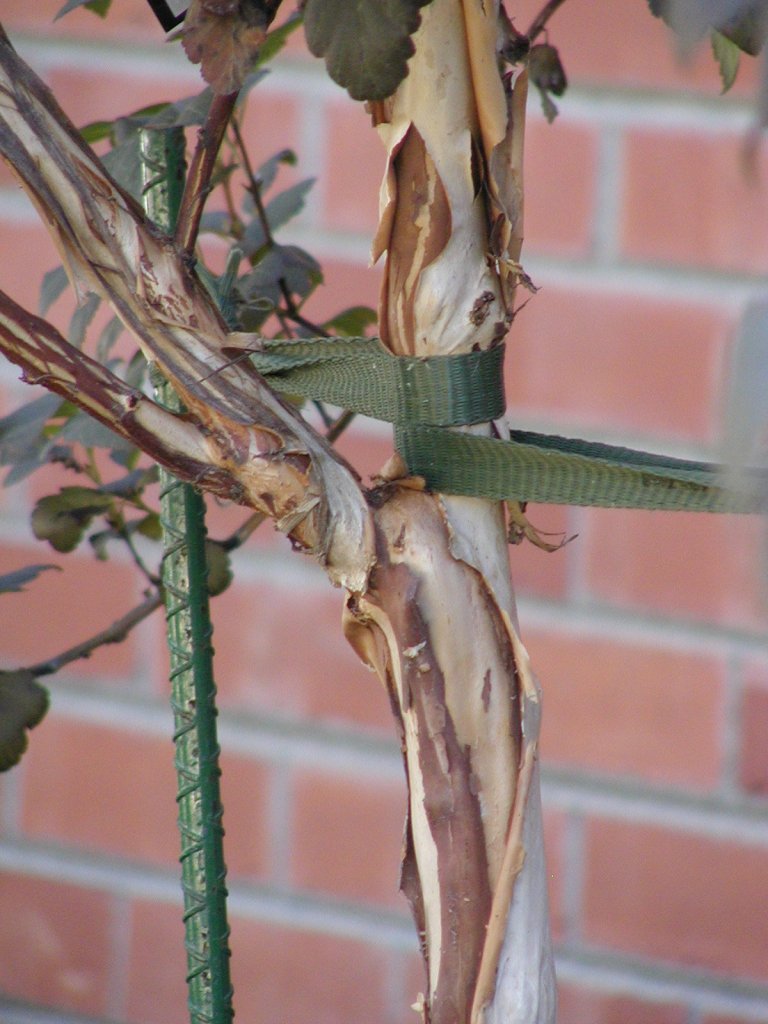
Diablo Ninebark
Interesting or Showy Fruit:
- Barberry, Japanese (Berberis thunbergii)
- Beautyberry (Callicarpa japonica)
- Buckthorn, Carolina (Rhamnus caroliniana)
- Buffaloberry, Silver (Shepherdia argentea)
- Buttonbush (Cephalanthus occidentalis)
- Chokeberry, Black (Aronia melanocarpa)
- Chokeberry, Red (Aronia arbutifolia)
- Coralberry, Indiancurrant or Buckbrush (Symphoricarpos orbiculatus)
- Cotoneaster (Cotoneaster spp.)
- Dogwood (Cornus spp.)
- Elder or Elderberry (Sambucus spp.)
- Euonymus (Euonymus spp.)
- Firethorn (Pyracantha coccinea)
- Hardy orange (Poncirus trifoliata)
- Holly (Ilex spp. and hybrids)
- Honeysuckle, Morrow (Lonicera morrowii)
- Honeysuckle, Tatarian (Lonicera tatarica)
- Jetbead, Black (Rhodotypos scandens)
- Juniper (Juniperus spp.)
- Mahonia (Mahonia spp.)
- Nandina or Heavenly bamboo (Nandina domestica)
- Privet (Ligustrum spp.)
- Sumac (Rhus spp.)
- Viburnum (Viburnum spp.)
Flowers During Winter and Early Spring
- Camellia (Camellia spp.)
- Forsythia (Forsythia spp.)
- Jasmine, winter (Jasminum nudiflorum)
- Honeysuckle, winter (Lonicera fragrantissima)
- Quince, Flowering (Chaenomeles spp.)
- Spirea (certain Spiraea spp.)
- Witchhazel (Hamamelis spp.)
- Winterhazel (Corylopsis spp.)
Showy Flowers
We expect herbaceous annual and perennial ornamental plants to bloom in the landscape, but it is an added bonus when shrubs bloom. The following shrubs provide colorful, showy flowers.
- Abelia, glossy (Abelia x grandiflora)
- Althea or Rose of Sharon (Hibiscus syriacus)
- Azalea (Rhododendron spp.)
- Barberry (Berberis spp.)
- Beautyberry (Callicarpa japonica)
- Beautybush (Kolkwitzia amabilis)
- Bluebeard or Blue-mist Shrub (Caryopteris x clandonensis)
- Bush Cinqefoil (Potentilla fruticosa)
- Buttonbush (Cephalanthus occidentalis)
- Butterfly bush (Buddleia spp.)
- Camellia (Camellia spp.)
- Carolina Allspice or Sweetshrub (Calycanthus floridus)
- Cherrylaurel, Carolina (Prunus caroliniana)
- Cherrylaurel, Otto Luyken (Prunus laurocerasus 'Otto Luyken')
- Cherrylaurel, Common (Prunus laurocerasus)
- Cotoneaster (Cotoneaster spp.)
- Crapemyrtle (Lagerstroemia indica)
- Flowering quince (Chaenomeles speciosa)
- Forsythia (Forsythia spp.)
- Honeysuckle (Lonicera spp.)
- Hydrangea (Hydrangea spp.)
- Indian Hawthorn (Rhaphiolepis spp.)
- Lilac (Syringa spp.)
- Mahonia (Mahonia spp.)
- Mockorange, sweet (Philadelphus spp.)
- Nandina or Heavenly bamboo (Nandina domestica)
- Pearl Bush (Exochorda spp.)
- Photinia (Photinia spp.)
- Pyracantha or Firethorn (Pyracantha coccinea)
- Rose (Rosa spp.)
- Sand plum (Prunus angustifolia)
- Siberian peashrub (Caragana arborescens)
- Spirea (Spiraea spp.)
- St. Johnswort (Hypericum spp.)
- Sweetspire (Itea virginica)
- Viburnums (Viburnum spp.)
- Vitex, Chaste tree (Vitex agnus-castus)
- Weigela (Weigela florida)
- Winter jasmine (Jasminum nudiflorum)
- Witchhazel (Hamamelis vernalis)
Flowering Shrubs
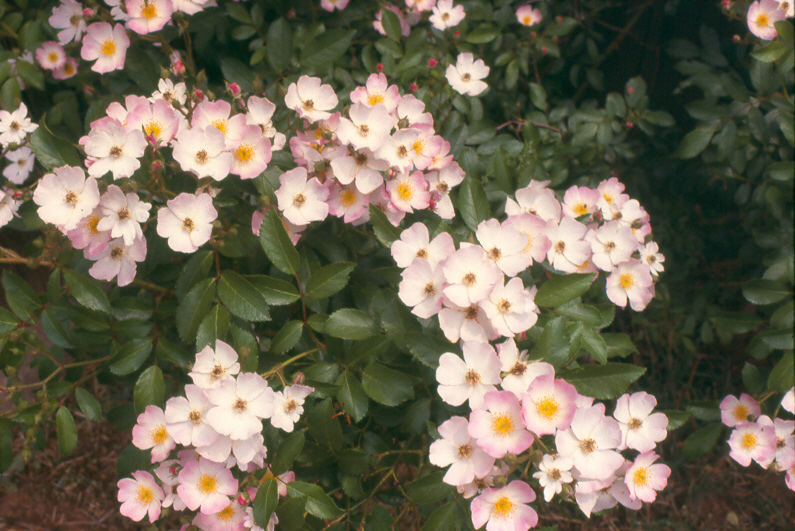
Ballerina Rose
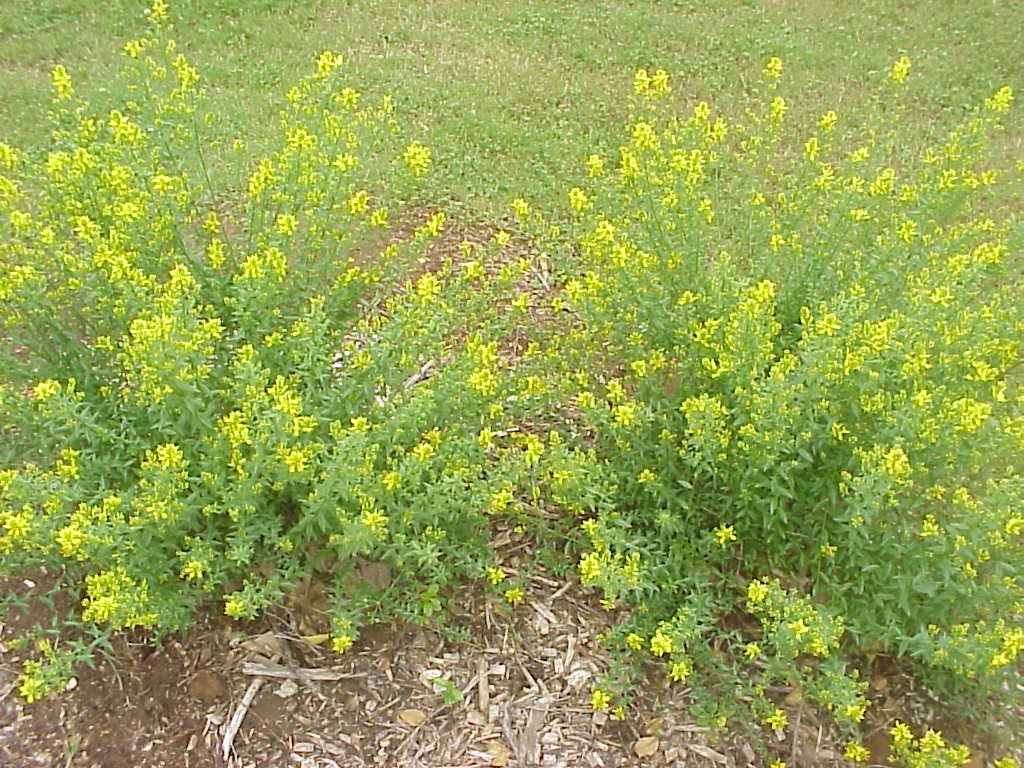
Woadwaxen
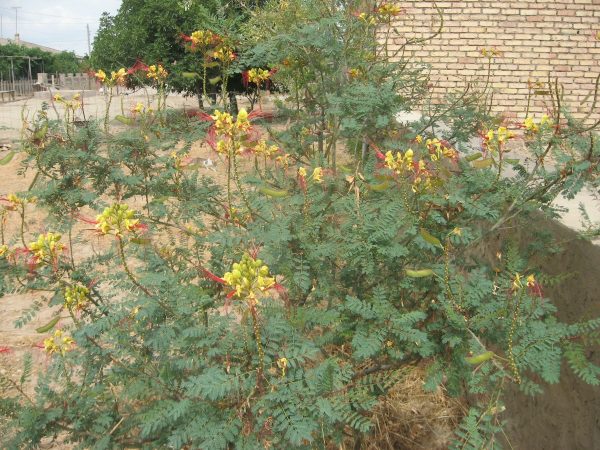
Bird of Paradise
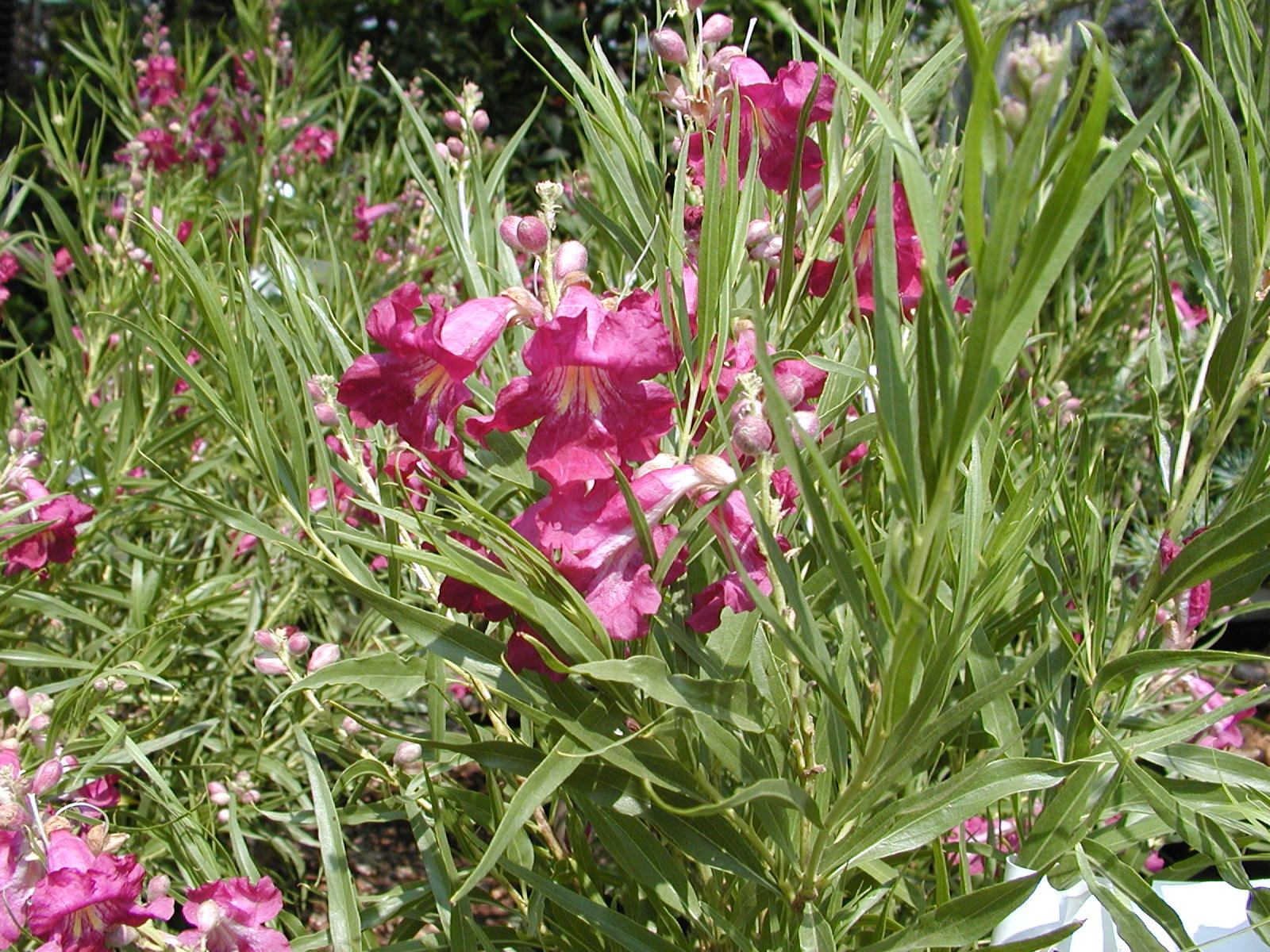
Burgundy Chilopsis
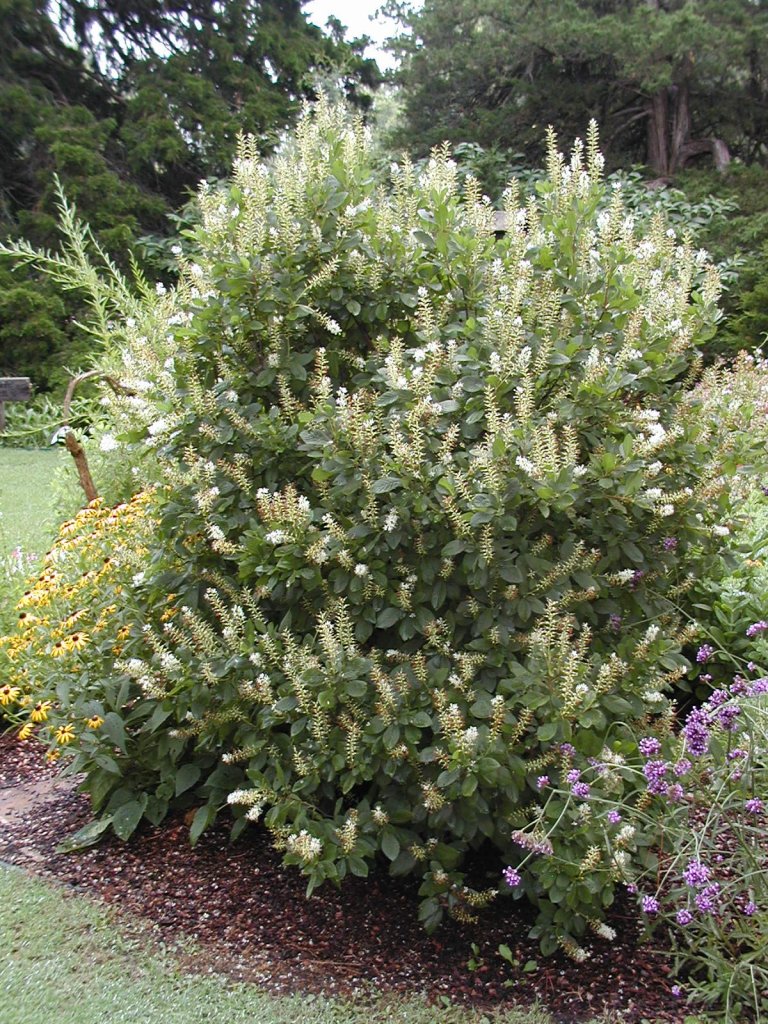
Summersweet
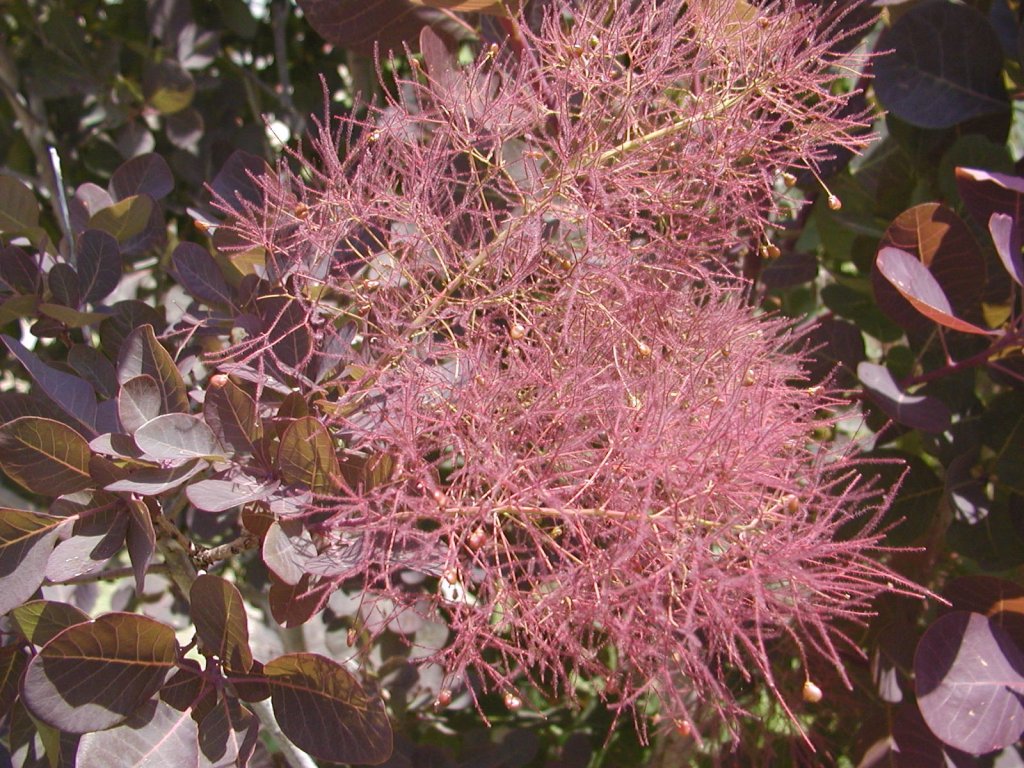
Purple Smoketree
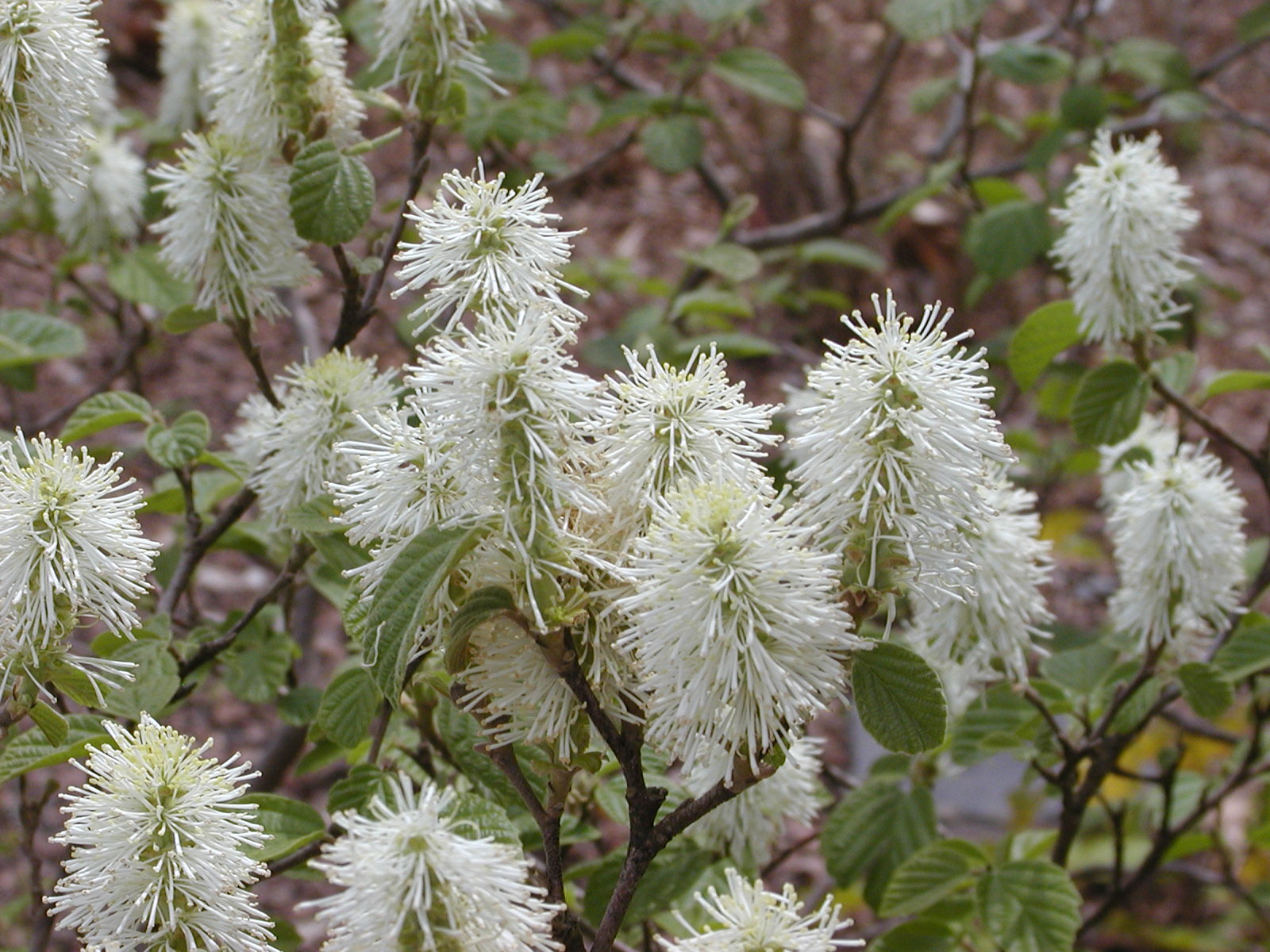
Fothergilla
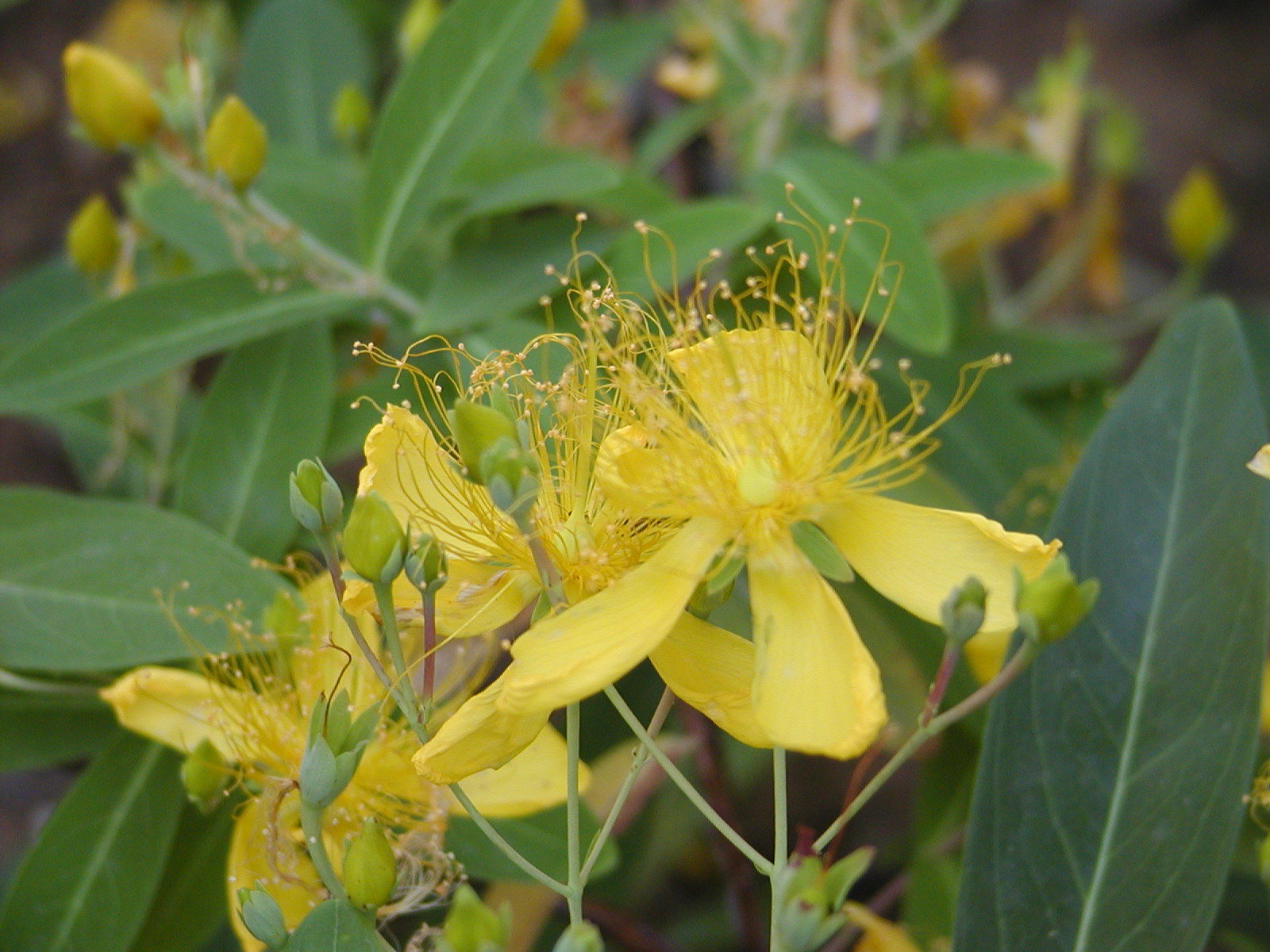
St. Johnswort
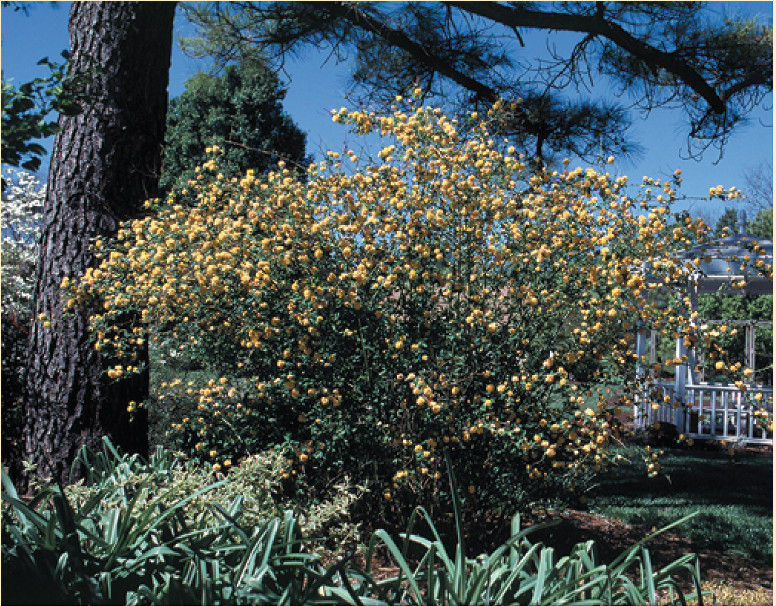
Japanese Kerria
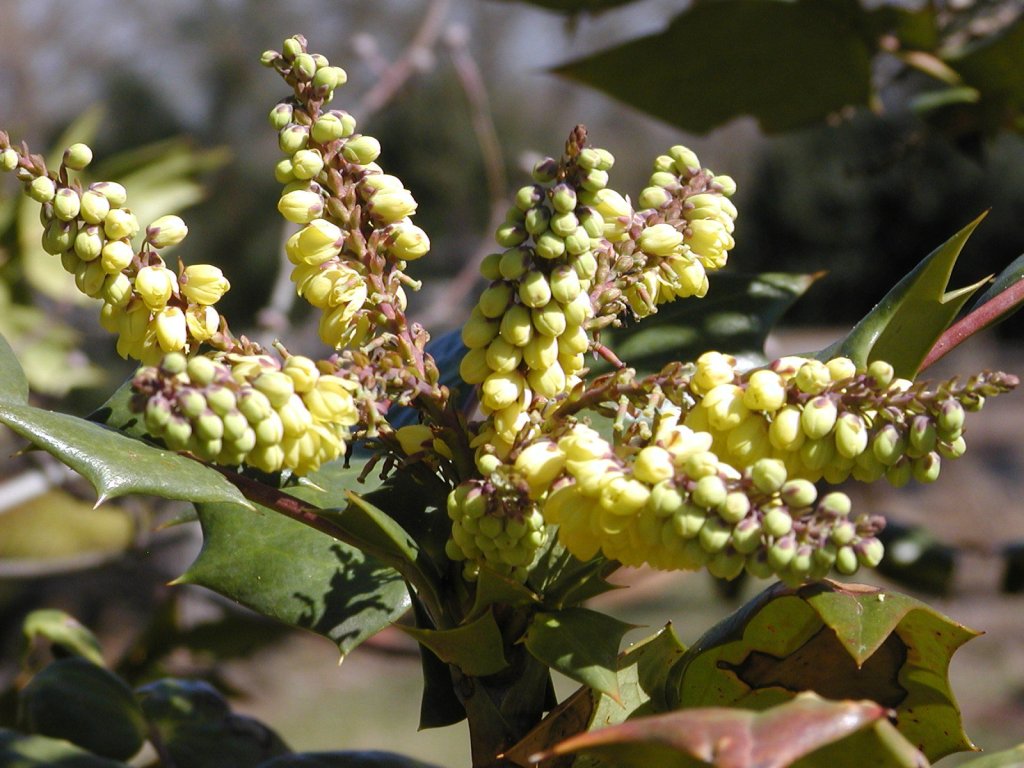
Leatherleaf Mahonia
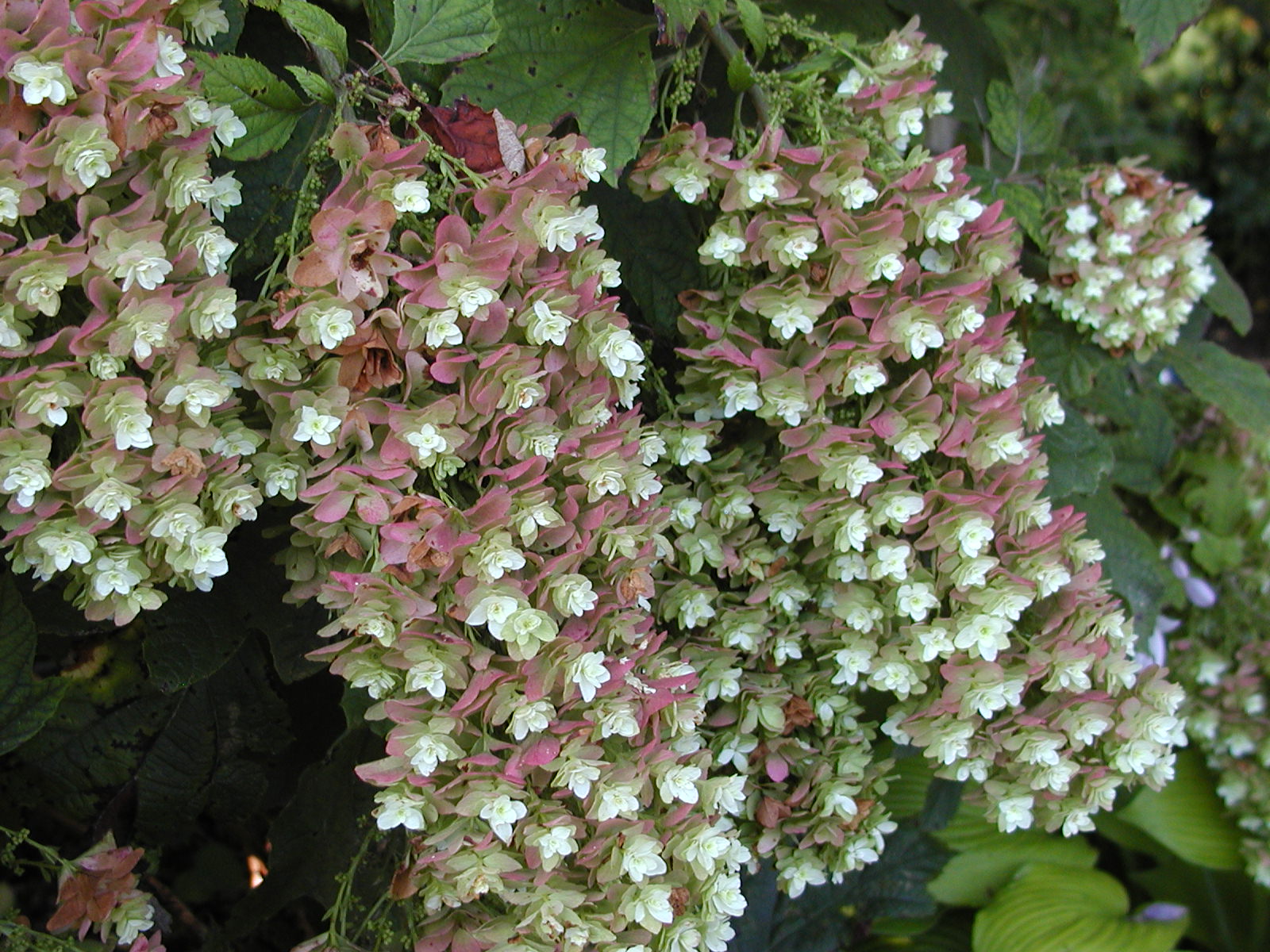
Oakleaf Hydrangea
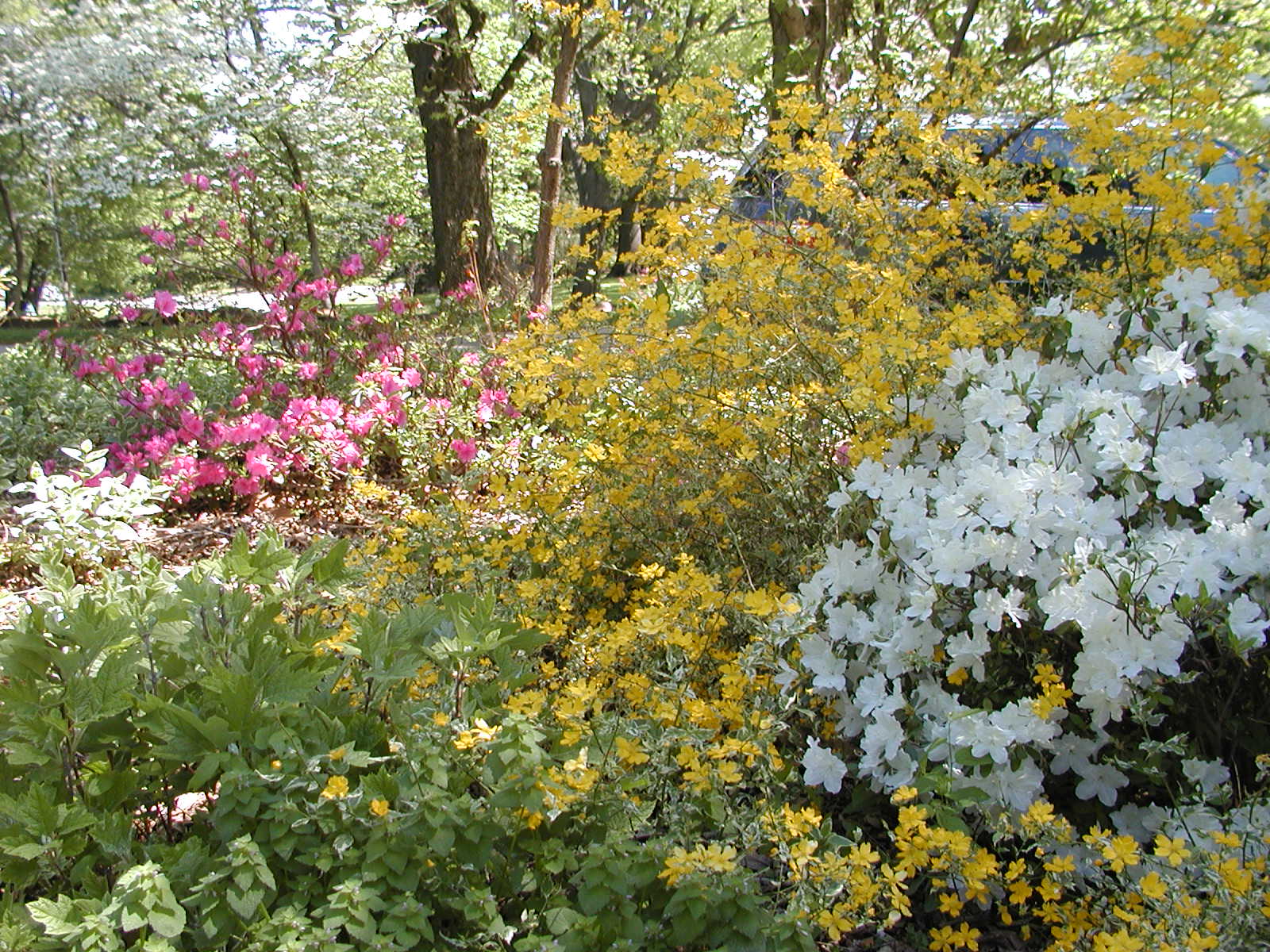
Azaleas and Japanese Kerria
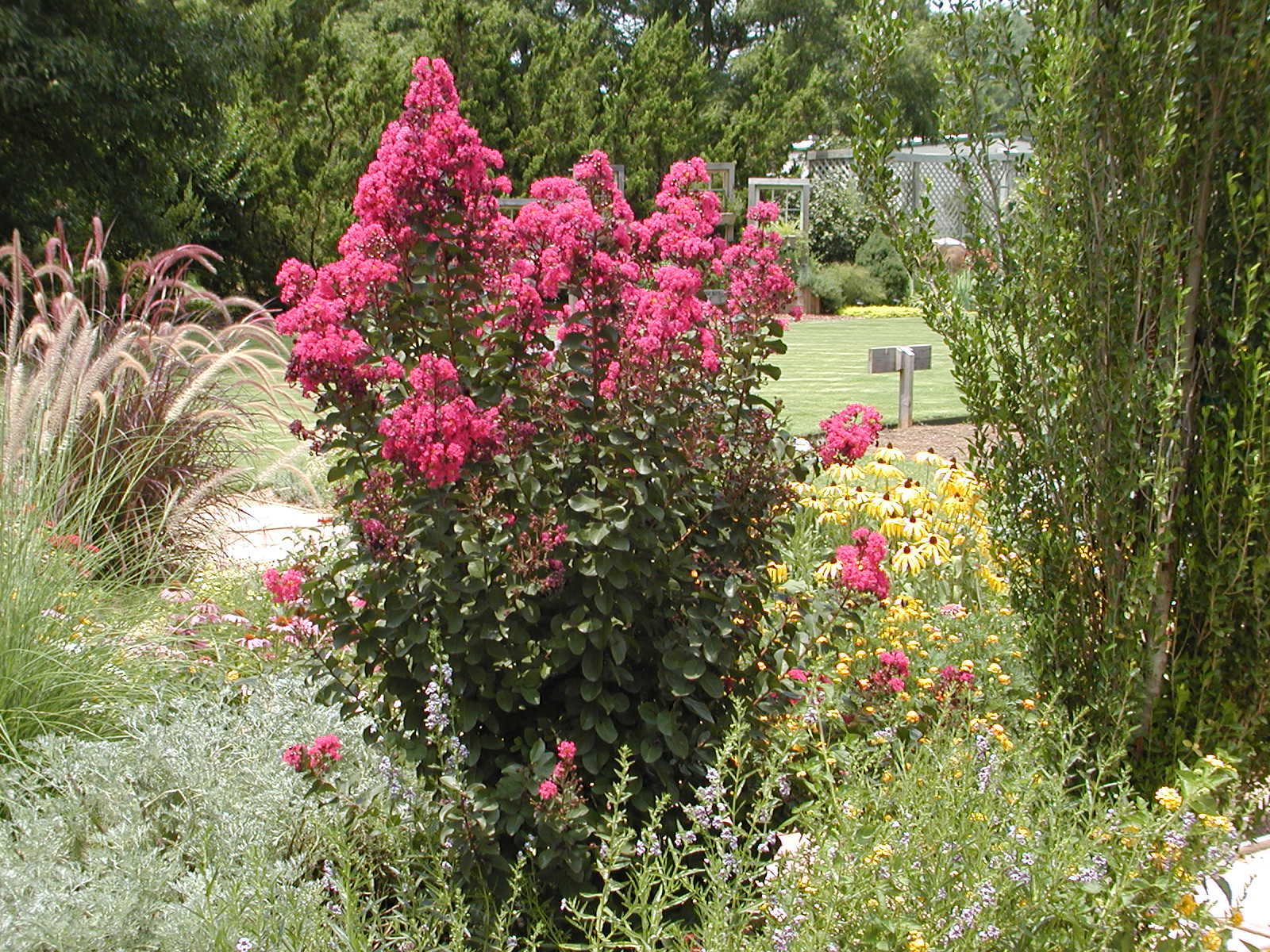
Pink Velour Crapemyrtle
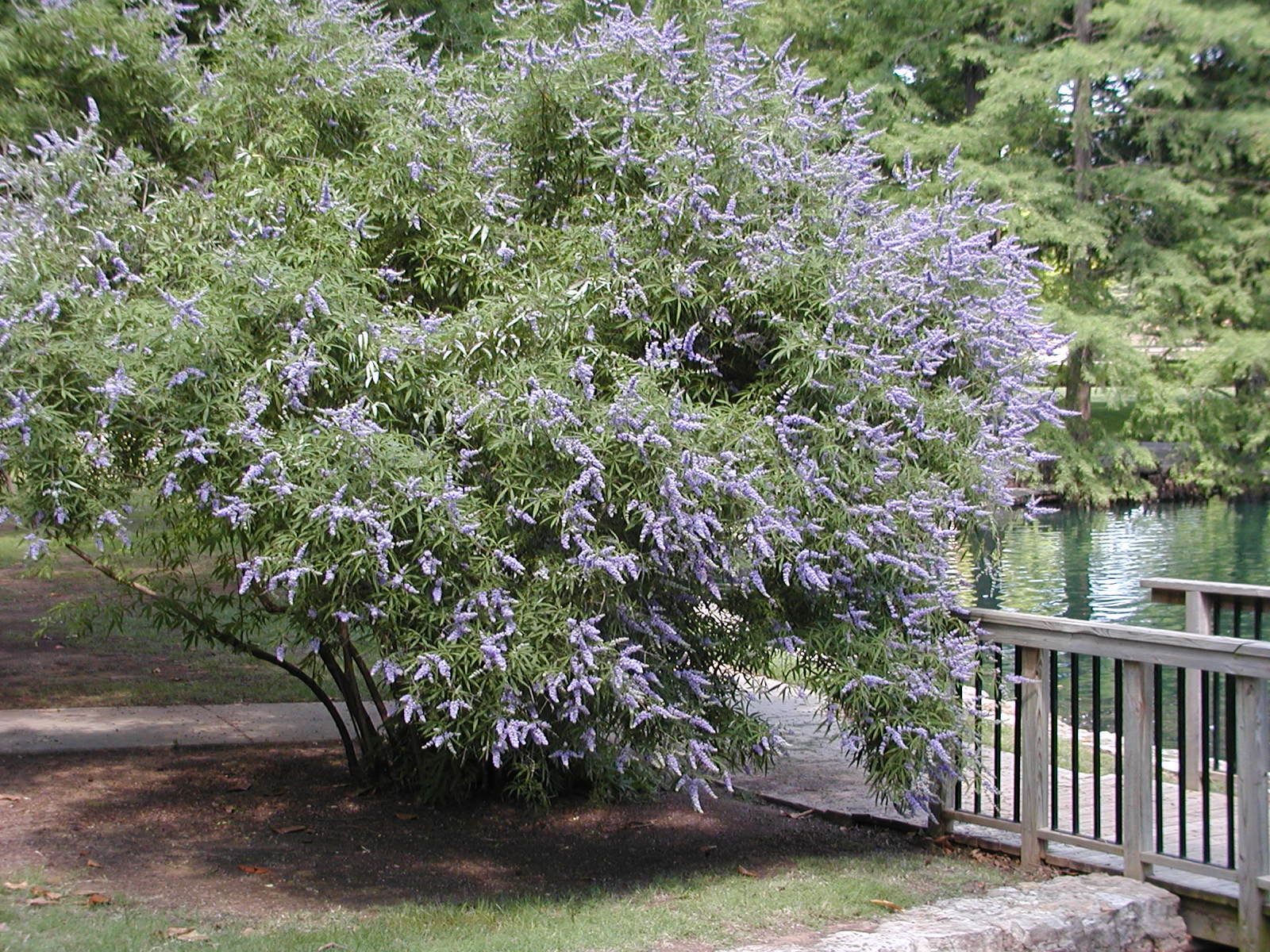
Chastetree
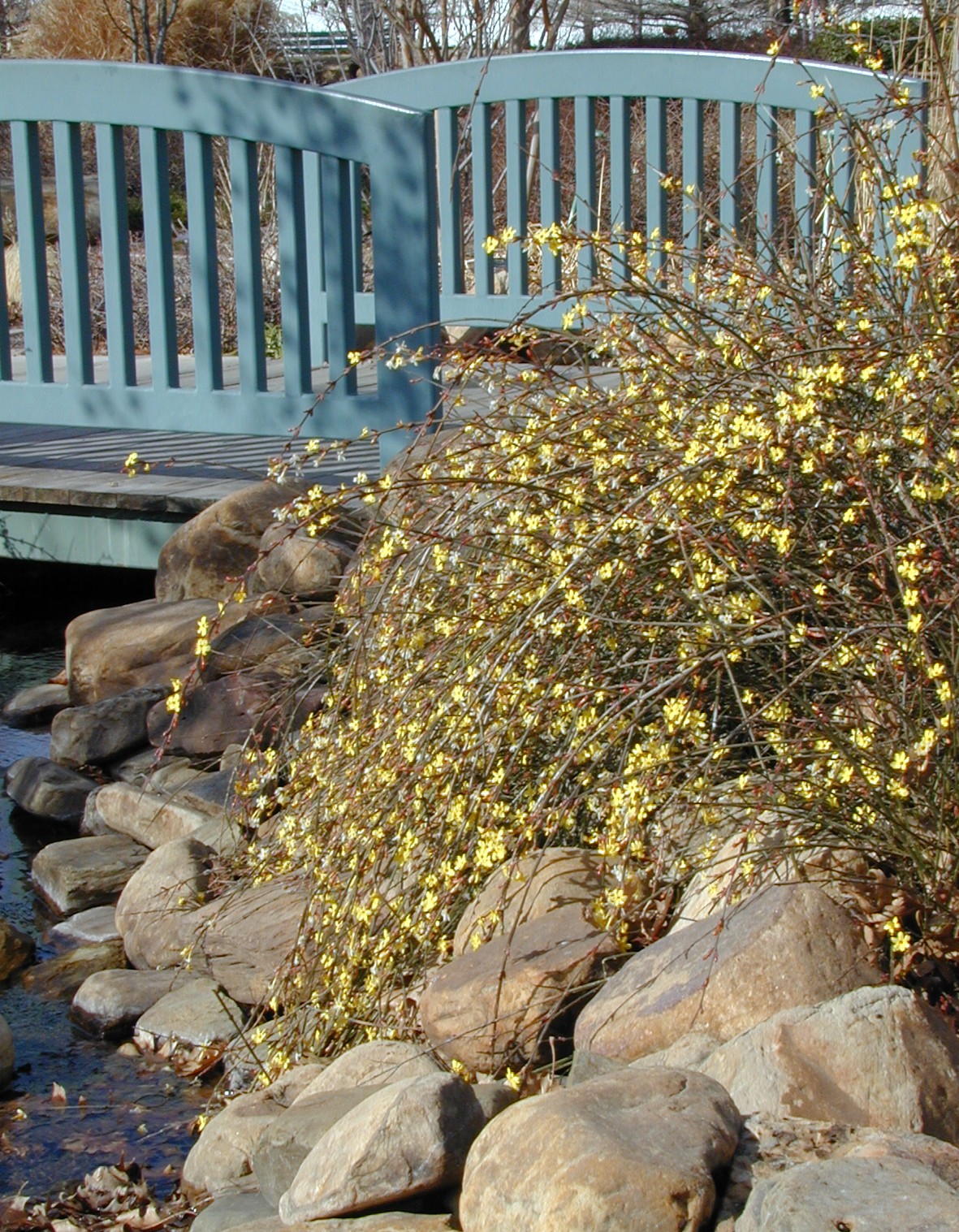
Winter Jasmine
Fall Color
Many factors influence the quality and intensity of fall color for any given year. Some of the plants listed below have specific species or cultivars that are known for reliable and markedly vivid fall color. When fall color is the priority trait desired, it is advisable to purchase the plant in the fall when such colors can be viewed and critiqued by the consumer.
- Barberry, Japanese (Berberis thunbergii)
- Beautyberry (Callicarpa spp.)
- Blueberry (Vaccinium spp.)
- Carolina Allspice or Sweetshrub (Calycanthus floridus)
- Chokeberry (Aronia spp.)
- Cotoneaster (Cotoneaster spp.)
- Crapemyrtle (Lagerstroemia spp.)
- Dogwood (Cornus spp.)
- Euonymus, Winged or Burning Bush (Euonymus alata)
- Forsythia (Forsythia spp.)
- Fothergilla (Fothergilla spp.)
- Hydrangea, Oakleaf (Hydrangea quercifolia)
- Mahonia, creeping and Oregon grapeholly (Mahonia repens and M. aquifolium)
- Nandina, heavenly bamboo (Nandina domestica)
- Ninebark (Physocarpus spp.)
- Parrotia, Persian (Parrotia persica)
- Serviceberry (Amelanchier spp.)
- Smoketree (Cotinus coggygria)
- Spirea (Spiraea spp.)
- Sumac (Rhus spp.)
- Sweetspire, Virginia (Itea virginica)
- Viburnum (Viburnum spp.)
- Witchhazel (Hamamelis spp.)
Shrubs with colorful foliage
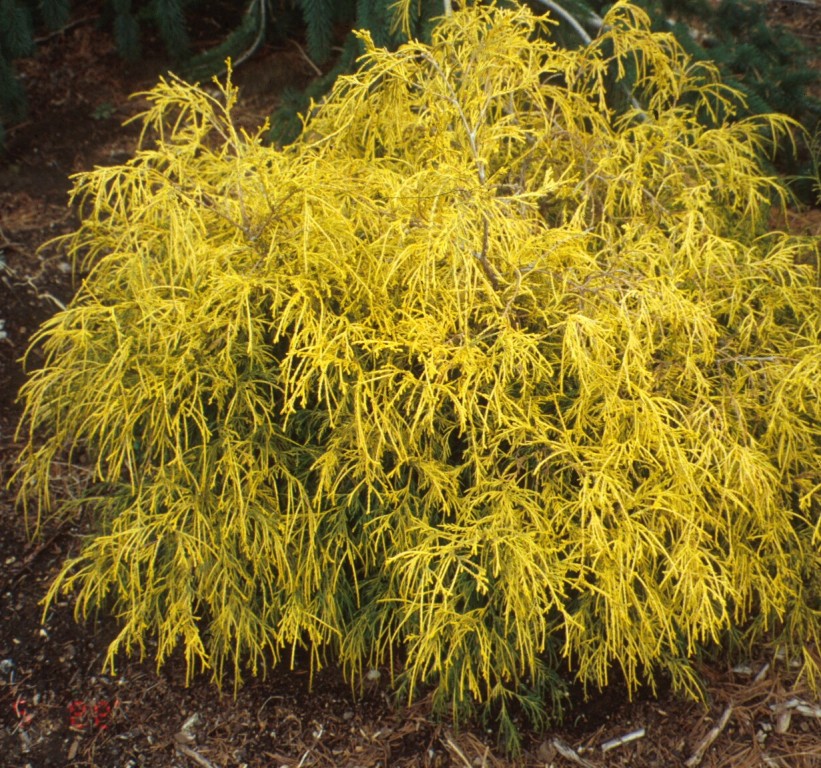
Golden Chamaecyparis
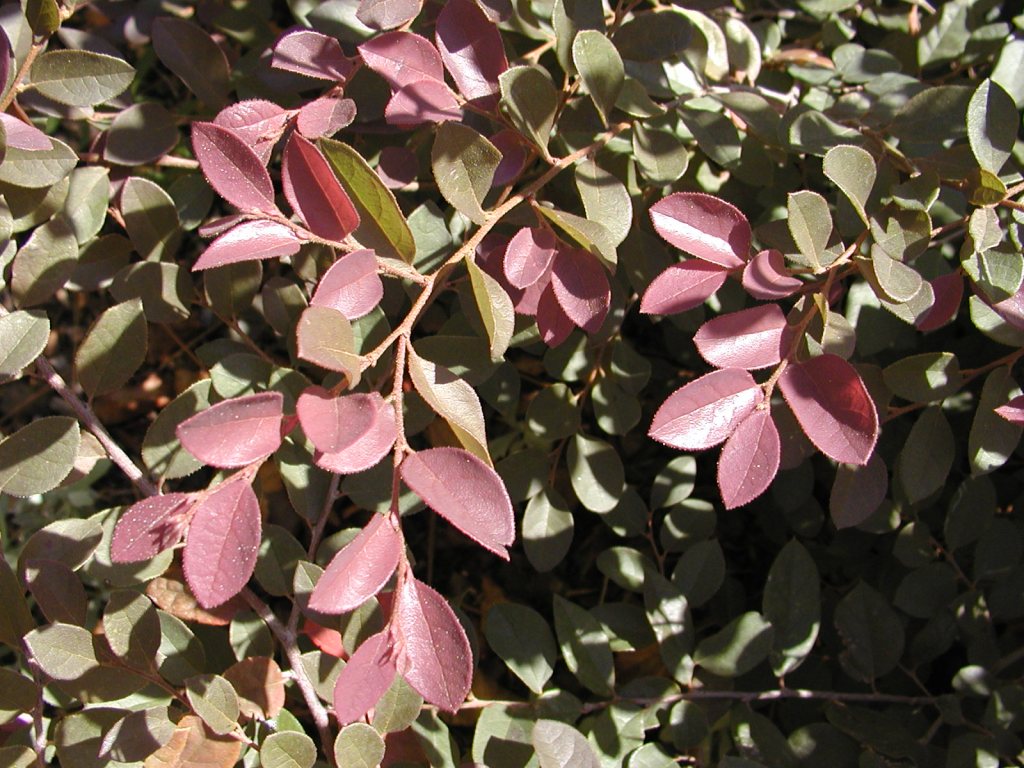
Loropetalum
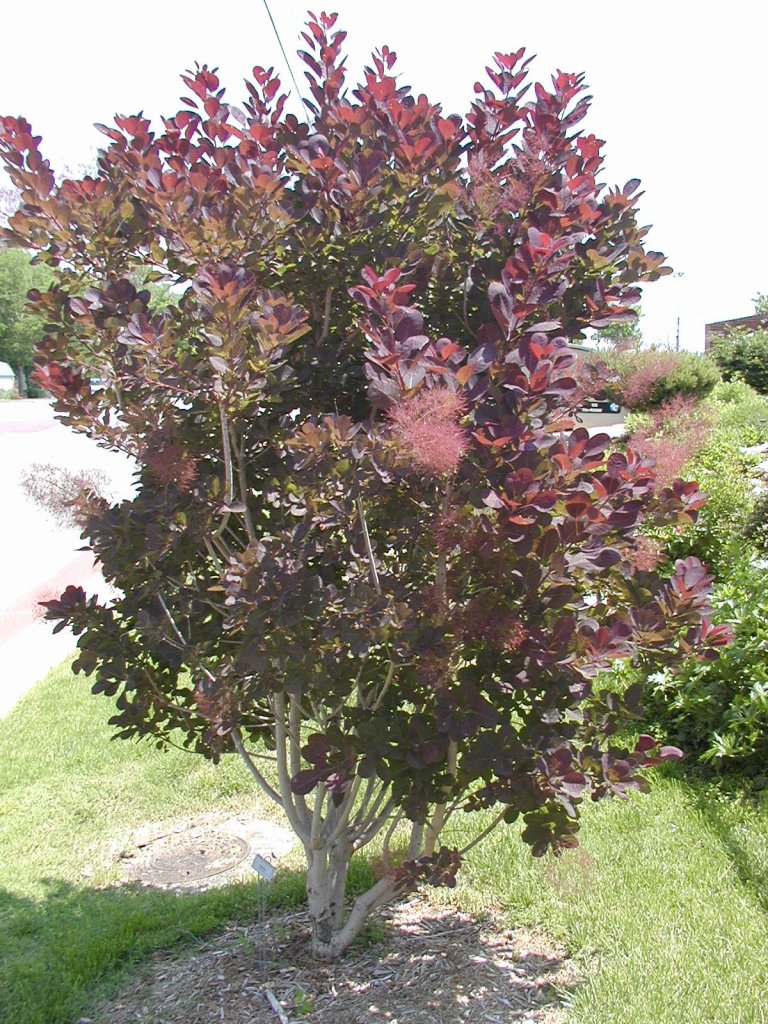
Purple smoketree
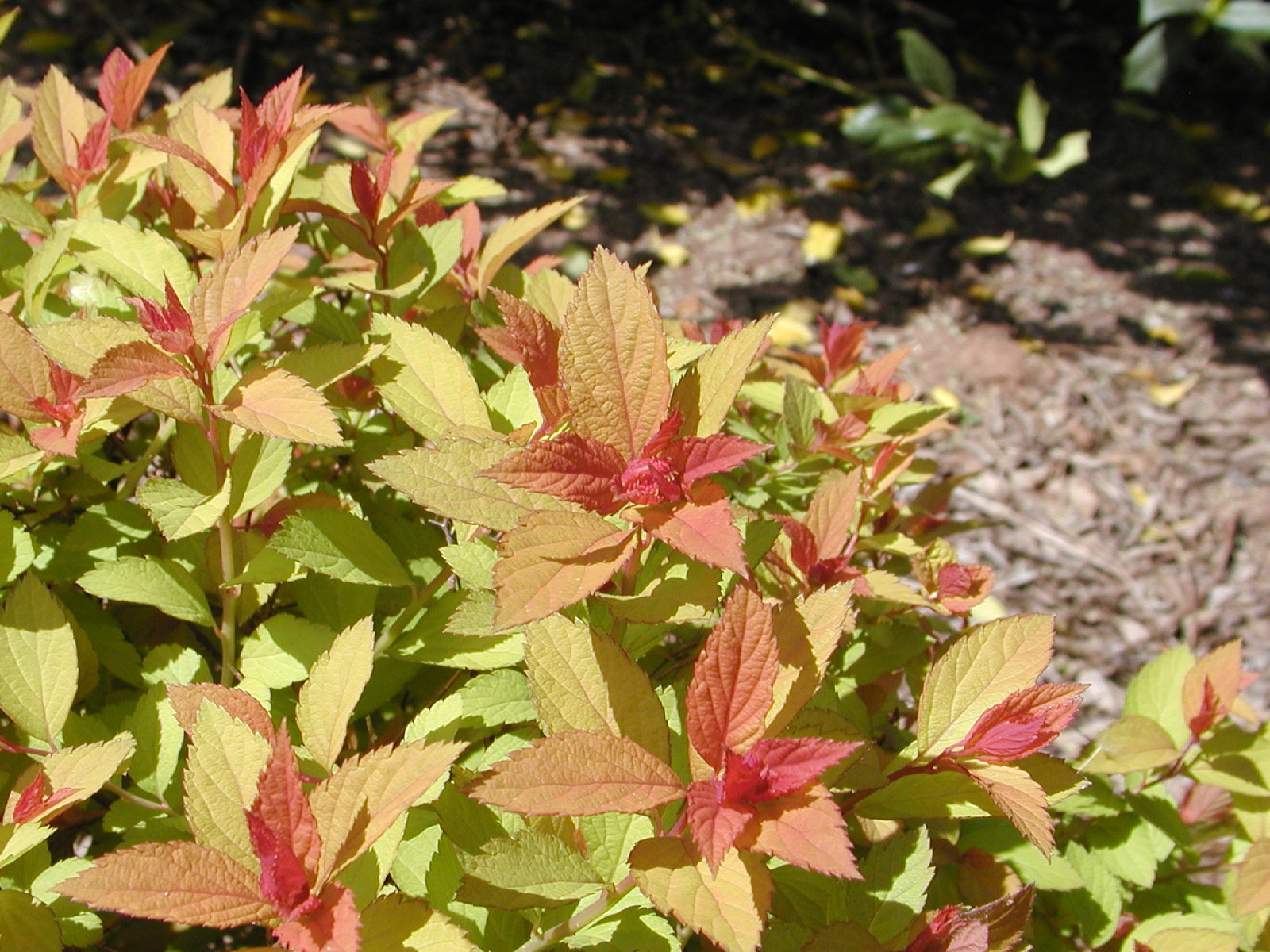
'Magic Carpet' Spirea
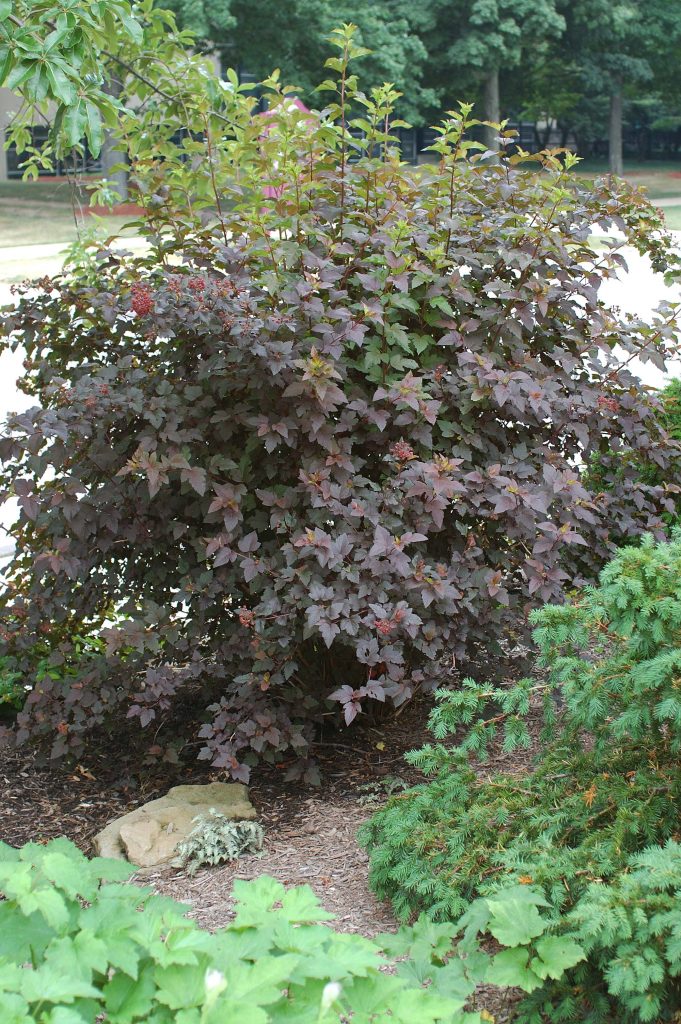
'Diablo' Ninebark
Garden and Patio or Large Containers
Just a few of the many plants that are candidates for containers are listed below; theoretically, most shrubs could be containerized. However, some plants do not perform well or outgrow containers after many years. If permanent plantings are your expectation, check with garden center personnel for the best plant or plants to use for long-term success.
- Abelia, glossy (Abelia x grandiflora)
- Barberry (Berberis spp.)
- Boxwood (Buxus spp.)
- Holly, Evergreen and deciduous (Ilex spp.)
- Juniper (Juniperus spp.)
- Mahonia, creeping (Mahonia repens)
- Nandina, dwarf selections (Nandina domestica)
- Yew (Taxus spp.)
Small Shrubs for Small Spaces
Many species have cultivars that have been selected for their short height or narrow width at maturity.
- Arborvitae, Dwarf (Thuja spp.)
- Crapemyrtle, Miniature (Lagerstroemia spp.)
- Dwarf Alberta Spruce (Picea glauca 'Conica')
- Euonymus, Dwarf Box leaf (Euonymus japonicus 'Microphyllus')
- Indian Hawthorn, Ballerina (Rhaphiolepis spp.)
- Junipers (Juniperus spp.)
- Mahonia, Creeping (Mahonia repens)
- Nandina, Dwarf (Nandina domestica)
- Pine, Mugo (Dwarf cultivars) (Pinus mugo)
- Pomegranate, Dwarf (Punica granatum)
- Roses, Miniature (Rosa spp.)
- Waxmyrtle, Dwarf (Myrica spp.)
Shrubs with attractive fruit
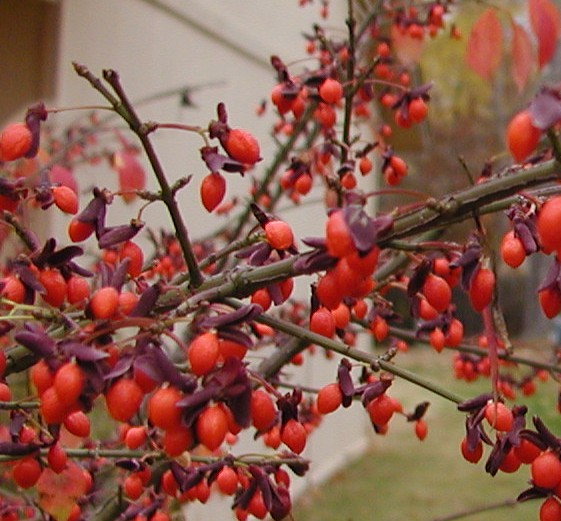
Burning Bush
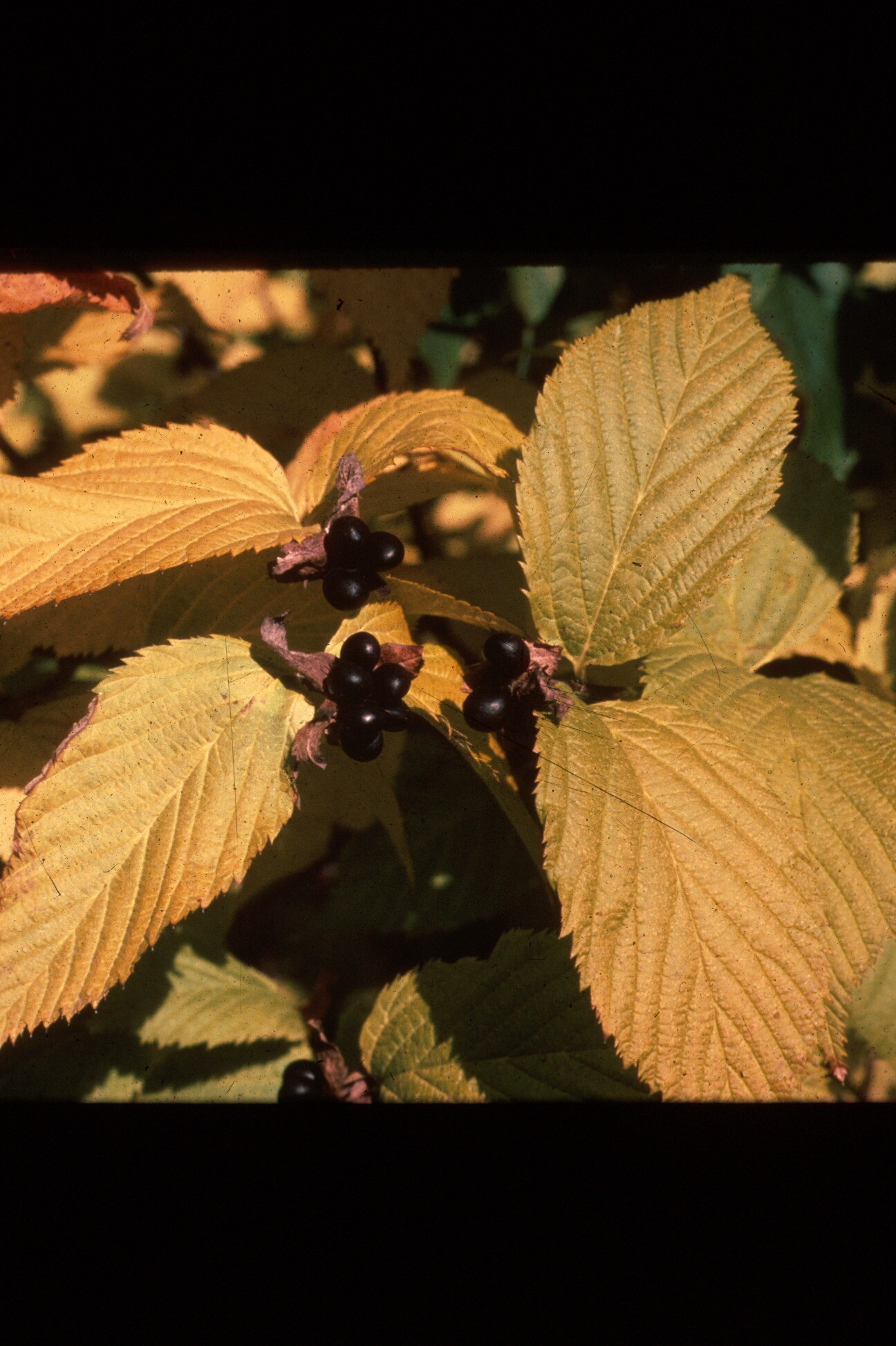
Black Jetbead
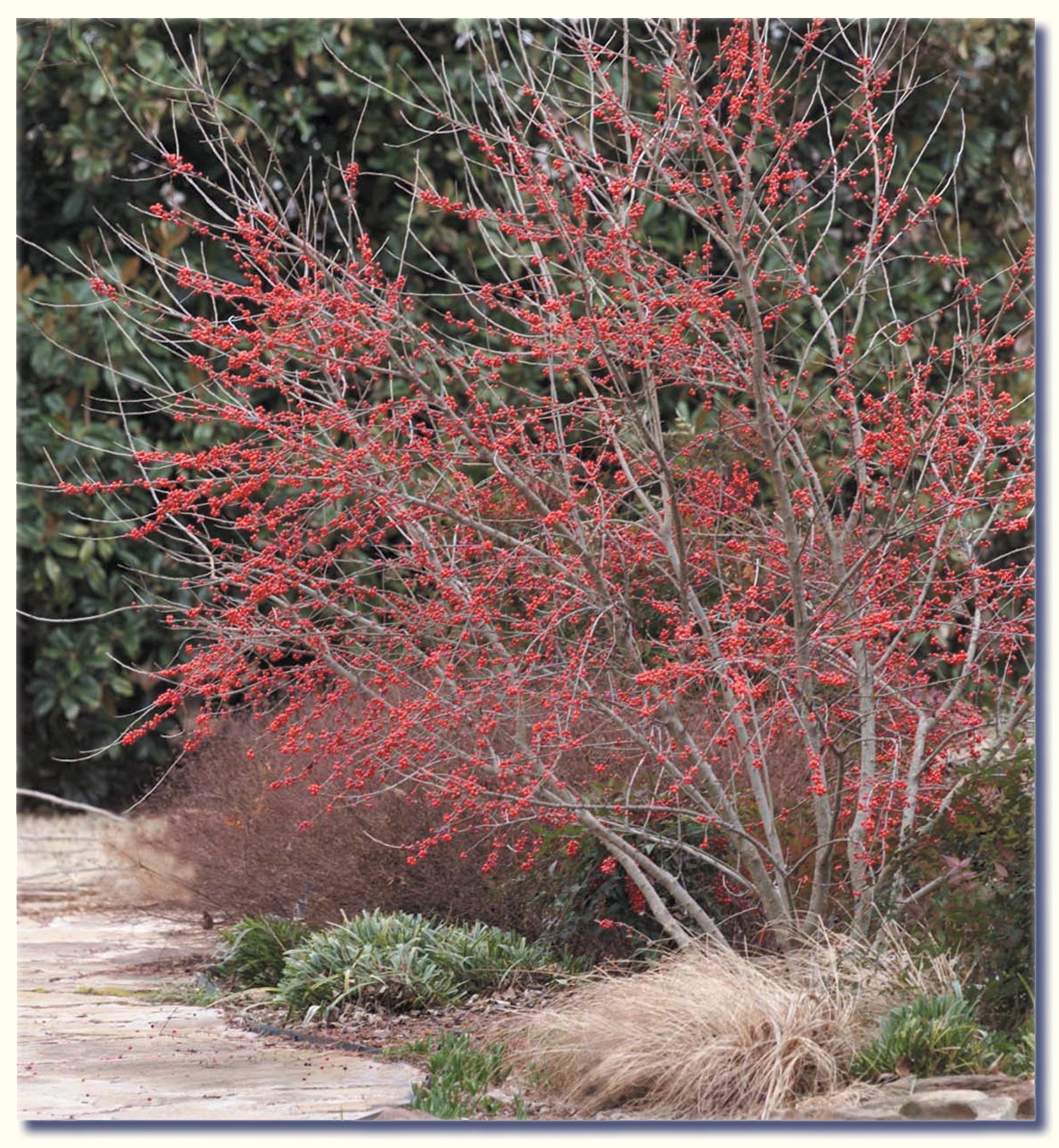
Deciduous Holly
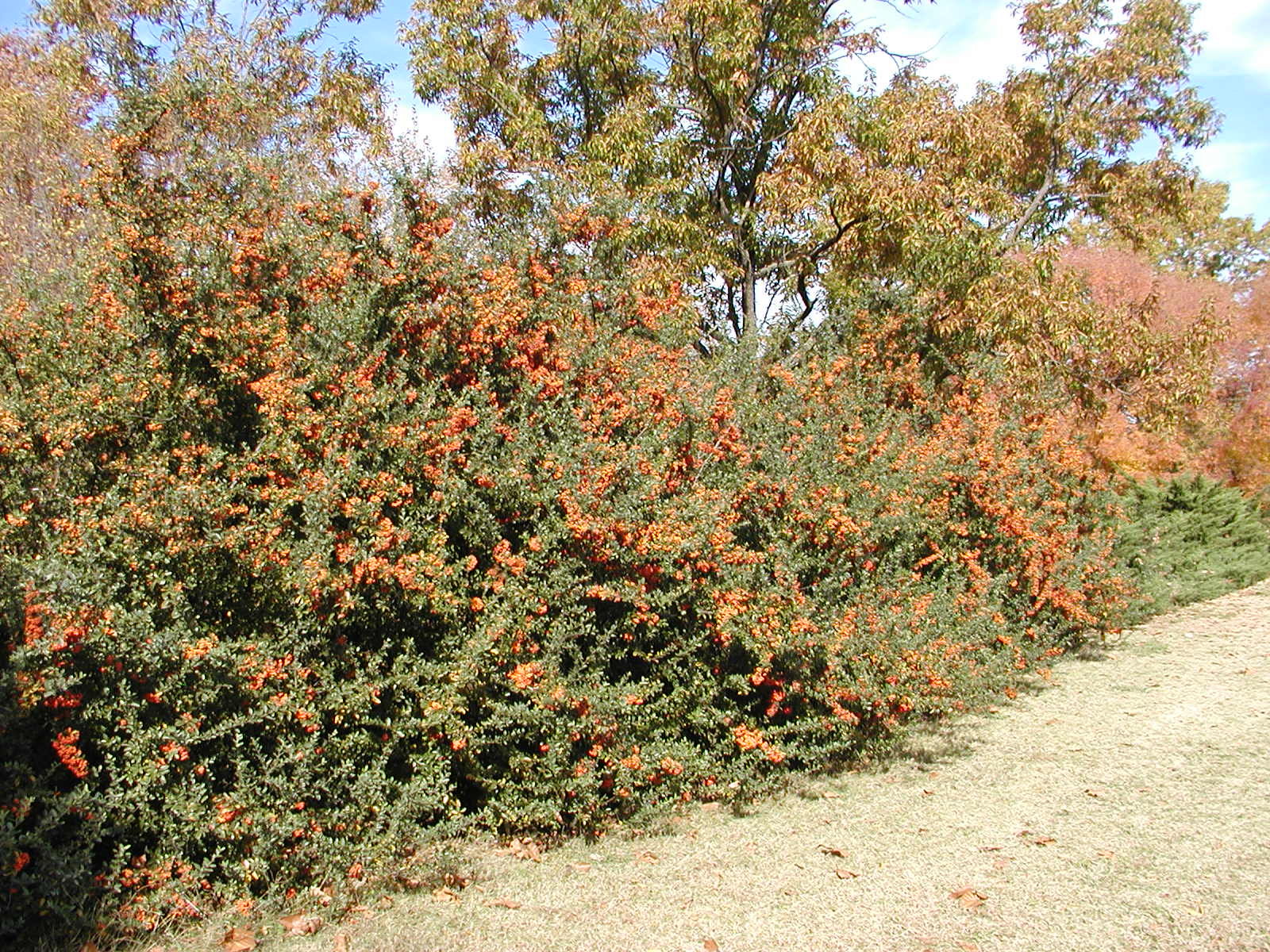
Firethorn
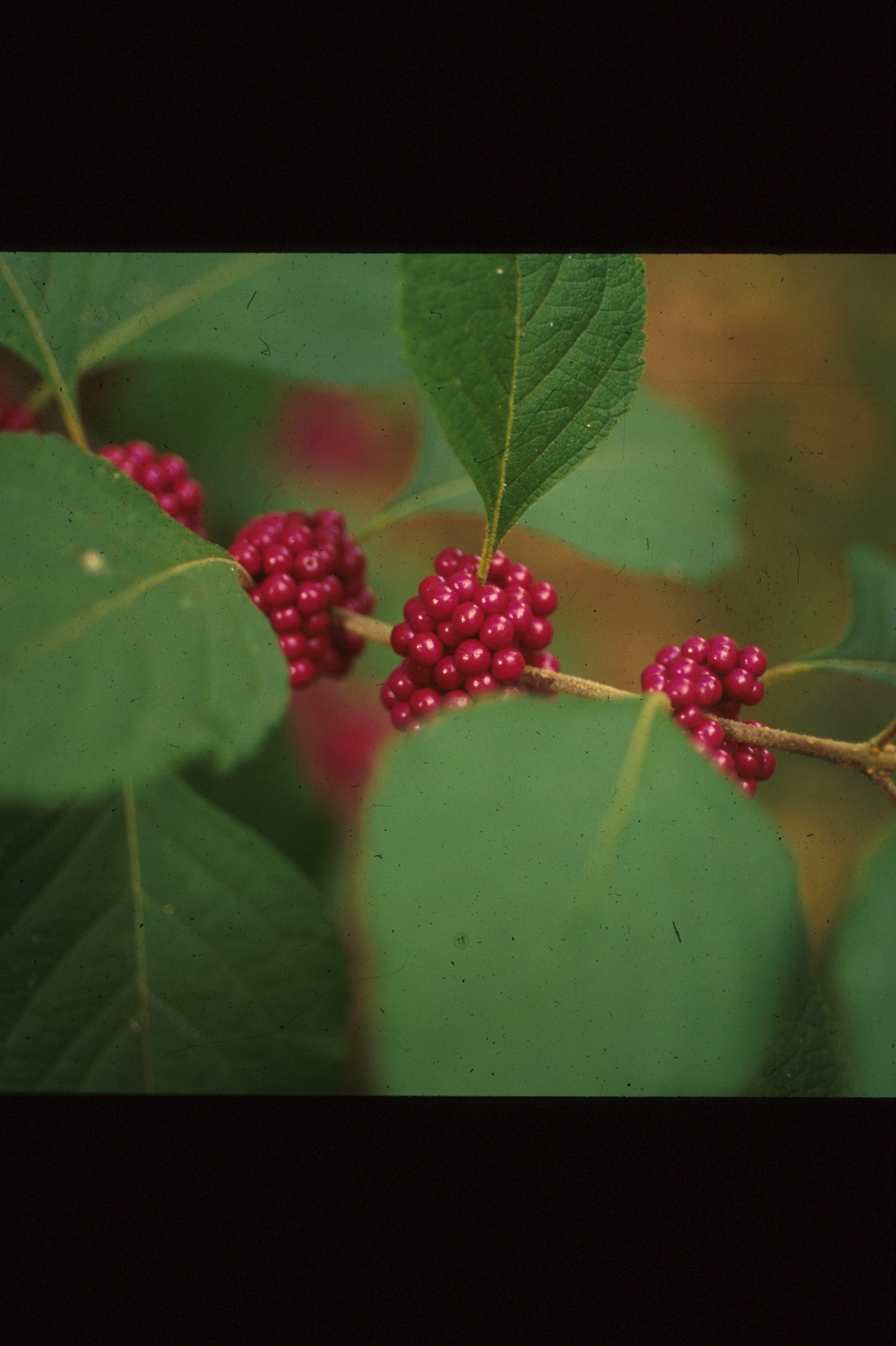
Beautyberry
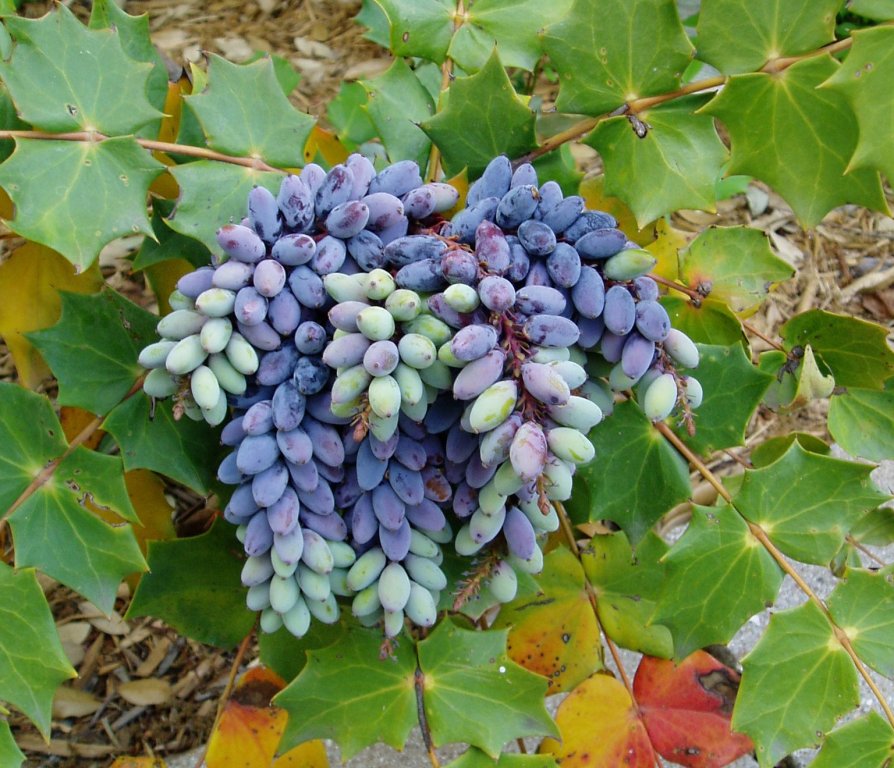
Leatherleaf Mahonia
Attract Wildlife
Many gardeners not only enjoy plants in the landscape, but also the wildlife that may be attracted to it. The following shrubs may attract wildlife by the fruit they produce or by providing physical protection.
- Abelia (Abelia spp.)
- Azalea (Rhododendron spp.)
- Barberry (Berberis spp.)
- Bayberry (Myrica pensylvanica)
- Beautyberry (Callicarpa spp.)
- Blackberry (Rubus spp.)
- Blueberry (Vaccinium spp.)
- Buckthorn, Carolina (Rhamnus carolinianus)
- Butterfly Bush (Buddleia spp.)
- Cherrylaurel, Carolina (Prunus caroliniana)
- Corralberry, Indiancurrant or Buckbrush (Symphoricarpos orbiculatus)
- Currant, Clove (Ribes odoratum)
- Dogwood, Roughleaf (Cornus drummondii)
- Eastern Wahoo (Euonymus atropurpureus)
- Elder, American or Elderberry (Sambucus canadensis)
- Firethorn (Pyracantha coccinea)
- Grapeholly (Mahonia spp.)
- Holly (Ilex spp.)
- Juniper (Juniperus spp.)
- Magnolia, Sweet Bay (Magnolia virginiana)
- New Jersey Tea (Ceanothus americanus)
- Plum, Sand (Prunus augustifolia)
- Privet (Ligustrum spp.)
- Quince, Flowering (Chaenomeles spp.)
- Rose (Rosa spp.)
- Spicebush (Lindera benzoin)
- Strawberry bush (Euonymus spp.)
- Sumac (Rhus spp.)
- Viburnum (Viburnum spp.)
- Weigela (Weigela spp.)
- Yucca (Yucca spp.)
Native Species
Native, in this context, is defined as any plant native to somewhere in the lower 48 contiguous states, not just Oklahoma.
- Bayberry, northern (Myrica pensylvanica)
- Beautyberry (Callicarpa americana)
- Bladdernut, American (Staphylea trifolia)
- Blueberry, highbush (Vaccinium corymbosum)
- Bush-Honeysuckle, Southern (Diervilla sessilifolia)
- Buttonbush (Cephalanthus occidentalis)
- Carolina Allspice or Sweetshrub (Calycanthus floridus)
- Chokeberries, Red and black (Aronia arbutifolia and A. melanocarpa, respectively)
- Currant, Clove (Ribes odoratum)
- Devil's walkingstick (Aralia spinosa)
- Fothergilla, Dwarf (Fothergilla gardenii)
- Fothergilla, large (Fothergilla major)
- Grapeholly (Mahonia spp.)
- Holly, American (Ilex opaca)
- Holly, common winterberry (Ilex verticillata)
- Holly, Deciduous or possumhaw (Ilex decidua)
- Holly, inkberry (Ilex glabra)
- Hydrangea, smooth (Hydrangea arborescens)
- Hydrangea, Oakleaf (Hydrangea quercifolia)
- Juniper (Juniperus spp.)
- Ninebark, purple, Diablo™ (Physocarpus opulifolius 'Monlo')
- Palmetto (Sabal minor)
- Rhododendron and azalea (Rhododendron spp. & cultivars)
- Summersweet or sweet pepperbush (Clethra alnifolia)
- Sweetspire, Virginia (Itea virginica)
- Viburnum, American cranberrybush (Viburnum trilobum)
- Viburnum, arrowwood (Viburnum dentatum)
- Viburnum, blackhaw (Viburnum prunifolium)
- Viburnum, Southern blackhaw (Viburnum rufidulum)
- Yellowroot (Xanthorhiza simplissima)
Make Good Hedges
Many shrubs are suitable for use as a hedge. However, some work better than others depending on if they are trained into a clipped, formal hedge or pruned more informally to maintain the natural form and shape of the plant. Plants with smaller leaves, as opposed to wide, large leaves, work best for formal, clipped hedges.
Shrubs for formal, clipped hedge:
- Abelia (Abelia spp.)
- Barberry, Wintergreen (Berberis julianae)
- Boxwood (Buxus spp.)
- Devilwood, False holly or Osmanthus (Osmanthus heterophyllus)
- Holly (Ilex spp.)
- Yews (Taxus spp.)
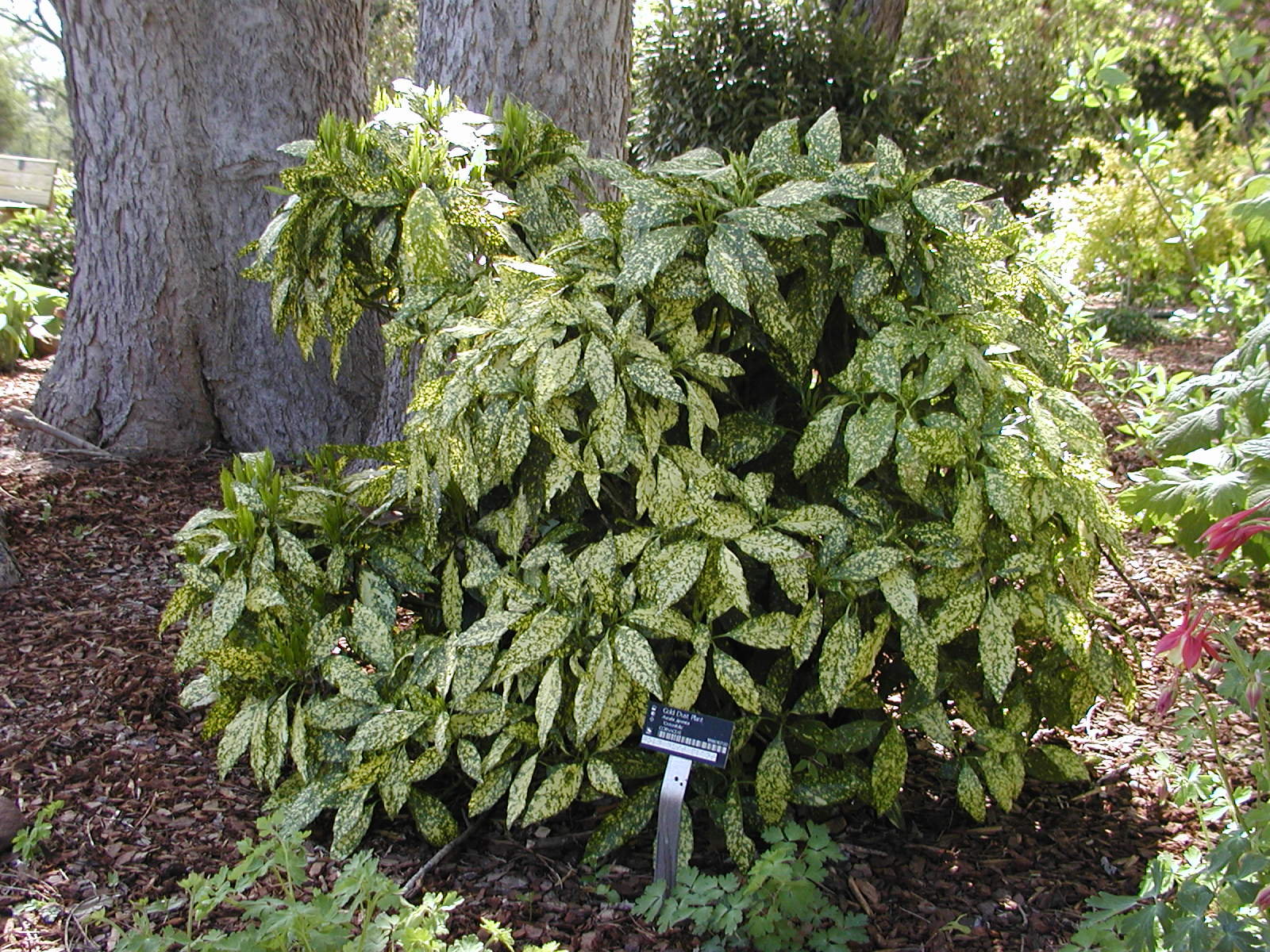
Aucuba – Gold Dust Plant
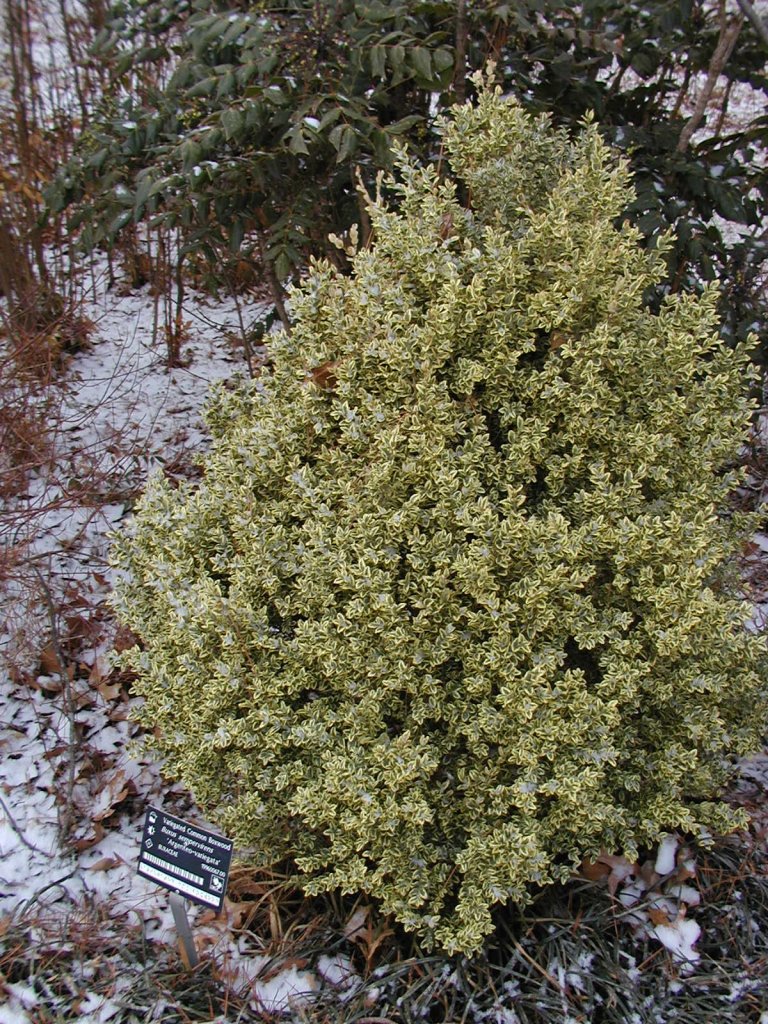
Green Mountain Boxwood
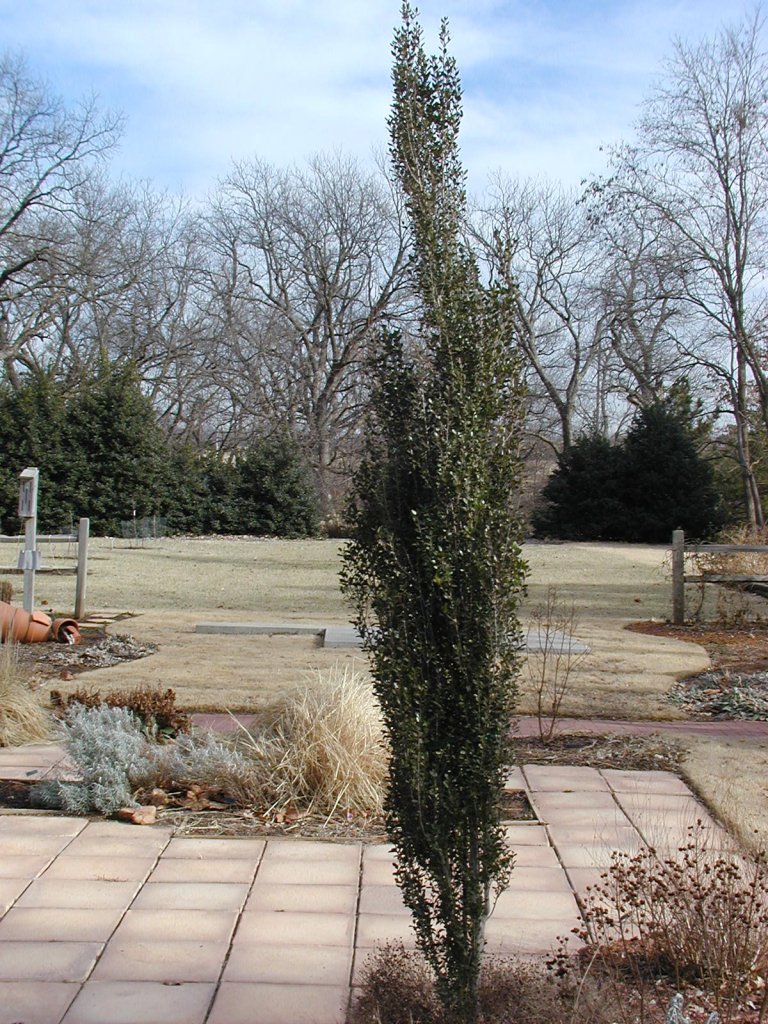
Pencil Yaupon Holly
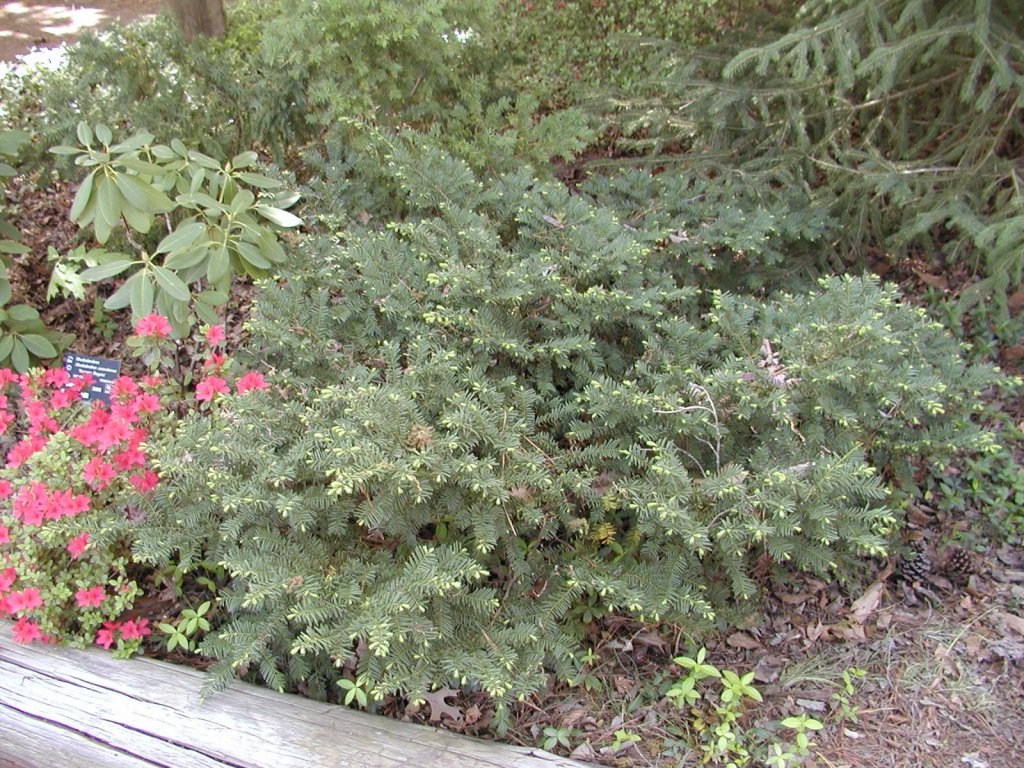
Yew
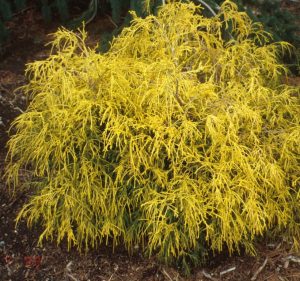
Chamaecyparis
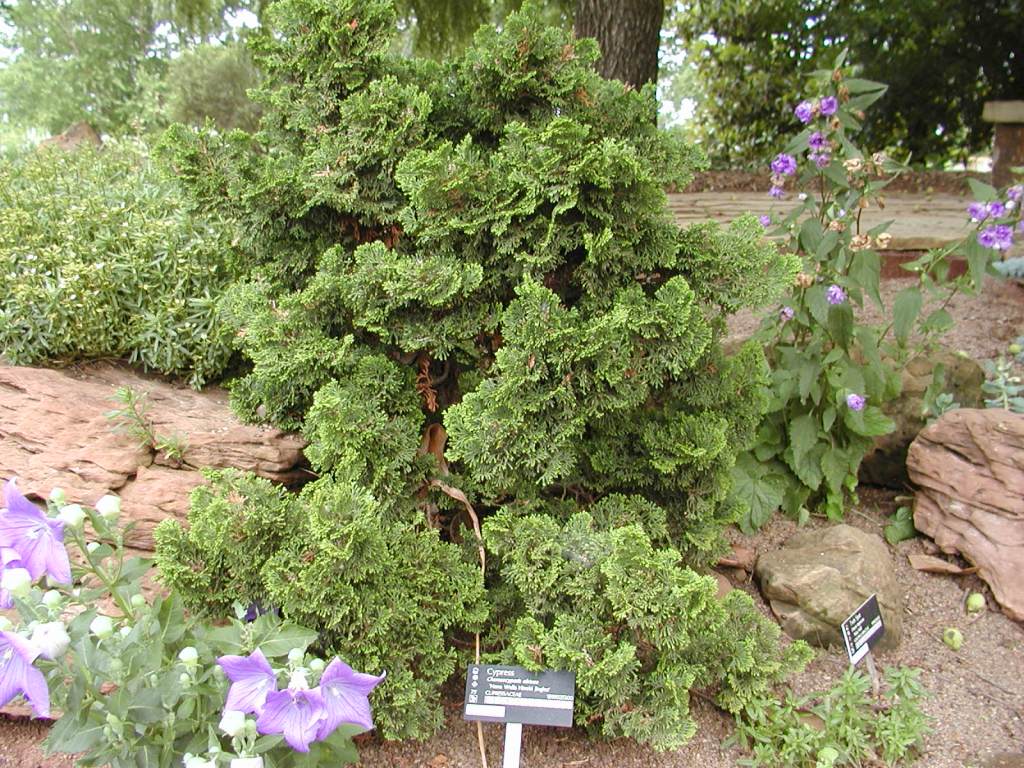
Falsecypress
Shrubs for natural hedges:
- Abelia (Abelia spp.)
- Barberry (Berberis spp.)
- Boxwood (Buxus spp.)
- Cherrylaurel (Prunus spp.)
- Cotoneaster (Cotoneaster spp.)
- Crapemyrtle (Lagerstroemia spp.)
- Firethorn (Pyracantha spp.)
- Forsythia (Forsythia cultivars)
- Holly (Ilex spp.)
- Honeysuckle (Lonicera spp.)
- Juniper (Juniperus spp.)
- Photinia (Photinia spp.)
- Privet (Ligustrum spp.)
- Rose (Rosa spp.)
- Viburnum (Viburnum spp.)
Evergreens for Background and Screens:
- Arborvitae (Thuja spp.)
- Azaleas (Rhododendron hybrids)
- Boxwood (Buxus spp.)
- Cherrylaurel (Prunus spp.)
- Devilwood, False holly or Osmanthus (Osmanthus heterophyllus)
- Holly (Ilex spp.)
- Juniper, Chinese (Juniperus chinensis cultivars)
- Privet (Ligustrum spp.)+
- Rhododendron (Rhododendron spp.)
- Viburnum (Viburnum spp.)
- Waxmyrtle (Morella cerifera)
- Yews (Taxus spp.)
Evergreen Shrubs
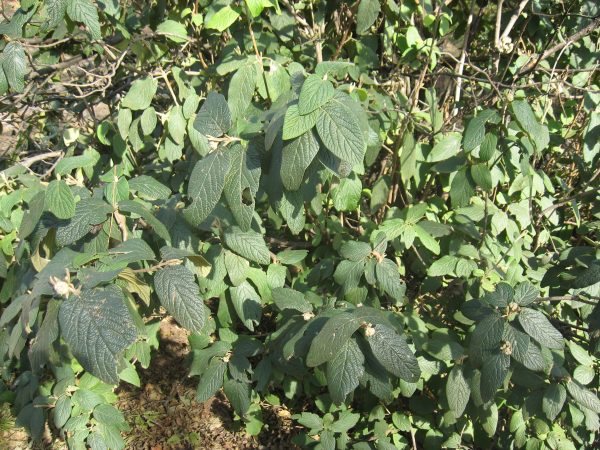
Viburnum
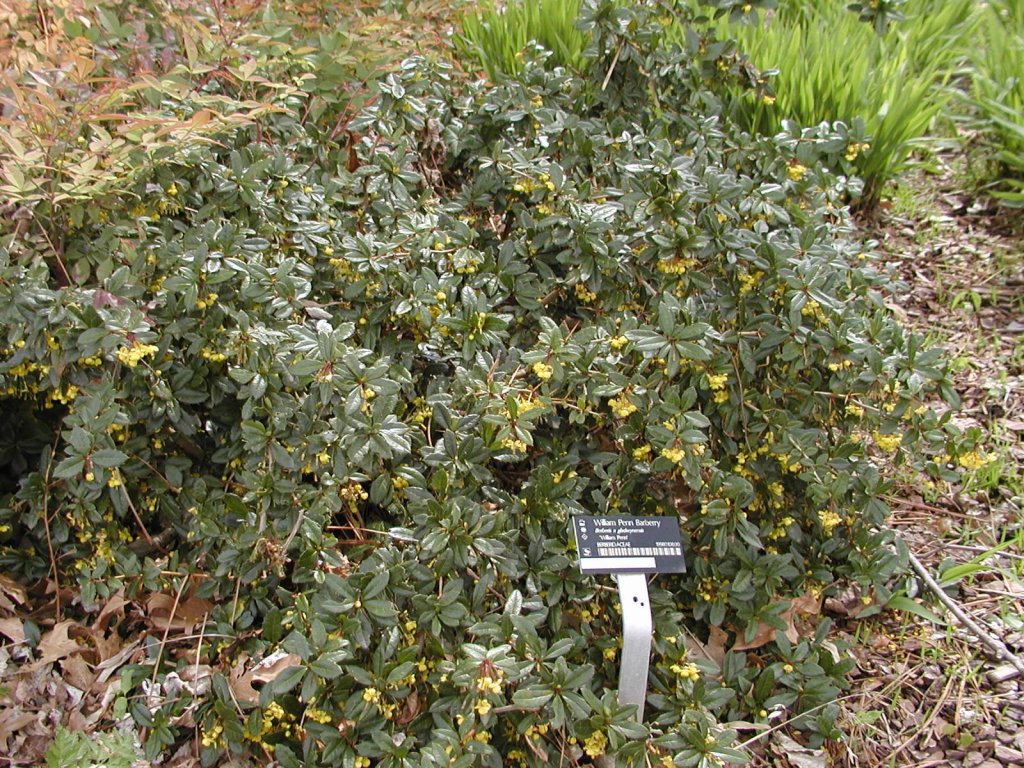
William Penn Barberry
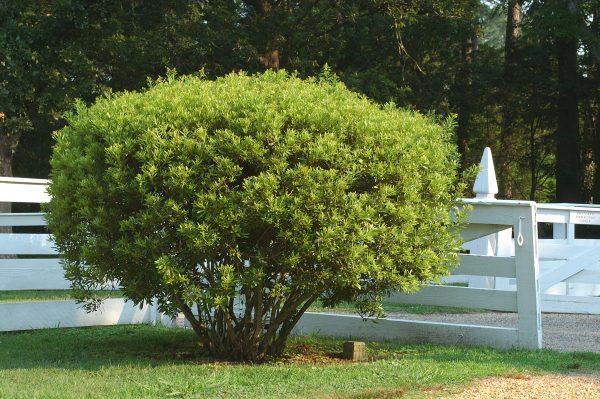
Southern Waxmyrtle
Make Good Ground Covers
Shrubs that tend to spread or creep along the ground, or don't grow more than 30 inches tall and when planted close together cover the ground, may be used as ground covers. Plants with attractive foliage and dense growth habit make the best ground covers.
- Abelia, dwarf (Abelia x grandiflora 'Prostrata,' 'Edward Goucher' and others)
- Azaleas, low and spreading (Azalea hybrids)
- Barberry, Crimson Pygmy (Berberis thunbergii atropurpurea 'Crimson Pygmy')
- Cotoneaster, rockspray (Cotoneaster horizontalis)
- Cotoneaster, willowleaf (Cotoneaster salicifolius 'Repens')
- Holly, dwarf yaupon (Ilex vomitoria 'Schelling's Dwarf' and other cultivars)
- Holly, Japanese (Ilex crenata 'Stokes' and other cultivars)
- Juniper, Chinese (Juniperus chinensis cultivars)
- Junipers, creeping (Juniperus horizontalis 'Blue Rug' and other cultivars)
- Juniper, shore (Juniperus conferta cultivars)
- Leucothoe, drooping (Leucothoe fontanesiana)
- Nandinas, Dwarf (Nandina domestica 'Harbor Dwarf" and other cultivars)
- St. Johnswort, shrubby (Hypericum patulum)
- Summersweet, 'Hummingbird' (Clethra alnifolia 'Hummingbird')
- Yellowroot (Xanthorhiza simplissima)
- Yew, anglojap (Taxus x media)
Table 1. Deciduous Shrubs (some grow naturally as small trees or can be trained as a standard)*
* Many varieties and cultivars of shrubs exist that are not listed. For the sake of brevity, only one or two samples are provided for any given group of plants. For example, there are numerous variations or cultivars of barberry, viburnum and others selected for foliage or flower color, size, etc.
Table 2. Evergreen Shrubs
* Many varieties and cultivars of shrubs exist that are not listed. However, for the sake of brevity, only one or two samples are provided for any given group of plants. For example, there are numerous variations or cultivars of barberry selected for foliage color, size, etc.
David Hillock
Assistant Extension Specialist, Consumer Horticulture
Kimberly Holmes
Former Assistant Extension Specialist
Mike Schnelle
Extension Ornamental Floriculture Specialist