

Sampling for Sorghum Headworms in Oklahoma Using the Headworm Decision Support System
The Sorghum Headworm Decision Support System http://entoplp.okstate.edu/shwweb/index.htm is a tool for sorghum producers, crop consultants and others involved in sorghum insect pest management. The system was designed by the USDA Agricultural Research Service, Oklahoma State University, West Texas A&M University and Kansas State University.
The system can help identify sorghum pests and learn more about their biology. Most importantly, it can assist in determining an economic threshold for headworms in sorghum fields. Headworm is a general name for two caterpillars that infest the whorls and grain heads of sorghum plants.
Common Names: Corn earworm (figure 1)
Fall armyworm (figure 2)
Damaging Stage: Larvae
Plant Part Attacked: Whorl, Panicle
Development: Complete: egg, larva, pupa and adult
Generations per year: two to six, depending on species
Nature of Damage: In the whorl, small caterpillars feed and cause “windowpaning,” and as they grow larger, they cause shotholes. Although this may look dramatic, leaf damage usually does not reduce yields greatly, and control of larvae during the whorl stage is seldom economically justified. In panicles, they feed and damage developing seed. One headworm can consume about 0.01 pounds of grain during its life.
When to Scout: Scout every three days to five days from full panicle emergence until hard dough stage. (See Example of Quick Count Sample Plan on next page):
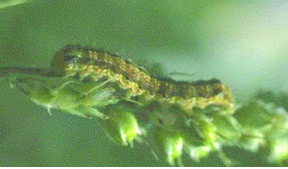
Figure 1. Corn Earworm. Photo courtesy Phil Sloderbeck, Kansas State University
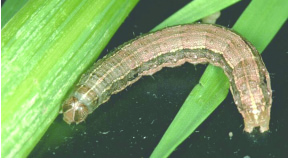
Figure 2. Fall Armyworm. Photos courtesy Phil Sloderbeck, Kansas State University
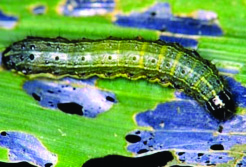
Figure 3. Windowpaning (Photo courtesy of University of Nebraska)
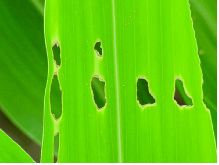
Figure 4. Shotholes (Photo courtesy Phil Sloderbeck, Kansas State University)
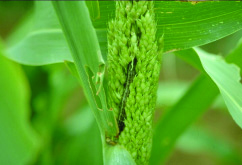
Figure 5. Panicle Feeding (Photo courtesy Phil Sloderbeck, Kansas State University)
Sorghum Headworm Quick Count Sampling Plan
The Sorghum Headworm Decision Support System can help identify sorghum pests, learn more about their biology and determine the economic threshold for headworms in sorghum fields. You can print out other sequential sampling forms for use in sampling your field.
Go to entoplp.okstate.edu/shwweb/index.htm for more forms!
Directions for using the Quick Count:
1. Walk at least 15 feet to 20 feet into the sorghum field to begin sampling in one row.
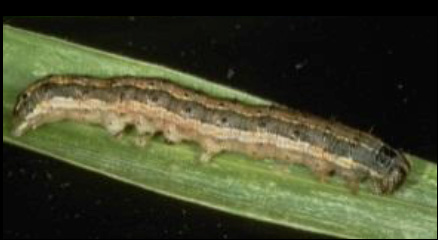
Corn Earworm (Helicoverpa zea)
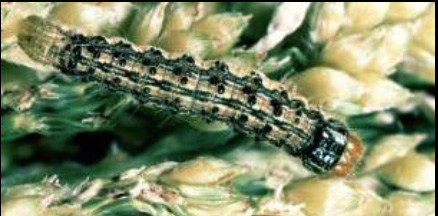
Fall Armyworm (Spodoptera frugiperda)
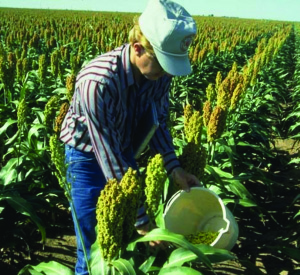
2. Grasp the stalk just below the emerged sorghum head, bend the head into the bucket opening and vigorously beat the head against the side of the bucket. Headworms will fall into the bucket, where they can be seen and counted.
3. Walk 30 paces down the row and sample another head, then walk 30 more paces and sample another head in the same row.
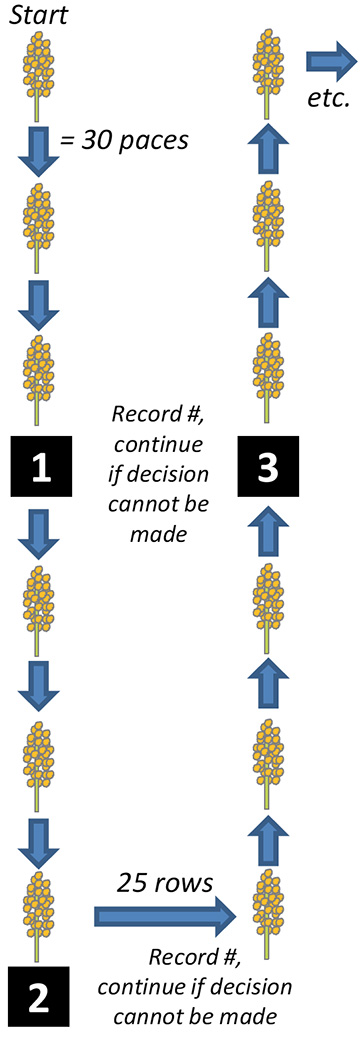
4. After sampling three plants, stop, count and record the total number of medium size (¼- inch to ½-inch long) and large (greater than ½ inch long) headworm caterpillars in the bucket. Ignore all caterpillars less than ¼-inch long. If there are mostly large caterpillars, use the Large Threshold. If there are mostly Medium-sized caterpillars, use the Medium Threshold. If there are about 50 percent of each large and medium, use the Mixed Threshold.
5. Sample three more plants in the same row, add the counts from the previous three plants and add the caterpillar totals.
6. After sampling six plants within a row, move across 25 rows and continue the process for each six heads.
7. Compare counts with numbers in red and green boxes (page 3). If they equal or exceed the “Treat” box, then treat. If they equal or are lower than the “Don't Treat Box,” stop sampling and don't treat. If they fall in the yellow “sample” box, keep sampling until 48 heads have been sampled. If a decision still cannot decided at Stop #16, return in three days and re-sample the field.
Tom A. Royer
Extension Entomologist, Oklahoma State University
Norman C. Elliott
Research Entomologist, USDA, ARS
Kristopher L. Giles
Regent’s Professor of Entomology,
Oklahoma State University