

Post-Wildfire Vegetation Recovery In Oklahoma Cross Timbers Forests
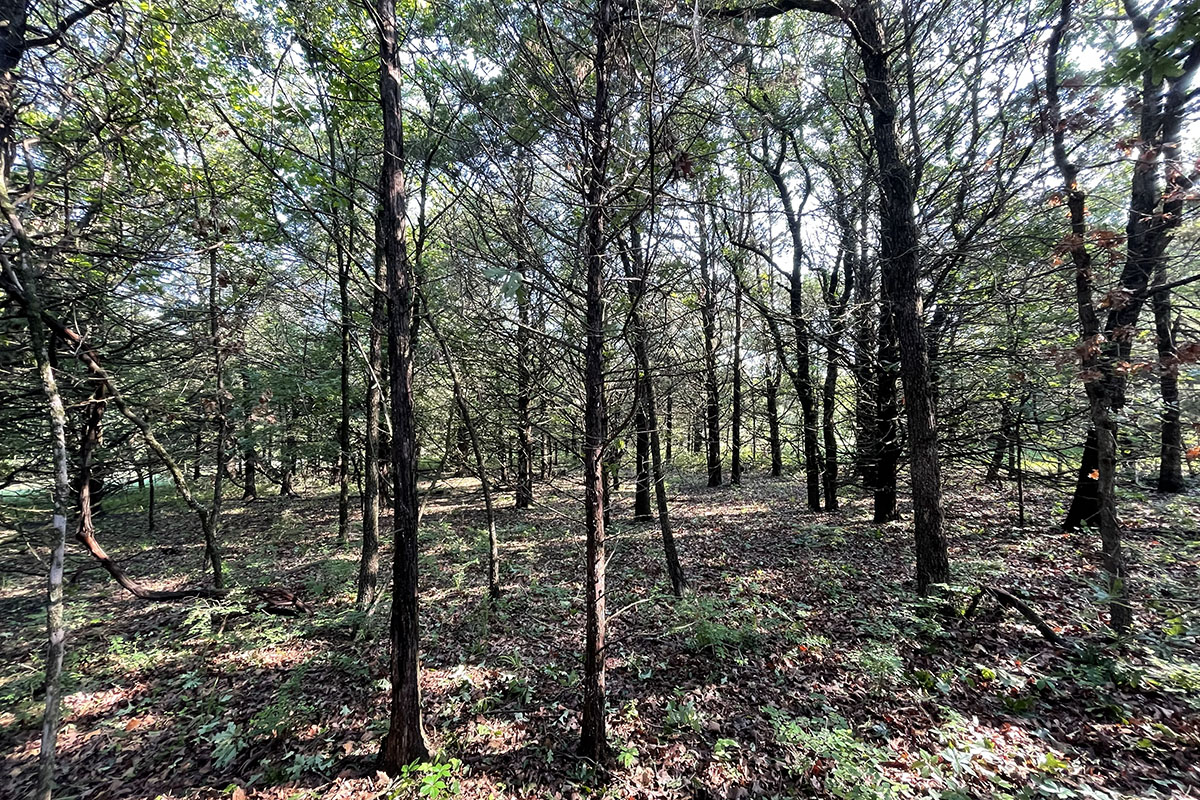 Figure 1. Eastern redcedar in Cross Timbers forest. Photo courtesy Sydny Hager.
Cross Timbers Ecoregion
The Cross Timbers ecoregion is a mosaic of tallgrass prairie, oak savanna and oak forest shaped by fire, which covers more than 12 million acres from southeastern Kansas across Oklahoma to north-central Texas. This region is home to approximately 17 million people and provides numerous ecosystem services, including fuelwood, wildlife habitat, nutrient cycling, climate regulation, recreation and other cultural services. This area retains some of the best preserved old-growth oak forests in the south-central US because the forest has little commercial lumber value and the land is not suitable for row-crop agriculture. Cross Timbers forests are dominated by post (Quercus stellata) and blackjack oak (Q. marilandica), with an increasing amount of eastern redcedar (Juniperus virginiana) due to a lack of fire. Fire historically played a dominant role in determining the vegetation composition and structure of the Cross Timbers. Over the last century, native junipers — eastern redcedar in the north and Ashe juniper (J. ashei) in the south — have rapidly expanded their historically limited range into many of the forests, savannas and prairies of the south-central US. In addition, oaks have decreased, and other tree species have increased, thereby changing fuels and vegetation composition.
Fire In Cross Timbers
Anthropogenic, or human-caused, fire was a historically important component of forests in Oklahoma. Previous studies suggest an average fire interval of 1-4 years throughout much of Oklahoma prior to the early 1800s. Fire was likely low in intensity and severity, killing relatively few large, mature trees. Fire intensity refers to the measure of energy or heat output during a fire, whereas fire severity refers to the measured effect of fire on the surrounding environment. On a small scale, fire regimes were tied to human settlement patterns and land use practices. The decline in Native American populations following European American colonization often led to reduced fire, dramatically changing forests. Through both the use and near abandonment of fire as a vegetation management tool, humans influenced disturbance regimes and altered forest composition and structure. Fire can top-kill oaks, especially when they are immature. However, vigorous stump sprout-ing from oaks compared to other species generally provides oaks with a competitive regeneration advantage. In addition, killing fire-sensitive species can increase light availability for oak sprouting following the immediate post-fire decrease in biomass. Without fire, shade-tolerant species like elm, hickory and hackberry outcompete oak.
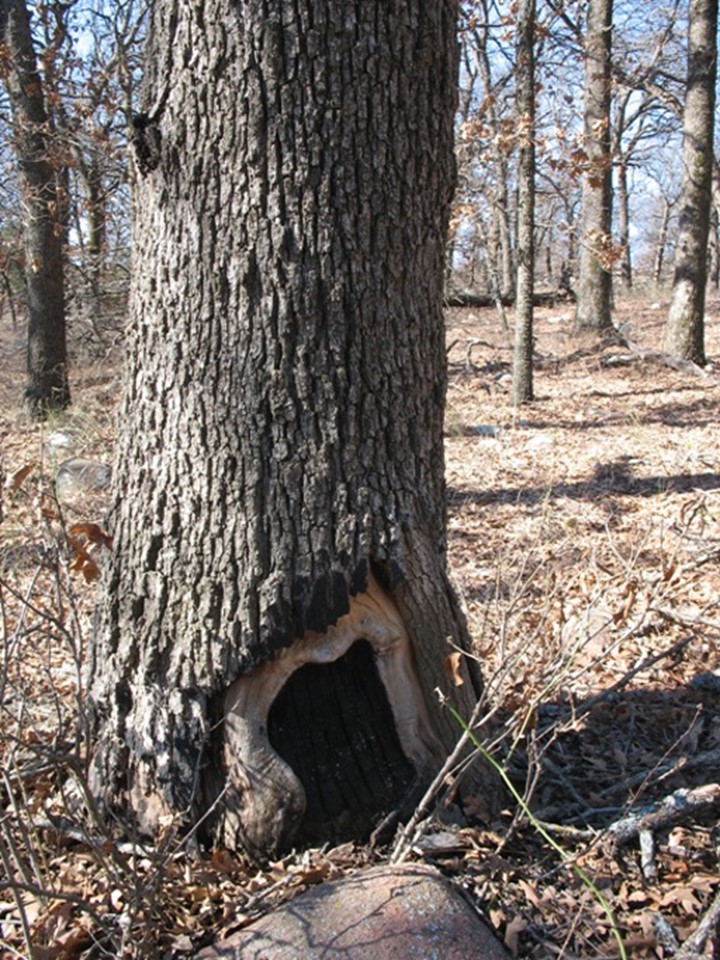 Figure 2. Post oak fire scar. Mature oaks develop thick bark that protects inner woody tissue from fire damage.
Research presents strong evidence of increasing tree density throughout the Cross Timbers over the last 50-100 years. Tree density impacts both fuel continuity and tree vigor. Higher tree density with limited resources, in particular moisture, often leads to decreased tree vigor and sometimes increases mortality risk as trees compete for a finite amount of resources. When trees are growing closer together, fuels tend to be more connected, which is also known as fuel continuity. This means that fire can more easily spread because the fuels are overlapping, adjacent or close enough for combustion to continue. Western US forests treated for wildfire reduction are often thinned, and logging slash is removed or piled and burned elsewhere for this reason. Follow-ing thinning and slash reduction or removal practices, residual trees are spaced farther apart, and fuels are disconnected. In Oklahoma Cross Timbers forests, similar management practices, including thinning and using prescribed fire to stimulate oak reproduction and decrease surface fuels, are recommended.
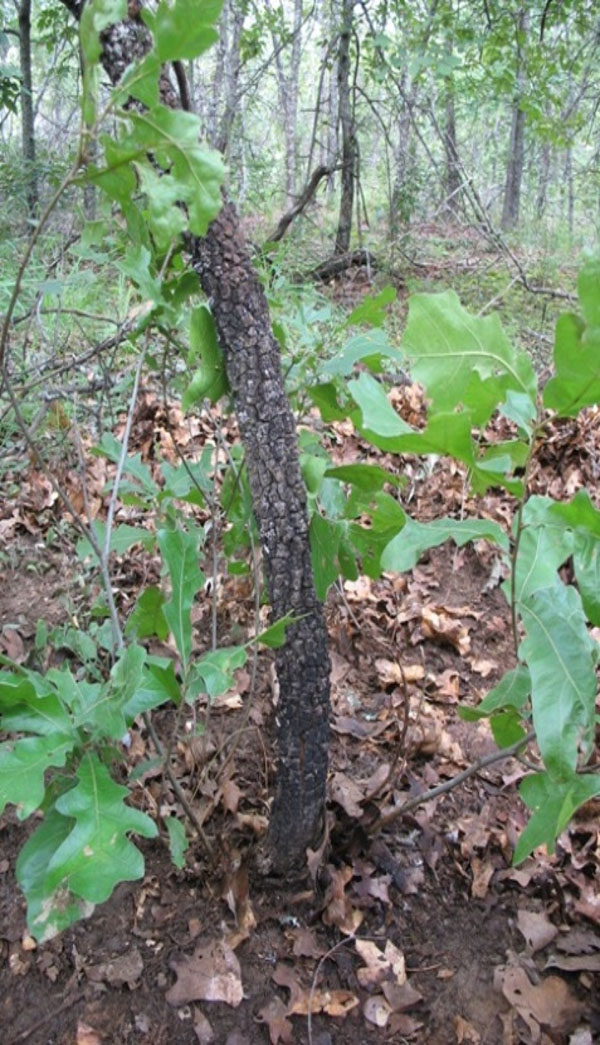 Figure 3. Blackjack oak basal sprouting from dormant buds around the root collar following low-intensity prescribed fire. Low- to moderate-intensity fires can kill aboveground parts and consume leaf litter and fire-intolerant vegetation while promoting sprouting.
Over the last 50-100 years, post oak and blackjack oak have declined because of competition from other mesic species and eastern redcedar in Cross Timbers forests. There are several important implications for eastern redcedar replacing oak in the Cross Timbers over time. Research suggests eastern redcedar uses water differently than oak. The species composition shift from oak to eastern redcedar can increase forest stand-level transpiration, which may decrease water runoff and groundwater recharge. Vegetation and microclimate are also substantially different under eastern redcedar. For example, research found higher tick abundance under eastern redcedar than under oak. There are considerably fewer surface fuels under eastern redcedar than under oak, which may reduce the conditions under which the stand will burn during a prescribed burn. Lastly, in late winter, as the only conifer native to Cross Timbers forests, eastern redcedar retains foliage, which is likely the most combustible part of the tree.
Wildfire Effects On Overstory Trees
The March 2025 Oklahoma wildfires were primarily fueled by extreme fire weather including critically low relative humidity (<11%) and strong winds (gusting >60 mph). Combined with adequately dry fine fuels, historically fast-moving and dangerous fires threatened communities across the state. Vegetation burned at high intensity, causing substantial mortality across all tree species in some areas. In research plots at the Cross Timbers Experimental Range (CTER) southwest of Stillwater, over half of the mature trees were killed by one of these wildfires. Pre-fire and post-fire measurements were analyzed to identify potential relationships between tree size, char height, eastern redcedar presence and size and total tree mortality. There was a significant correlation between char height and total tree mortality rate and between eastern redcedar density and total tree mortality. Our analysis compared mortality rates across four levels of eastern redcedar tree densi-ty: low (<1%), moderate (50%), heavy (70%) and eastern redcedar woodland (86%). The eastern redcedar wood-land was previously a cut-over oak forest that became a grassland and over several decades filled in with eastern redcedar as the main overstory species. Our eastern redcedar woodland experienced nearly 100% mortality, but our analysis suggested that tree density alone plays an important role in determining fire severity and tree mortality.
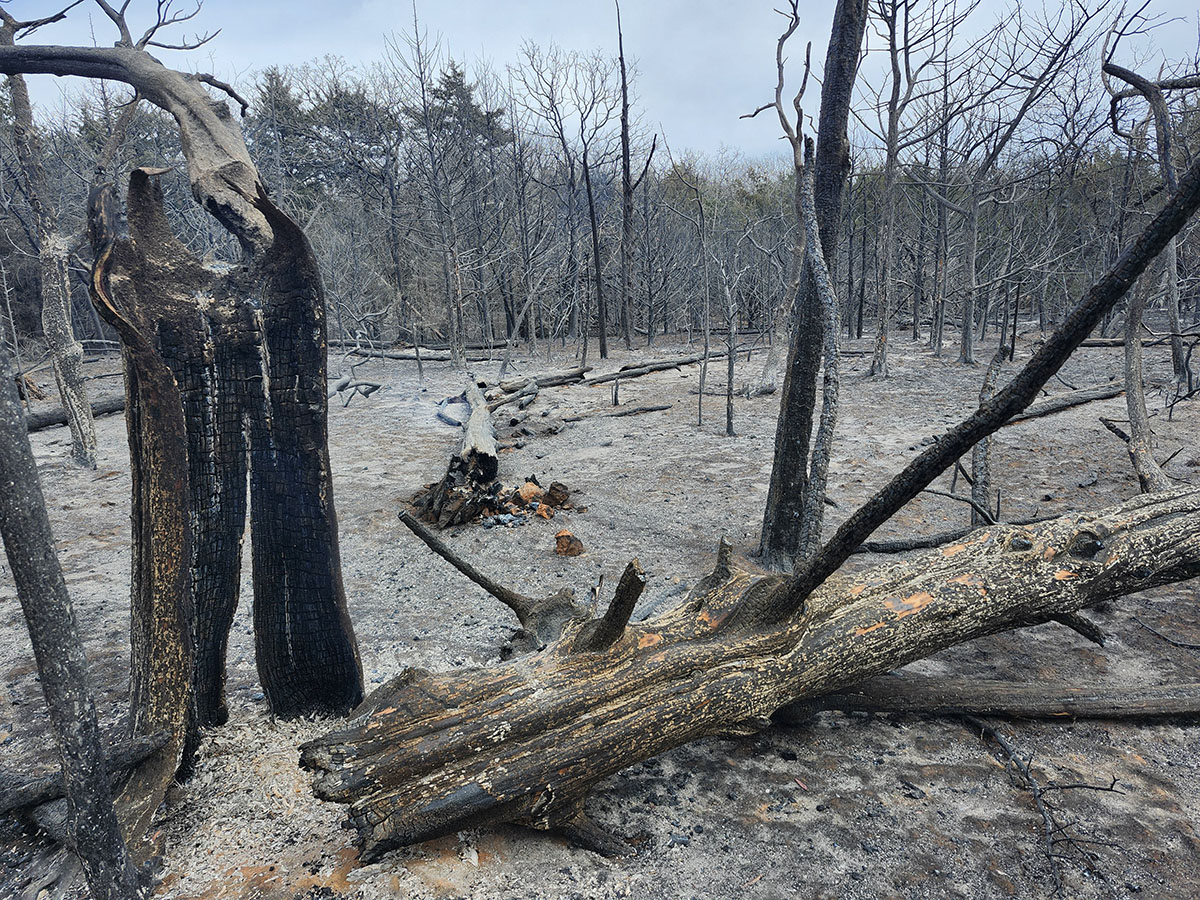 Figure 4. Mixed oak - eastern redcedar woodland on the day following the March 2025 Stillwater wildfire.
In addition to fire severity, we analyzed oak regeneration following the wildfire. Similar to past research, CTER study plots revealed that post oak and blackjack oak respond differently to fire. There were many more blackjack oak than post oak sprouts per tree, which follows past research findings that blackjack oak tends to sprout prolifically following fire. However, after several decades, blackjack oak can be outcompeted and eventually overtaken by post oak in the forest canopy.
Wildfires burning under extreme conditions, like those of March 2025 in Oklahoma, often burn with high severity, which means significant impacts on vegetation and structures. However, it is important to note that fire burning under low-intensity conditions, like many that historically occurred, and prescribed fire currently used for management purposes, can be beneficial to Oklahoma’s fire-adapted and fire-tolerant vegetation communities. Even in areas of moderate to high severity fire, top-kill (mortality) of trees can often lead to prolific oak sprouting. This can regenerate oak forests by providing abundant resprouts, which serve as the next cohort of oak trees, as well as a palatable food source for animals such as white-tailed deer (Odocoileus virginianus).
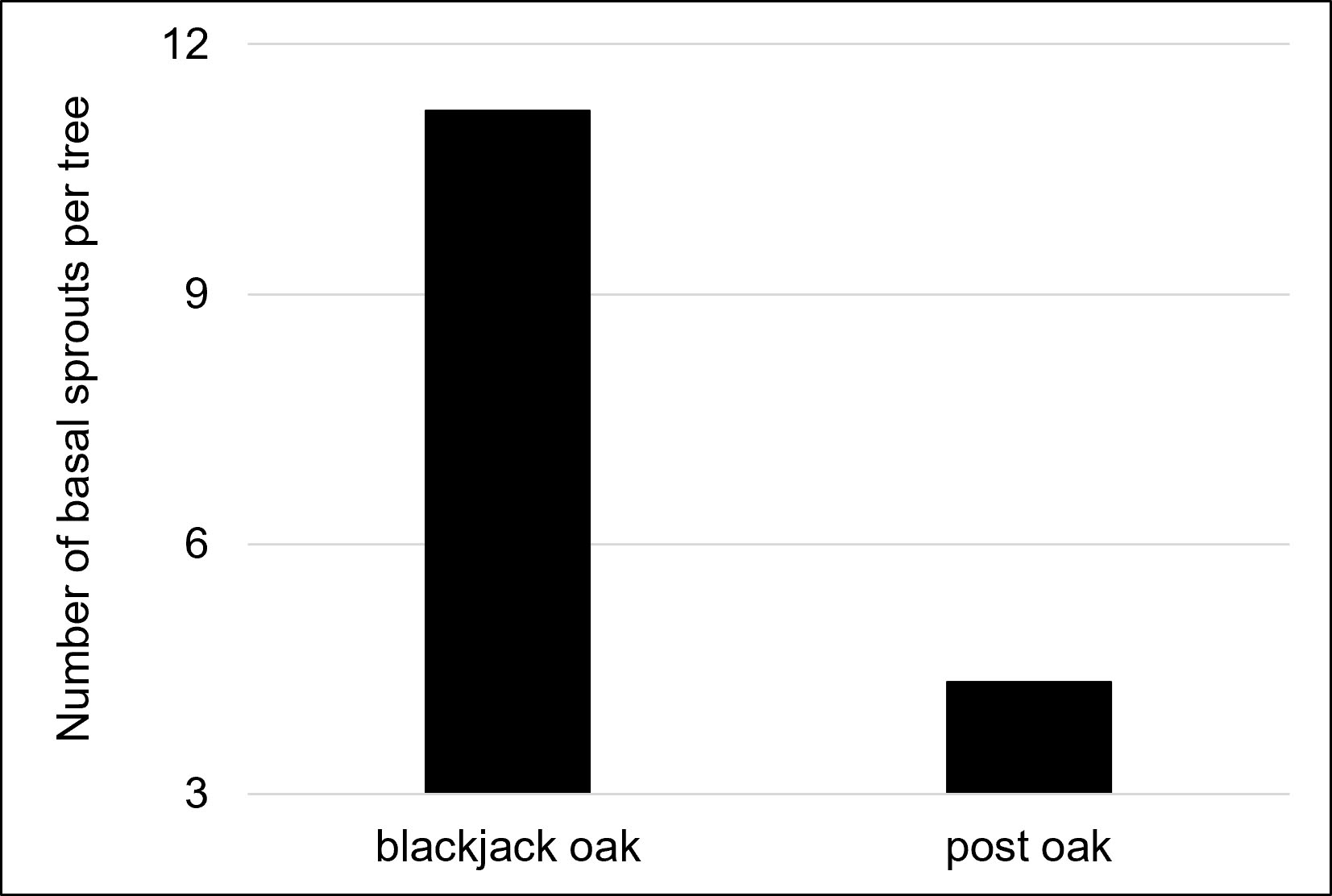 Figure 5. Comparison of average number of sprouts per tree be-tween blackjack oak and post oak in CTER research plots.
Understory Vegetation And Wildlife
Understory vegetation, or plants growing below approximately 4 feet in height, provides important resources for many wildlife species. For example, most food and cover for deer, wild turkey (Meleagris gallopavo) and north-ern bobwhite quail (Colinus virginianus) are provided by plants in the understory. All three species require under-story vegetation, particularly forbs (broadleaf, nonwoody plants) that provide food and cover, which is often limited in the understory of Cross Timbers forests.
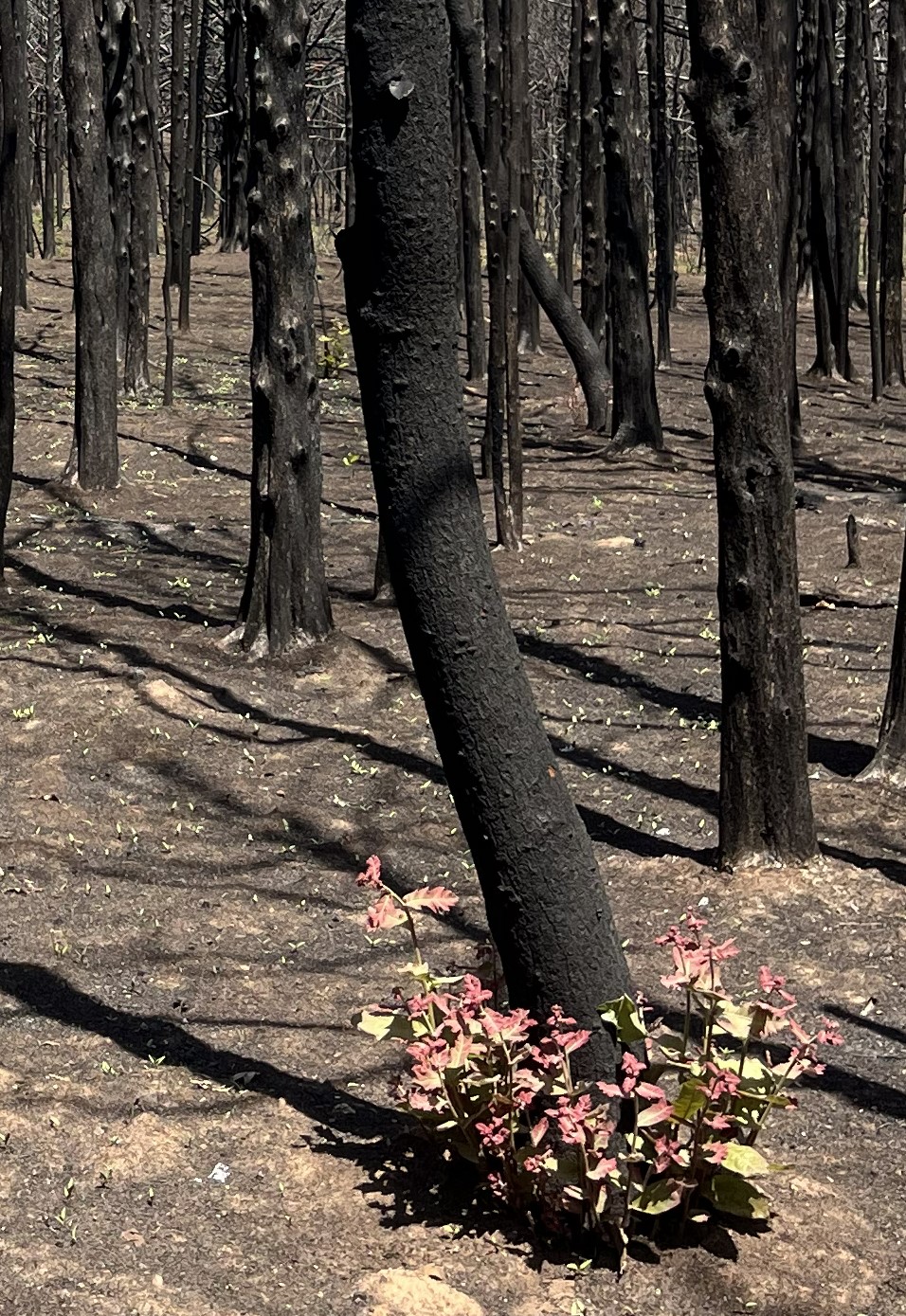 Figure 6. Fire-killed oak basal sprouting following wildfire. Note that although fire may be hot enough to top-kill mature trees, if there is not enough radi-ant heat exposed to dormant buds and roots, trees may still have the capacity for sprouting.
Many Cross Timbers forests provide limited resources for deer, turkeys and quail because of closed-canopy conditions. Cross Timbers forests with limited understory vegetation represent poor habitat for deer and turkeys and are usually nonhabitat for quail. Thus, wildfires that open the canopy by top-killing overstory trees often improve conditions for deer, turkeys and quail. The exception is large-scale wildfire that eliminates turkey roosting locations over a large area. However, moderate severity wildfires in the Cross Timbers can leave sufficient living turkey roost trees, whereas the loss of turkey roost trees is a greater issue in western Oklahoma systems.
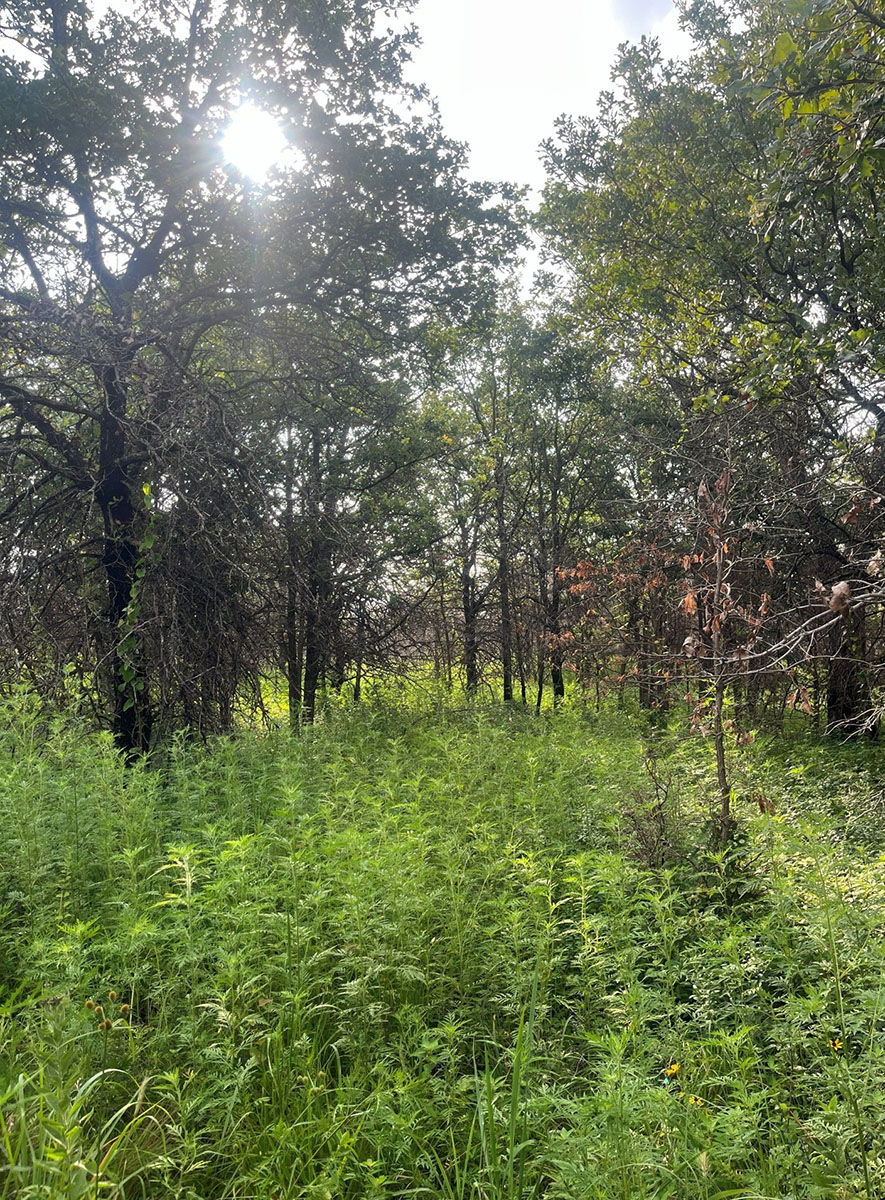 Figure 7. Understory vegetation response after the wildfire. Understory forbs that provide high-quality deer forage and brood-rearing cover for turkeys and quail responded quickly after the wildfire.
Desirable vegetation for deer, turkeys and quail established quickly following the Stillwater wildfire. We measured over 50% forb coverage in the understory only a few months after the fire, whereas forb coverage was <50% before the wildfire. Many shade-intolerant species that provide high-quality deer for-age and seed production for birds, including common ragweed (Ambrosia artemisiifolia), beggarslice or tick clover (Desmodium spp.) and partridge pea (Chamaecrista fasciculata), established quickly after the fire. Prescribed fire will be needed to maintain desirable understory conditions following the wildfire, as canopy closure will occur relatively quickly without additional disturbances.
Conclusion
Landowners in Cross Timbers forests should consider maintaining oak as a primary component. Retaining oak can accomplish many landown-er goals, including provision of wildlife forage, habitat and aesthetically pleasing fire- and drought-adapted vegetation. Although tree mor-tality near structures is hazardous, consider that oak tree mortality in wooded areas of Oklahoma can be beneficial by promoting a younger, more vigorous oak forest, which can serve many purposes. To continue maintaining oak in your forest, consider management practices such as Forest Stand Improvement and prescribed fire. To contact your local prescribed burn association for assistance.
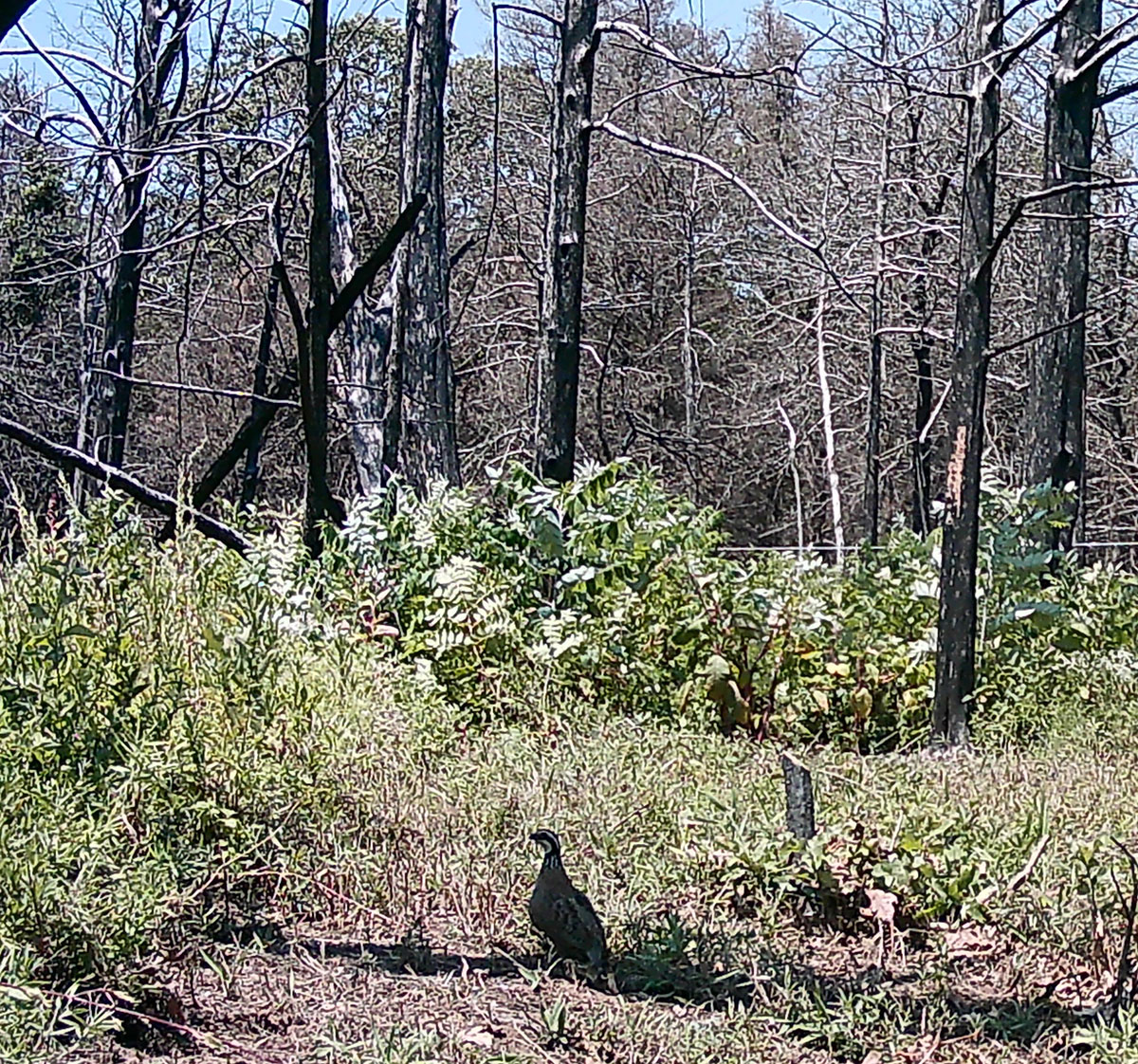 Figure 8. This area represented nonhabitat for quail prior to the wildfire, but quail used the area only a few months after the wildfire when understory vegetation increased.
For More Information, See:
DeSantis, R.D., Hager, S.R., Weir, J.R., Ansley, R. J. 2025. Eastern red-cedar and climate change in Oklahoma’s Cross Timbers forests. OSU Extension fact sheet NREM-5155 Eastern redcedar and climate change in Oklahoma’s Cross Timbers forests
References
DeSantis, R.D., Hallgren, S.W. 2011. Prescribed burning frequency affects post oak and blackjack oak regeneration. Southern Journal of Applied Forestry 35: 193-198.
DeSantis, R.D., Hallgren, S.W., and Stahle, D.W. 2011. Drought and fire suppression lead to rapid forest composition change in a forest-prairie ecotone. Forest Ecology and Management 261: 1833-1840.
Elmore, D., DeSantis, R., and Goodman, L. 2023. Forest Stand Improvement Practices for Oklahoma. Oklahoma State University Extension technical guide E-1058.
Propst, J., Taylor, T., Loss, S.R., Noden, B.H. 2025. Effects of woody plant encroachment on abundance of multiple tick species in the U.S. Great Plains. Plos One 20 (10).
Zou, C.B., Twidwell, D., Bielski, C.H., Fogarty, D.T., Mittelstet, A.R., Starts, P.J., Will, R.E., Zhong, Y., Acharya, B.S. 2018. Impact of eastern redcedar proliferation on water resources in the Great Plains USA – Current state of knowledge. Water 10, 1768.