

Oklahoma Row Crop Weed Identification Guide
Introduction
Weeds pose a major risk to crop quality and yield. Weed management starts with the proper identification of the species present. Proper identification aids in selecting effective control measures. This weed identification guide is designed to aid in properly identifying common row crop weeds in Oklahoma crop production. This guide is not exhaustive, but it can serve as a good starting point for weed identification.
Barnyardgrass
Echinochloa crus-galli (L.) P. Beauv.
Aliases
Cockgrass, watergrass
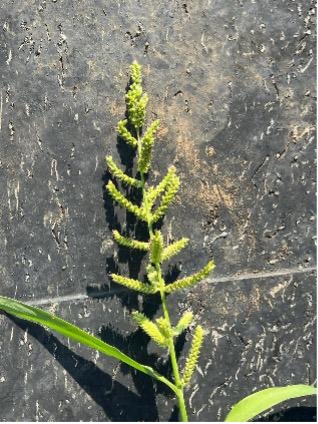 Figure 1. Barnyardgrass.
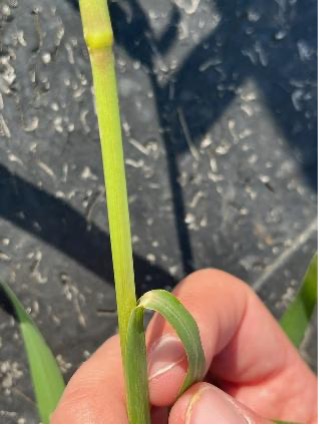 Figure 2. Barnyardgrass.
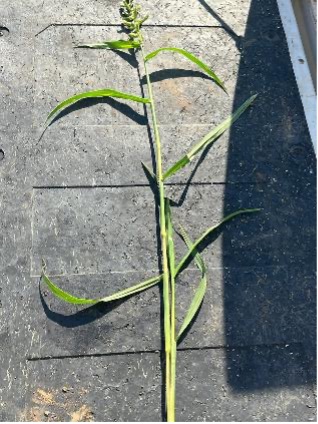 Figure 3. Barnyardgrass.
Description
Barnyardgrass is a clump-forming summer annual grass native to Eurasia, widespread in moist U.S. soils. It infests rice fields, low spots in row crops and irrigation ditches.
Seedlings
Cotyledons are linear with rounded-tip first true leaves. No ligule or auricles present; stems often purple-tinged at base. Young plants start prostrating, then tiller upright.
Leaves
Leaves alternate, fat, 3–12 inches long, 0.5 inches wide, with rough margins. Sheath’s hairless or sparsely hairy; surfaces are rough to the touch. Leaves droop as the plant matures.
Flowers and Fruit
Nodding panicle has 5–20 racemes with green-purple spikelets bearing short awns or bristles. Seeds are smooth, gray-brown and viable for years in soil. Panicles compact in dense stands.
Roots
Fibrous roots develop from lower nodes, shallow but dense. Nodal roots proliferate in moist soils for anchorage. Supports rapid top growth.
Buffalo Bur
Solanum rostratum Dunal
Aliases
Kansas thistle, spiny nightshade
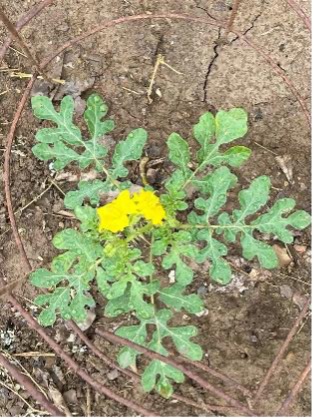 Figure 4. Buffalo bur.
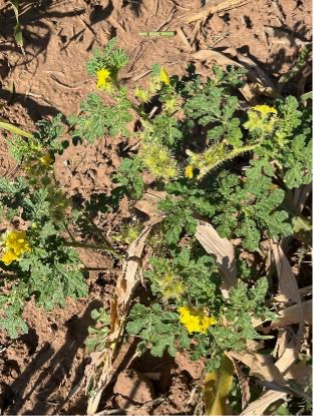 Figure 5. Buffalo bur.
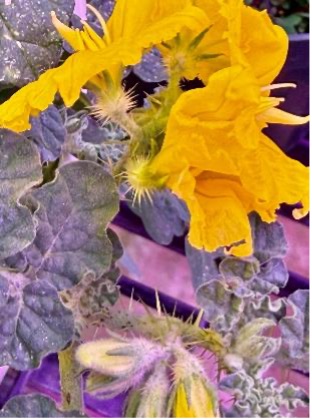 Figure 6. Buffalo bur.
Description
Buffalo bur is a spiny summer annual in the nightshade family that colonizes disturbed soils, overgrazed pastures, field margins and livestock holding areas. It typically grows 1–3 feet tall and is heavily armed with sharp spines on stems, leaves and calyces.
Seedlings
Seedlings emerge from relatively small seeds and quickly develop lobed, gray/green leaves with noticeable spines on the veins and petioles. Young plants may form a low rosette before sending up more erect, branched stems.
Leaves
Leaves are deeply lobed, gray/green and covered with stellate (star-shaped) hairs, often with spines along the veins. The combination of lobes, hairs and spines gives plants a very rough, prickly feel.
Flowers and Fruit
Flowers are bright yellow, star-shaped and resemble small tomato or potato blossoms, typically found as a single flower or in small clusters. They are followed by small, round, green berries enclosed in a spiny calyx; berries turn yellowish as they mature and hold many seeds.
Roots
Buffalo bur has a deep taproot that allows survival under dry, low-fertility conditions. The root system supports regrowth if top growth is damaged early, but the species completes its life cycle in one season.
Cocklebur
Xanthium strumarium L.
Aliases
Common cocklebur
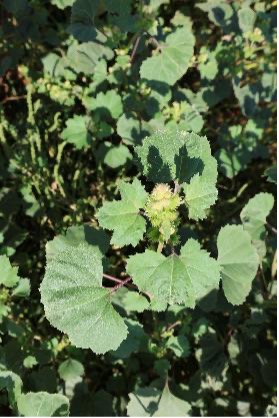 Figure 7. Cocklebur.
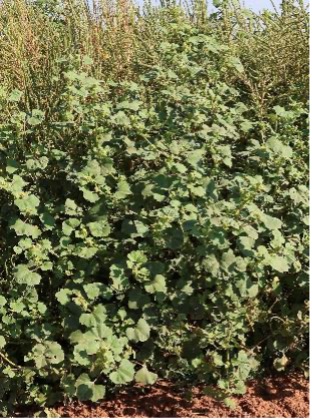 Figure 8. Cocklebur.
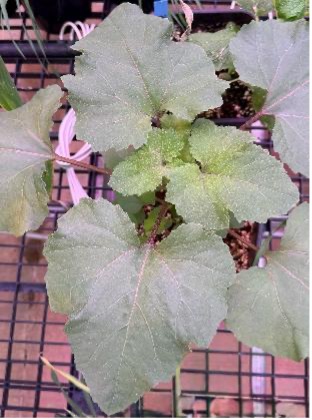 Figure 9. Cocklebur.
Description
Cocklebur is a coarse summer annual that prefers moist, nutrient-rich soils, such as field margins, low spots and areas receiving manure or foodwater. Mature plants often reach 2–5 feet tall with thick stems and broad leaves that shade nearby vegetation.
Seedlings
Seedlings emerge from large, bur-enclosed seeds and are easily recognized by their large, thick, opposite cotyledons. Early true leaves are opposite, triangular to ovate and rough to the touch.
Leaves
Leaves are alternate on older plants, broadly triangular to heart-shaped, with coarse teeth along the margins and a sandpapery texture. They are positioned on long petioles and may emit a distinct odor when crushed.
Flowers and Fruit
Flowers are inconspicuous and greenish, with male and female flowers on the same plant; male heads form above female heads on the stem. Female flowers develop into hard, spiny burs containing typically two seeds, which readily attach to animals, clothing and equipment.
Roots
Cocklebur has a stout taproot that penetrates moderately deep, with lateral roots spreading outward to support its coarse top growth. The root system is well adapted to moist soils but does not regrow once the plant is killed.
Common Purslane
Portulaca oleracea L.
Aliases
Pursley, garden purslane
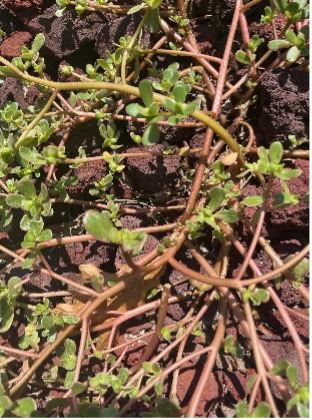 Figure 10. Purslane.
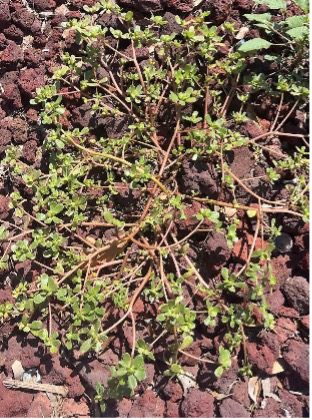 Figure 11. Purslane.
Description
Common purslane is a prostrate summer annual with fleshy, succulent tissues adapted to hot, dry conditions. Forms dense mats radiating 3–12 inches across in gardens, row crops, compacted soils and waste areas. Thrives in full sun and disturbed sites with high fertility.
Seedlings
Cotyledons are bright green, round/spoon-shaped, fleshy, and opposite. First true leaves alternate, small, oval and noticeably succulent even at young stage. Stems reddish, hairless, forming low rosettes.
Leaves
Leaves alternate (sometimes clustered), fleshy, spoon/oval shaped (0.5–2 inches), hairless with rounded tips. Stems are round, reddish and very succulent. Leaf margins entire, slightly fleshy thickening at base.
Flowers and Fruit
Tiny yellow flowers (<0.5 inch) with 4–6 petals arise in leaf clusters at stem tips, opening only in bright sunlight. Capsules form tiny black seeds (1–2 mm) in great abundance. Flowers are inconspicuous and short lived.
Roots
Extremely shallow fibrous roots form at nearly every node on prostrate stems. Taproot minimal; easily fragments and reroots from stem nodes. Thrives near the soil surface where moisture collects.
Common Ragweed
Ambrosia artemisiifolia L.
Aliases
Annual ragweed, small ragweed
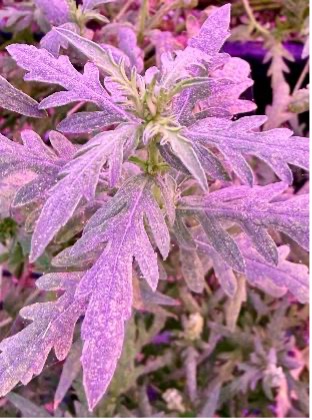 Figure 12. Common ragweed.
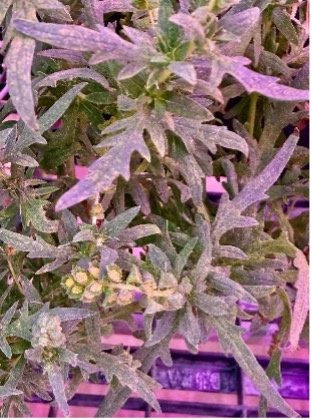 Figure 13. Common ragweed.
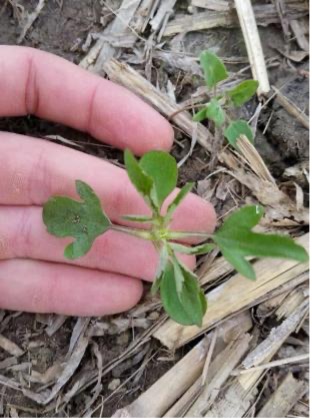 Figure 14. Common ragweed.
Description
Common ragweed is a widespread summer annual that thrives in disturbed soils, including crop fields, fencerows, construction sites and roadsides across much of North America. It is typically shorter and more branched than giant ragweed, often 1–4 feet tall but forming dense stands that compete heavily with young crops.
Seedlings
Seedlings emerge in spring from relatively large seeds and often appear in patches where soil has been disturbed. Cotyledons are thick and somewhat spoon-shaped, followed by opposite, deeply lobed first true leaves.
Leaves
Leaves transition from opposite to alternate up the stem and are deeply divided into many narrow lobes, giving a fern-like appearance. Blades are typically 2–4 inches long, dull green and may be slightly hairy on both surfaces.
Flowers and Fruit
Male flower heads are borne in slender spikes at the top of the plant, releasing large quantities of wind-dispersed pollen that contribute to late-summer allergies. Female flowers are in the leaf axils and develop into small, spiny achenes (seeds) that fall near the parent plant or move with the soil.
Roots
Common ragweed has a fibrous root system with a modest taproot that penetrates several inches into the soil. It supports rapid early-season growth but does not survive once the top is destroyed.
Common Sunflower
Helianthus annuus L.
Aliases
Wild sunflower, annual sunflower
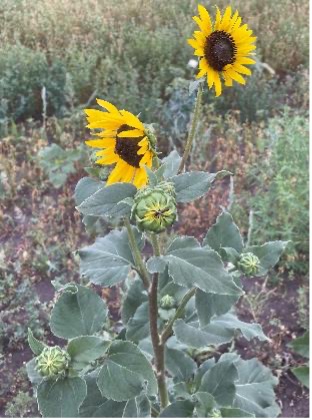 Figure 15. Common sunflower.
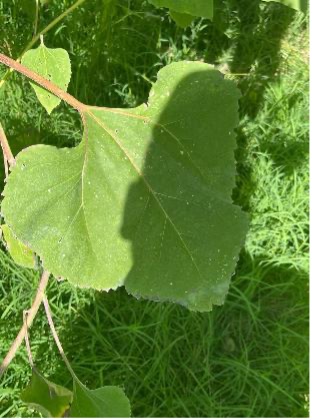 Figure 16. Common sunflower.
Description
Common sunflower is an erect, coarse and tap-rooted summer annual native to North America, commonly 3–14 feet tall depending on conditions. It is grown as a crop but also behaves as a weed in cultivated fields, pastures and disturbed areas where volunteer or wild plants emerge.
Seedlings
Young seedlings have bright green cotyledons and early leaves that are wider than they are long, giving a squat appearance. Stems and leaves are rough-hairy even at small sizes, making seedlings easy to feel and recognize.
Leaves
Leaves are large, rough and simple; lower leaves are opposite and heart-shaped (cordate), while upper leaves become alternate and more ovate to lanceolate. Mature leaves can reach 3–12 inches or more across, with toothed to nearly entire margins and coarse hairs on both leaf surfaces and stems.
Flowers and Fruit
Plants produce 1–12 or more large “sunflower” heads per plant, each 3–12 inches across. Heads typically have bright yellow ray florets surrounding purplish-brown to yellow disk florets, with only disk florets producing seeds. The dry fruits (“seeds”) are gray to black, often with white stripes and contain a single oil-rich kernel.
Roots
Common sunflower develops a strong taproot that can penetrate several feet, with many lateral roots branching near the surface. The root system supports tall growth and good drought tolerance in open, sunny sites.
Devil’s Claw
Proboscidea louisianica (Mill.) Thell.
Aliases
Unicorn plant
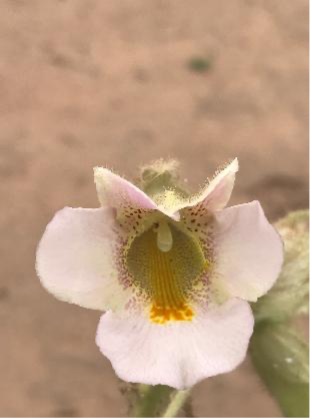 Figure 17. Devil’s claw.
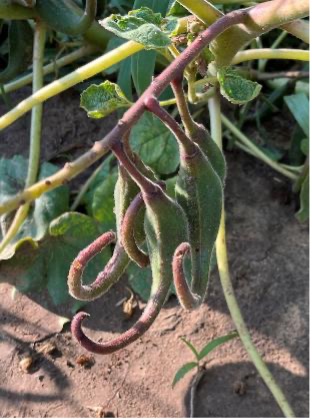 Figure 18. Devil’s claw.
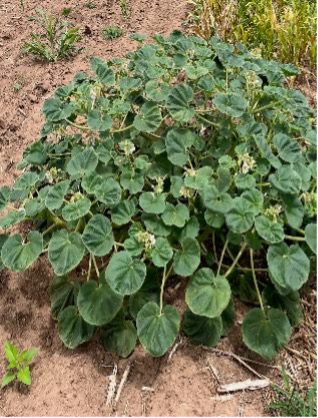 Figure 19. Devil’s claw.
Description
Devil’s claw is a coarse annual in Southwest/South cotton fields and waste areas. Features large sticky leaves and curved pods.
Seedlings
Cotyledons are large, heart-shaped; the first leaves are lobed.
Leaves
Alternate, heart-shaped, 4–8 inches; long petioles, sticky hairs.
Flowers and Fruit
Purple-maroon flowers; long curved pods split into claws with seeds. Indehiscent fruit.
Roots
Taproot with fibrous laterals.
Field Bindweed
Convolvulus arvensis L.
Aliases
Creeping Jenny
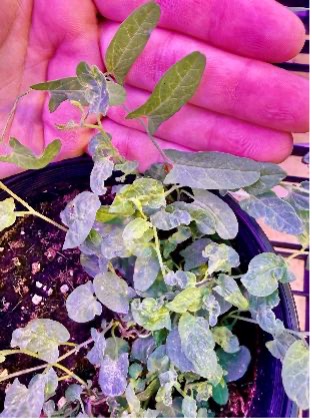 Figure 20. Field bindweed.
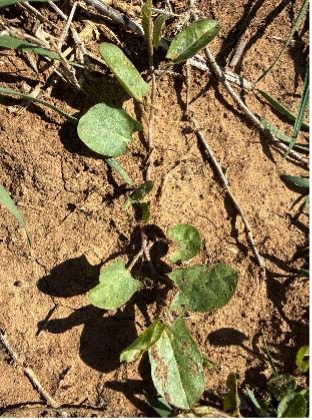 Figure 21. Field bindweed.
Description
Field bindweed is a perennial vine in U.S. cropland, pastures and disturbed sites. Spreads by deep rhizomes and seed.
Seedlings
Cotyledons square, gray/green; first leaves arrow-shaped.
Leaves
Alternate, sagittate/arrow-shaped, 0.5–2 inches; twisted petioles.
Flowers and Fruit
White-pink funnel flowers; capsules with 4–6 dark seeds.
Roots
Extensive deep roots/rhizomes to 20 feet; regenerates from fragments.
Giant Ragweed
Ambrosia trifida L.
Aliases
Kinghead
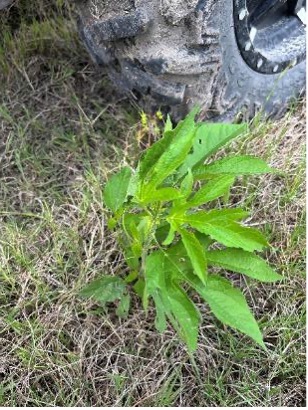 Figure 22. Giant ragweed.
Figure 23. Giant ragweed.
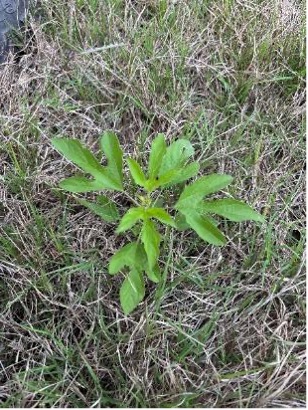 Figure 24. Giant ragweed.
Description
Giant ragweed is a tall, early-emerging annual in Midwest field edges and row crops. Reaches 6–10+ feet shading out crops.
Seedlings
Cotyledons are spoon-shaped; the first leaves are opposite, 3-lobed.
Leaves
Opposite then alternate, 3-lobed (6–12 inches), rough texture. Long petioles.
Flowers and Fruit
Male racemes are terminal; female burs are spiny with a single pitted seed. Wind/animal dispersed.
Roots
Branching taproot several feet deep.
Horseweed
Conyza canadensis (L.) Cronq.
Aliases
Marestail
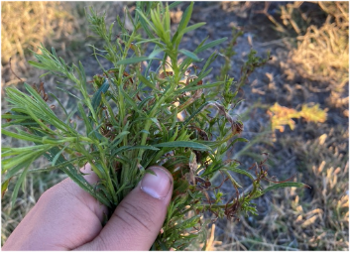 Figure 25. Horseweed.
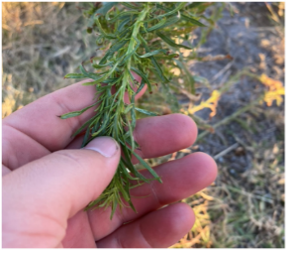 Figure 26. Horseweed.
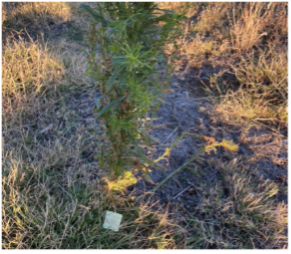 Figure 27. Horseweed.
Description
Horseweed is a winter or summer annual broadleaf weed common in no-till and reduced-tillage crop fields, roadsides and waste areas. It can reach 3–6 feet tall and is a frequent problem in glyphosate-reliant systems due to widespread herbicide resistance.
Seedlings
Seedlings often establish in the fall as small rosettes with numerous narrow leaves close to the ground. Rosettes overwinter and bolt in spring, but some seedlings can also emerge in spring or early summer.
Leaves
Leaves are narrow, linear to lanceolate and arranged alternately along the upright stem, giving the plant a bushy, bottlebrush appearance when mature. Leaf margins may be slightly toothed or entire, and surfaces are often hairy, especially on younger plants.
Flowers and Fruit
Small, white to pale yellow flower heads are borne in many-branched clusters near the top of the stem. Each head produces numerous tiny seeds equipped with a pappus of bristles, allowing them to be carried long distances by wind.
Roots
Horseweed has a relatively shallow taproot with fibrous laterals concentrated in the upper soil layers. This shallow system allows efficient use of surface moisture and nutrients but does not survive once the main crown is killed.
Ivyleaf Morningglory
Ipomoea hederacea Jacq.
Aliases
Ivyleaf bindweed, ivy-leaved morning-glory
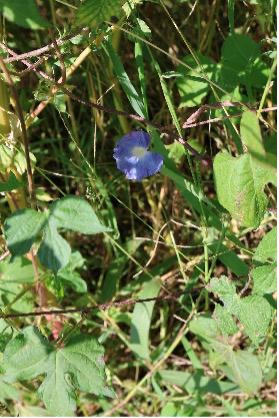 Figure 28. Ivyleaf morningglory.
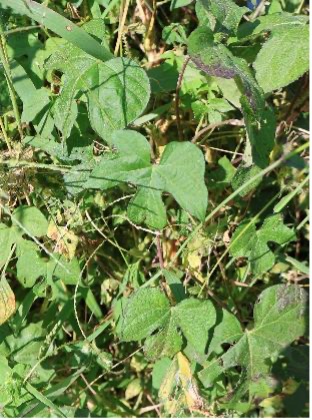 Figure 29. Ivyleaf morningglory.
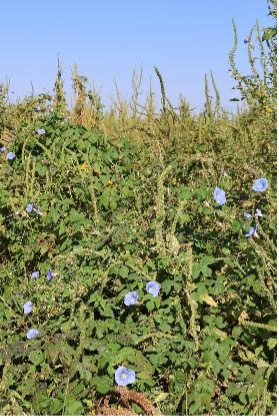 Figure 30. Ivyleaf morningglory.
Description
Ivyleaf morningglory is a twining, summer annual vine that infests row crops, field borders and disturbed areas throughout much of the eastern and central United States. It can form dense tangles that climb over crops, fences and equipment, interfering with harvest.
Seedlings
Seedlings emerge from relatively large, hard seeds that may have cracked seed coats after scarification or weathering. Cotyledons are heart/ivy-shaped and often slightly purple-tinged on the underside, making them noticeable among grasses.
Leaves
Leaves are alternate, 2–5 inches long, distinctly 3-lobed and ivy-shaped, with each lobe broadly rounded. Stems and petioles are hairy, and the hairs on leaves and petioles are erect rather than lying flat, which helps distinguish this species from some other morningglories.
Flowers and Fruit
Funnel-shaped flowers arise singly or in small clusters from the leaf axils, typically white to pale blue or purple, about 1–2 inches in diameter. Flowers are densely hairy at their bases, and they develop into round to ovoid capsules containing several relatively large, dark and rough seeds.
Roots
Ivyleaf morningglory develops a distinct taproot that penetrates moderately deep into the soil. The root system supports vigorous vining growth but does not regenerate once the plant is killed.
Johnsongrass
Sorghum halepense (L.) Pers.
Aliases
Egyptian millet, Aleppo grass
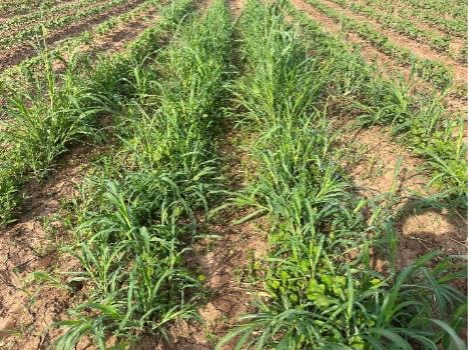 Figure 31. Johnsongrass.
Description
Johnsongrass is a tall, robust perennial grass that spreads aggressively by rhizomes and seed, forming dense stands in fields, roadsides and disturbed sites. It is one of the most troublesome perennial grasses in many cropping systems, especially in warm regions.
Seedlings
Seedlings resemble other sorghums, with rolled leaves and a distinct, whitish midvein but initially lack the thick rhizomes of mature plants. Young plants can establish from both seed and buds on shallow rhizomes.
Leaves
Leaves are 20–60 cm (about 8–24 inches) long and 10–30 mm wide, with a prominent white midvein and mostly hairless blades and sheaths. A membranous ligule with short hairs is present at the junction of the leaf and stem, and the leaf surface is typically smooth.
Flowers and Fruit
The seedhead is a large, open, pyramidal panicle 12–50 cm long with many branched spikelets. Panicles begin green but mature to dark reddish or purple/brown, with oval, reddish-brown seeds 3–5 mm long.
Roots
Johnsongrass develops stout, creeping rhizomes that allow it to spread laterally and form colonies. Rhizomes and fibrous roots together give the plant resilience to mowing, grazing and shallow tillage.
Kochia
Bassia scoparia (L.) A.J. Scott
Aliases
Tumbleweed
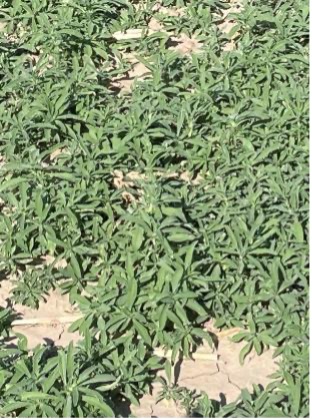 Figure 32. Kochia.
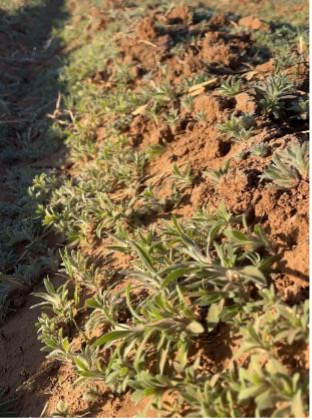 Figure 33. Kochia.
Description
Kochia is a bushy summer annual tumbleweed in Great Plains crops and roadsides. Drought/salt-tolerant.
Seedlings
Cotyledons are narrow; the first leaves are succulent and fleshy.
Leaves
Alternate, linear/lanceolate, 0.5–2 inches; dense hairs.
Flowers and Fruit
Green flowers in leaf axils; utricles form tumbleweed.
Roots
Taproot with extensive laterals.
Large Crabgrass
Digitaria sanguinalis (L.) Scop.
Aliases
Hairy crabgrass, finger grass
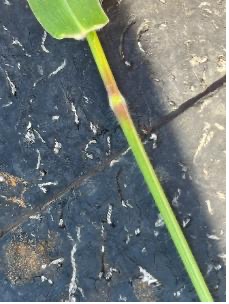 Figure 34. Large crabgrass.
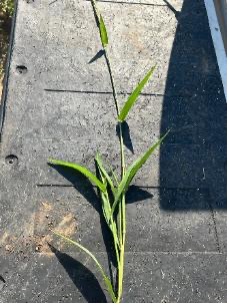 Figure 35. Large crabgrass.
Description
Large crabgrass is a prostrate to erect summer annual in disturbed U.S. soils, turf and row crops. It roots at nodes, forming mats in thin canopies.
Seedlings
Cotyledons oblong; first leaves wrinkled, hairy; membranous ligule prominent.
Leaves
Leaves fat, 2–6 inches long, tapered; hairy with white midvein; rolled vernation.
Flowers and Fruit
Digitate racemes (2–10, finger-like); spikelets hairy, purplish; seeds oval, ridged.
Roots
Fibrous roots at nodes; forms roots at lower nodes.
Palmer Amaranth
Amaranthus palmeri S Wats.
Aliases
Palmer pigweed, Careless weed
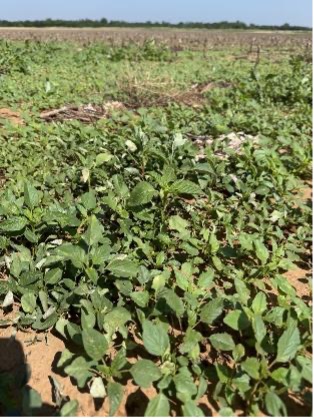 Figure 36. Palmer amaranth.
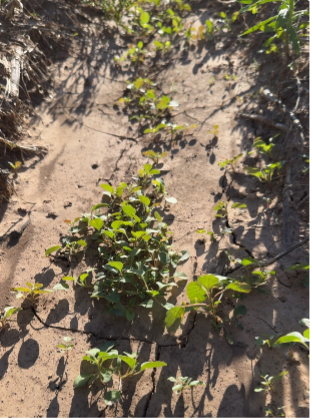 Figure 37. Palmer amaranth.
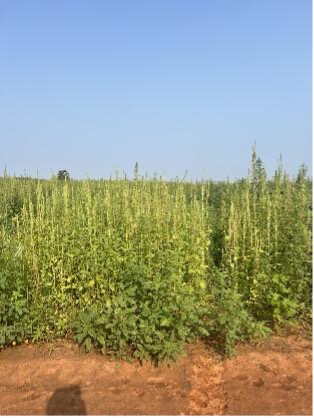 Figure 38. Palmer amaranth.
Description
Palmer amaranth is a summer annual weed native to the Southwestern United States. It can be found throughout the Southern U.S. and the Great Plains.
Seedlings
Cotyledons are narrow and often have a reddish lower leaf surface. The first true leaves are arranged alternately, ovate in shape and have a notch at the leaf tip. The notch often has a small hair protruding from it.
Leaves
Leaves are alternately arranged along the stem and are often lance-shaped, although they can be rounder. Leaves occur on long petioles that are often longer than the leaf itself.
Flowers and Fruit
Seedheads contain densely packed, small, green flowers. Male and female flowers occur on different plants. Male flowers often have a smooth feel while female flowers appear and feel rough/spiny. Panicles can reach greater lengths (1 ½ feet) than many other Amaranthus species. Seeds are small (less than 2mm) and appear dark brown to black in color.
Roots
Palmer amaranth has a strong taproot that usually appears red in color.
Prickly Sida
Sida spinosa L.
Aliases
Teaweed, ironweed, prickly fanpetals
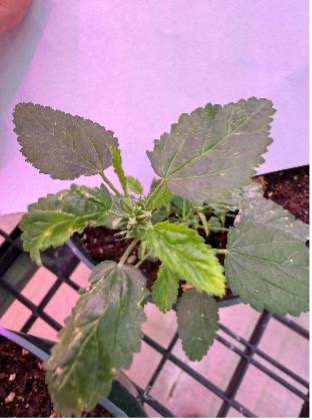 Figure 39. Prickly sida.
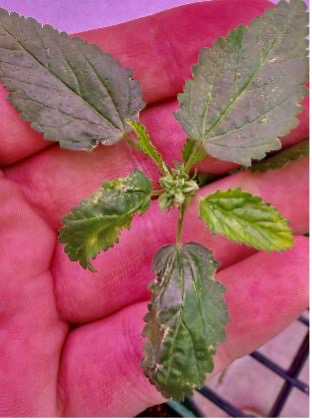 Figure 40. Prickly sida.
Description
Prickly sida is a branched summer annual reaching about 0.75–2 feet tall that infests row crops, pastures, roadsides and waste areas. It is one of the more common and troublesome broadleaf weeds in many warm regions, especially in reduced-tillage systems.
Seedlings
Seedlings have two heart-shaped cotyledons followed by alternate true leaves with toothed margins. Small, stiff spines (stipules) at the base of each petiole are present even on young plants and are a key ID characteristic.
Leaves
Leaves are alternate, 0.75–2 inches long, oval to lanceolate with serrated margins and inconspicuous hairs on both surfaces. Petioles are 0.5–1.25 inches long and bear narrow, green, spine-like stipules (about 5–8 mm) at their bases.
Flowers and Fruit
Pale yellow to light orange flowers about 1-inch across occur singly or in small clusters from leaf axils on short stalks, often partly hidden by foliage. Fruits are small, rounded capsules (4–6 mm) divided into five segments, each with two short spines at the tip and containing one seed. Seeds are small, egg-shaped and dark brown.
Roots
Prickly sida develops a shallow taproot that branches into several secondary roots. The plant reproduces only by seed but can form small colonies under favorable conditions.
Purple Nutsedge
Cyperus rotundus L.
Aliases
Purple nutgrass
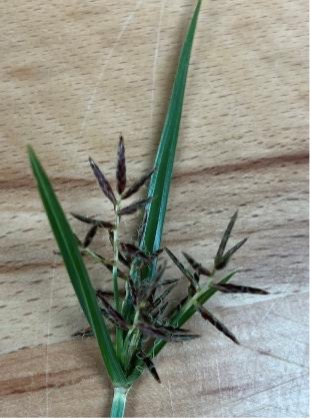 Figure 41. Purple nutsedge.
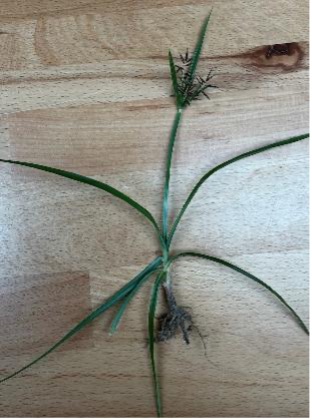 Figure 42. Purple nutsedge.
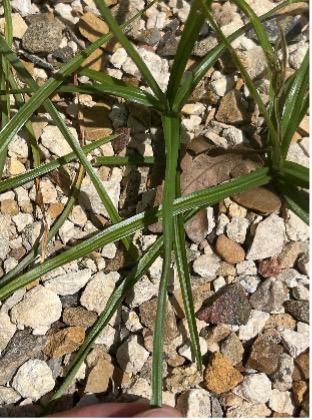 Figure 43. Purple nutsedge.
Description
Purple nutsedge is a warm-season perennial sedge considered one of the world’s most troublesome weeds due to its aggressive spread by chains of underground tubers. It is common in warm, irrigated cropping systems, gardens and turf where it forms dense, persistent patches.
Seedlings
Most new shoots arise from tubers rather than seeds, emerging as dark-green, grass-like leaves that may appear in distinct clumps or patches. Seedling-like shoots quickly produce additional rhizomes and tubers, expanding the infestation.
Leaves
Leaves are narrow, glossy green to dark green and arranged in three ranks around a solid, triangular stem like yellow nutsedge. Leaf tips are often more pointed, and overall color tends to be darker than that of yellow nutsedge.
Flowers and Fruit
Inflorescences are composed of reddish/brown to purple spikelets in loose clusters at the stem top. While seeds can form, vegetative spread via tubers is the primary means of reproduction.
Roots
Purple nutsedge produces extensive networks of rhizomes bearing chains of tubers at varying depths. Tubers are often produced in vertical series, allowing regrowth even if the upper tubers are destroyed.
Red Morningglory
Ipomoea coccinea L.
Aliases
Redstar morningglory, scarlet morningglory
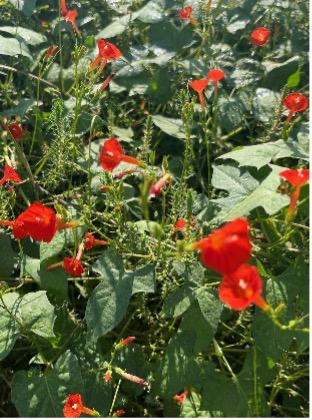 Figure 44. Red morningglory.
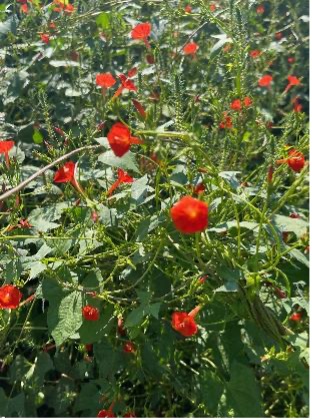 Figure 45. Red morningglory.
Description
Red morningglory is a summer annual twining vine that is most common in the southern United States along field edges, fence-rows and in row crops. It is like other morningglories but is distinguished by its smaller, red to orange/red tubular flowers.
Seedlings
Seedlings arise from relatively large seeds that germinate later in spring or early summer when soils warm. Cotyledons are heart-shaped, and young plants quickly produce twining stems that seek support.
Leaves
Leaves are alternate, usually heart-shaped to shallowly three-lobed and 1.5–3 inches long. Surfaces may be sparsely hairy, and petioles are slender, allowing the leaves to drape from support structures or crop plants.
Flowers and Fruit
Flowers are narrow, tubular and red to orange/red, resembling small trumpets and are produced from the leaf axils on slender stalks. After pollination, capsules form that contain several small, dark, angular seeds capable of persisting in the soil for multiple seasons.
Roots
Red morningglory has a distinct taproot that anchors the plant and supports its climbing vines. Roots are relatively shallow compared to those of perennial species, but still adequate for rapid growth in warm soils.
Redroot Pigweed
Amaranthus retrofexus L.
Aliases
Rough pigweed, carelessweed, red root amaranth
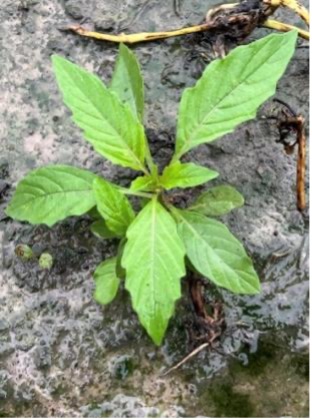 Figure 46. Redroot pigweed.
Description
Redroot pigweed is a common summer annual broadleaf weed found throughout the U.S. in disturbed soils, row crops, pastures and waste areas. It grows erect to about 3–6 feet tall with a stout, branching habit and is named for its distinctive red taproot and lower stem. Highly competitive in early crop stages due to rapid growth and high seed production.
Seedlings
Cotyledons are linear to lanceolate with a reddish tint underneath. First true leaves are oval to diamond-shaped, slightly hairy and noticeably smaller toward the stem tip. The stem base often shows early reddish coloration from the taproot junction.
Leaves
Leaves alternate along the stem, egg-shaped to diamond-shaped (2–6 inches long), with wavy margins and fine hairs on both surfaces. Upper leaves are smaller, petioles shorter; leaf tips are rounded or slightly notched. Undersides often show prominent veins with reddish/purple tones.
Flowers and Fruit
Dense, bristly spikes form terminal panicles and upper leaf axils, greenish with prominent bracts longer than flowers. Monoecious (male/female on the same plant); flowers are tiny and inconspicuous. Utricles split to release single shiny black seeds (up to 100,000/plant).
Roots
Distinctive stout red taproot gives the species its name, penetrating 1–2 feet deep. Lateral fibrous roots support rapid nutrient uptake in disturbed soils. Red coloration is most visible at the soil line on young plants.
Sicklepod
Senna obtusifolia (L.) H.S. Irwin & Barneby
Aliases
Coffee weed, American sicklepod
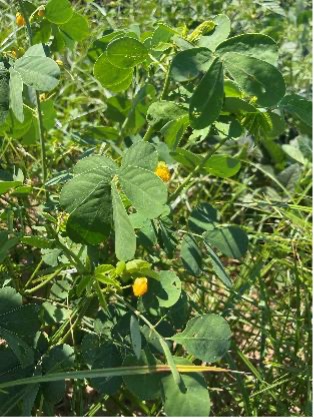 Figure 47. Sicklepod.
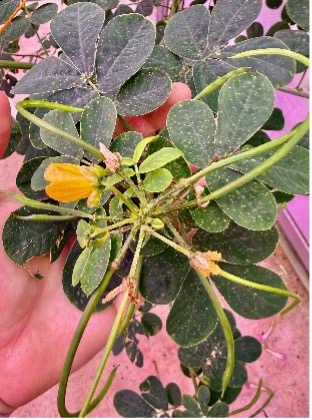 Figure 48. Sicklepod.
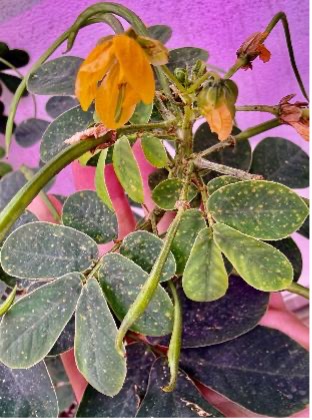 Figure 49. Sicklepod.
Description
Sicklepod is an erect summer annual legume reaching 2–5 feet tall in crop fields, pastures and waste areas across the southern U.S. It is easily recognized by its pinnate leaves and long, curved pods that resemble a sickle.
Seedlings
Seedlings have large, oblong cotyledons followed by alternate, pinnately compound leaves with a few broad, rounded leafets. Young stems are green to reddish and hairless or sparsely hairy.
Leaves
Leaves are alternate and pinnately compound with 3–6 pairs of broad, oval leaflets that have rounded tips. Each leaf is bright green, with a short petiole and smooth margins, giving the plant a “smooth, fat” foliage appearance.
Flowers and Fruit
Showy, bright yellow, five-petaled flowers occur singly or in small clusters in upper leaf axils from mid- to late summer. Flowers are followed by slender, 4-sided, strongly curved, sickle-shaped pods up to about 7 inches long and 0.25 inch wide. Pods turn brownish as they mature and contain numerous small seeds.
Roots
Sicklepod has a stout taproot with lateral branches, which confer good drought tolerance. The root system supports regrowth if shoots are cut while young, but does not persist as a perennial.
Silverleaf Nightshade
Solanum elaeagnifolium Cav.
Aliases
Silverleaf nettle, white horsenettle, tomatillo, bull-nettle
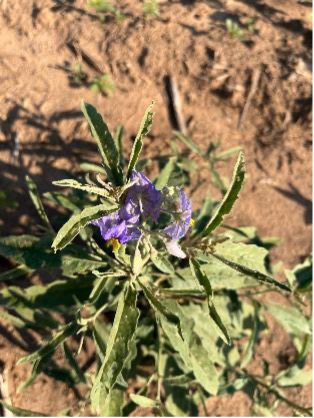 Figure 50. Silverleaf nightshade.
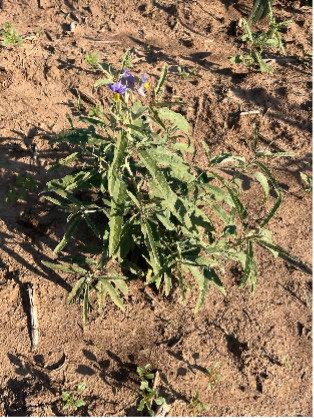 Figure 51. Silverleaf nightshade.
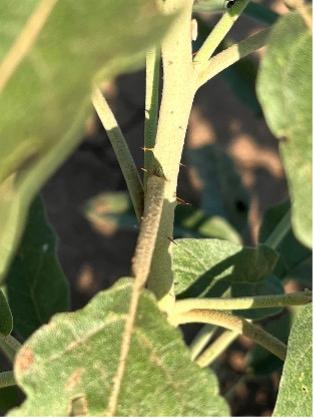 Figure 52. Silverleaf nightshade.
Description
Silverleaf nightshade is a deep-rooted perennial broadleaf weed in the nightshade family, common in pastures, rangeland, roadsides and disturbed sites across the southern and central United States. It typically grows 1–3 feet tall and forms spreading patches via creeping roots. The plant is considered toxic to livestock due to alkaloids in the foliage and berries.
Seedlings
Seedlings emerge from both seed and root fragments, often appearing in small clusters. Young plants have narrow, gray/green leaves with visible hairs that give them a dull, silvery look even at early stages. Stems and leaves show small prickles early on, making seedlings rough to the touch.
Leaves
Leaves are alternate, narrow to lance-shaped (often 1–3 inches long), with wavy or slightly lobed margins and a dense covering of fine, star-shaped hairs that give a “silvery” or gray/green appearance. Short prickles are often present on the midrib and veins, especially on the underside of the leaf. Leaves are attached by short petioles to slightly woody, branching stems.
Flowers and Fruit
Flowers are showy, star-shaped and typically violet to bluish/purple (occasionally white), with 5-pointed petals and prominent yellow cone-shaped anthers. They occur in small clusters along the upper portions of the stems through late spring and summer. Fruits are round berries about 0.25–0.5 inches in diameter that turn from green and mottled to yellow or orange when mature and contain numerous fattened yellow seeds.
Roots
Silverleaf nightshade has an extensive system of deep, creeping roots and rhizomes that can extend several feet into the soil and horizontally beyond the visible plants. New shoots commonly arise from these roots, allowing patches to expand and making the species difficult to control once established. Root pieces left in the soil can regenerate new plants.
Spotted Spurge
Euphorbia maculata L.
Aliases
Spotted sandmat, prostrate sandmat, milk spurge
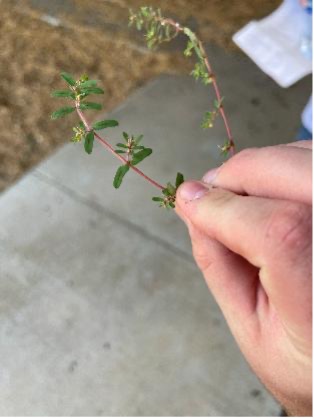 Figure 53. Spotted spurge.
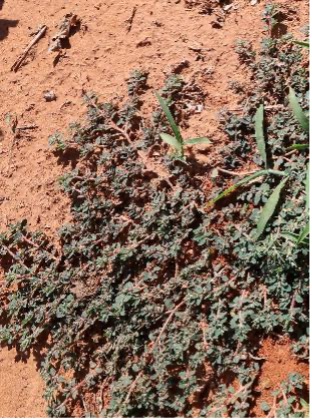 Figure 54. Spotted spurge.
Description
Spotted spurge is a low-growing summer annual forming prostrate mats 4–12 inches wide in turf, landscapes, row middles and compacted soils. Stems trail along the ground, rooting at nodes; distinguished by milky sap when broken. Prefers thin, sunny, disturbed areas.
Seedlings
Cotyledons oval, red tinged; first true leaves are opposite, small (0.25 inch), often with dark purple spots in the center. Stems are thin, reddish, hairless to slightly hairy. Forms tight rosettes initially.
Leaves
Leaves opposite, oval/lance shaped (0.25–0.75 inch), often with conspicuous purple/red spots at midrib. Leaf margins are finely toothed; petioles are very short. Milky sap exudes from any broken plant part.
Flowers and Fruit
Tiny greenish/white flowers clustered in cuplike structures (cyathia) at leaf axils. Capsules are explosive, scattering three tiny gray seeds per fruit. Flowers are inconspicuous but numerous.
Roots
Fibrous roots shallow, primarily at stem nodes where prostrate stems contact soil. Taproot slender. Easily spreads vegetatively from fragments.
Tall Morningglory
Ipomoea purpurea (L.) Roth
Aliases
Common morningglory, purple morning glory
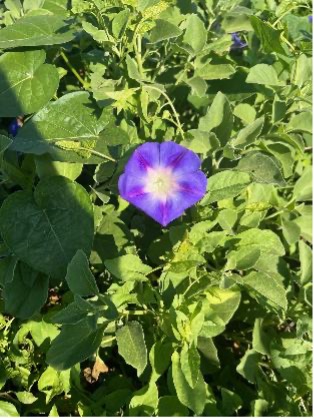 Figure 55. Tall morningglory.
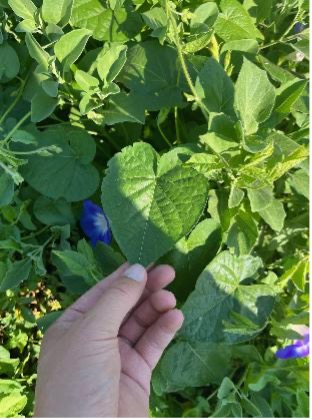 Figure 56. Tall morningglory.
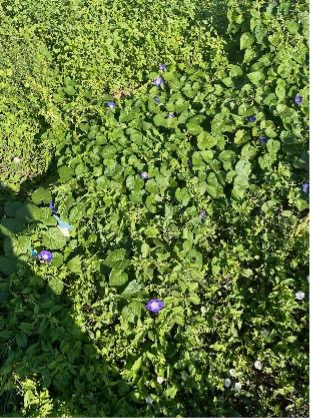 Figure 57. Tall morningglory.
Description
Tall morningglory is a fast-climbing summer annual commonly found in row crops, field edges and disturbed sites across the eastern and central U.S. Vines grow several feet long, twining over crops and equipment to create dense harvest-interfering tangles. Thrives in warm, sunny conditions with well-drained soils.
Seedlings
Cotyledons are large, thick and distinctly heart-shaped, borne on slender reddish or purplish stems. First true leaves alternate, showing early twining growth as stems circle nearby supports. Hard-coated seeds germinate slowly unless weathered or scarifed.
Leaves
Leaves alternate along twining stems, broadly heart-shaped (sometimes shallowly three-lobed), 2–5 inches long with pointed tips. Medium- to dark-green blades may have sparse hairs along the veins; long, flexible petioles allow leaves to twist and drape from supports.
Flowers and fruit
Large funnel-shaped flowers (2–3 inches across) arise singly or in pairs from leaf axils, typically purple, blue, pink or white with lighter throat. Flowers open in the mornings and close by midday. Round capsules hold several large, dark, angular seeds that persist for years in soil.
Roots
Produces a distinct taproot with several lateral branches penetrating moderately deep. Supports vigorous vining growth but does not resprout from roots; reproduces primarily by seed.
Tall Waterhemp
Amaranthus tuberculatus (Moq.) J.D. Sauer
Aliases
Roughfruit amaranth
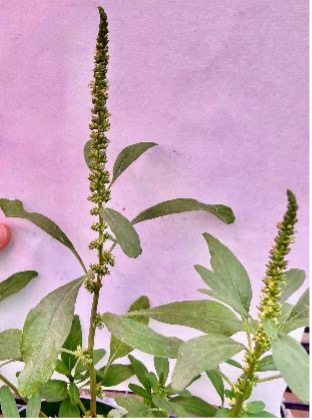 Figure 58. Tall waterhemp.
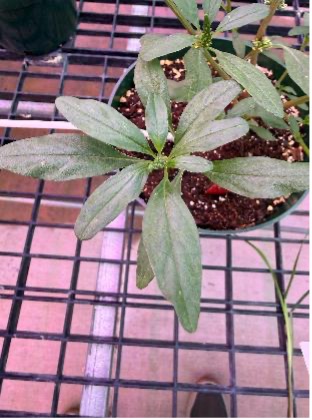 Figure 59. Tall waterhemp.
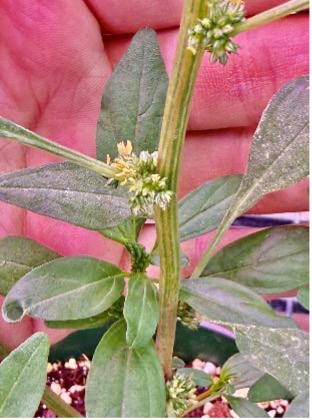 Figure 60. Tall waterhemp.
Description
Tall waterhemp is a summer annual widespread in Midwest row crops, tolerant to wet/dry soils.
Seedlings
Cotyledons linear, green; first leaves lanceolate, hairless.
Leaves
Alternate, lanceolate/ovate, hairless or slightly hairy; long petioles.
Flowers and Fruit
Dense axillary spikes; dioecious; smooth bracts; black seeds <1mm.
Roots
Taproot, white; deep penetration.
Texas Millet
Urochloa texana (Buckl.) R.D. Webster
Aliases
Texas panicum
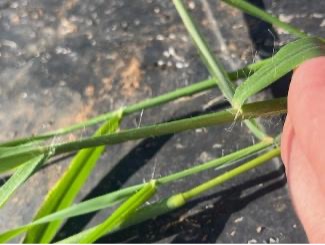 Figure 61. Texas millet.
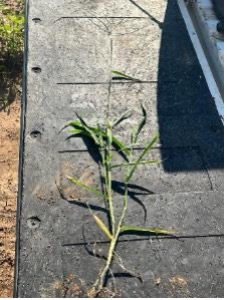 Figure 62. Texas millet.
Description
Texas millet is a tufted summer annual grass in fields, pastures and waste areas of the southern U.S.
Seedlings
Cotyledons narrow; first leaves hairy, rolled; short hairy ligule.
Leaves
Leaves linear, 2-8 inches, hairy sheaths/blades; prominent veins.
Flowers and Fruit
Open panicle, purple; spikelets paired, hairy; seeds small, brown.
Roots
Fibrous, shallow root system.
Tumble Windmillgrass
Chloris verticillata Nutt.
Aliases
Windmill grass
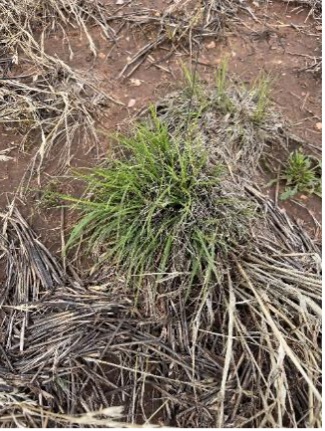 Figure 63. Tumble windmillgrass.
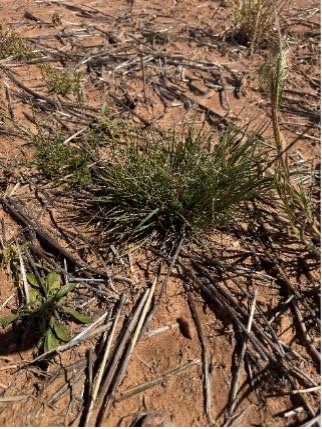 Figure 64. Tumble windmillgrass.
Description
Tumble windmillgrass is a warm-season perennial grass that forms loose clumps in pastures, rangelands, roadsides and disturbed sites. It is named for its characteristic seedhead, which can detach and tumble across the ground, aiding in seed dispersal.
Seedlings
Seedlings have narrow, fat leaves and emerge in small tufts that may be overlooked until tillers and seedheads develop. Young plants are typically light green and slow-growing initially compared to some annual grasses.
Leaves
Leaves are alternate, fat or slightly folded, 2–6 inches long and may be slightly rough along the margins. Sheaths are often somewhat compressed and can form a small, tufted basal clump.
Flowers and fruit
The inflorescence consists of multiple, stiff, radiating spikes resembling windmill blades, borne at the top of a slender stem. As plants mature and dry, the entire seedhead can detach and tumble in the wind, scattering seeds over a wide area.
Roots
Tumble windmillgrass has a fibrous root system with short rhizomes that help anchor small clumps. It tolerates drought and low fertility, slowly expanding under light grazing or disturbance.
Venice Mallow
Hibiscus trionum L.
Aliases
Flower-of-an-hour, bladder hibiscus
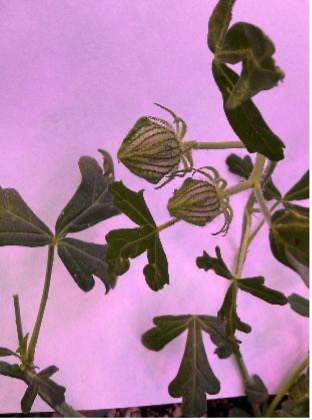 Figure 65. Venice mallow.
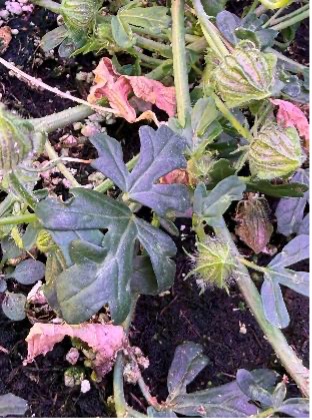 Figure 66. Venice mallow.
Description
Venice mallow is an introduced annual mallow found in crop fields, gardens and disturbed sites, typically 6–18 inches tall with a spreading to erect habit. It is attractive, with showy pale flowers and bladder-like calyces, but has become a weed in row crops and waste areas.
Seedlings
The first two leaves are round with toothed margins, followed by leaves that quickly become more deeply lobed. Stems and young leaves are hairy, and lower stems/petioles can show red to purple coloration.
Leaves
Leaves are alternate and simple; later leaves are deeply three-lobed, with each lobe having rounded teeth along the margin. Leaf blades are 0.8–2.4 inches long, hairy on both surfaces and borne on petioles that may be somewhat reddish.
Flowers and Fruit
Flowers are up to about 1.5 inches long, with white to pale yellow petals that often have a dark purple center at the base. Each flower opens for only a few hours (hence “flower-of-an-hour”) and is followed by a dry seed capsule enclosed in a conspicuous, inflated, papery calyx that resembles a small bladder.
Roots
Venice mallow has a fibrous root system with a weak primary taproot. Roots are generally confined to the upper soil layers, supporting their shallow, spreading habit.
Yellow Nutsedge
Cyperus esculentus L.
Aliases
Yellow nutgrass, chufa
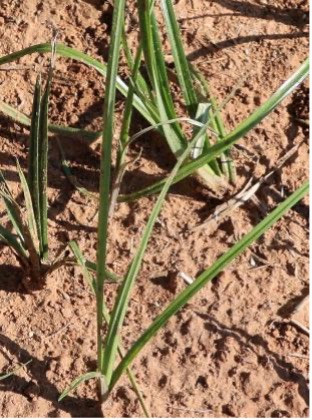 Figure 67. Yellow nutsedge.
Description
Yellow nutsedge is a perennial, grass-like sedge that spreads primarily by underground rhizomes and tubers, though it can also produce viable seed. It is most problematic in moist to wet soils, including irrigated fields, lawns and low spots in row crops, where its yellow-green color and coarse texture stand out from surrounding grasses.
Seedlings
Shoots emerge from overwintering tubers as well as from seed, appearing as bright yellow/green, grass-like leaves. Young plants are often faster growing and more upright than surrounding turf or crop seedlings, making patches noticeable early in the season.
Leaves
Leaves are glossy, yellow/green, fat to V-shaped in cross-section and typically longer and stiffer than turfgrass leaves, often overtopping the canopy. Leaves are basal and along the lower stem, arranged in three ranks around a solid, triangular stem that can be felt by rolling it between the fingers.
Flowers and Fruit
Flower clusters are produced at the tip of the stem in golden/yellow to straw-colored spikelets arranged in loose umbels. Seeds may form under favorable conditions but generally play a lesser role in spread compared to tubers.
Roots
Yellow nutsedge spreads through a system of rhizomes and numerous small, brown tubers (“nutlets”) that form near the soil surface. These tubers can persist for several years and sprout new plants, making the species difficult to eradicate with tillage alone.