

Plants in the Classroom: Cemetery Horticulture
Cemetery Horticulture
Plants have been an integral part of burial rites throughout human history. Around the globe and through the ages, many cultures have used plants in and around burial grounds, on the earth surrounding a gravesite and even within the burial chamber itself. The plants chosen for burial rites are often used for specific reasons, and they symbolize different meanings to different groups of people. They played a role in forming the first burial grounds in America to depart from traditional churchyards, the first green spaces set aside for recreation in the United States and a new profession, landscape architecture. Their role in death is creating growing interest in citizen science, biodiversity and nontraditional uses of burial grounds.
Death Rites in Ancient History
Ancient cultures viewed death in a myriad of ways — a horror to be avoided, a fulfillment of a lifelong goal, or a calm departure into the afterlife. Methods of burial and accompanying ceremonies varied over time and place. The oldest known intentional burial of Homo sapiens dates to 100,000 years ago in Israel, where the remains of more than 10 humans were found in a cave, along with 71 pieces of red ochre and tools stained with it. Placement of the ochre and tools suggests a ritual. Intentional burial with food and tools near the body suggests belief in an afterlife, with mourners placing valuable items the deceased might need.
The act of placing flowers on gravesites also goes back thousands of years. At a burial site in Israel, there is evidence of graves lined with plants and flowers, with plant impressions of sage, mint and other plants. The burial took place about 14,000 years ago. Even in ancient times, flowers had positive connotations.
Ancient Egyptians believed flowers were sacred and used plants and flowers in elaborate rituals they believed would grant them immortality after death. Ancient Egyptians planted funeral gardens for some of their dead. Tomb walls sometimes had depictions of gardens etched into them. An actual garden, divided into a grid of plant beds, was uncovered in Luxor. This 4,000-year-old garden, measuring about 10 feet by 6.5 feet, was in a courtyard bordering a tomb. A tamarisk shrub with roots and trunk still connected was found in one corner, along with a little bowl of fruit. Attached to the side of the tomb was a mud-brick chapel with three headstones newer than the garden itself, indicating that the tomb was intentionally placed within the garden.
In ancient Greece, greenery such as wreaths and garlands was placed on the bodies of the deceased and on their graves to honor them. Wreaths of celery demonstrated love for the deceased. Celery in ancient Greece had thin, bitter, dark-colored stalks and had a strong smell. Ancient Greeks associated celery with death. The Greeks used the term “to need celery” to indicate that someone was close to death.
As Christianity spread throughout the Middle Ages, religious beliefs influenced burial rites and practices. Flowers at funerals symbolized aspects of the Christian faith — lilies signified purity and the Virgin Mary. Red roses represented the blood of Christ. Churchyards became graveyards; mourners brought and scattered flowers over graves to honor the deceased. Tombstones in church graveyards were little more than simple wooden crosses, or slate or sandstone slabs with a name and maybe birth and death dates scratched or carved in the stone.
The Rise and Evolution of Rural Cemeteries in the United States
In the United States in the late 1700s, there were three main areas for burying the dead: graveyards (on church property, usually next to the church itself), family plots on family land or burial grounds in the common area of a city. City cemeteries were landlocked and couldn’t keep adding burials in perpetuity.
By the early 1800s, American graveyards and inner-city burial grounds were becoming overcrowded. The Industrial Revolution was drawing more people into cities, and burial grounds were becoming landlocked with no room for expansion. The population of Boston increased from 18,329 in 1790 to 33,787 in 1810 and 61,392 in 1830. Neither the relatively large city cemeteries nor small churchyards, a few acres at most, could contain all the dead. Graves were reused, coffins stacked, and sometimes burials were in large, communal graves. Cemeteries and graveyards became unsafe areas with crime, including body snatching for medical schools. Diseases of the buried were blamed for contaminating water supplies and the spreading of epidemics. There was a need for burial reform. Burial grounds needed to be separated from densely populated cities.
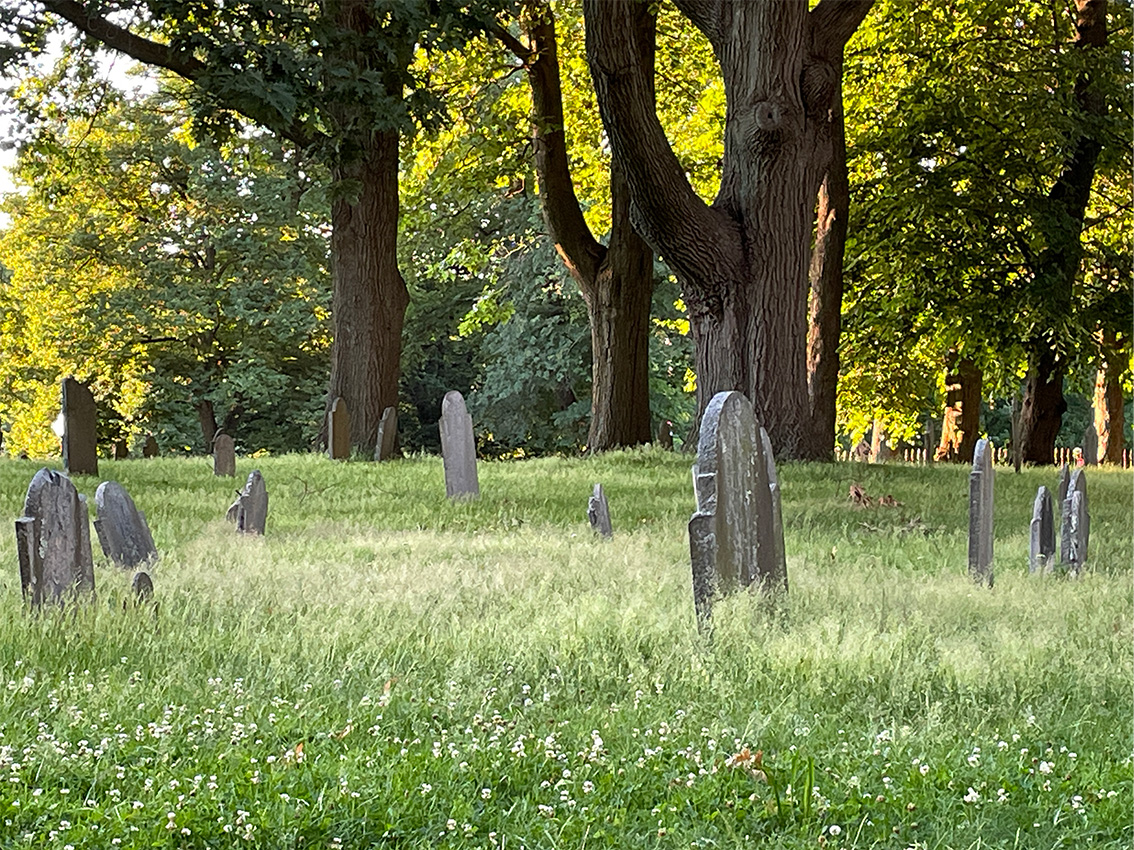 Figure 1. The Central Burying Ground on the Boston Common.
In 1823, Boston’s city council created a committee to address the growing burial problem. They recommended that the city no longer allow burials within the city and that a burial ground be established outside the city limits, but no one was interested in having public burial grounds on their property. In 1825, Dr. Jacob Bigelow, a Harvard physician who authored a textbook on the medicinal uses of plants, proposed a burial ground on the edge of the city that would double as a landscaped public nature preserve. In 1829, the recently created Massachusetts Horticultural Society had a vision of creating a repository of plants, seeds, books and ideas to help farmers and gardeners in New England improve their yields.
In 1830, Dr. Bigelow found 72 acres for sale in an undeveloped area near Harvard. The fact that it was only four miles from downtown was appealing. The acreage cost $6,000. As the corresponding secretary for the new Massachusetts Horticultural Society, he presented the board with an opportunity to accomplish two things: build a burial ground outside the city limits and set aside 40 acres for the society’s headquarters and experiment garden. The society allowed their name, influence and contact list to be shared for the project, which was marketed as the horticultural society’s garden and burial grounds. For $60, buyers got eternal rights to a family-size burial plot (20' × 15') as well as voting membership in the horticultural society. By August 1831, all $6,000 had been raised. Bigelow named the land Mount Auburn.
The word “cemetery,” from the Greek word “koimeterion,” means “sleeping place.” Cemetery was an uncommon word before this time. In 1831, the Massachusetts legislature passed an act allowing the Massachusetts Horticultural Society to dedicate Mount Auburn as a “rural cemetery” (the first use of the term “rural” in reference to cemeteries). The act also stipulated that once laid out and used for burials, the grounds would be dedicated for that sole purpose in perpetuity. Mount Auburn Cemetery was designed by Henry Dearborn (the founder of the Massachusetts Horticultural Society and mayor of Roxbury, Massachusetts) and Alexander Wadsworth, a civil engineer and surveyor who became one of America’s first landscape architects. They made no significant changes to the natural landscape. Carriages could access all burial sites on streets that followed the natural shape of the land. There were breathtaking views at several points along the trails, but the trails were designed to keep traffic flowing and avoid congestion. Forested areas, as well as ponds and boggy areas, were preserved. The paths and avenues were all given plant names, reminding visitors that horticulture was central to the plan. The tall border fences helped prevent graverobbing, lessening family anxiety. Gates at the entrance provided protection and symbolized passing into a sacred, quiet space.
Mount Auburn Cemetery was the first true landscape architecture project in America: Dearborn and Wadsworth, neither of them architects, did much of the early physical work — marking, surveying and dirt work. It was the first planned large open landscape in the United States. The original design was to be a “Garden of Eden” with hundreds of plant species in a natural environment. It drew inspiration from English landscape gardens and Père Lachaise Cemetery in Paris, Napoleon’s response to the city’s shortage of burial space. The plan combined beauty with innovation. Within a decade of Mount Auburn’s opening, the ten largest cities in the United States had similar burial grounds, generally within five miles of the city limits on land with little or no commercial value. With the few green ‘common’ grounds of cities used for things such as grazing cattle and public executions, and forests disappearing for new construction, people were drawn to visit rural cemeteries. City dwellers were becoming disconnected from nature, and rural cemeteries such as Mount Auburn offered natural areas near the city for rest and recreation.
In addition to solving the problem of where to put the dead, rural cemeteries provided a place to explore nature and admire the scenery. Gone were the crowded church cemeteries that reflected the fatalism of the settlers in the first centuries of their arrival.
The first plot holders at Mount Auburn had installed decorative fences around their plots and commissioned statues and monuments that were smaller versions of those seen in other countries during their travels. Exotic plants from across the world were planted around the cemetery. Within a few miles from their homes, people now had a chance to see the plants and sculptures that only the well-traveled usually got to admire. Some cemeteries had nurseries to supply or replace plants for the cemetery, as well as to ensure families could acquire plants suitable for family plots.
Mount Auburn became one of America’s biggest tourist attractions soon after it opened. It and other rural cemeteries were so popular that they essentially became the first public green spaces in the United States not used as “commons” for grazing and executions. The picturesque views, winding roads, trees, ponds and walkways drew people to rural cemeteries. People would take city transportation to the cemeteries, and then either take a formal tour or walk, using guidebooks that highlighted special plants, included extensive descriptions of the sculptures, and identified the graves of well-known people. Some would bring picnic lunches and enjoy the surroundings. Rural cemeteries became destinations. Cemeteries in major cities marketed themselves through publications, pamphlets, newspaper ads and tours as providing respite from crowded, polluted, smoky cities.
Green-Wood Cemetery, established in 1838 in Brooklyn, New York, became another of the most-visited sites in the United States, bringing over half a million visitors a year by the start of the Civil War. Sleepy Hollow Cemetery in Concord, Massachusetts, was established in 1855 by Ralph Waldo Emerson to protect the natural landscape from encroaching agriculture and development. In 1856, Sleepy Hollow had a “tree bee” during which local citizens brought 100 trees to plant on the property. By protecting a natural area and cultivating nature, Sleepy Hollow became the first conservation land in the United States.
By the time of the Civil War, commercialism was growing, and efficiency was emphasized. A new landscape-lawn style of cemetery design was envisioned in 1859 by the superintendent of Spring Grove Cemetery in Cincinnati, Ohio, landscape architect Adolph Strauch. The landscape-lawn design was more “scientific”, using professional management and a more straightforward layout. The lawnmower, patented in 1830, allowed more efficient maintenance and reduced labor costs. Hedge rows, fences, and flower beds around individual plots were eliminated, the ground was leveled and the cemetery became a series of interconnected fat lawns, divided by streets and lined with trees and shrubs. Lawns connected by paved walkways offered a sense of order, making the grounds easier to maintain. Landscape-lawn type cemeteries had larger open areas and standardized grave markers, with an emphasis on a professionally groomed lawn. Cemetery professionals, instead of families, performed maintenance. This layout was efficient but not as appealing to visitors.
The popularity of rural cemeteries led to the construction in 1857 of New York City’s Central Park, the first major landscaped public park (designed for the living), and currently the most visited urban park in the United States. Central Park influenced the design of many urban parks nationwide and spurred the professionalization of landscape architecture. As public parks became popular, visits to cemeteries dwindled, but their vast collections of fora continued to expand. John Jay Smith, the founder of Laurel Hill Cemetery (1836) in Philadelphia, planted over 800 trees, shrubs and flowering plants representing over 175 different species within the first year of the cemetery’s existence.
The Association of Cemetery Superintendents was formed in 1887, mainly as an educational endeavor. Cemetery superintendents attended annual conferences, sharing ideas for cemetery maintenance and for standardizing cemeteries’ overall appearance. A large portion of the time was spent discussing horticulture, including planting techniques and recommendations for species that thrived in different parts of the country, especially plants newly introduced from abroad.
Plants and Plant Motifs in Cemeteries
Plants were selected for cemeteries based on whether they could grow in the climate, produce desired scenic effects, serve as living fences or gateways between areas of the cemetery, create separate open areas or serve as exotic horticultural specimens. Hedges were appropriate for creating separate spaces, especially those made of trees or shrubs that naturally pointed toward heaven. To avoid overcrowding, the size of a plot or area dictated the size of the plants. Small plots utilized short trees with no low-spreading limbs. Growth characteristics had to be considered — trees with extensive root systems might interfere with monuments, and wide trees might create visual obstructions. Vines or shrubs covered any railings that would interfere with rural beauty.
Plants were also selected for their symbolic shapes and the historical associations of their species. Weeping willow trees were popular in cemeteries due to their long, drooping leaves’ dramatic emotional and visual effects. Evergreens, green all year long, symbolize eternal life, and could bring cheerfulness during the gloomy winter. In Oklahoma, mistletoe was sometimes the only greenery available to decorate graves during harsh winters. This characteristic earned the parasitic plant the honor of being the state’s floral emblem under a 1910 law, making it the first official floral emblem in the United States.
Yew has a historical association with burial landscapes. Yews have been associated with death for thousands of years, in mythology and folklore. All parts of the tree (except for the fleshy part of the fruit) are toxic, and it may have been planted to keep grazing animals from trampling the burial grounds. Yews can live for thousands of years, and if the tip of a branch touches the ground, it can take root and grow another yew. They are relatively care-free, can grow in sun or shade, and withstand harsh exposures. The Horticulturist, a mid-1800s monthly magazine, considered yews appropriate for American rural cemeteries due to their longevity and dark color, which gave them a somber appearance.
Deciduous trees, which lose their leaves in winter and leaf out again in the spring, represented the cycle of life, while plants that return every year, such as the iris and daffodil, symbolized immortality. The beauty and scents of flowers were comforting in an area primarily associated with loss.
Even hardscape elements, such as benches and gates, can be incorporated into plant themes. They were often made of cast iron and could be formed into shapes such as naturalistic twig motifs, a characteristic of middle-class fashion in the Victorian era for rustic, picturesque design elements.
As cemeteries evolved from stark and utilitarian to pleasantly land-scaped, so did gravestones. Early gravestones in colonial New England had images such as winged skulls and crossed bones, representing the orthodox Puritan view that all humans were sinners, and mortal symbols on headstones were a reminder of death. But around the beginning of the rural cemetery movement, the Victorian era began.
With high mortality rates due to plagues and wars, death was a big part of Victorian life. Elaborate public rituals with strict rules for dress codes and behavior, strict mourning etiquette and a preoccupation with death characterized the Victorian era. Funerals were often theatrical events, with excessive use of black cloth, glass-walled hearses and even mourning jewelry and stationery. As embalming was limited in that time, excessive amounts of flowers were used to mask the odor of decay. In fact, most of the money spent on funerals went for flowers. Flowers also symbolized hope and immortality, helping to alleviate the horror of death.
During the Victorian era, the use of flowers also extended to headstones. At the time, there was a growing interest in botany. The Victorians were interested in floriography (flower language) and assigned symbolic meanings to almost every known flower. This interest was reflected in the cemetery, where flowers were placed as grave decorations and carved into headstones. For example, lilies (especially when pictured on a cross) were a common symbol in Victorian art, representing Christ and the Virgin Mary. Lilies are also heavily scented and could help mask the smell of death during the several days after death when the deceased was laid out in the house.
 Figure 2. A rose on a gravestone.
Symbolism of Plants in Different Cultures
During the Victorian era, many people were illiterate, and the language of floriography could communicate many things. Flowers conveyed emotions difficult to express, such as forget-me-nots, which symbolize remembrance and enduring love. Sometimes the color of flowers conveyed messages. Regarding roses, red signified love or passion, white purity and virginity, and yellow friendship. The stage of a rose’s opening could be used to convey age at death. A rose bud represented a child (12 or under), a partial bloom represented a teenager, and a fully open rose represented an adult in the prime of their lives. Broken stems represented a life cut short.
The Victorians were not the first to associate plants with various characteristics of life and death. Ancient Egyptians used papyrus stems to symbolize resurrection. Bouquets of papyrus with their umbels of flowers were given to the deceased on the day of burial and at festive occasions. Flowers pleased the gods, especially the lotus flower, which was associated with rebirth and eternal life.
Mistletoe, an evergreen, sustains itself by parasitizing trees. It grows as clumps on tree branches far above the ground, and this ability led the Druids to believe that mistletoe was sacred. It was thought to keep the host tree alive all winter, and Druids regarded mistletoe as the heart of the holy oak tree, which was prevalent in their culture for lumber, fuel, and food (acorns). Mistletoe is commonplace in ancient mythology, and its superstitions are widespread socially and regionally. It was used as an ingredient in cooking and had a place in rituals. It was believed to keep witches away, promote fertility, protect against fires and prevent nightmares, among other things.
The cypress tree was one of the earliest mourning symbols used world-wide. The cypress was “the mourning tree” to the Greeks and Romans, sacred to the rulers of the underworld. Romans considered cypress a sign of respect, and bodies were placed on cypress branches between death and burial. The Roman author Ovid told the story of Cyparissus, a boy who accidentally killed his beloved stag and vowed to mourn forever. Cypress became associated with mourning and burial grounds. In the late 1700s, cypress became a common motif on mourning jewelry. By the 1800s, only the leaves and branches of cypress were used, allowing for smaller depictions.
The iris comes in many colors; “iris” means “rainbow” in Classical Greek. In Greek mythology, Iris was the messenger of the Olympian gods, carrying messages between heaven and earth with her rainbow. Ancient Egyptian hieroglyphs from 3,500 years ago depict the iris signaling the gods’ approach.
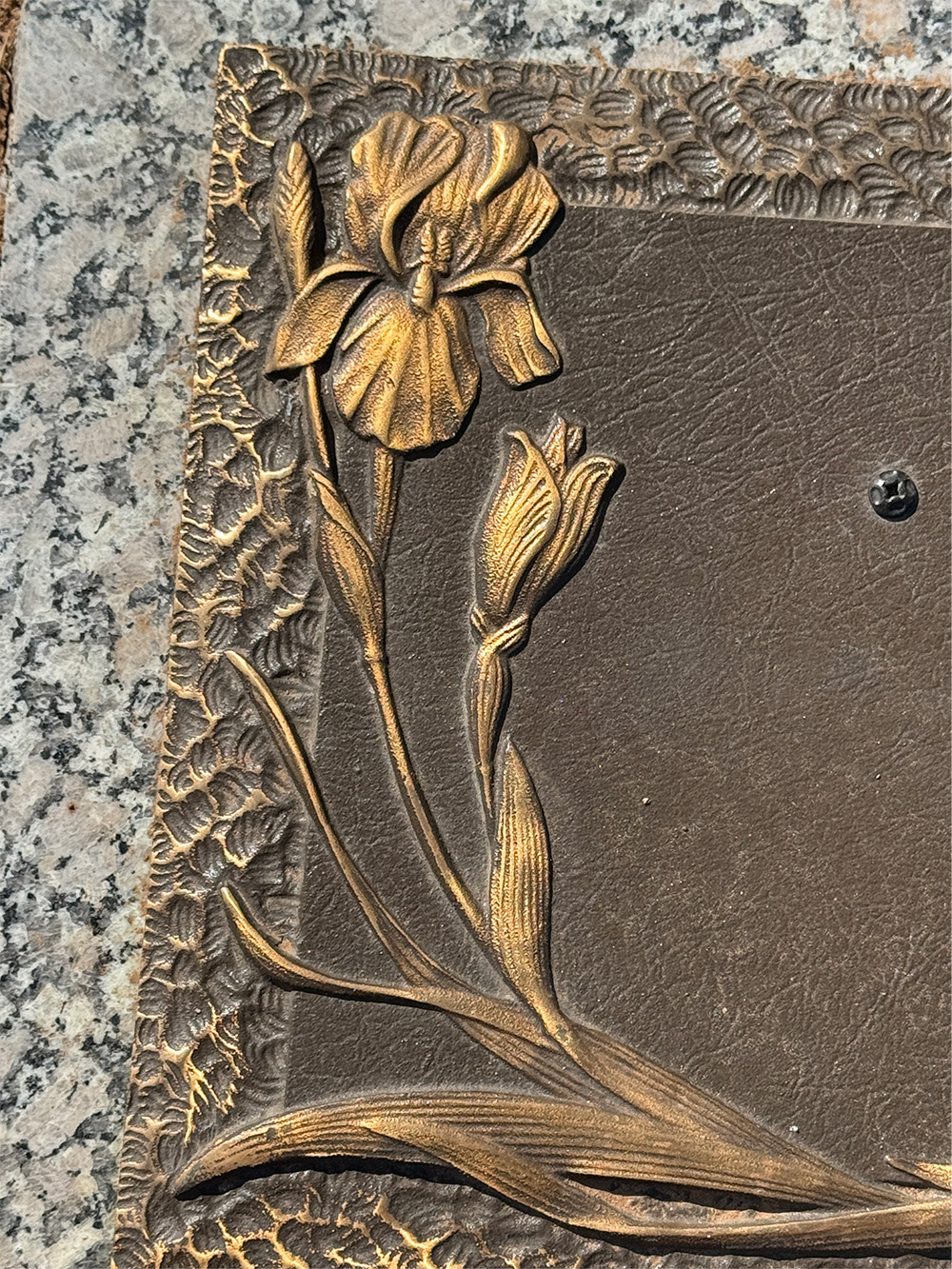 Figure 3. An iris on a gravestone.
Flowers also play a significant role in funerals and graveyards across many religions, often symbolizing respect, remembrance and the cycle of life. Some plants and plant motifs represent different religions or religious aspects and may appear on tombstones.
General Meanings of Plant Symbols in Cemeteries
For centuries, flowers have been used to express our condolences and to show respect when someone dies. Visitors to a grave or a funeral may bring their loved one’s favorite flowers or flowers that convey the sentiment they want to share. Flowers serve as a reminder of life’s transient nature. Plants and plant symbols chosen for the dead and their grave may reflect their personality, achievements, career, religion, organizational affiliations, age or social status. Not all horticultural symbols reflect their “assigned” meanings, and these meanings may vary over time, place and culture. However, it is still interesting to explore the meanings behind plant motifs.
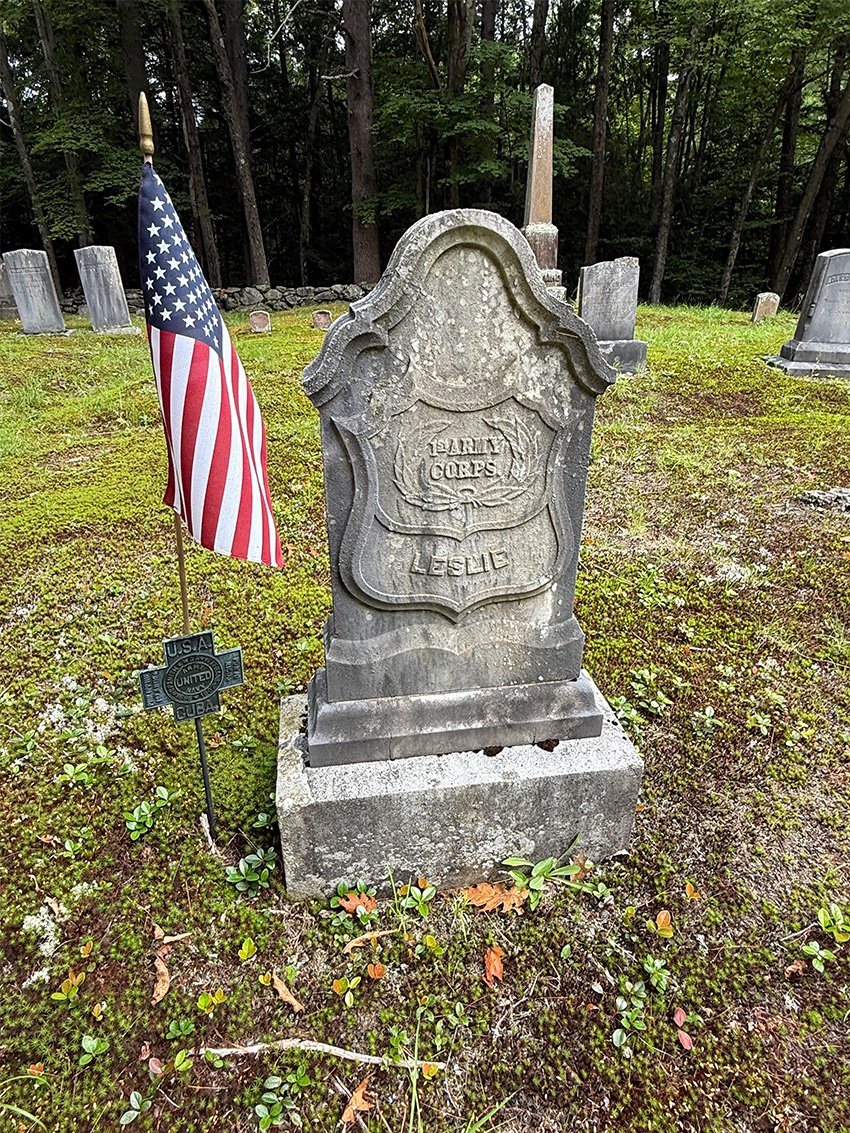 Figure 4. Laurels on the grave of a soldier.
Acanthus is one of the oldest cemetery motifs, associated with the rocky ground amongst which ancient Greek cemeteries were placed. It is the most common motif found on memorials.
The weeping willow expresses mourning with its slumping shape. It can also represent immortality since it is one of the last trees to lose leaves in the fall and one of the first trees to green back up in spring. They are also easily propagated from cuttings.
Some Chinese cultures view lit bamboo as a way to ward off evil spirits. In Japanese memorials, bamboo symbolizes devotion and truthfulness. Daisies symbolize innocence and are often part of children’s graves. For practical reasons, its simplicity made it an early choice for gravestones, as it was easier to carve with more primitive stone-carving methods.
The bellflower has bell-shaped blooms and symbolizes consistency, like a church bell that rings at specific times. It represents gratitude for the lasting impact the deceased had on those left behind.
Marigolds are associated with Mexico’s Day of the Dead in November. Marigolds are said to attract souls, and they are one of the few flowers available at that time of year. They are used to decorate graves and to form trails that lead the souls of the dead to a home altar.
Thistles are the national symbol of Scotland. A 10th-century legend describes defending Staines Castle against the Vikings by putting thistles in the moat. When the Vikings stepped on the spiny edges, they cried out, alerting the Scots to their location. Though it has sharp spines, the flower attracts insects and can describe someone who is seemingly tough but has a soft heart. It can also represent a love that has gone through suffering.
Ivy represents friendship and immortality; when it climbs up a headstone, it symbolizes undying attachment. In historic times, holly was believed to protect headstones from lightning.
Oak trees symbolize strength, endurance, power, and victory and are often seen on the graves of military veterans. The graves of military veterans often picture acorns and laurels.
A lily on a headstone is believed to keep unwanted visitors away. It also symbolizes the deceased’s liberation from worldly burdens and their transformation into a state of spiritual purity. In China, lilies are associated with feminine beauty. The distinct cup or calyx of the lily can represent a spiritual vessel from which the divine is born. Lilies were a favorite flower in the Victorian era and symbolized the soul’s restored innocence at death.
Occupations are sometimes represented on graves. Wheat and corn were often part of the country custom of sending a sheaf to relatives when a farmer died and may have been used as occupational symbols. Adolphus Busch, co-founder of Anheuser-Busch, has bronze hop flowers adorning his mausoleum.
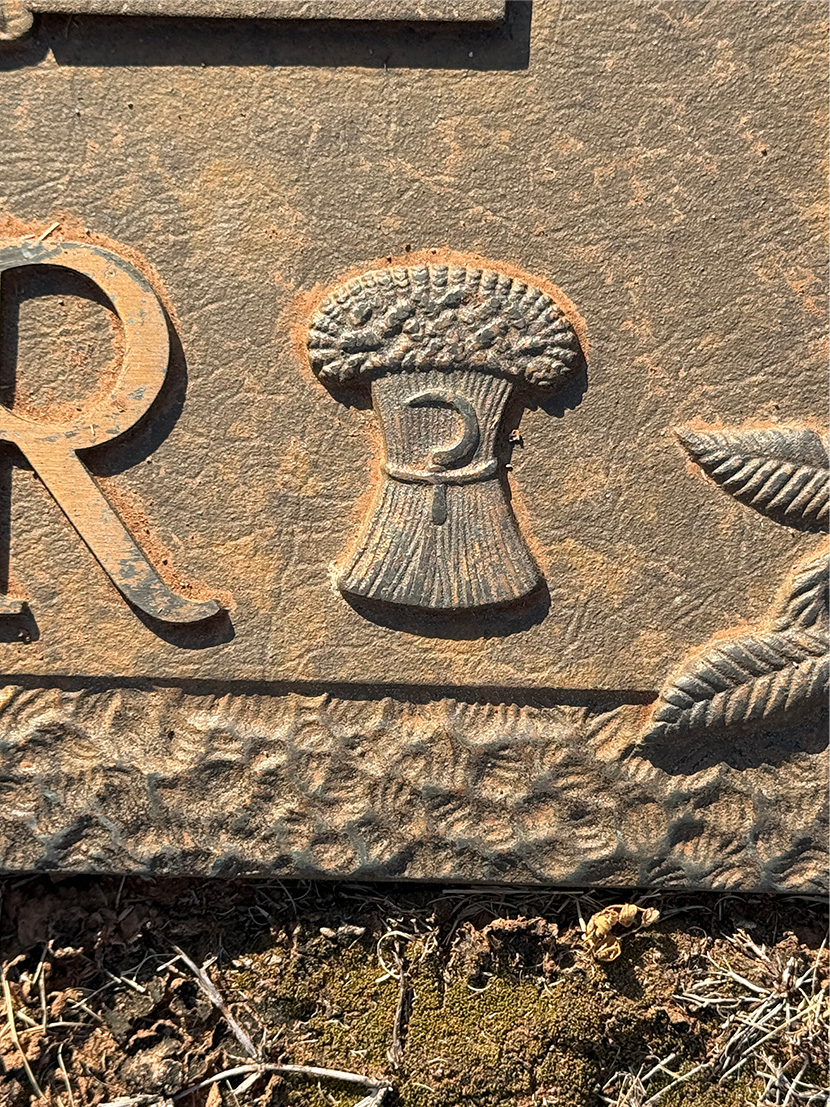 Figure 5. A sheaf of wheat on a gravestone.
Tree Stones
Grave markers shaped like tree trunks, stumps and logs can be found in old cemeteries across the U.S. Most date from the mid-1800s to the 1930s and were carved from limestone by local stone carvers. Rustic designs were a popular style at the time, as increasing urbanization created nostalgia for a simple, rural life. The Rural Cemetery Movement championed the idea of the cemetery as a retreat for the living, and tree-stump grave markers were part of a movement to turn the focus away from death back to the life of the deceased.
Tree stones may represent an individual or family. A stump represents a life cut short, and if it is not a clean cut but has jagged and rough break marks, it means an unexpected death. A short tree trunk, stump, or a small pile of cut wood can indicate a child. Branches can be twisted to represent two people who are now becoming one in death. The number of branches might represent the number of children or the number of family members buried in the plot. Sometimes other plants, such as ivy or ferns, were carved into the tree’s stone to convey additional meanings.
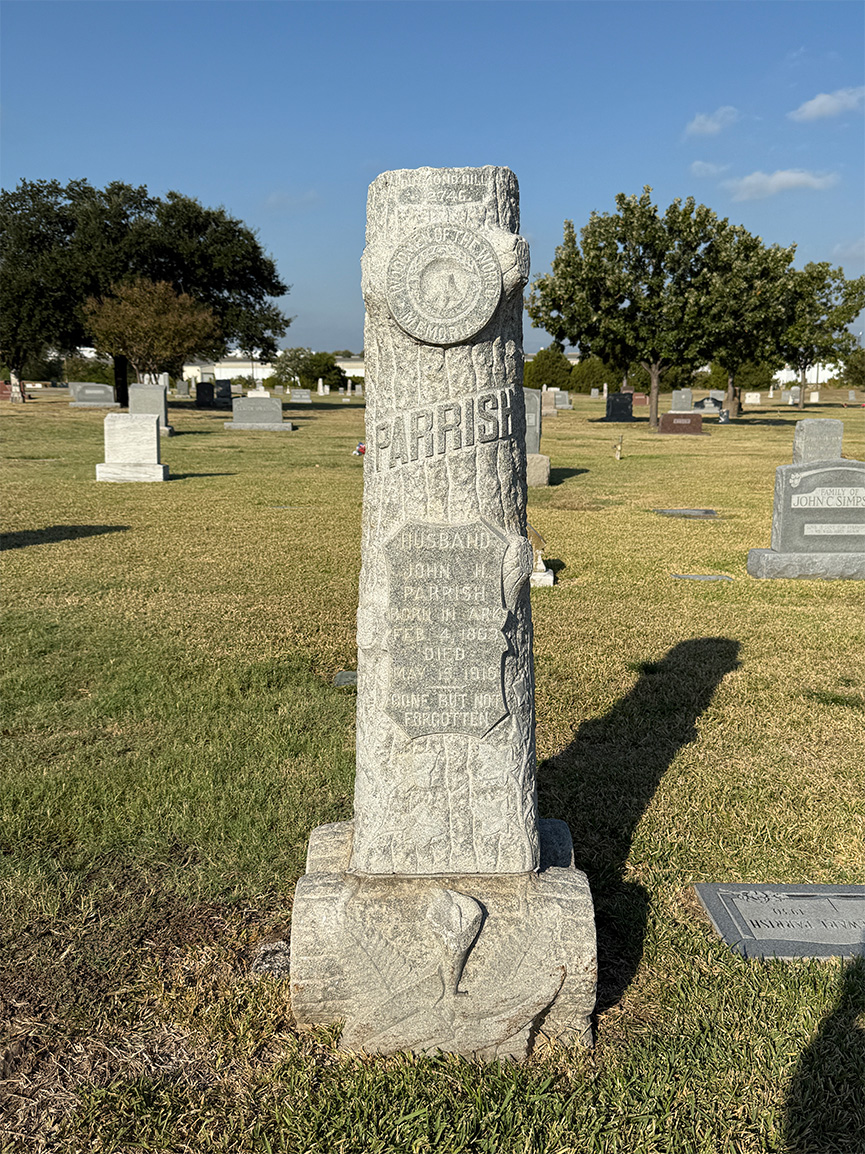 Figure 6. A tree stone in Fort Worth, Texas.
Tree stones also represented shifts in the funeral industry caused by the Industrial Revolution. Instead of being carved by local carvers, standardized tree stones could be ordered from catalogs and shipped to customers by rail.
Many tree stones found in graveyards are marked with “Woodmen of the World.” This was an organization created to make life insurance affordable for everyone and had nothing to do with the lumber industry. From 1890 until discontinuation in the 1920s, policies included a tombstone. All gravestones provided by the Woodmen of the World (WOW) association had to bear the organization’s seal. Stone carvers had instructions for carving the WOW seal. The tombstone benefit of the policy could be used to purchase other types of monuments, but “Erected by Woodmen of the World” and later “Here rests a Woodmen of the World” had to be on the memorial for advertising purposes.
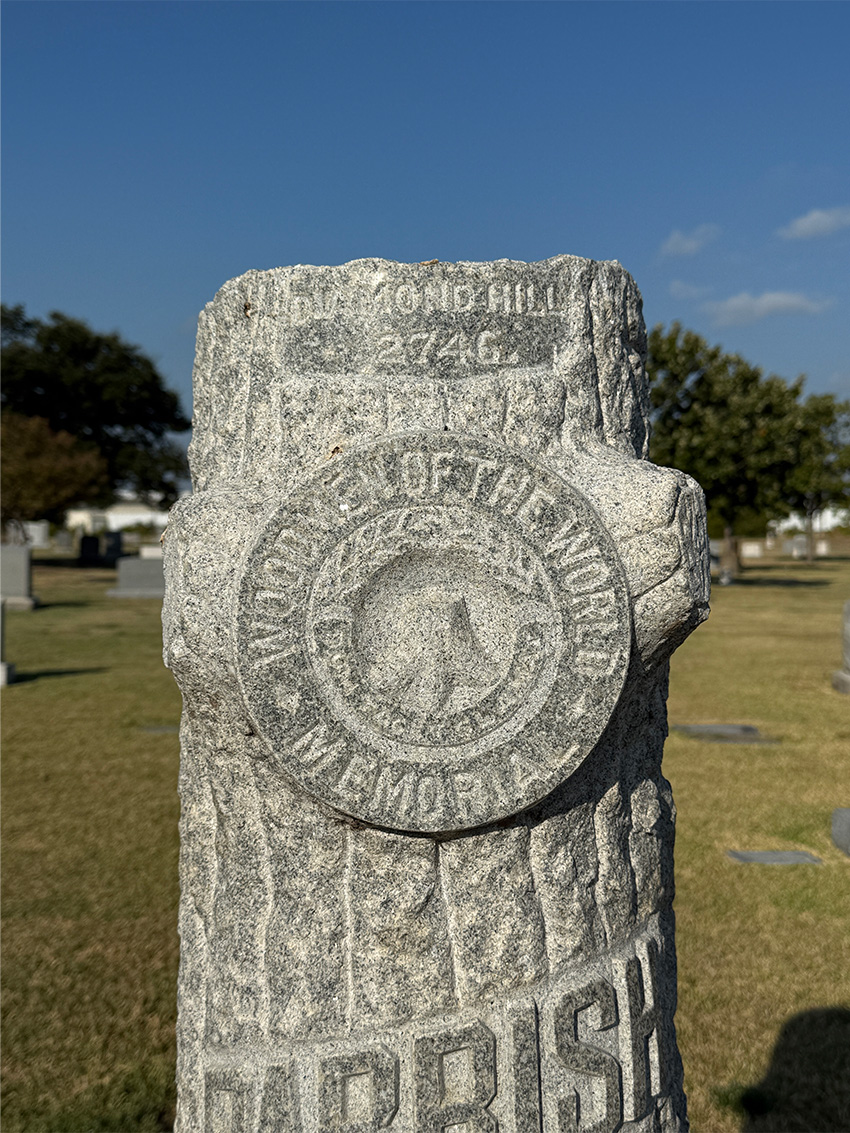 Figure 7. A close-up of a Woodmen of the World Memorial.
World War I and National Cemeteries
At the end of the Civil War, Congress appropriated funds for the establishment and maintenance of national cemeteries, specifying that a portion of the funds was to be spent on planting and cultivating trees and shrubs. In 1870, the US Army Quartermaster General, Montgomery Meigs, contacted the noted landscape architect Frederick Law Olmsted for advice on tree selection, placement and care. Olmsted recommended simple designs to establish permanent dignity and tranquility. When funds became avail-able, Quartermaster Meigs issued “Instructions Relative to the Cultivation and Care of Trees in the National Cemeteries.” Meigs’ instructions pro-moted a “sacred grove” aesthetic, advocating for graceful, useful trees like cherries, pears, walnuts and hickories, along with ornamental shrubs and climbers, to create dignified, tranquil landscapes, emphasizing planting for beauty, shade and character.
After the American Civil War, “Decoration Day” was established to encourage family members and loved ones of those who died in the war to place flowers and decorations at their gravesites. The establishment of national days of remembrance (Memorial Day, etc.) was associated with the practice of placing flowers on the graves of soldiers and war veterans. The red poppy became the symbol of remembrance for those who died in military service. During World War I, men would gather flowers alongside the battlefield to honor the dead and decorate their graves. As the war came to an end, the red poppies that bloomed became vivid reminders of the tolls of war.
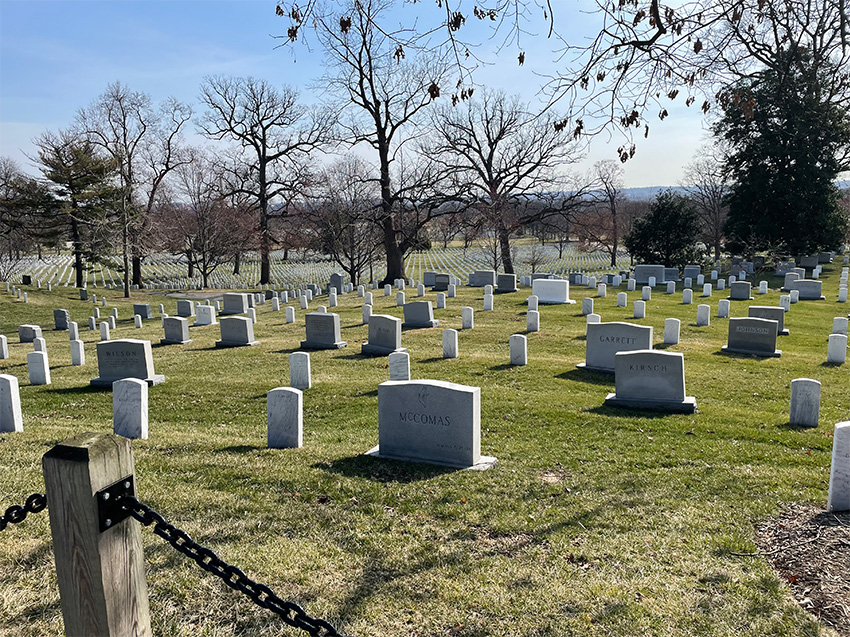 Figure 8. Arlington National Cemetery.
In the United States, war rationing affected the supply of fresh flowers. To create floral arrangements, people began using silk or paper flowers. Even after the war, the trend toward artificial flowers continued, reflecting broader cultural changes. Using artificial flowers allowed lasting tributes that were peaceful and enduring. Creating artificial flowers also provided a revenue stream for wounded soldiers who couldn’t return to their former jobs but could still make them, even with limited mobility.
In the selection of the World War I Unknown Soldier in France in 1921, Sargent Edward F Younger, a decorated World War I veteran, was sent from his post in Germany for the selection. Four caskets contained the remains of unidentified soldiers. To indicate his choice of the Unknown Soldier, he placed white roses (which came to symbolize the Tomb of the Unknown Soldier) on one casket. The roses were donated by Brasseur Brulfer, a member of the city council who lost two sons, one of whom has never been identified. The white roses, grown in France, linked the American Unknown Soldier, the Unknown Soldier of France and France. The roses traveled with the American Unknown Soldier on his way back to the United States and may have been buried with him in the tomb. After the ceremony, the members of the French government and French citizens gave floral wreaths and other gifts to the Unknown. Along the journey home aboard the USS Olympia, French citizens and schoolchildren continued to present flowers. Upon arrival in the United States, the Unknown Soldier lay in state at the Capitol rotunda from Nov. 9–11. The 90,000 public visitors left flowers. Many Americans viewed the selected Unknown as a proxy for the individuals they mourned.
Natural/Green Burials
Today, many people are opting for natural or “green” burials. These individuals are often concerned that traditional embalming chemicals, metal caskets and concrete vaults harm the environment. Rather than caskets, green burials use natural materials, such as cotton shrouds and woven-grass caskets, that minimize impact on the land. The burial land is set aside in dedicated green areas of traditional cemeteries or in conservation areas designated for that purpose.
Green Haven Cemetery in Payne County, Oklahoma, was Oklahoma’s first dedicated green cemetery. The only monument is a large monolith at the front of the meadow, with the names of the buried engraved on it. The cemetery is maintained as a meadow habitat, mowed only to control the weeds, maybe once or twice a year. Funerals are typically conducted without modern artificial grass, chairs, or tents to keep everything as natural as possible. The parking area is not paved. Grave decorations are not allowed.
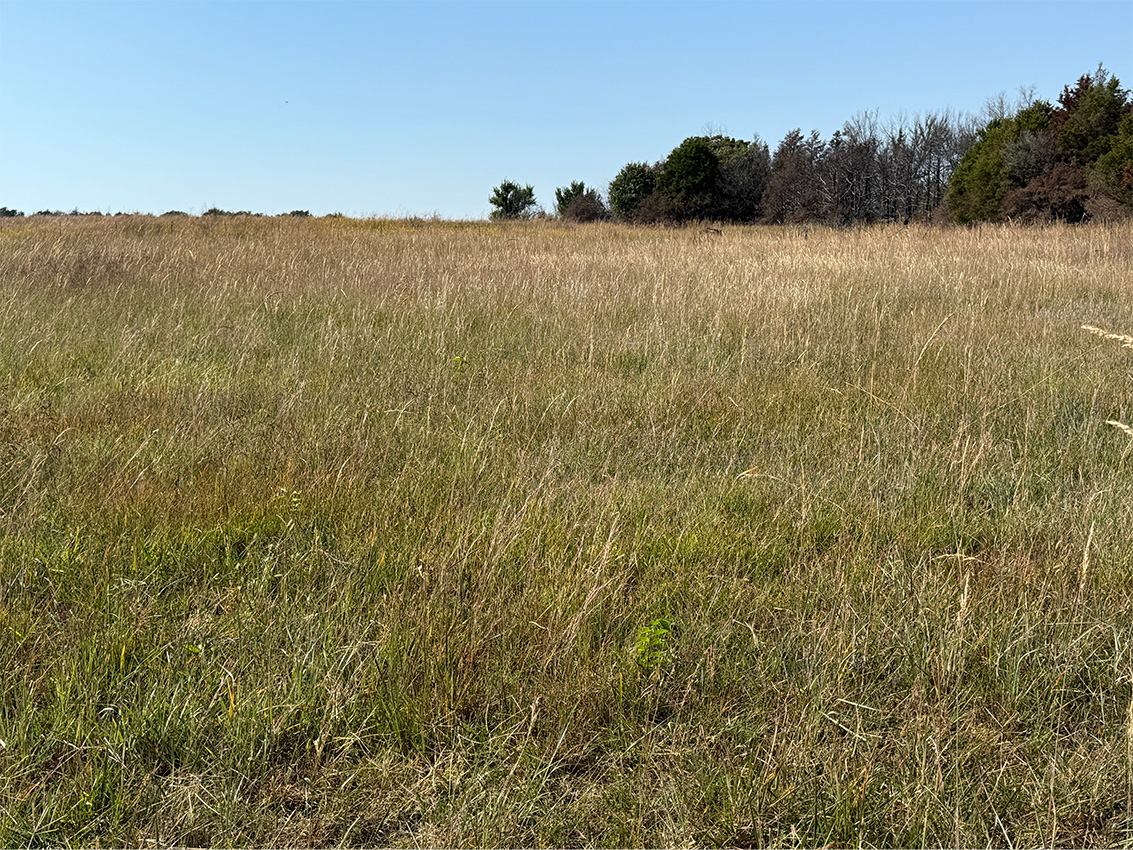 Figure 9. The grounds of Green Haven Cemetery.
Repositories of Biodiversity
Cemeteries are treasure troves of biodiversity, sometimes yielding discoveries and rare organisms. Green-Wood Cemetery in Brooklyn, New York, is an accredited arboretum with over 450 acres of land. There are 690 unique species of trees growing there and about 8,000 living specimens, many of which are more than a century old. The variety of natural areas provides many micro-climates, protecting both old and new species, not all of which are desirable. In one hidden area, a small population of redback salamanders was discovered, inhabiting just a tiny part of their previous range.
In 2019, a US Forest Service survey crew found a new species of jewel beetle in Green-Wood’s European beech trees. DNA analysis suggests this beetle arrived from Europe, probably in shipping crates or imported trees. Since the cemetery is only a few blocks from a shipping port — a shared entry place for non-native, invasive species — it is important to scout for exotic and invasive species that may wreak havoc on both fora and fauna.
In an old Missouri cemetery, a new population of eastern prairie-fringed orchids was discovered. These orchids are threatened by habitat loss and are found in only small areas across eight states. It takes 3–9 years for a flowering plant to emerge after seed dispersal, and they are challenging to propagate.
Rose enthusiasts often search for old cemeteries to obtain cuttings of old garden (antique) roses. Such roses have been cultivated for hundreds of years, and some found in cemeteries might be the actual roses planted originally hundreds of years ago. The flowers may produce only one flush of blooms a year, unlike the repeated blooming of modern roses, but are hardy, require little care, and are usually more fragrant. Modern roses are bushy and bred for long stems, making them suitable for cut flowers. Antique roses may climb, trail or form bushes. Old garden rose colors are different from modern roses and tend to be muted compared to today’s bright colors.
New Uses for Cemeteries
Today, more people are choosing to be cremated than buried. The cremation rate in the United States is currently 63.4% and is predicted to increase to 82.3% by 2045. Some cemeteries, especially in urban areas, are landlocked and have less room for new burials. As cemeteries fill up and people opt for cremation and green burials, cemeteries are creating arboretums and offering opportunities for birdwatching, trolley tours and historic attractions to sustain a steady revenue stream. Activities that used to be restricted in cemeteries are becoming more acceptable, even welcomed. Events in cemeteries can help reconnect with communities. Laurel Hill in Philadelphia offers tours and programs that introduce visitors to the cemetery while increasing awareness of the historic site’s importance to the community.
At Spring Grove in Cincinnati, there are many opportunities for citizens to become involved with the cemetery. There are horticulture tours, both walking and using a 4-car tram. Public classes, such as container gardening, are offered in conjunction with the University of Cincinnati’s horticulture program. There are also special events such as lantern-lighting ceremonies.
Woodlands Cemetery in Philadelphia has a Grave Gardener program; over 150 volunteers adopt a cradle grave to tend to for the growing season. Cradle graves were abundant in the Victorian era and have become untended as relatives die. Grave Gardeners bring those graves back to life with Victorian-era flowers and plants. Each gardener spends time getting to know the deceased and uses that information to choose flowers. A dentist may get white flowers. Winemakers may get deep red flowers. The town gossip may end up with snapdragons.
In Evergreen-Washelli in Seattle, Washington, a group of bee enthusiasts called the Catacomb Bee Collective has 20 hives. The cemetery gifted them an unused, overgrown area, which was cleaned up, mulched and turned into a bee sanctuary. The diversity of plants and year-round availability of forage (sometimes including fresh flowers left at gravesites) benefit the bees. Their honey is offered to mourners to help offset the sadness. The presence of bees has also changed landscape maintenance practices, favoring the use of herbicides safe for bees.
The Congressional Cemetery in Washington, DC, spans 35 acres and became unkempt and dangerous as people moved to the suburbs. In the mid-1990s, “K9 Corps” was established, allowing dog owners to let their dogs run of-leash during certain hours, with membership costing $400–$500 per year. The membership fees cover 25% of the cemetery’s operating costs. The cemetery also offers tours and a book club named “Tomes and Tombs.” During “Soul Strolls” in October, lantern-lit tours highlight volunteers who “appear” at the graves to tell stories of the deceased.
Edible Graveyards
Edible gardening in cemeteries is a growing trend, using land near plots or unused plots to create productive green spaces. These gardens provide fresh produce (often given to food banks), promote urban farming and create living memorials that honor the dead while benefiting the living. The Allegheny Cemetery in Pittsburgh, Pennsylvania, is home to the Lawrenceville Organic Community Garden, which showcases urban gardening and community building. It is a place to connect with neighbors and learn about gardening from each other. People from all backgrounds are invited to become part of the garden community.
The Woodlands Cemetery in Philadelphia, Pennsylvania, was built over a garden established in the 1700s as part of the estate of botanist William Hamilton (1745–1813). During his lifetime, he had a garden for growing food and a greenhouse for growing exotic fruits. Lewis and Clark originally collected some of the seeds that he planted on his estate. Today, the grounds are still supporting horticulture, with a one-acre Learning Orchard growing 90 fruit and nut trees and berry patches. The Learning Garden serves as the educational headquarters for the nonprofit Philadelphia Orchard Project (POP), which plants orchards across the city, often in food deserts (areas with limited access to fresh produce and healthy foods). Some of their heirloom plantings go back to the Indigenous people who originally lived on the land.
Growing food and eating in a cemetery are not new concepts. Ancient Mesopotamians, Egyptians and Greeks had rituals connecting life and death to agricultural practices; wall paintings in an Egyptian tomb picture the deceased plowing fields in the afterlife. In ancient Greece, the cycle of life was tied to the seasonality of their barley crops. Death was not considered the end, but as a temporary moment of darkness. (A magical, possibly psychedelic barley potion called kykeon may have helped maintain this vision.)
People in many cultures around the world eat next to their deceased loved ones. On the first Sunday after Easter, the Greek Orthodox gather at village cemeteries for a traditional lunch with the dead. Russian Orthodox traditions include all-day picnics with vodka at family gravesites. People of Hispanic heritage celebrate All Saints Day by eating at the graves of loved ones. On Tomb Sweeping Day in China, families visit their loved ones’ graves and share meals with their favorite foods. In Korea, families have picnics at the grave with offerings of rice cakes, fruits and wine. In Hmong culture, descendants gather at gravesites to tell stories and bring food to honor the deceased. In Appalachian culture, “Dinner on the Ground” on Decoration Day celebrated family with communal potluck meals.
In the United States, as rural cemeteries emerged, they were the closest green spaces city dwellers could visit. Rural cemeteries were popular picnic spots because of epidemics of yellow fever and cholera in the cities. Death was a constant, so this was a way to maintain a connection to deceased loved ones. As public parks emerged and epidemics wound down, fewer visitors came to picnic in cemeteries. Some cemeteries started banning picnics because they were tired of picking up all the trash left behind by picnickers.
Today, some cemeteries are raising funds by hosting events on their picturesque grounds. Cemetery picnics are making a comeback. In Wilkes-Barre, Pennsylvania, the Shawnee Cemetery Preservation Association hosts a yearly revival of the Victorian tradition of cemetery picnics.
Citizen Science
Many old cemeteries have landscapes that have been relatively undisturbed for decades or even centuries. Cemeteries rarely visited have grounds that aren’t trampled, providing opportunities to observe nature, and are great places for citizen science projects. Citizen science projects involve public volunteers who collect information in collaboration with scientists. There are projects on water quality, bird counts, butterfly migrations and many more topics.
One example of citizen science in cemeteries is at Green-Wood Cemetery in New York City. The Green-Wood Cemetery Fungi Phenology Project documents the various fungal species present. The cemetery hosts microclimates that support diverse plant, animal, and fungal species. So far, over 300 fungal species have been found.
Many of the trees in the cemetery have symbiotic relationships with soil fungi. The mycorrhizal fungi at the roots of the tree have filaments (hyphae) that serve to extend the tree roots and increase the tree’s ability to absorb water and minerals. The root fungi help trees stay healthy. In return, the tree’s photosynthesis provides the fungi, which do not photosynthesize, with the sugars they need.
Some of the findings of the fungi project include discovering species here that had previously been found only on other continents. Inocybe procorum, which produces a small brown mushroom, had only been found in one place in Finland. DNA testing determined this was the same species. Psathryella madida produces a fragile mushroom that grows on sedges in wet environments and had previously only been found in a boggy meadow in Sweden. Another type of fungus, mainly found on the west coast of the United States, was found in the roots of a Douglas fir that had been planted, so it was likely on the fir when it was transplanted.
Discoveries such as these demonstrate the importance of older cemeteries, with their undisturbed grounds, in conservation. They support a variety of living organisms that may only find suitable habitats in particular microclimates of a cemetery.
Recognition of their Role in Mental Health
Cemeteries contribute significantly to emotional, psychological, and social well-being. They promote mental health by providing access to natural, green spaces that foster tranquility and refection. Often landscaped with trees, flowers and wildlife, cemeteries offer the restorative benefits of nature found in parks, enhanced by an atmosphere of peace and solemnity. These spaces serve as designated, secure environments for processing grief, engaging in remembrance and participating in comforting rituals such as tending to headstones.
Contemplating mortality within such settings can encourage clarity, reduce anxiety and cultivate acceptance. Removed from the distractions of daily life, cemeteries provide opportunities for decompression, introspection and the restoration of inner calm. Their historical and cultural significance connects visitors to collective human experiences, mitigating feelings of isolation. Some cemeteries even feature structured therapeutic elements, such as “healing paths” with interactive stations designed to support emotional recovery.
References
AFTR. 2021. Flowers on graves: A brief history. Retrieved September 15, 2025 from https://www.aftr.live/en/blog/flowers-on-graves-a-brief-history/#:~:text=It%20is%20believed%20that%20the,decorations%20at%20their%20grave%20sites
Albany Diocesan Cemeteries. 2025. How cemetery landscaping creates a space for healing. Retrieved October 1, 2025 from https://blog.capitaldistrictcemeteries.org/how-cemetery-landscaping-creates-a-space-for-healing/
Barlow, Brian. 2008. Mistletoe in folk legend and medicine. Retrieved December 4, 2025 from https://www.anbg.gov.au/mistletoe/folk-legend.html
Bloomberg, Katya. 2022. A hybrid model for urban cemeteries to honor the departed by feeding the living. Retrieved September 15, 2025 from https://storymaps.arcgis.com/stories/738c671554b245d4932923c7f0284204
Boston Parks and Recreation. 2021. History of central burying ground. Retrieved October 27, 2025 from https://www.boston.gov/news/history-central-burying-ground
Byond By OpusXenta. 2023. The history of cemetery florals: how flowers have played a role in death care. Retrieved October 1, 2025 from https://byond.cloud/the-history-of-cemetery-florals/
Catholic Cemeteries Association of the Archdiocese of Hartford, Inc. 2025. The significance of cemetery flowers and their meanings. Retrieved September 18, 2025 from https://ccacem.org/2025/03/22/the-significance-of-cemetery-flowers-and-their-meanings/
Cothran, James R. and Erica Danylchak. Grave Landscapes: the Nineteenth-Century Rural Cemetery Movement. 2018. The University of South Carolina Press: Columbia, SC.
Curran, Erica Jackson. 2019. Garden cemeteries were among America’s first urban parks. Retrieved October 1, 2025 from https://www.nationalgeographic.com/travel/article/best-garden-cemeteries
Deetz, James, and Edwin S. Dethlefsen. 1967. Death’s head, cherub, urn and willow. Natural History, Vol. 76(3), pp. 29-37.
Dudek, Debra. n.d.. Cemetery symbolism cheat sheet. Retrieved September 20, 2025 from https://www.cslibrary.org/sites/default/files/2023-09/DUDEK%20-%20Cemetery%20Symbolism%20Handout.pdf
Eggener, Keith. 2010. Cemeteries. W.W. Norton & Company: New York, NY.
ETSheppard Monumental Masons. 2024. The symbolic meaning of flowers on gravestones. Retrieved October 13, 2025 from https://etsheppard.co.uk/the-symbolic-meaning-of-flowers-on-gravestones/
Fallik, Dawn. 2025. From punk rock to gardening classes: the cemeteries getting a new lease on life. Retrieved October 14, 2025 from https://www.theguardian.com/us-news/2025/jul/25/cemetery-community-event-green-space
Finkelstein, Allison S. 2021. The centennial flower ceremony: meaning, symbolism and history. Retrieved September 10, 2025 from https://www.arlingtoncemetery.mil/Blog/Post/11482/The-Centennial-Flower-Ceremony-Meaning-Symbolism-and-History
Flower Anchor. n.d.. Historical perspectives: The evolution of cemetery floral traditions. Retrieved September 27, 2025 from https://floweranchor.com/historical-perspectives-the-evolution-of-cemetery-floral-traditions/
Green, Joanna Wilson. 2021. The evolution of funerary symbolism. Retrieved October 6, 2025 from https://www.dhr.virginia.gov/blog-posts/the-evolution-of-funerary-symbolism-or-whats-with-all-the-willow-trees/
Grow Pittsburgh. n.d.. Lawrenceville Organic Community Garden: Allegheny Cemetery. Retrieved December 16, 2025 from https://www.growpittsburgh.org/directory/garden/lawrenceville-organic-community-garden-allegheny-cemetery
Helmreich, A.L. 2024. National Gallery of Art: History of early American landscape design. Retrieved December 3, 2025 from https://heald.nga.gov/mediawiki/index.php/Cemetery/Burying_ground/Burial_ground
Hillock, David and Mike Schnelle. 2016. Roses in Oklahoma. Oklahoma State University Extension Fact Sheet HLA-6403.
Hinton. n.d. Story of the tree stump tombstones. Retrieved September 19, 2025 from https://historichouston1836.com/woodmen-of-the-world/
Hoynaki, George J. 2022. Death and burial in the ancient world. Retrieved October 23, 2025 from https://www.ebsco.com/research-starters/history/death-and-burial-ancient-world
Katz, Brigit. 2017. First evidence of ancient Egyptian funerary garden found in Luxor. Retrieved September 15, 2025 from https://www.smithsonianmag.com/smart-news/first-evidence-ancient-egyptian-funerary-garden-found-luxor-180963252/
Kendall, Jonathan. 2021. Remembering when Americans picnicked in cemeteries. Retrieved December 16, 2025 from https://www.atlasobscura.com/articles/picnic-in-cemeteries-america#:~:text=%E2%80%9CWe%20are%20going%20to%20keep,welcomed%20to%20enjoy%20the%20grounds
Laurel Hill Cemeteries. n.d.. Cemetery symbolism: what do those mysterious monuments mean? Retrieved October 4, 2025 from https://laurelhillphl.com/blog/cemetery-symbolism/
Leffer, Lauren. 2021. An urban cemetery is a surprising sanctuary for fantastic fungi. Retrieved October 2, 2025 from https://www.popsci.com/environment/mushroom-hunting-green-wood-cemetery/#:~:text=The%20puffball%20anomaly%20is%20just,out%20by%20the%20human%20thrum
Maple Hill Cemetery Association. n.d.. The symbolism of flowers and trees. Retrieved September 10, 2025 from https://maplehillcemetery.org/symbolism-of-flowers-and-trees/
Marasco, Doak. 2024. Cemeteries and the healing power of nature. Retrieved December 17, 2025 from https://ctcemeteryassociation.org/cemeteries-and-the-healing-power-of-nature/#:~:text=In%201984%2C%20Roger%20Ulrich%2C%20a,issue%2C%20particularly%20within%20urban%20areas
Marriott, Janine. n.d.. Secrets and symbols – The grave language of the Victorian cemetery. Retrieved September 10, 2025 from https://arnosvale.org.uk/secrets-and-symbols-the-grave-language-of-the-victorian-cemetery/
Martin, Frank Edgerton. 2017. Two Twin Cities cemeteries document Minnesota’s waves of immigration and regional history. Retrieved October 3, 2025 from https://www.startribune.com/two-old-twin-cities-cemeteries-document-our-regional-history/464425143
Meier, Allison C. 2024. Bearing fruit. Retrieved December 16, 2025 from https://www.kates-boylston.com/american-cemetery-and-cremation/bearing-fruit/article_61dfec44-9d4f-11ef-80ff-ab36ae22fd81.html
Melville, Greg. Over my dead body: unearthing the hidden history of America’s cemeteries. 2022. Abrams Press, NY.
Miner County Historical Society. n.d.. Tree-stump tombstones. Retrieved October 2, 2025 from https://www.minercountyhistoricalsociety.org/tree-stump-tombstones.html
Missouri Botanic Garden. 2023. Death plants: plants and their symbolism in graveyards. Retrieved October 14, 2025 from https://discoverandshare.org/2023/10/09/death-plants-plants-and-their-symbolism-in-graveyards/
Mize, Richard. n.d.. The encyclopedia of Oklahoma history and culture: mistletoe. Retrieved October 15, 2025 from https://www.okhistory.org/publications/enc/entry?entry=MI047
Morgan County History Center and Museum. 2022. Bury me not on the lone prairie. Retrieved October 2, 2025 from MuseumNewsletter10Summer2025.pdf
Mossfords. n.d.. The history of headstones and burials. Retrieved September 17, 2025 from https://mossfords.com/education/the-history-of-headstones-and-burials/
Nadel, D., Danin, A., Power, R., Rosen, A., Bocquentin, F., Tsatskin, A., Rosenberg, D., Yeshurun, R., Weissbrod, L., Rebollo, N., Barzilai, O., and Boaretto, E. 2013. Earliest floral grave lining from 13,700-11,700-y-old Natufian burials at Raqefet Cave, Mt. Carmel, Israel. Proc Natl Acad USA, 2013, Jul 16;110(29):11774-8.
National Funeral Directors Association. 2025. Americans choosing cremation at historic rates, NFDA Report Finds. Retrieved December 16, 2025 from https://nfda.org/news/media-center/nfda-news-releases/id/9772/americans-choosing-cremation-at-historic-rates-nfda-report-finds
National Park Service. n.d.. Central Park. Retrieved November 21, 2025 from https://www.nps.gov/places/central-park.htm
National Park Service. 2023. Design history of national cemeteries. Retrieved October 5, 2025 from https://www.nps.gov/articles/000/national-cemeteries-design.htm
Old Cemeteries Society of Victoria. n.d.. Symbolism: plant and floral symbolism. Retrieved September 14, 2025 from https://oldcem.bc.ca/about-the-society/resources/gp_art/gp-arts/plant-and-floral/
Penn State Extension. 2021. Generational grave gardening. Retrieved October 14, 2025 from https://extension.psu.edu/programs/master-gardener/counties/blair/news/generational-grave-gardening
Peters, Hayden. n.d.. Know your trees: Symbolism, the cypress. Retrieved December 10, 2025 from https://artofmourning.com/know-your-trees-symbolism-the-cypress/
Peters, Hayden. n.d. Symbolism meaning: plants. Retrieved September 15, 2025 from Symbolism Meaning: Plants - Art of Mourning
Resor, Cynthia Williams. 2021. Tree stones in American cemeteries. Retrieved September 27, 2025 from https://teachingwiththemes.com/index.php/2021/06/01/tree-stones-in-american-cemeteries/
Schemmer, Cynthia Ann. 2024. Dead head: on grave gardening. Retrieved October 14, 2025 from https://syllabusproject.org/dead-head-on-grave-gardening/
Smith, Jeffrey. 2022. The rural cemetery movement: the origins of cemeteries like yours. Retrieved October 14, 2025 from https://digitalcommons.lindenwood.edu/buried_history_documents/4/
Smithsonian Institution. 2024. Qafzeh: oldest intentional burial. Retrieved October 24, 2025 from https://humanorigins.si.edu/evidence/behavior/burial/qafzeh-oldest-intentional-burial
Stauderman, Karen. 2022. Cemetery horticulture. Retrieved September 12, 2025 from https://blogs.ifas.ufl.edu/volusiaco/2022/10/10/cemetery-horticulture/
Sutton, Michelle. 2018. The rustic symbolism of Victorian-era treestones. Retrieved September 27, 2025 from https://nysufc.org/rustic-symbolism-victorian-era-treestones/2018/04/16/
Thornton, Katie. 2019. Why cemeteries are a surprising source of life. Retrieved October 22, 2025 from https://www.nationalgeographic.com/animals/article/cemeteries-home-to-diverse-plants-animals
United States Fish and Wildlife Service. n.d.. Eastern prairie fringed orchid. Retrieved December 16, 2025 from https://www.fws.gov/species/eastern-prairie-fringed-orchid-platanthera-leucophaea
Welch, Bill. n.d.. Old roses. Retrieved December 16, 2025 from https://aggie-horticulture.tamu.edu/earthkind/landscape/old-roses/
Wessel, Fergus. 2019. Flower symbols and meanings on gravestones. Retrieved October 13, 2025 from Flower symbols and meanings on gravestones | Stoneletters
Williams, Tate. 2014. In the garden cemetery: the revival of America’s first urban parks. Retrieved September 22, 2025 from https://www.americanforests.org/article/in-the-garden-cemetery-the-revival-of-americas-first-urban-parks/