

Native Woodborers and Emerald Ash Borer Lookalikes
Emerald ash borer (EAB),Agrilus planipennis, is an invasive metallic woodboring beetle that attacks ash trees,Fraxinusspp. Emerald ash borer has been spreading rapidly throughout North America and was discovered in Oklahoma for the first time in October 2016. A key to effective management of EAB is early detection, which relies on correct identification of the insect. However, there are other woodborers that attack ash trees, and many other insects that resemble EAB. This publication highlights native ash borers and commonly encountered look-alikes to aid in identification and reporting of this invasive species.
Native Ash Borers
Clearwing borers
Wasp-mimicking moths are active during the day and attracted to stressed or dying trees; larvae hatch from eggs laid on bark, tunnel within trees and feed on xylem, inhibiting water transport.
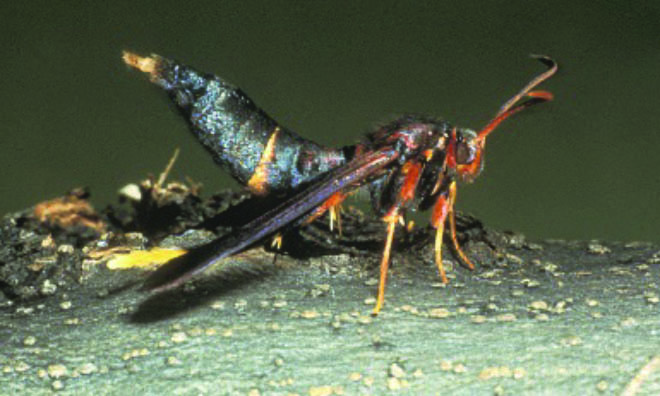
Figure A: Banded ash clearwing,Podosesia aureocincta, adult
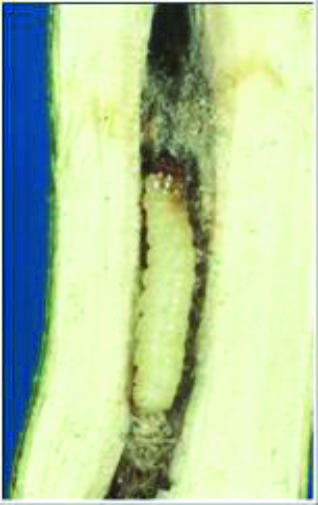
Figure B: Banded ash clearwing, Podosesia aureocincta, larva
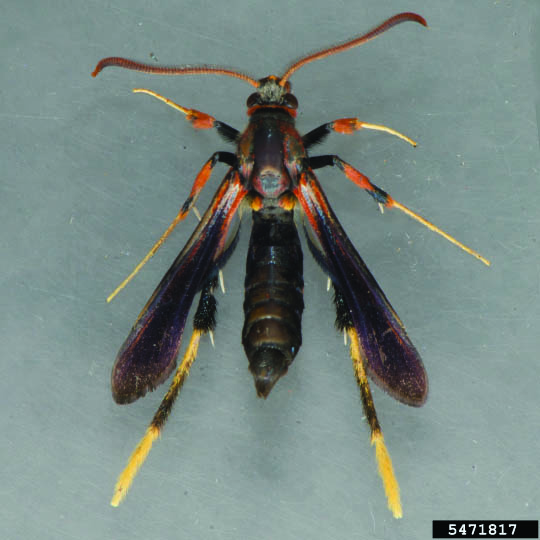
Figure C: ash/lilac borer, P. syringae, adult
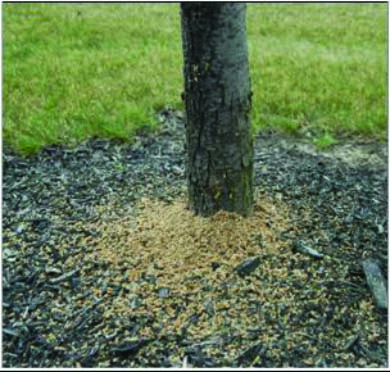
Figure D: Larvae expel sawdust-like frass (fecal material) from tree
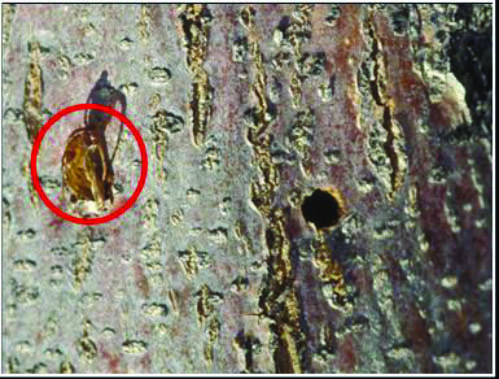
Figure E: Pupae are exposed from trunk and adults emerge from trees, leaving behind ¼-inch, circular exit holes
- Banded ash clearwing,Podosesia aureocincta, adult (A) and larva (B); ash/lilac borer,P. syringae,adult (C).
- Larvae expel sawdust-like frass (fecal material) from tree (D).
- Pupae are exposed from trunk and adults emerge from trees, leaving behind ¼-inch, circular exit holes (E).
Roundheaded Borers
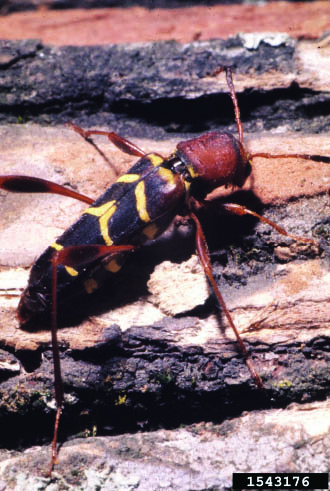
Figure F: Redheaded ash borer, Neoclytus acuminatus, adult
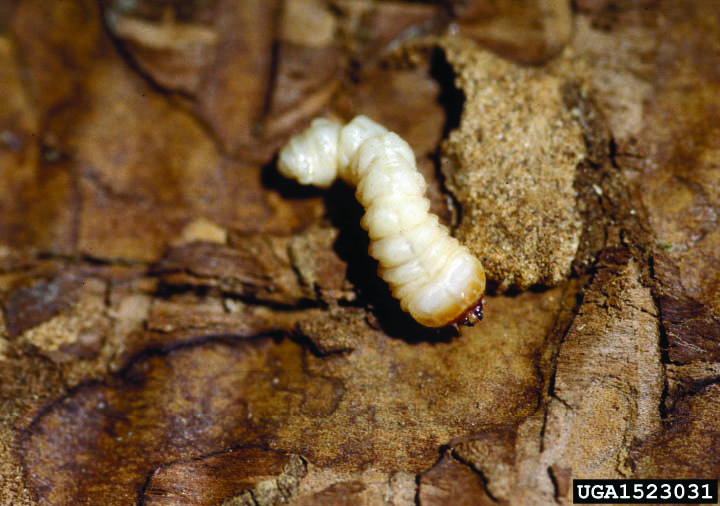
Figure G: Redheaded ash borer, Neoclytus acuminatus, larva
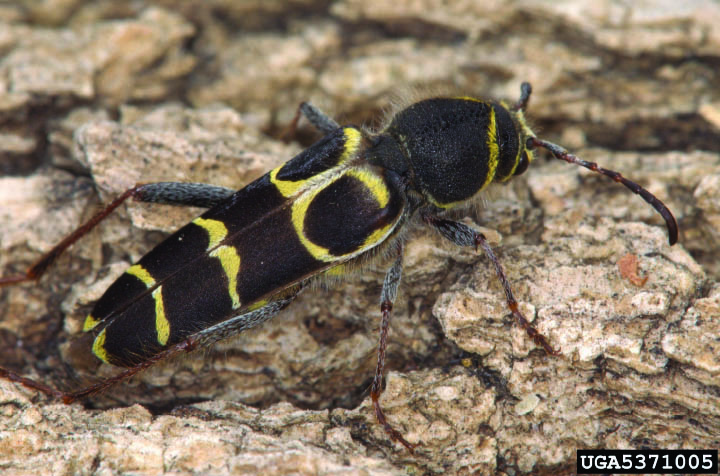
Figure H: banded ash borer, N. caprea, adult
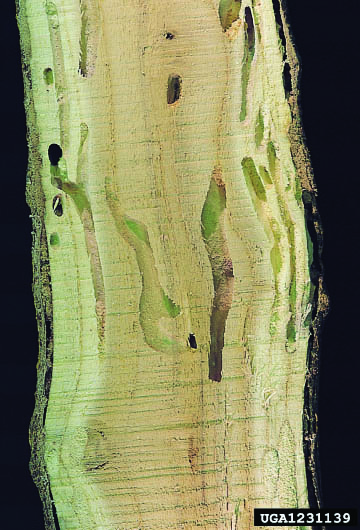 Figure I: Larvae emerge from eggs and bore into vascular tissues, then tunnel deep within heartwood
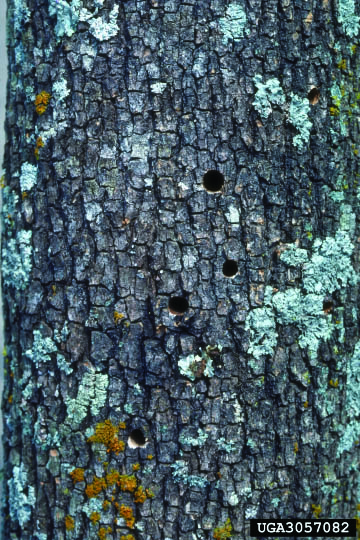
Figure J: Adults emerge from ¼-inch, circular exit holes
- Adults are called longhorned beetles and are attracted to stressed ash trees, but also colonize elm, hickory, oak, and other hardwoods; females lay eggs in bark cracks and crevices.
- Redheaded ash borer,Neoclytus acuminatus, adult (F) and larva (G); banded ash borer,N. caprea, adult (H).
- Larvae emerge from eggs and bore into vascular tissues, then tunnel deep within heartwood (I).
- Adults emerge from ¼-inch, circular exit holes (J).
Bark Beetles
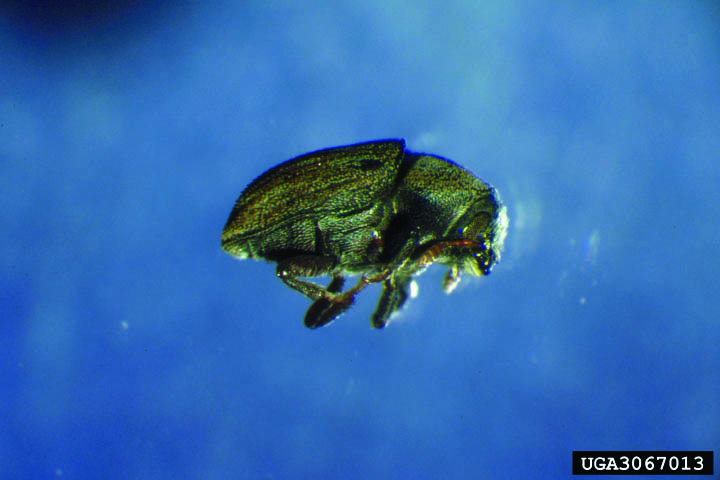
Figure K: Eastern ash bark beetle, Hylesinus aculeatus, adult.
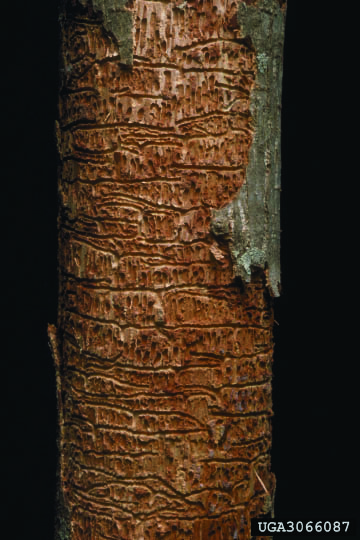
Figure L: Cylindrical bark beetle that forms galleries beneath bark of ash trees
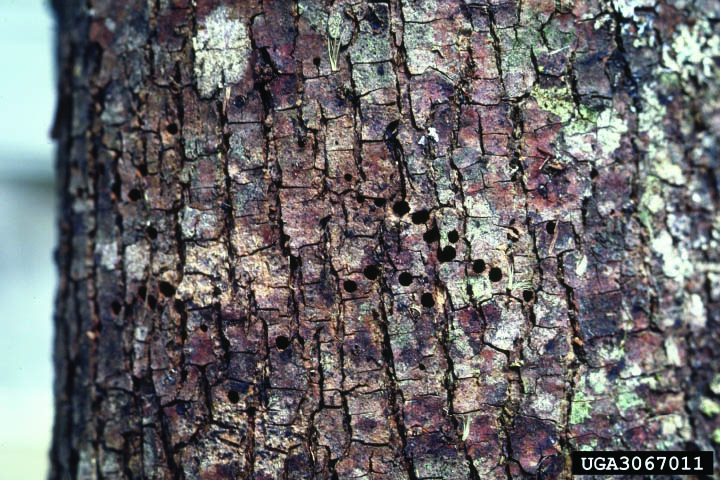
Figure M: Bark of infested trees peppered with tiny, round exit holes measuring approximately 1/16 inch
- Eastern ash bark beetle,Hylesinus aculeatus, adult (K).
- Cylindrical bark beetle that forms galleries beneath bark of ash trees (L).
- Bark of infested trees peppered with tiny, round exit holes measuring approximately 1/16 inch (M).
Emerald Ash Borer Lookalikes
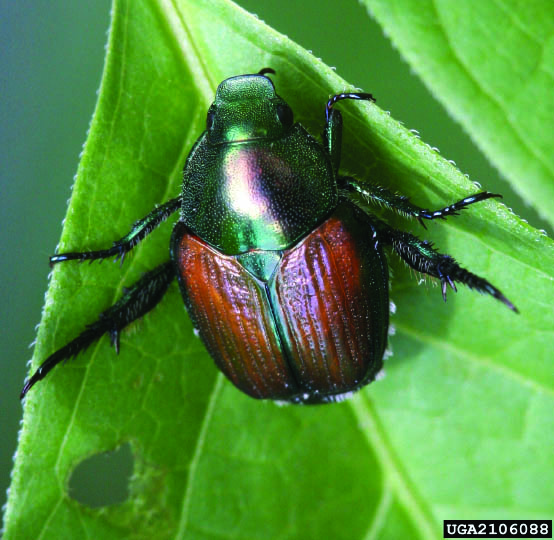
Figure N: Japanese beetle, Popillia japonica
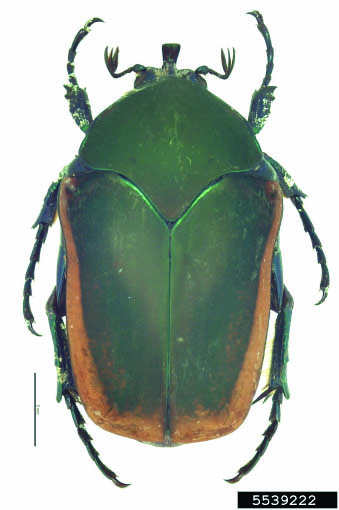
Figure O: Green June beetle, Cotinis nitida
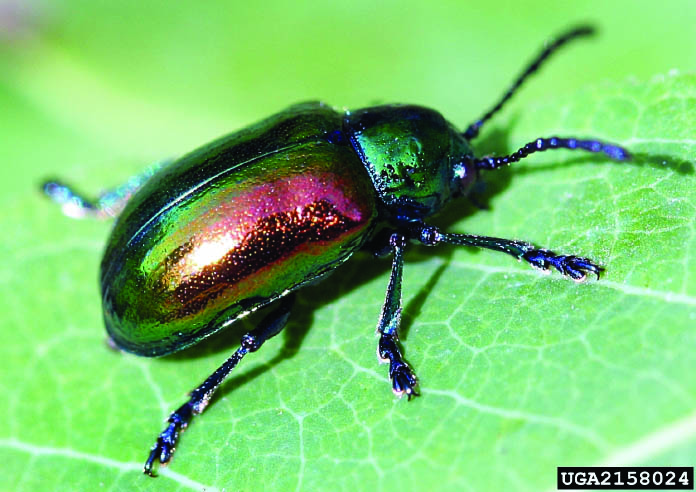
Figure P: Dogbane beetle, Chrysochus auratus
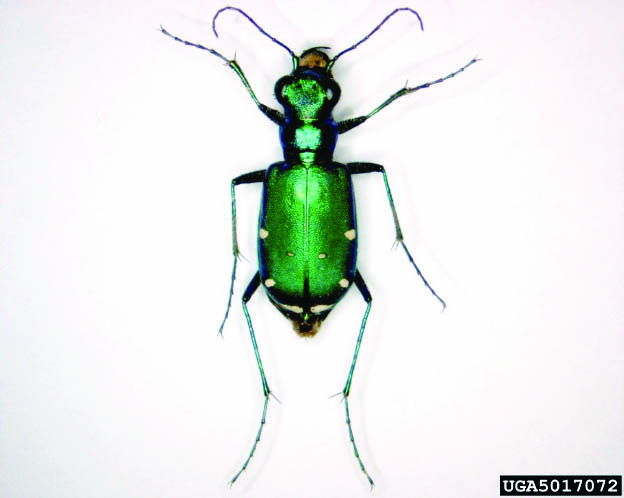
Figure Q: Six-spotted tiger beetle, Cicindela sexguttata
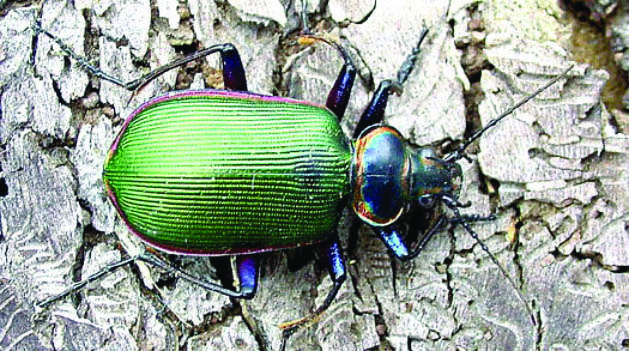
Figure R: Caterpillar hunter, Calosoma spp.
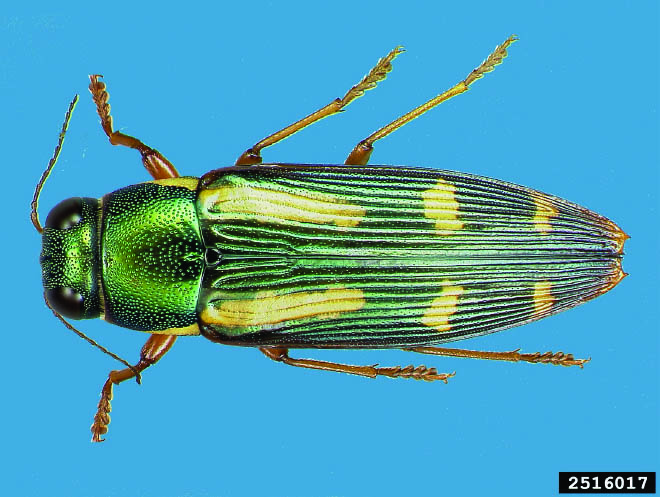
Figure S: Red-legged buprestis, Buprestis rufipes
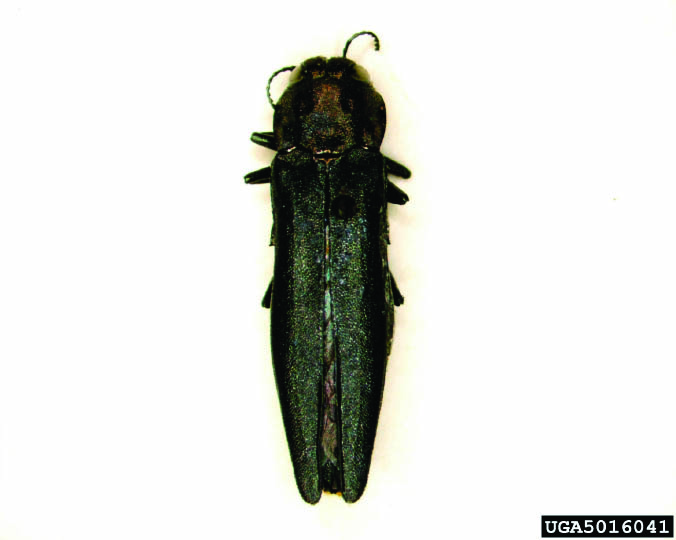
Figure T: Bronze birch borer, Agrilus anxius
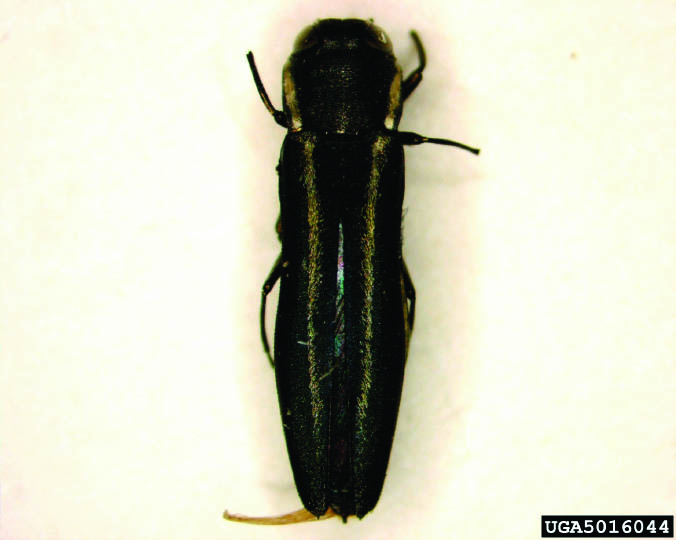
Figure U: Two-lined chestnut borer, Agrilus bilineatus
- Japanese beetle,Popillia japonica(N).
- Green June beetle,Cotinis nitida(O).
- Dogbane beetle,Chrysochus auratus(P).
- Six-spotted tiger beetle,Cicindela sexguttata(Q).
- Caterpillar hunter,Calosomaspp. (R).
- Red-legged buprestis,Buprestis rufipes(S).
- Bronze birch borer,Agrilus anxius(T).
- Two-lined chestnut borer,Agrilus bilineatus(U).
If you encounter emerald ash borer in your area, please contact USDA Animal and Plant Health Inspection Service (APHIS) at (405)609-8840 and Oklahoma Department of Agriculture, Food, and Forestry (ODAFF) at (405)522-5971. For more information about emerald ash borer, please visit the national Emerald Ash Borer website at www.emeraldashborer.info and the Don’t Move Firewood campaign website at www.dontmovefirewood.org.
Eric Rebek
Extension Entomologist