

Hunger in Higher Education: A Focus on Food Insecurity Among International Students at Oklahoma State University
What is Food Insecurity, and Why Does It Matter?
Food insecurity occurs when a person does not have enough food to eat and does not know where their next meal will come from. A person experiencing food insecurity may reduce the variety of food they eat (low food security) or even reduce the amount of food they eat (very low food security). This can lead to inadequate intake of the of the daily nutrients needed to stay healthy.
Who Experiences Food Insecurity?
In 2023, about 13.5% of households in the United States experienced some level of food insecurity (Rabbitt, 2024). The rates are slightly higher in Oklahoma where 15.4% of households experienced food insecurity, placing the state among the top five with the highest food insecurity rates (Explore Food Insecurity in the United States | AHR, 2024). Within the U.S., while anyone can experience food insecurity, certain groups are at greater risk, such as households with children and black and Hispanic households. Another vulnerable group is college students, particularly international students.
Research shows that food insecurity affects 41% of U.S. college students (Nikolaus et al., 2020). This is a critical issue because it has significant consequences for students’ diet quality, physical and mental health, and academic performance (Farahbakhsh et al., 2017; Hanbazaza et al., 2017; Maroto et al., 2015; Raskind et al., 2019; Shi et al., 2021). Many students dealing with food insecurity often opt for low-cost, high-calorie foods, which may provide temporary fullness but lack the nutrients needed for long-term health and well-being (Maynard et al., 2018).
International students face additional and unique challenges that may increase their risk for food insecurity. These challenges include cultural adjustment, language barriers, limited work opportunities due to visa restrictions, ineligibility for federal financial aid and lack of access to culturally appropriate food.
What is Oklahoma State University Doing to Support Students?
To reduce food insecurity, Oklahoma State University has implemented several campus free food resource programs (Basic Needs Resources - Oklahoma State University, 2024). These include Pete’s Pantry, which provides groceries; Pete’s Eats, which offers free cooked meals to students in need; Our Daily Bread Mobile Market, a mobile grocery service, delivering free fresh produce and staple foods to students and community members. Off-campus, the Stillwater community offers additional resources like Our Daily Bread Food Resource Center, which offers services that include free groceries to community members, including international students.
What Does Research Reveal About Food Insecurity and Food Resource Use Among International Students at OSU?
A study conducted by researchers in the OSU Department of Nutritional Sciences explored food insecurity among 173 international students at OSU and their awareness and use of available food resources (Allen, 2024). The study found that 46% (n=79) international students who completed the study experienced some level of food insecurity - almost one in two students (Allen, 2024). While 91% (n=153) of the 173 students surveyed were aware of at least one food resource, only 78% (n=126) had used at least one of the food resources. Specifically, of the 173 surveyed, 55% reported using Pete’s pantry, 54% used Our Daily Bread Food Resource Center and 32% used the Our Daily Bread Mobile Market.
Among the 46% that reported some level of food insecurity, 87% (n=61) reported using at least one food resource (Allen, 2024). Many international students surveyed also reported using various strategies to cope with food insecurity, such as cutting the size of their meals (n=113, 74%), eating less healthy meals (n=101, 66%), and purchasing cheap, processed foods (n=102, 65%). Many also reported stretching meals (n=94, 63%), skipping meals (n=90, 59%) and relying on help from family and friends (n=92, 59%). These coping strategies, which involve sacrificing both the quantity and quality of food, could have long-term negative effects on nutrition and health, increasing the risk of chronic diseases.
What is the Take Home Message and How Can You Help?
Food insecurity is a serious issue among international college students at Oklahoma State University with nearly one in two reporting limited or uncertain access to food. While OSU provides several free food resources, many international students still face barriers that prevent them from using these supports effectively.
You Can Help Make a Difference! Here’s How:
- Raise awareness: Share information about food resources like Pete’s Pantry, Pete’s Eats, and Our Daily Bread Mobile Market and Food Resource Center with students, families, churches, community groups and others who interact with international students.
- Be welcoming: Help international students feel welcome by inviting them to community events on and off campus, sharing meals or asking how you can support their food preferences.
- Promote culturally appropriate foods: Encourage food pantries and donation programs to include ingredients that reflect the cultural diets of international students.
- Support local efforts: Volunteer with or donate to food resource centers like Pete’s Pantry or Our Daily Bread and advocate for programs that address student food insecurity.
- Be a connector: If you know international students who may be struggling, connect them to available resources and listen with empathy. Speak positively about these food resources to help normalize them. Let people know that needing help with food is nothing to be ashamed of.
By working together, we can ensure that all students, regardless of their background, have access to the healthy, culturally appropriate food they need to do well in school and in life.
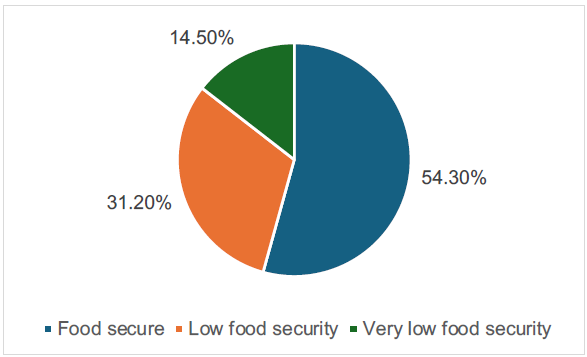
Figure 1. Prevalence of food insecurity among OSU international students.
References
USDA Economic Research Service. (2024). Food Security and nutrition assistance. https://www.ers.usda.gov/data-products/ag-and-food-statistics-charting-the-essentials/food-security-and-nutrition-assistance/
Rabbitt, M. P., Reed-Jones, M., Hales, L. J., Burke, M. P. (2024). Household food security in the United States in 2023. Economic Research Service, U.S. Department of Agriculture. https://doi.org/10113/8583175.
America’s Health Rankings. (2025). Food Insecurity in Oklahoma. United Health Foundation. Accessed May 22, 2025. https:// www.americashealthrankings.org/explore/measures/food_insecurity_household/OK
Nikolaus, C. J., An, R., Ellison, B., & Nickols-Richardson, S. M. (2020). Food insecurity among college students in the United States: A scoping review. Advances in Nutrition, 11(2), 327-348. https://doi.org/10.1093/advances/nmz111
Shi, Y., Davies, A., & Allman-Farinelli, M. (2021). The Association Between Food Insecurity and Dietary Outcomes in University Students: A Systematic Review. Journal of the Academy of Nutrition and Dietetics, 121(12), 2475-2500.e1. https://doi.org/10.1016/j.jand.2021.07.015
Farahbakhsh, J., Hanbazaza, M., Ball, G. D. C., Farmer, A. P., Maximova, K., & Willows, N. D. (2017). Food insecure student clients of a university-based food bank have compromised health, dietary intake and academic quality. Nutrition & Dietetics, 74(1), 67–73. https://doi.org/10.1111/1747-0080.12307
Raskind, I. G., Haardörfer, R., & Berg, C. J. (2019). Food insecurity, psychosocial health and academic performance among college and university students in Georgia, USA. Public Health Nutrition, 22(3), 476-485. https://doi.org/10.1017/S1368980018003439
Maroto, M. E., Snelling, A., & Linck, H. (2015). Food insecurity among community college students: Prevalence and association with grade point average. Community College Journal of Research and Practice, 39(6), 515–526. https://doi.org/10.1080/10668926.2013.850758
Hanbazaza, M., Ball, G. D. C., Farmer, A. P., Maximova, K., Farahbakhsh, J., & Willows, N. D. (2017). A comparison of characteristics and food insecurity coping strategies between international and domestic postsecondary students using a food bank located on a university campus. Canadian Journal of Dietetic Practice and Research, 78(4), 208–211. https://doi.org/10.3148/cjdpr-2017-012
Maynard, M. S., Meyer, S. B., Perlman, C. M., & Kirkpatrick, S. I. (2018). Experiences of food insecurity among undergraduate students: “You can’t starve yourself through school.” Canadian Journal of Higher Education / Revue Canadienne d’enseigne-ment Supérieur, 48(2), 130–148. https://doi.org/10.7202/1057107ar
Pradhananga N, Niroula K, Enriquez JP, McKinley E, Houghtaling B. (2025). Barriers and facilitators to campus food pantry utilization among international students attending a public university in the southeastern US. J Nutr Educ Behav. Advance online publication. https://pubmed.ncbi.nlm.nih.gov/40057861/
Shi Y, Lukomskyj N, Allman-Farinelli M. (2021). Food access, dietary acculturation, and food insecurity among international tertiary education students: A scoping review. Nutrition. https://pubmed.ncbi.nlm.nih.gov/33545541/
Glick AA, Winham DM, Shelley MC. (2025). Food insecurity predictors differ for white, multicultural, and international college students in the United States. Nutrients. https://www.mdpi.com/2072-6643/17/2/237
Oklahoma State University. (2024). Basic Needs Resources. Campus Life. https://campuslife.okstate.edu/student-support/ba-sicneeds.html
Allen, T (2024). Food accessibility and food insecurity on campus: Experiences of international students at Oklahoma State University. Honors Thesis, Oklahoma State University.