

Growing Apples in the Home Garden
Apples are well-adapted to many areas of Oklahoma and are often included in home orchards. When considering apples for a home orchard, a few items should be considered prior to planting. Selecting cultivars with good disease resistance, planting complementary pollinators and rootstock selection can be key to productive trees. Growing apples will also require timely maintenance and care to achieve high-quality fruit production.
Site and Soil Requirements
For maximum production, apples need plentiful sunlight. Choose an area that receives full sun most of the day; otherwise, expect reduced performance. Early-morning sun is particularly important to dry the dew from the leaves, which will reduce the incidence of diseases, but full sun is best.
Although apples are more adapted to clay soils than peaches or cherries, they do require good soil drainage. Soil drainage is more important than soil fertility. Avoid areas where water stands for more than 24 hours after rainfall. In such areas, the roots will die from insufficient oxygen, resulting in stunted growth and the eventual death of the tree. If such conditions exist, planting on a raised area, such as a berm or terrace, will help.
Apples do best in slightly acidic soils with a pH of between 6.0 and 7.0. Avoid planting in areas with a high soil pH where cotton root rot can thrive. Apples are highly susceptible to root rot, and no control measures are currently available.
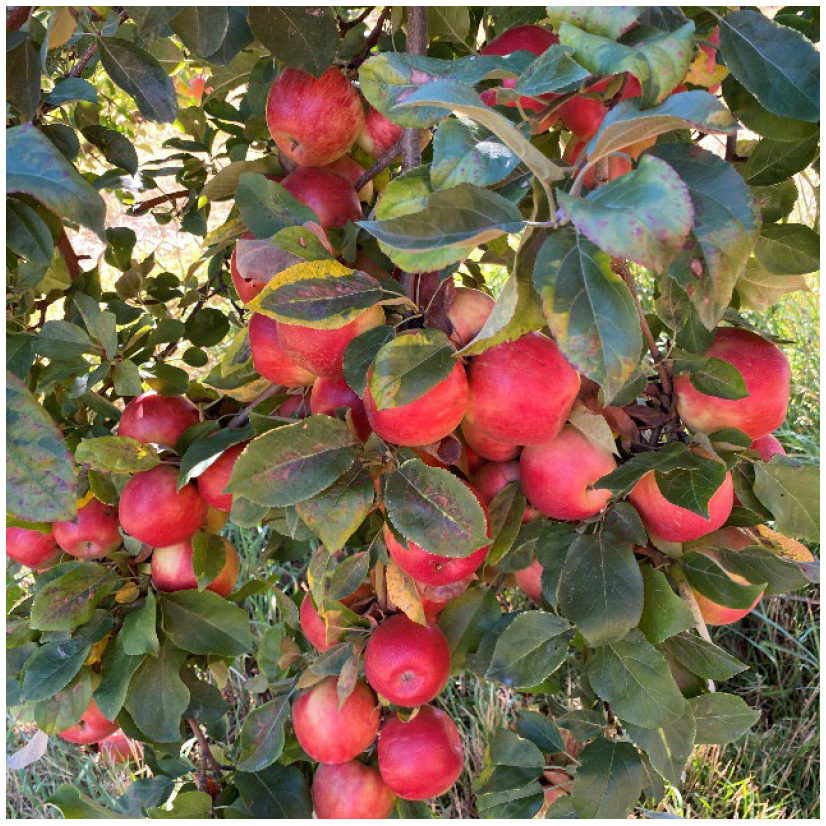 Figure 1. Apples on a tree.
Buying Trees
If possible, order bareroot trees from nurseries specializing in fruit trees. Nurseries in the eastern half of the United States will have similar climate and disease issues to those in Oklahoma. Fruit trees are an investment. Don’t succumb to “bargain bin” trees at the end of the season. Starting with high-quality trees adapted to Oklahoma conditions will yield the best results. Do a little research to find recommended disease-resistant cultivars. If purchasing locally, buy from a reputable nursery. Keep the following points in mind when buying apple trees:
- Younger and smaller is better: A healthy year-old whip (a branchless shoot), about 3–4 feet tall with a ½-inch diameter trunk and a good root system is preferred. Smaller trees experience less transplant shock, are easier to train to the desired shape, and cost less. A small tree with a good root system is more desirable than a large tree with a poor root system. Trees two years old or older are often not as good as 1-year-old trees. The older trees often have too few buds on the lower trunk to develop a good framework. If buying older trees, cut them back to force out buds lower on the main trunk.
- Buy healthy trees: Do not buy trees that appear stunted, poorly grown, diseased or injured by insects. Do not buy dried or shriveled plants, even at discounted prices.
- Know what you are buying: Check the labels carefully to ensure the desired cultivar and rootstock are selected. Do not purchase if the rootstock is not labeled. Some indication of tree size is important – standard vs. dwarf rootstocks will require different spacing and needs.
Pollination
Apple cultivars require pollen from another cultivar to set fruit. Therefore, plant two or more cultivars with overlapping bloom periods. Complementary pollinator tables are available online. Many nurseries offer suggestions of cultivars that work well together. Some cultivars bear heavy crops when pollinated by another pollen-producing cultivar, but do not produce good pollen themselves. A few cultivars have sterile pollen and are called triploids. “Arkansas Black” is a triploid. When planting a triploid, three cultivars will be needed for pollination. Some catalog descriptions tout certain cultivars as “self-pollinating”, but these trees will produce best with a pollinator. Flowering crabapples can be substituted as a pollinator in many cases. Trees grafted with more than one cultivar (five-in-one or fruit cocktail trees) do not give good results. One cultivar generally crowds out the others. Table 1 lists common and promising apple cultivars for planting in Oklahoma.
| Cultivar | Chilling Hours | Bloom Group | Ripening Time | Fruit Size | Color | Texture |
|---|---|---|---|---|---|---|
| Anna | 200 | 1 | July | Large | Green/ blush | Coarse |
| *Arkansas Black | 600 | 3 | Late Sept | Medium | Dark red | Hard |
| Braeburn | 700 | Late October | Red | Crisp | ||
| Dorsett Golden | 100-300 | July | Medium | Yellow | Crisp, firm | |
| Enterprise | 800 | 4 | September | Red | Firm/ crisp | |
| Florina | 4 | Large | Rosey | Firm/ crisp | ||
| Freedom | 500-600 | 3 | Late-Sept | Med-lg | Red | Crisp |
| Fuji | 500 | 3 | Late-Sept | Large | Red | Firm |
| Gala | 600 | 4 | August | Medium | Orange/ Red | Crisp |
| Golden Delicious | 600-700 | 4 | Late-Sept | Large | Yellow | Crisp |
| Goldrush | 800 | 4 | Mid-late Oct | Yellow | Firm, crisp | |
| Granny Smith | 600 | 3 | Late Oct | Green | Firm, crisp | |
| Honeycrisp | 800 | 4 | Sept-Oct | Large | Red, mottled | Crisp, juicy |
| Jonathan | 800 | 3 | Late | Medium | Orange/ red | Firm, juicy |
| King David | 300 | 3 | Very-Late | Medium | Purple | Crisp |
| Liberty | 800 | 2 | Sept | Large | Yellow/Red | Crisp |
| Lodi | 800-1000 | July | Medium | Yellow/ Green | Crisp | |
| McLemore | Late July | Medium | Red | |||
| Mollies Delicious | 450-500 | 5 | Mid-late Aug | Red | Crisp/firm | |
| *Orleans (Antique) | 4 | Late Sept | Medium | Red | Fine, crisp | |
| Ozark Gold | Late-Aug | Yellow | Crisp, firm | |||
| Pristine | 4 | Mid-July | Green/Yellow | Crisp | ||
| Red Delicious | 800-900 | 4 | Sept | Red | Crisp | |
| Williams Pride | 400 | 2 | Early Aug | Large | Maroon-red | Firm, crisp |
| Columnar Types | ||||||
| Northpole | 800–1200 | Late Aug-early Sept | Large | Red | crisp/ juicy | |
| Golden Sentinel | 800–1200 | early October | large | yellow | crisp/ juicy | |
| Scarlet Sentinel | 800–1200 | 2 | mid-late Sept | Large | Red | crunchy |
| Cultivar | **Disease Resistance (Fire-Blight) | **Disease Resistance (Cedar Apple Rust) | **Disease Resistance (Scab) | **Disease Resistance (Powdery Mildew) | General Resistance | Storage | Use or Comments |
|---|---|---|---|---|---|---|---|
| Anna | S | R | S | S | Average | Fair: 1 week | Good flavor, low-chill, Southern, self |
| *Arkansas Black | S | VR | S | S | Good | Good: 3 mo.+ | Distinctive flavor, cooking, fresh, cider, triploid |
| Braeburn | VS | S | S | S | Poor | Good | Tangy, dessert, cooking |
| Dorsett Golden | S | MR | S | R | Average | Fair | Low-chill, upright growth, self, Anna pollinator, Southern |
| Enterprise | R | R | VR | R-S | Good | Good: 3 mo.+ | Spicy, sweet-tart, cold-hardy, fresh |
| Florina | MR | VS | R | MR | Good | Good: 3 mo. | Fresh, sweet |
| Freedom | VR | R | VR | R | Good | Fair: 1-2 Mo. | Fresh, cider, juice, cooking, cold-hardy |
| Fuji | S | R-VS | MR | R | Average | Good: 3 mo.+ | Sweet, dessert, cooking |
| Gala | VS | R-S | VS | MS | Poor | Good | Excellent flavor, fresh, cider, drying, needs thinning |
| Golden Delicious | S | S | S | VS | Poor | Good: 3 mo.+ | Early production, cooking, fresh, juicy, russets |
| Goldrush | MR | S | VR | VR | Good | Good: 3-6 mo. | Tart, tangy, fresh or in pies, cider |
| Granny Smith | VS | R | S | VS | Average | Good: 3 mo.+ | Sweet, tart, fresh, cooking, good for hot climates, self |
| Honeycrisp | R | S | MR | S | Good | Good: 3 mo.+ | Fresh, sweet, cold-hardy |
| Jonathan | VS | S | S | VS | Poor | Good: 3 mo.+ | Aromatic, fresh, cooking, self |
| King David | S | R | R | R | Good | Fair: 1-2 mo. | Fresh, cooking, cider, tart |
| Liberty | R | VR | VR | R | Good | Fair: 1-2 mo. | Fresh, cooking, canning, cider, cold-hardy |
| Lodi | VS | MS | S | R | Good | Poor | Cooking, cider, applesauce, freezing |
| McLemore | Good: 6 mo. | Dessert, cooking, thin skin, productive, OSU release | |||||
| Mollies Delicious | S | VR | S | N/A | Good | Fresh, cooking, canning, Southern, good color | |
| *Orleans (Antique) | HS | R | R | R | Good | Fair: 1 mo. | Sweet, cider, drying, cold-hardy, triploid |
| Ozark Gold | MR | Excellent | Mild, sweet, fresh, cooking, canning, frozen | ||||
| Pristine | R | S | VR | R | Good | Poor: 1 Week | Sweet-tart, cooking, applesauce, fresh, thinning needed |
| Red Delicious | R | VR | S | MR | Good | Fair: 1-2 Mo. | Dessert |
| Williams Pride | R | VR | VR | R | Good | Poor: 1-3 Days | Spicy, fresh, baking, cold-hardy |
| Columnar Types | |||||||
| Northpole | MR | S | R | S | Good | Poor | Requires fruit thinning, aromatic, eat fresh |
| Golden Sentinel | MR | S | R | S | Good | Good: 3 mo. | |
| Scarlet Sentinel | S | S | R | S | Fair | Good: 5 mo. |
*Triploid cultivar and will need two other pollinators
**VS — Very susceptible; S — Susceptible; MS — Moderately susceptible; VR — Very resistant; R — Resistant; MR — Moderately resistant.
Cultivar Selection
Of the approximately 6,000 named apple cultivars, most have been displaced by a smaller number of superior-tasting cultivars. Some apple cultivars, such as “Red Delicious” and “Golden Delicious,” are also available in various strains. A strain is a mutation of a cultivar selected and propagated for an improved characteristic. Strains may differ in fruit characteristics, growth characteristics, or both. Some cultivars have many strains; for example, about 250 strains of “Red Delicious” have been described and cultivated.
A point to remember for Oklahoma apples is that they may not resemble the same cultivar sold in the grocery store. Most everyone can identify a “Red Delicious” apple, but one grown in Oklahoma will not have the deep red coloring or lobe characteristics found on apples grown in northern apple-producing states. Oklahoma’s hot days and warm nights during fruit development can affect their shape and coloring. They still taste good but won’t have the “look” of the cultivar.
Spend considerable time studying these cultivars. Keep in mind that these will live for several decades. Choose several cultivars to provide apples for desired use: processing into apple sauce, cider and apple butter; dessert/fresh eating right off the tree; and long storage in the refrigerator.
Strain types may be spur or non-spur (See Figure 2.) Spur-type strains are ideally suited for home gardeners with space limitations because the fruit spurs and leaf buds are spaced more closely than on non-spur trees. Two-year-old wood on spur-types will usually form fruit buds rather than develop side shoots. Spur-type strains of a cultivar generally grow only 60–70% as large as the non-spur strains of that cultivar.
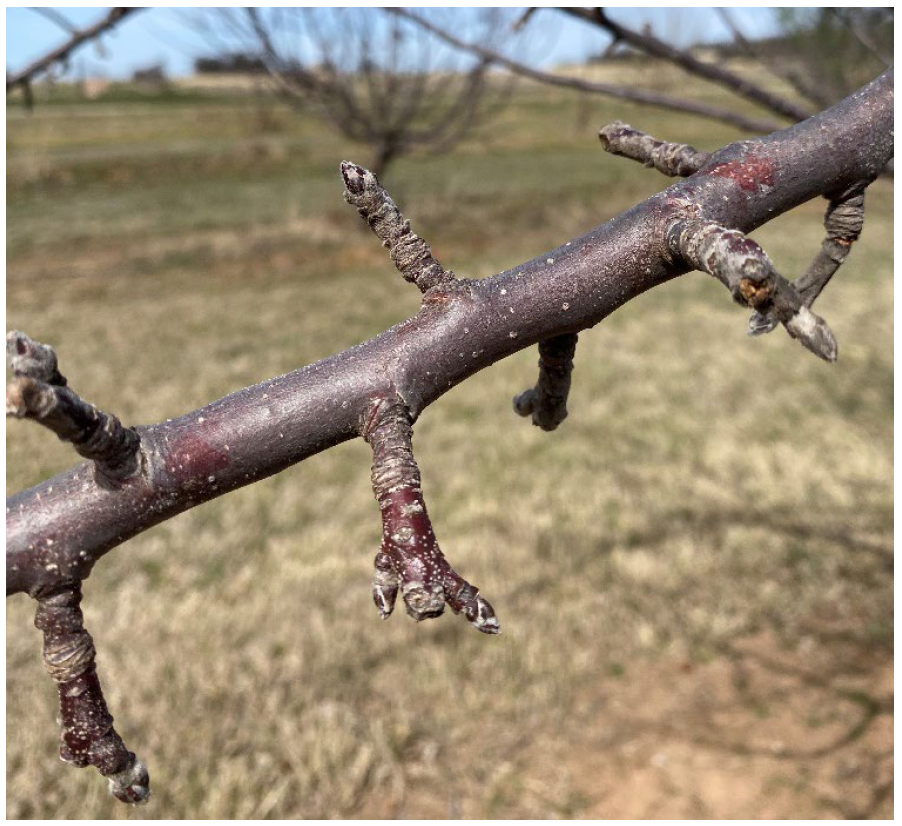 Figure 2. Spurs that are two years old may produce fruit instead of new side shoots.
Standard Trees Versus Dwarf Trees
The two dominant influences on tree size are the rootstock and the strain type (spur or non-spur). Other factors influencing tree size include general care, cultivar, soil type, time and severity of pruning and earliness of fruiting.
Apple tree size, as influenced by rootstocks, is generally divided into three categories: standard, semi-dwarf and dwarf. Standard trees are propagated on seedling rootstock and grow to 30 feet tall. See Table 2 for more information on rootstock.
Semi-dwarf trees are propagated on one of the clonal (vegetatively propagated) rootstocks that produce trees about three-quarters the size of standard trees if both are grown under similar circumstances. The most common semi-dwarf rootstocks used for apples are MM.106 and MM.111.
| Rootstock | Canopy Diameter (ft) | Nursery Stock* (ft) | Years to Bearing | Potential Yield (Bushels) | Notes |
|---|---|---|---|---|---|
| Seedling | 25 | 3 to 4 | 8 | 5 to 8 | Large tree |
| M.9 /M.26/M.27 | 10 | 3 to 4 | 3 | 0.5 to 1 | Needs support |
| MM.111 /MM.106 | 20 | 3 to 4 | 5 | 4–5 | Semi-dwarf |
*Nursery stock refers to either plant size or grade.
Trees on semi-dwarf and dwarf rootstocks are ideal for home fruit production. Although sometimes more expensive to buy, the smaller trees are easier to prune, spray, and harvest, and they produce fruit at an earlier age than full-sized trees. M.9 and M.27 rootstocks produce fully dwarfed trees (6 to 8 feet tall and 4 to 6 feet tall, respectively). Both produce shallow, weak root systems and require staking or trellising, and regular watering. Dozens of other size-reducing apple rootstocks exist, but the best for Oklahoma is a semi-dwarf rootstock, MM.111, which will produce a tree 25 percent smaller, but very well anchored and drought resistant.
Columnar forms of many popular cultivars also exist and may be a great choice for a small landscape. Columnar apples fit well within tight spaces in the urban landscape.
Chilling Hours
When selecting apple cultivars to plant, match the chilling hours to your location. Most fruiting plants require chilling hours to break the first stage of dormancy. This helps to protect the tree from blooming too early in the season. Chilling hours begin accumulating after the first hard freeze. Oklahoma averages 800 to 1200 hours of chilling each year, with 800 in the southeastern corner and 1200 in northern Oklahoma. A chilling hour map is available on Mesonet and is active from a hard freeze until March 15. Using a lower chilling hour cultivar in northern Oklahoma may result in blooms earlier than desired, and spring buds may be damaged. If using a high chilling cultivar in southern areas, the tree may not be able to meet the chilling requirement, and bloom will be delayed, which can cause issues with cross-pollination. The cultivar listing lists the chilling hours required for each cultivar.
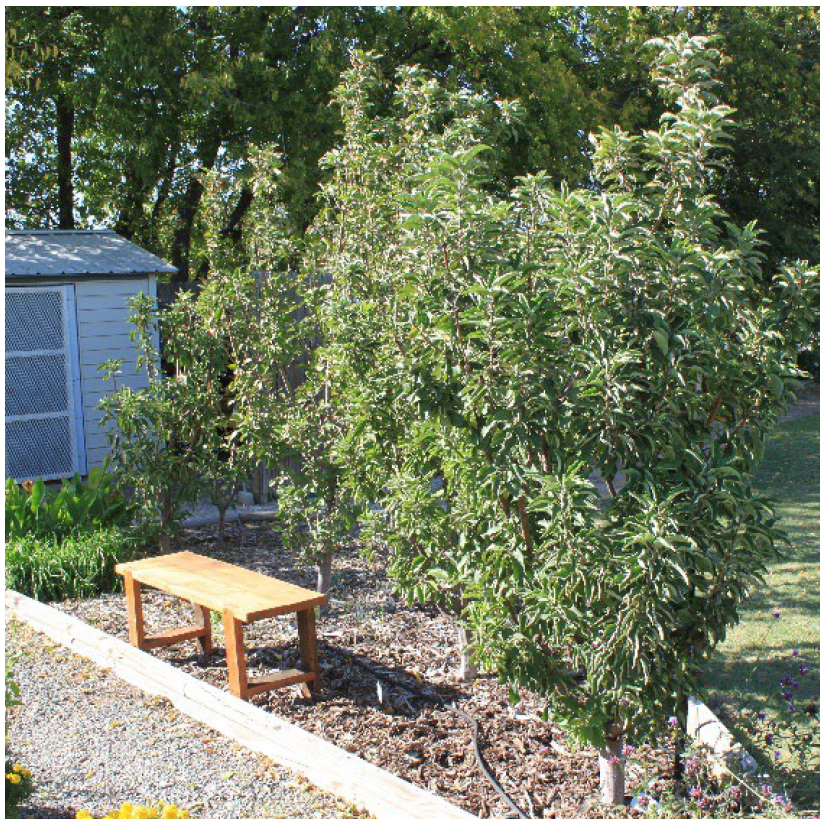 Figure 3. Columnar apples in Cleveland County.
Soil Preparation and Planting
Before planting, prepare the soil thoroughly by deep cultivation. Have the soil tested and make any recommended adjustments before planting. Information on soil testing can be obtained from the local county Extension office.
High-pH soils above 7.5 are difficult to adjust but working organic matter into the top foot of soil will help.
When bareroot apple trees arrive from the nursery, open the bundles immediately and inspect the trees for damage and general condition. If unable to plant at that time, “heel-in” trees by temporarily burying the roots in soil or mulch to protect roots from drying or freezing.
Prior to planting, soak the roots in water for ½ to 1 hour. Avoid leaving plants soaking in a bucket until planting, as oversoaking can be detrimental to plant health. Plant the trees while they are still dormant. Ideal planting time is mid-February to early March. Container trees can be planted in the fall or spring. It is best to avoid planting in the hot summer months.
When planting bareroot trees, dig holes large enough to receive the roots freely without cramping or bending from their natural position. Do not dig the hole deeper than needed to avoid the settling of trees. Use pruning shears to cut off all broken or damaged parts of the roots. Set the plants at the same depth they grew in the nursery. Work soil in and around the roots.
When the hole is half-filled, firm the soil with your feet; finish filling the hole, and then pack the soil firmly again. Do not leave a large depression around the tree. Also, do not place fertilizer in the planting hole or fertilize the tree immediately after planting. Fertilizer should be applied only after tree growth begins.
After planting, apply enough water to soak the soil thoroughly around the tree roots. Watering eliminates air pockets and brings the soil into closer contact with all sides of the roots. The planting hole may need additional soil after watering. Adjust the tree if it settles too deep in the soil.
For a visual guide to bare-root planting techniques, see this Oklahoma Gardening video of planting an Asian pear, which mirrors apple tree planting: Asian Pear Tree Planting Guide - Bare Root Fruit Trees Made Easy.
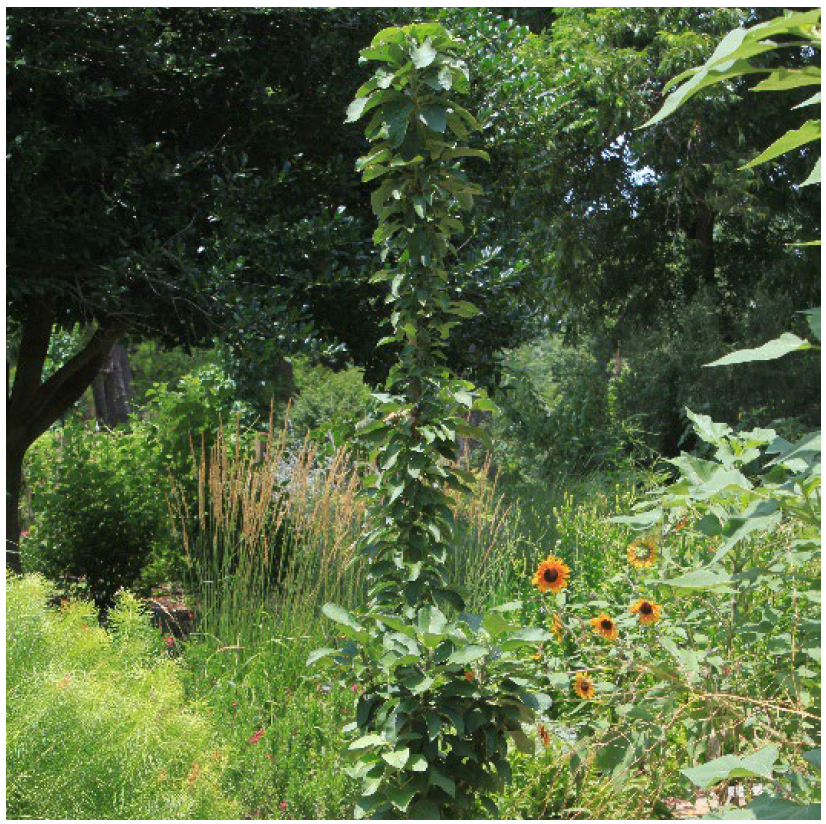 Figure 4. “Northpole” columnar apple.
Training and Pruning
Pruning is cutting or trimming the undesired twigs or branches from a tree or other plant. Training begins the day the tree is planted. If neglected, the trees will grow poorly, and fruiting will be delayed.
The modified central leader system is the preferred method of pruning and training non-trellised trees. A modified central leader tree has a main trunk and main branches that stair-step up around the central leader. The key is to allow sunlight into the interior of the tree, which promotes the development of short shoots or spurs, where the apples will be produced. This also reduces disease pressure with more light and better airflow.
After planting, cut the tree back to 30–36 inches. The topmost bud will take over as the leader and grow very vigorously straight up. The buds in a 4 to 6-inch zone below the top will also be quite vigorous and usually have narrow crotch angles. A crotch angle is the angle at which the branch is connected to the tree. These branches should be removed when 2–3 inches long or spread immediately with limb spreaders to increase the crotch angles. Branches below this region will tend to have better, wider crotch angles. The selected primary limbs, known as scaffolds, should have at least a 60-degree crotch angle and grow in an outward manner. Apples should have three to five scaffolds in the bottom tier, well distributed on all sides of the tree, with the central leader maintained. Scaffold selection should be made early, and extra shoots should be removed. More details can be found in the fact sheet HLA-6228 Annual Pruning of Fruit Trees.
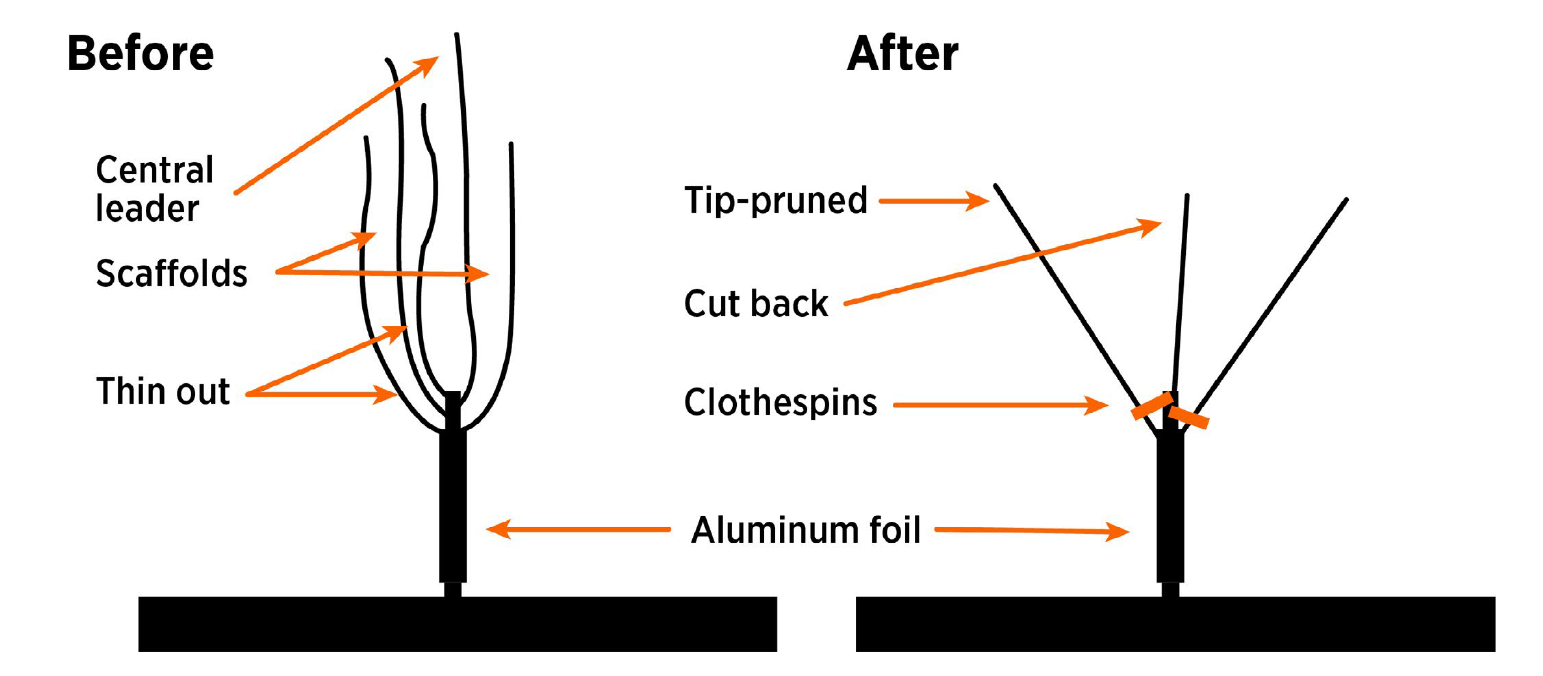 Figure 5. Recommended pruning of apple trees during the first dormant season.
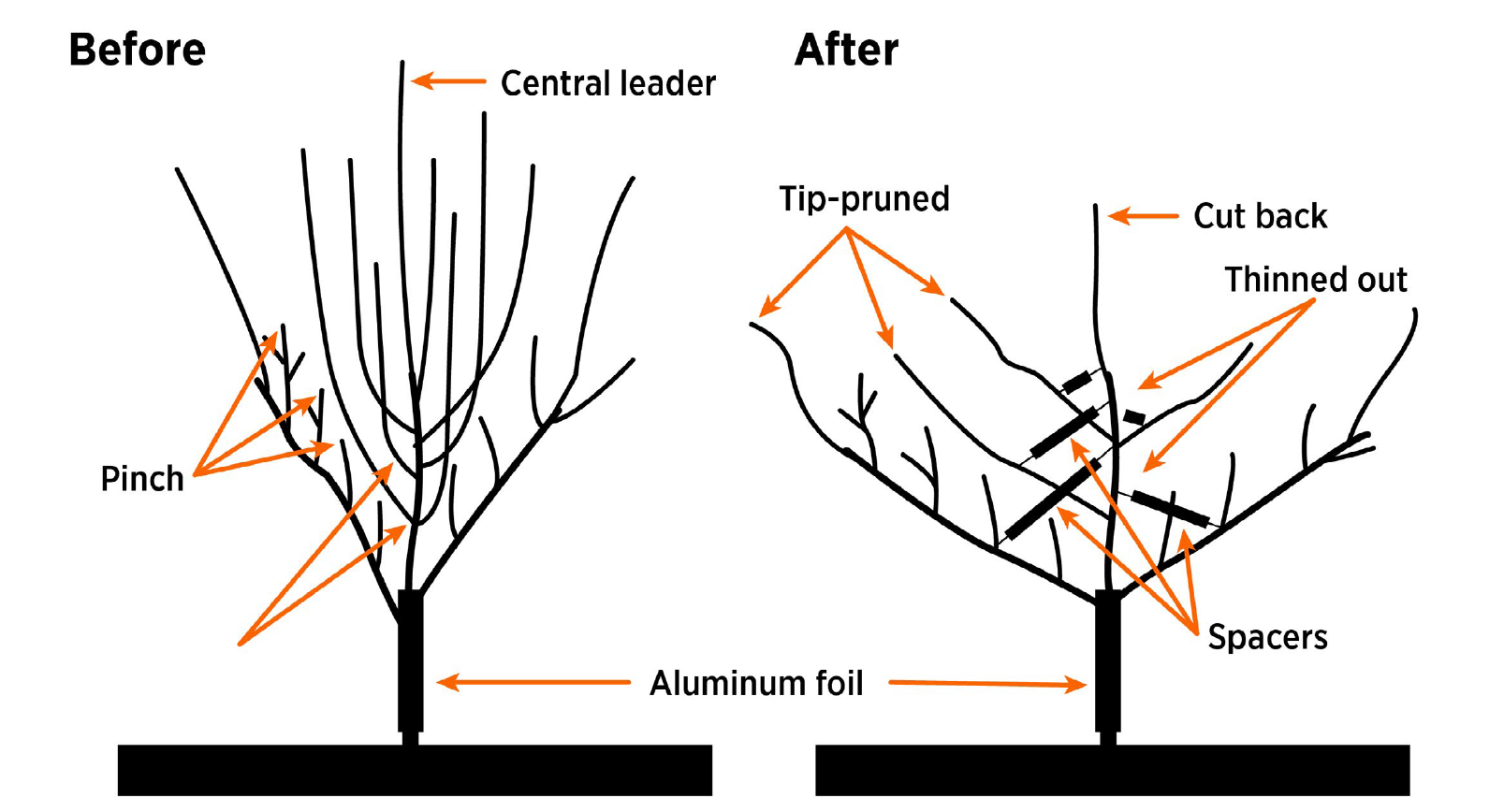 Figure 6. Recommended pruning for apple trees during the second dormant season. Prune in late winter. Winter pruning of apple trees consists of removing undesirable limbs as well as tipping terminals (removing the buds at the ends of the twigs) to encourage branching.
The best time to start establishing good light penetration in a tree is during its first growing season. In the following seasons, a second tier of scaffolds is made, starting 24–30 inches above the first tier. If using semi-dwarf rootstocks, there should be a third tier the same distance above the second. Pruning a young tree controls its shape by developing a strong, well-balanced framework of scaffold branches, which are the primary limbs growing laterally from the tree trunk. Remove or cut back unwanted branches early to avoid large cuts later.
It is important that these scaffold limbs do not grow straight up. Vigorous upright growth tends to be less fruitful, and it will interfere with the limbs above. If the scaffold can be made to grow outward, the tree’s width will increase, increasing the amount of light intercepted by the tree. Some cultivars are cooperative in producing wide-angled, spreading limbs; “Red Delicious” is a notorious exception. Every branch it produces wants to become the leader of the tree, and consequently, all grow straight up. Effective management of “Red Delicious” demands that mechanical spreading of the scaffold limbs be done to prevent crowding of the branches, shading of the interior and to promote lateral growth and fruitfulness. Using limb spreaders or small weights can help achieve better crotch angles (Figure 7). Limb spreaders can be removed after one season. Once the shape of the tree has been established and the tree is mature, annual pruning is about removing upright-growing shoots, competing shoots and dead wood, as well as shortening any branches that are growing too tall or wide. Most of the pruning cuts on a mature apple tree will probably be in the top part to prevent shading out of the lower branches.
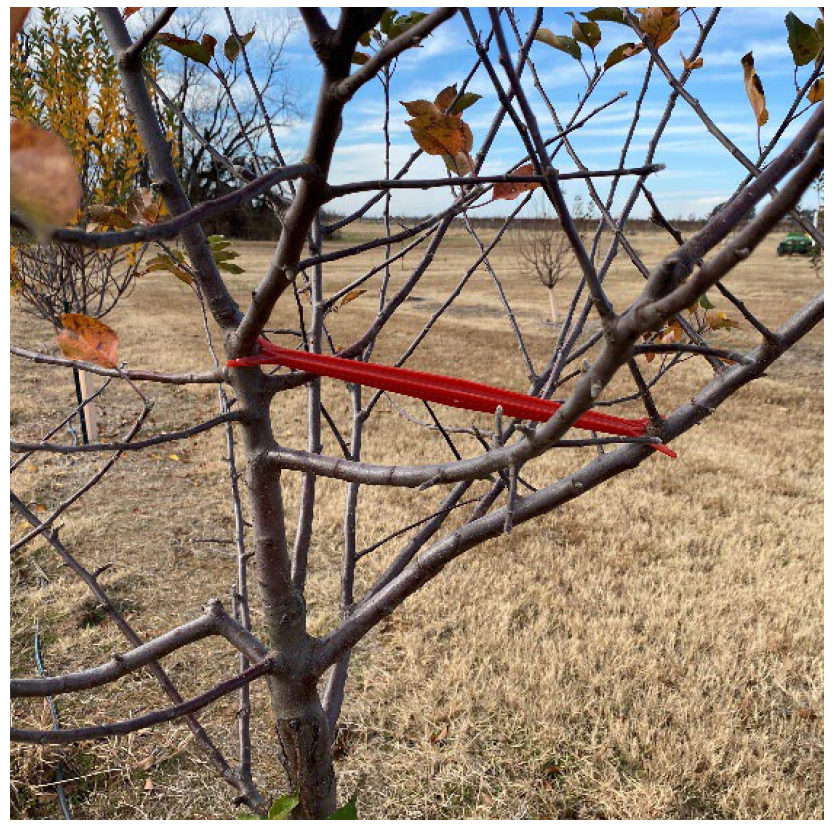 Figure 7. Limbs can be trained to grow outward with limb spreaders.
The problem comes when dealing with an older tree that is not properly trained when young. You will be confronted with a mass of branches, some weak, others large, probably most with poor crotch angles that are too old and rigid to spread. Resign yourself to not having a picture-book tree but start pruning to make the most of what you’ve got. The key is to open it up to improve light interception and airflow.
The general shape of the tree should be like an inverted cone: narrow at the top and gradually widening at the bottom (Christmas tree shape). Remove any dead wood first to make access to the remaining branches easier to trim. Carefully look at the tree and decide which branches to leave for the lower tier and to use as the central trunk. Younger branches may be spread, and older branches can be cut back to an outwardly growing side branch, which, if possible, can be spread. Try to leave 6 to 8 inches of vertical distance between the chosen scaffolds. Start choosing for the second tier, 24–30 inches above the first tier, following the same methods as the first tier. These branches will probably need shortening by cutting back to a side shoot. Add a third tier 24 to 30 inches above the second. Remember to maintain the inverted cone ‘Christmas tree’ shape. Do not make many fine cuts on the branches that will be kept; save that for next year. A general rule is not to remove more than 1/3 of the wood during dormant-season pruning. The tree will respond to drastic pruning by sending out vigorous regrowth. Be prepared to deal with it. Vigorous upright growth on the trunk and along the branches will need to be removed either during the summer or at the next dormant season pruning. The best timing for summer pruning in Oklahoma is sometime during August.
Apples can be trained into many shapes. For those with limited space, the espalier method trains the tree to a fat surface against a building or fence. Here’s an Oklahoma Gardening segment discussing the process: Oklahoma Gardening - Espalier Fruit Trees is Easy!
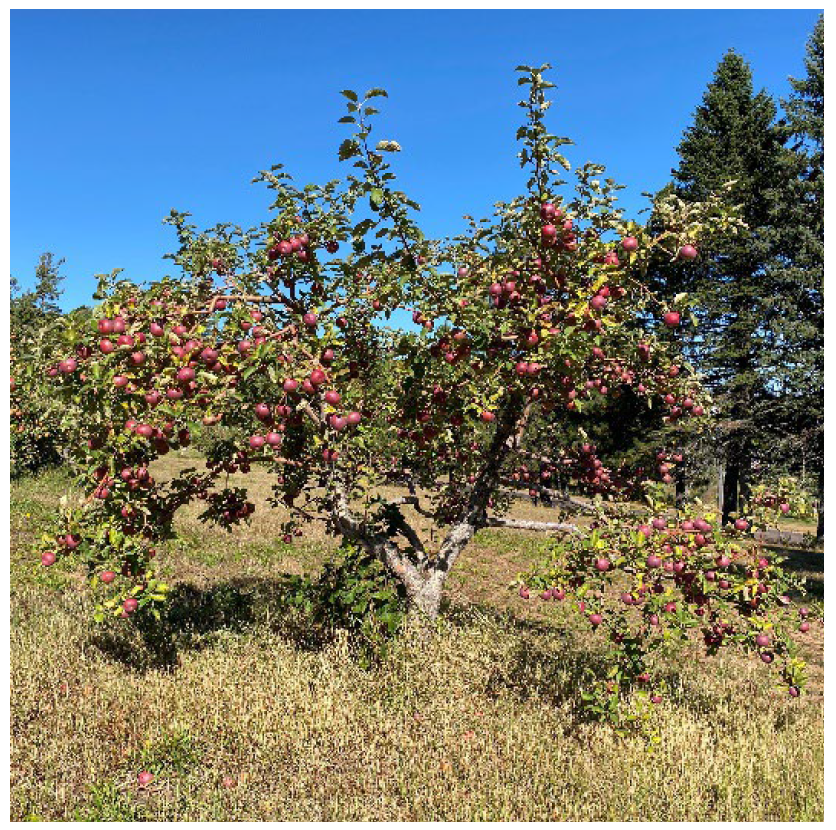 Figure 8. Apple tree with spreading growth.
Fertilization
During the year of planting, fertilize when the tree shows several inches of new growth. Use a complete fertilizer, such as 10-10-10, and apply it in three equal amounts, spaced about two weeks apart. If the trees are not actively growing, skip the later fertilizer applications.
- Year 1: Apply one pound of fertilizer.
- Year 2: Apply two pounds.
- Year 3: Apply three pounds.
- Continue increasing the fertilizer up to a maximum of ten pounds as the tree matures.
If you are growing dwarf trees, if fruit is lost to freeze, or if terminal growth exceeds eight inches, reduce fertilizer rates.
Complete fertilizer can be spread in a band about 24 inches long, at least 12–18 inches from the trunk (see Figure 9). As the tree grows, the fertilizer should be spread to cover the width of the tree canopy. Nitrogen-only fertilizer applications can be broadcast under the tree canopy.
During the first year, adequate water and weed control are more important than fertilization. Apply approximately one pound of complete fertilizer per year of tree age, up to a maximum of 10 pounds. If needed, based on fruit set, add three pounds of ammonium nitrate per tree in May. For bearing trees, annual terminal growth should be around eight inches, and fruit spurs should have about eight leaves. More information can be found in fact sheet HLA-6232 Fertilizing Pecan and Fruit Trees.
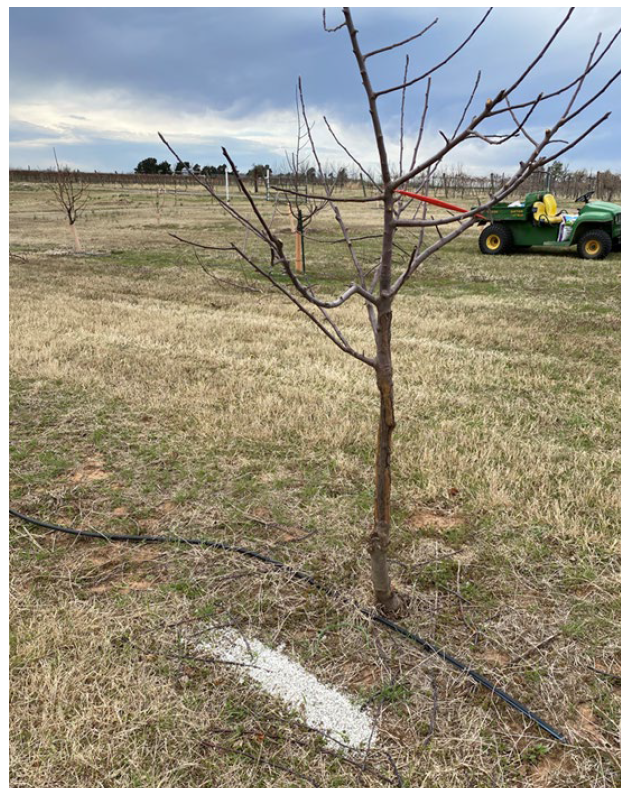 Figure 9. Band of fertilizer placed 12 to 18 inches away from the trunk.
Irrigation
In most areas of Oklahoma, supplemental water is necessary for healthy tree growth. Water young trees weekly during the growing season, unless rainfall is sufficient. For mature trees, the amount of water needed depends on several factors, including wind, rainfall, temperatures, crop load, and soil type. Generally, about one inch of water every 7–10 days during the growing season is adequate.
Mulching can help conserve moisture. Drip irrigation is the most efficient method for applying water, as it allows water to infiltrate deeply where the roots are located. Watering only the top few inches of soil is ineffective. Overwatering can be more detrimental than underwatering. Signs of overwatering include standing water or yellowing leaves, which may indicate that the roots are waterlogged.
Weed Control
Eliminating weed competition around young trees is essential for their survival and rapid growth. Ideally, the soil surface should be kept free of weeds in an area at least as wide as the tree’s limb spread. Organic mulches can also be used to aid in weed control and moisture retention. Using a string trimmer around young trees is often detrimental as the thin bark can easily be damaged.
Herbicides are available to control weeds, but safety precautions and proper sprayer calibration are essential. Avoid spraying herbicides on green, growing tissue. Trunk protectors can help prevent herbicides from coming in contact with the trunk surface. Grass-specific herbicides are particularly useful because they target grasses while leaving broadleaf weeds unaffected. For more information, consult the current report CR-6242 Weed Control in Pecans, Apples and Peaches.
Fruit Thinning
Apple trees grown under favorable conditions often set more fruit than they can successfully mature. Thinning the fruit helps ensure that the remaining apples reach optimal color, shape, and size. Failing to remove excess fruit can result in poor bud formation the following year, leading the tree to produce a crop only every other year.
The earlier fruit thinning is done in the season, the more effective it will be in achieving the desired results. Begin thinning when the apples have set and are about the size of a dime. Fruit is often set in clusters of 2 to 6 apples, so leave only one fruit per spur or cluster. The remaining apples should be spaced about 4–6 inches apart. Start by removing smaller fruits or those that are damaged. Take care not to break or damage the spurs during thinning. To remove the fruit without damaging the spur, hold the stem of the apple between your thumb and forefinger, and push the fruit from the stem with the other fingers. This method removes the apple and leaves the stem attached to the spur.
Caution: Avoid using sprays containing the insecticide carbaryl shortly after petal fall; it can cause fruit thinning if applied during this period. If you use a general-purpose home orchard mix, check the label for ingredients.
Harvesting
Harvest time varies with individual tastes and location in the state. One person may consider fruit ripe, while another believes it is immature. However, fruit picked too soon does not develop full flavor or store well. On immature fruit, the flesh may have a green tint. Flesh color should be white or cream. Seed color also changes with ripening. Ripe apples should have brown seeds. Normally the apples with the most sun exposure will ripen first. When you start to see apples on the ground, it may signal that harvest time is here. When picking apples, avoid injuring the fruit; apples picked with the stem attached to the fruit will keep longer.
Remove the apple from the spur by pulling upward and outward while rotating the fruit slightly. On some of the thin, long-stemmed cultivars, such as ‘Golden Delicious,’ it is sometimes necessary to place your index finger firmly at the point of attachment of the stem and spur to prevent breaking the spur.
Disease and Insect Management
The best fruit is produced when diseases and insects are controlled. Using disease-resistant cultivars is the easiest form of pest management. Common diseases of apples that may require control include cedar apple rust, apple scab, powdery mildew, fire blight, sooty blotch, and bitter rot. Summer rots can be particularly devastating to the fruit in a wet year. Damaging insects are scales, spider mites, plum curculios, aphids, and codling moths. For more information on pest control of apples see OSU Extension publication EPP-7319 Home Tree Fruit Production and Pest Management.
Several companies sell home orchard fruit spray mixes to control fruit tree pests. Read and follow all label instructions when applying any pesticide.