

A Beef Cattle Producer’s Guide to Castration Methods
Introduction
Castration is the removal or inactivation of the testicles. Historically, castration has been implemented to tame cattle for use as draft animals, prevent unwanted breeding and improve meat quality. Historical evidence of castration practices can be traced back to the Neolithic period and in Ancient Egypt (Childe, 1930; Ikram, 1995).
Today, castration is an important component of calf preconditioning. Preconditioning refers to a defined set of calf best management practices, including weaning, vaccination, castration, dehorning, deworming and training calves to eat from a feed bunk before the date of sale. Calf preconditioning practices reduce calf stress, improve calf health and performance after leaving the ranch of origin. It is important to ensure calves are allowed time to heal before sale, following castration and dehorning procedures.
Survey data collected by the USDA in the 2017 Beef (NAHMS) Beef Cow-calf Management Practices in the United States indicated that 62% of commercial cow-calf operations castrated bull calves before sale. Data collected at Oklahoma livestock sale barns indicated that in 2013, approximately 10.3% of calf sale lots contained bulls. In 2014, this percentage decreased to 7.1% then 4.7% in 2020. However, that data collection effort indicated an increase beginning in 2021, with approximately 12% of calf sale lots containing bulls in 2023 (Raper). Thus, castration is considered a common practice, but the timing and method continue to spark debate.
This fact sheet provides an overview of the impact of castration on calf growth, meat quality, economic value and an overview of castration methods.
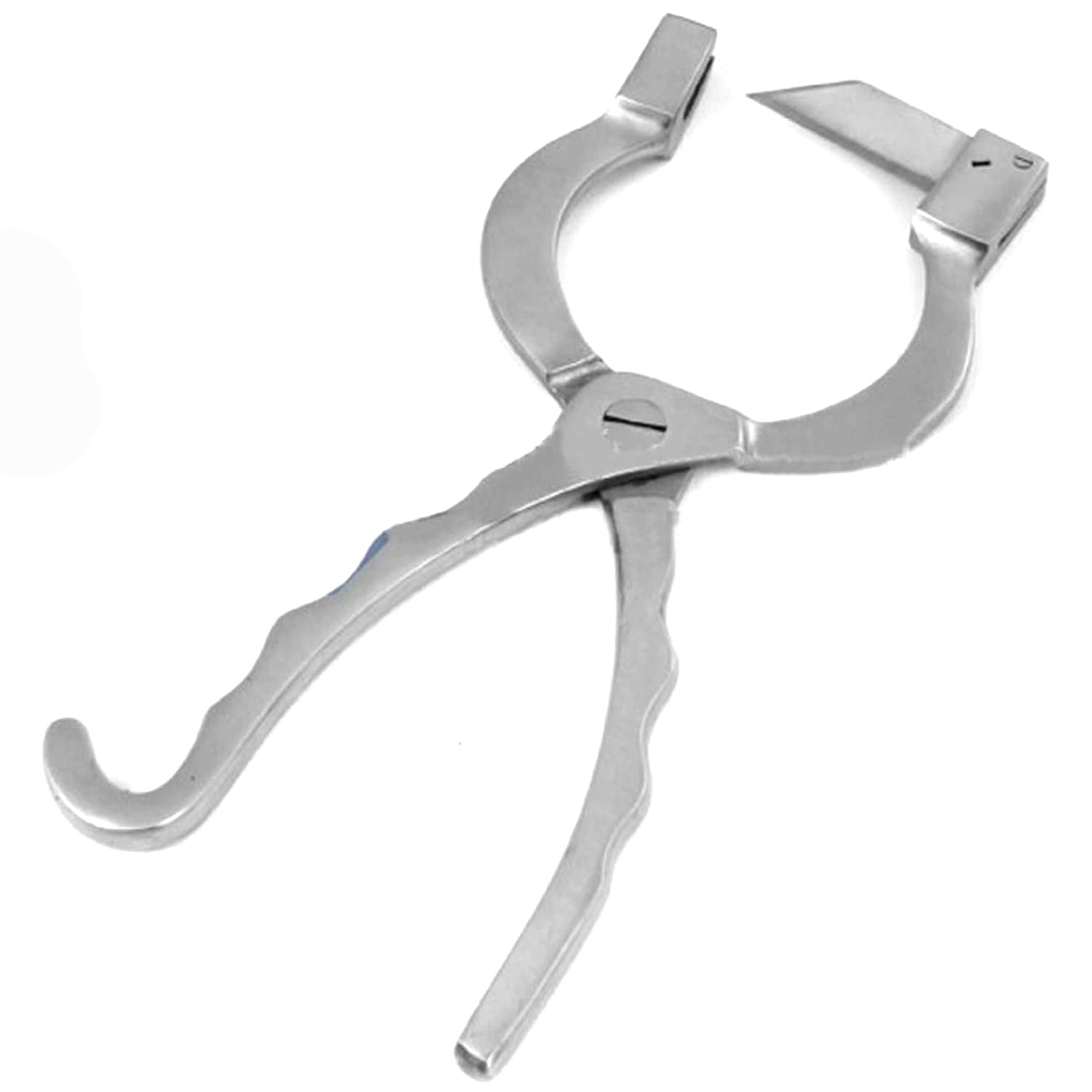 Figure 1. Newberry knife.
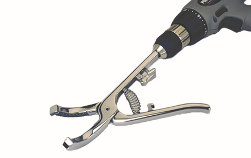 Figure 2. Henderson Castrating Tool.
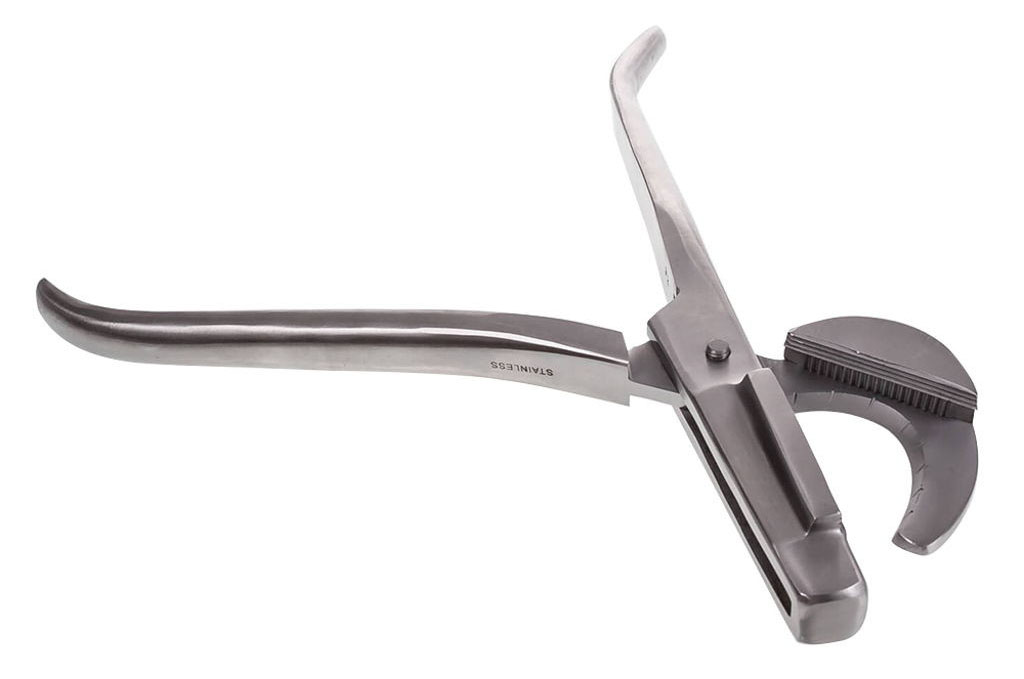 Figure 3. White’s Style Emasculator
Why Castrate Male Calves?
Performance and Meat Quality
The potent effects of testosterone mean that bulls often produce leaner and heavier carcasses compared to steers. Research indicated that steer calves exhibited lesser ADG and final carcass weights compared to bulls (Field et al., 1964). A feedlot finishing study indicated that while ADG was similar for steers and bulls, steer hot carcass weights were 35lbs lighter with a 0.70in2 smaller ribeye area (Schoonmaker, 2002). However, decreased carcass weights and a slight disadvantage in growth are necessary trade-offs for improved meat quality and palatability associated with steers. Beef from steer carcasses is more tender with greater marbling compared to bulls (Purchas, 2002). Research indicated that steer carcasses were less likely to be classified as dark cutters (Tarrant 1981). Beef from “dark cutter” carcasses is darker in color, caused by animal stress and nervousness, which depletes muscle glycogen stores, resulting in decreased muscle pH. Dark colored beef is not appealing to consumers. Castration reduces aggression and mounting behavior, making steers generally less stressed and nervous compared to bulls and thus reducing the occurrence of dark cutter carcasses.
Economic Benefit
Steer calves receive a price premium compared to bull calves of similar like and kind at the time of sale. Data collected by Oklahoma State University Extension specialists in 2010 indicated that steer calves received an average premium of $5.77/cwt compared to bulls (Williams et al., 2012). A recent multi-state data collection indicated that steers received an average premium of $7.40/cwt compared to bulls (Peel et al., 2024). Overall, extension economists estimate current premiums for steers compared to bulls of similar type and kind marketed at livestock auctions to range from $6 to $12/cwt.
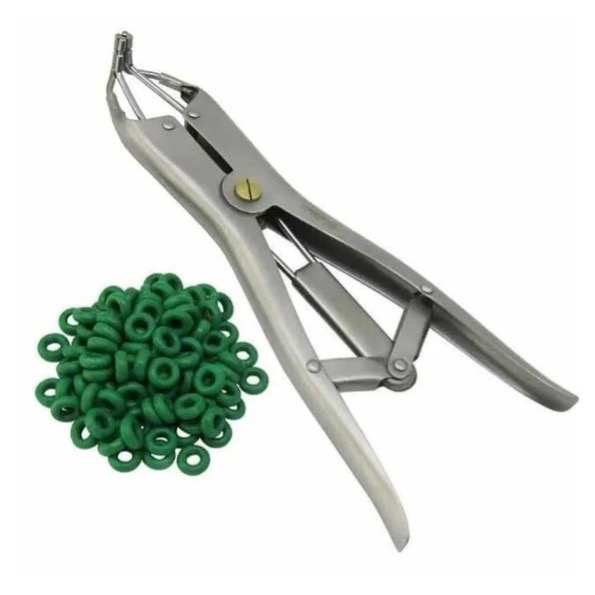 Figure 4. Elastrator and bands.
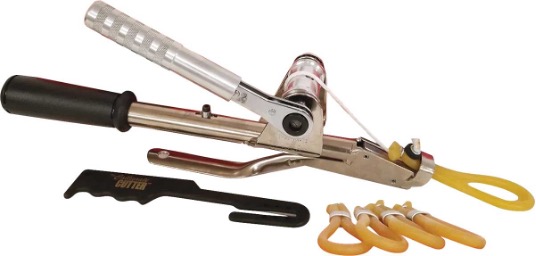 Figure 5. Callicrate Bander.
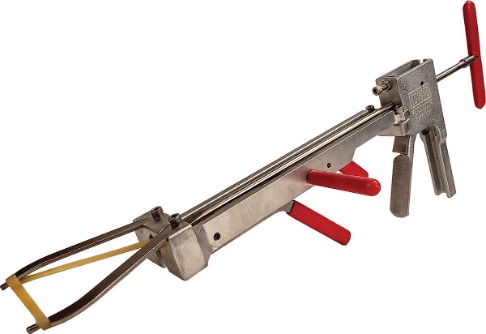 Figure 6. EZE Bloodless Bander.
Evaluation of Castration Methods
Veterinary Consultation
Livestock producers need to maintain a veterinary-client-patient relationship. It is recommended to consult and seek training from an experienced veterinarian or livestock production professional before implementing any castration method. A veterinarian should be consulted before purchasing medication or surgical tools.
Surgical Methods
Surgical castration involves making an incision in the scrotum to expose and allow for removal of the testicles. This procedure is usually performed using a knife, scalpel or similar tool. Other tools include the Newberry Knife, Henderson Castration Tool and emasculator. The New-berry Knife is a castrating tool used to make vertical incisions on each side of the scrotum, exposing the testicles, which are removed by pulling and breaking the spermatic cord. The Henderson Castration Tool is a drill attachment used to twist and sever the spermatic cords. An emasculator is a tool used to remove the scrotum and testicles while crushing the spermatic cord, minimizing blood loss. The emasculator method is generally recommended for use in calves at birth to 300lbs. Surgical castration is effective but carries the risk of post-operative bleeding, leaving an open wound that is at risk of infection until healed.
Elastrator Banding
Elastrator banding is a bloodless method of castration that places a small latex band above the testicles, near the base of the scrotum. Due to restricted blood flow, the testicles atrophy and fall off. A common issue of castration with an elastrator band is incomplete castration. Incomplete castration occurs when one or both testicles are not fully captured below the elastrator band. This may occur if a testicle slips into the inguinal canal, if both testicles are not fully pulled into the scrotum or if cold weather causes them to retract. A testicle left above the band may remain functional and continue to produce testosterone.
Banding Options for Larger Bulls (Greater than 300lbs)
These bloodless castration methods use robust tension bands that restrict blood flow to the testicles. These methods are recommended for calves weighing more than 300lbs. because the scrotum must be large enough to ensure appropriate pressure is applied by the band. These tools stretch a durable latex band over the scrotum, which is secured above the testicles.
The Callicrate Bander and EZE Bloodless Bander use a ratcheting mechanism to tighten the bands, which are secured by a clip. The California Bander uses a manual process to stretch the band above the scrotum and clip it into place. These tools are effective in minimizing blood loss. Careful observation should be used to ensure that the bands are neither over-tightened (potentially leading to breakage) nor under-tightened, which could result in failure.
The risk of tetanus infection increases when castrating larger calves. It is recommended to provide a tetanus vaccine when using these banding methods. As a general guideline, a tetanus toxoid vaccine should be administered two weeks prior to banding, and a booster should be provided at the time of banding. Be sure to seek veterinary consultation and review vaccine label protocol before administering vaccines. Like elastrator banding, it is important to ensure that both testicles are secure below the tightened band to avoid incomplete castration.
The Burdizzo Emasculatome is a tool used to crush the spermatic cord, thus bloodlessly inactivating the testicles without complete removal. This method is not recommended for calves smaller than 300lbs because it is important that the spermatic cords are large enough to be crushed by the tool. It is ideal for calves weighing 300–400lbs, but is not as effective on larger, older bulls. Emasculatome use requires proper technique to ensure that the spermatic cords are rendered inactive, and failure rates are greater than surgical and banding methods. A university study indicated that emasculatome use resulted in a 23% failure rate (Mach et al., 2009).
| Image | Caption |
|---|---|
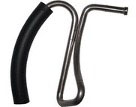 | Figure 7a. A California Bander Tool. |
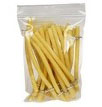 | Figure 7b. A bag filled with rubber bands. |
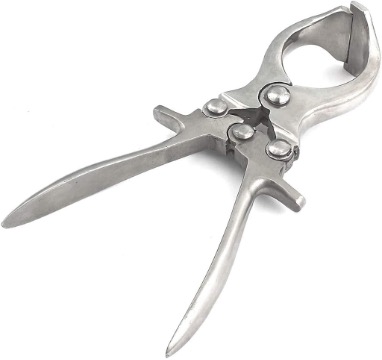
Figure 8. Burdizzo Emasculatome.
| Method | Calf Body Weight | Pros | Cons |
|---|---|---|---|
| Surgical (knife, scalpel, New-berry Knife, etc.) | Birth to 500 lbs. |
| Risk of post-operative bleeding and infection |
| Surgical (emasculator) | Birth to 300lbs |
| Risk of post-operative bleeding and infection |
| Emasculatome | 300–400 lbs. |
|
|
| Elastrator Band | < 300 lbs. | Bloodless | Risk of failure |
| California Bander | 300–900 lbs. |
|
|
| Callicrate Bander | 300–1500 lbs. |
|
|
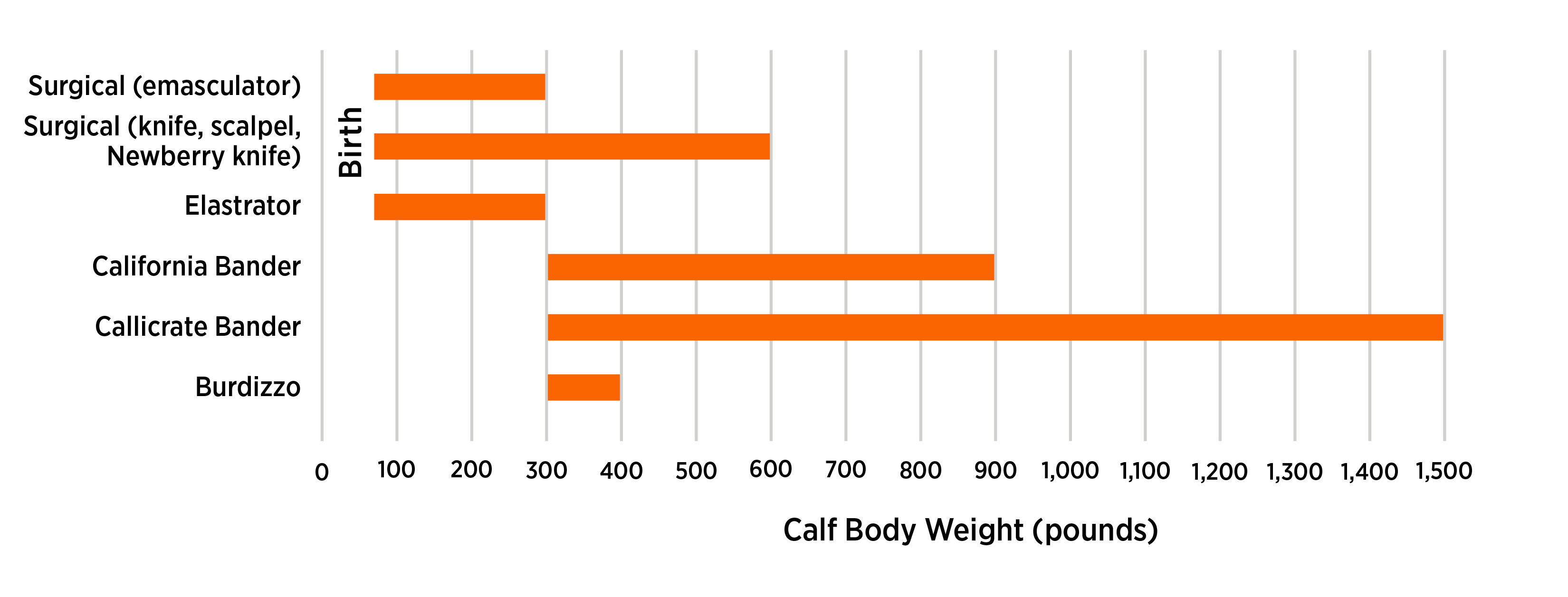 Figure 9. Acceptable calf body weight (lbs.) by castration method
Pain Associated with Castration Method
Surgical castration increases immediate and intense or “acute” physical pain. While banding methods cause less acute pain but greater delayed longer longer-lasting “chronic” pain. Researchers observed an increase in serum haptoglobin levels (an indicator of inflammation and pain), and prolonged standing duration (an indication of discomfort) immediately following surgical castration. Indicating that pain from surgical castration is immediate and intense (Roberts et al., 2016).
Research indicated that banding caused a delayed inflammatory response compared to surgical methods. The pain response was less acute but persisted for several days (Warnock et al., 2012).
| Method | Pain intensity | Pain duration |
|---|---|---|
| Surgical castration | High (acute) | 1–4 days |
| Banding castration | Moderate (chronic) | 7–14 days |
Pain Management Options
Meloxicam
Meloxicam is a nonsteroidal anti-inflammatory drug (NSAID) that is effective at providing pain relief. Meloxicam requires a veterinary prescription. Meloxicam is not explicitly labeled for use in livestock. To acquire meloxicam, a prior veterinary-client-patient relationship must exist so that a veterinarian can provide an off-label prescription. Research indicated that administering 0.45mg/lb. of calf body weight at the time of surgical and banding castration reduced pain (Roberts 2016). Other research indicates that meloxicam provided effective pain relief from castration for up to 48 hours (Coetzee et al., 2009). Meloxicam is commercially available as Metcam (Boehringer Ingelheim), and other generic formulations are available.
Lidocaine Block and Lidocaine-Infused Castration Bands
Lidocaine is a local anesthetic that is effective at providing temporary pain relief. A university study indicated that a subcutaneous 1ml. Lidocaine injection in the neck of the scrotum before surgical castration provided up to 1 hour of pain relief (Mancke et al., 2025). Lidocaine-infused castration bands are commercially available under the trade name Lidoband (Solvet). Lidocaine-infused castration bands were effective at providing moderate pain relief for a minimum of 28 days following banding (Manke et al., 2025). Lidocaine requires a veterinary prescription for purchase, and a veterinarian should provide details regarding the injection site, amount of drug, etc. Lidoband products do not require a veterinary prescription for purchase. However, consulting a veterinarian prior to the use of either product is highly recommended.
Average Daily Gain and Castration Method
Research indicated that banded calves had a 0.93lb/day increase in feedlot ADG compared to surgically castrated calves for the first 7 days following castration. However, banded calves had a 0.28lb/day decrease in feedlot ADG compared to surgically castrated calves from days 14 to 32 following castration. For the total duration of the trial, no difference in ADG was observed between surgical and band castration (Roberts 2016).
Conclusion
Each castration method has advantages and disadvantages. Method selection should be based on calf size and producer preference. Surgical castration eliminates the chance of failure or incomplete castration but causes bleeding and leaves an open wound. Banding methods are effective bloodless alternatives. Elastrator bands are effective for smaller calves (< 300lbs) while large latex band application methods are effective for castrating larger bulls. Emasculatome use should be practiced with care and caution due to an elevated risk of incomplete or failed castration. Pain reduction strategies should be discussed with a veterinarian and implemented if possible. Regardless of the selected method, castration remains an important management practice that contributes to calf management and profitability.
References
Childe, V., Watson, D.M.S., Robinson, A. 1930. Final report on selected animal bones. In: Skara Brae: a “Stone Age” village in Orkney. Proceedings of the Antiquaries of Scotland, 65:27-77. DOI: 10.9750/PSAS.065.27.77
Coetzee, J.F., B. KuKanich, R. Mosher, and P.S. Allen. 2009. Pharmacokinetics of intravenous and oral meloxicam in ruminant calves. Vet Therapeutics. 10;1-8.
Field, R.A. 1971. Effect of castration on meat quality and quantity. J. Anim. Sci. 32: 849-858. DOI: 10.2527/jas1971.325849x
Ikram, S. 1995. Ch 1 Introduction. In: Choice cuts: meat production in Ancient Egypt. Peeters Press & Department of Oriental Studies, Leuven, BE. pages 1-34.
Mach, N., A. Bach, C.E. Realini, M. Font i Furnols, A. Velarde, and M. Devant. 2009. Burdizzo pre-pubertal castration effects on behavior, carcass characteristics, and meat quality of Holstein bulls fed high-concentrate diets. Meat Science. 81;329-334. DOI: 10.1016/j.meatsci.2008.08.007
Mancke, M.R., E.M. Bortoluzzi, P. Dahmer, and B.J. White. 2025. The use of lidocaine-infused castration bands to castrate beef-dairy calves and its effect on animal welfare and performance. Animals. 15; 538-552. DOI:10.3390/ani15040538
Peel, D.S., E. McGill, K.C. Raper, and E.A. DeVuyst. 2024. Value indicators in feeder cattle: an analysis of multi-state auction data. Western Economic Forum 22. https://waeaonline.org/western-economics-forum/?fwp_dropdowns=2024%2Cvolume-22-issue-1
Purchas R.W., D.L. Burnham, and S.T. Morris. 2002. Effects of growth potential and growth path on tenderness of beef longissimus muscle from bulls and steers. J. Anim. Sci. 80;3211-3221. DOI: 10.2527/2002.80123211x
Raper, K.C. No-bull the value of castration. Drovers; May 2023. No Bull – The Value of Castration for Calves - Drovers
Roberts, S. L. 2016. Effect of castration and oral meloxicam on inflammation, animal behavior, growth and performance in beef cattle. PhD Diss. West Texas A&M University, Canyon.
Schoonmaker, J.P., S.C. Loerch, F.L. Fuharty, H.N. Zerby, and T.B. Turner. 2002. Effect of age at feedlot entry on performance and carcass characteristics of bulls and steers. J. Anim. Sci. 80;2247-2254. DOI: 10.1093/ansci/80.9.2247
Tarrant, P.V. 1981. The occurrence causes and economic consequences of dark cutting in beef: a survey of current information. In: The problem of dark cutting in beef. Springer, Dordrecht, NL. pages 3-36. DOI: 10.1007/978-94-009-8322-9_1
USDA-NAHMS. 2017. Beef cow calf management practices in the United States, 2017. Ft. Collins, Co. Beef Cow-calf Health and Management Practices in the United States, 2017.
Warnock T.M., T.A. Thrift, M. Irsik, M.J. Hersom, J.V. Yelich, and T.D. Maddock. 2012. Effect of castration technique on beef calf performance, feed efficiency, and inflammatory response. J. Anim. Sci. 90; 2345-2352. DOI: 10.2527/jas 2011-4511
Williams, G.S., K.C. Raper, E.A. DeVuyst, D. Peel, D. McKinney. 2012. Determinants of price differentials in Oklahoma value-added feeder cattle auctions. Journal of Agricultural and Resource Economics. 37;114-127.