

What OK Cotton Growers Should Know about the Two-Spotted Cotton Leafhopper, aka Cotton Jassid
The two-spotted cotton leafhopper, also known as the cotton jassid (Amrasca biguttula), has not been detected in Oklahoma cotton production as of August 27, 2025. However, this insect pest has been confirmed to be causing significant injury in cotton fields that have high populations of the jassid throughout the southeastern United States (Figure 1). Although it is not known to currently be in Oklahoma cotton acres, our cotton growers and consultants are encouraged to keep an eye out for this pest and to report sightings of the insect or related damage to the OSU Cotton Extension team for confirmation.
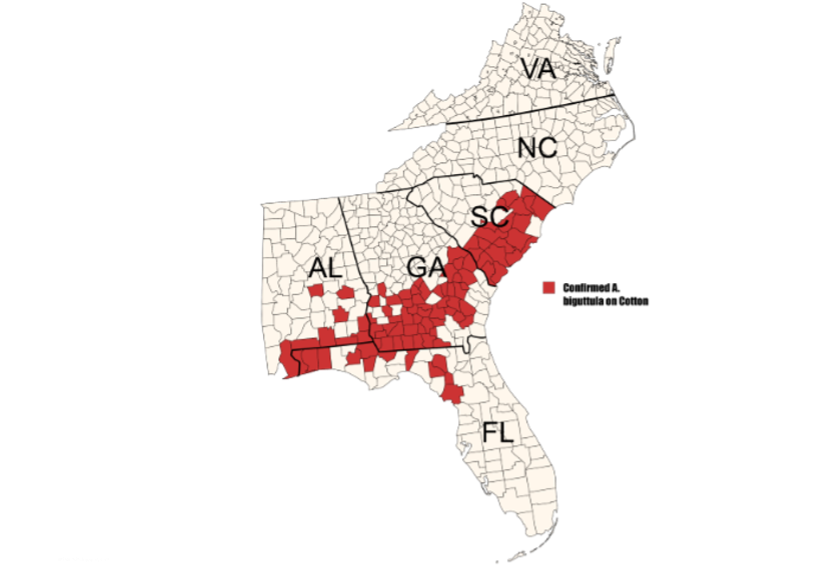
Figure 1. Counties where the cotton jassid has been confirmed in the southeastern United States. Image courtesy of Dr. Isaac L. Esquivel (University of Florida), Dr. Phillip Roberts (University of Georgia), Dr. Scott Graham (Auburn University), and Dr. Jeremy Green (Clemson University).
Two-Spotted Cotton Leafhopper Identification & Injury
Cotton jassids are small, sap-sucking insects that are pale green insects with yellowish-green wings. They can be distinguished from most native North American species by the pair of black spots head and black spots on the tip of each wing (Figure 2). The immature nymph stages are even smaller than the adults; they are wingless but light green in color like the adults. (Figures 3 and 4).
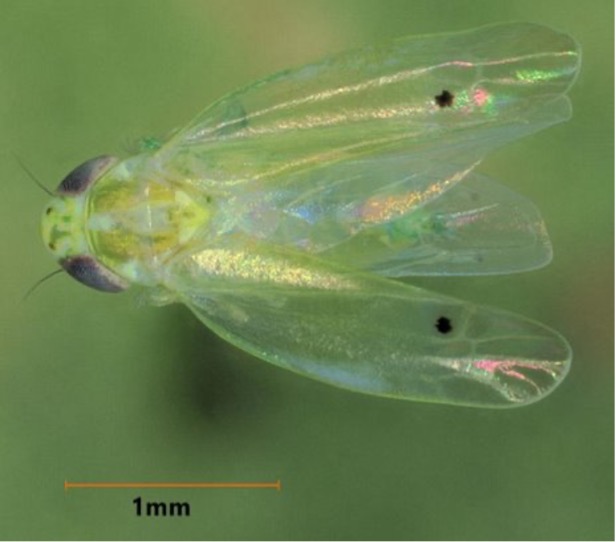
Figure 2. Adult two-spotted cotton leafhopper, also known as cotton jassid. It can be identified by two black spots on the wings and head. Black spots on head can fade as the adult ages. Photo courtesy of Dr. Isaac L. Esquivel, University of Florida Extension.
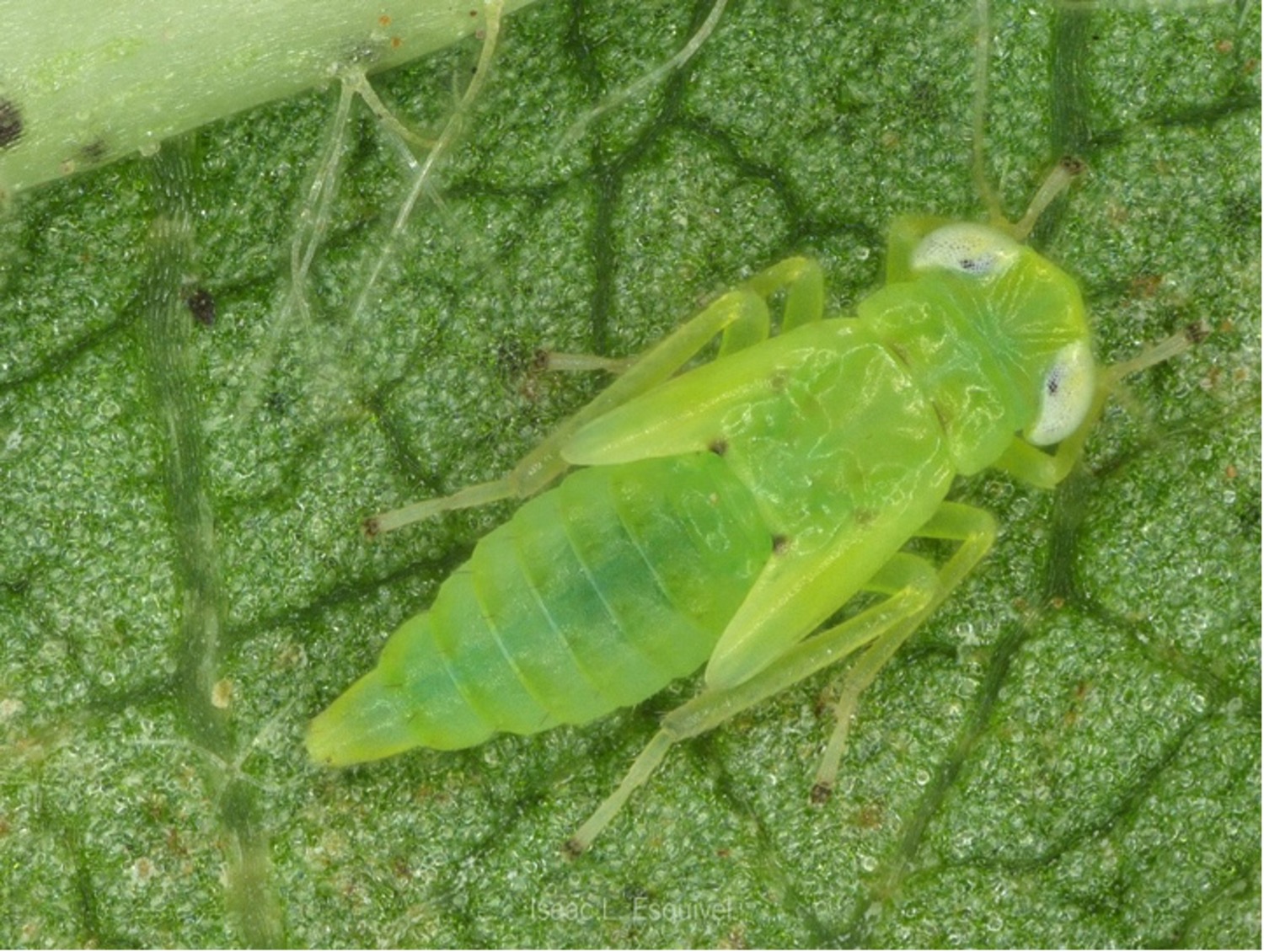
Figure 3. Nymph two-spotted cotton leafhopper (cotton jassid). Photo courtesy of Dr. Isaac L. Esquivel, University of Florida Extension.
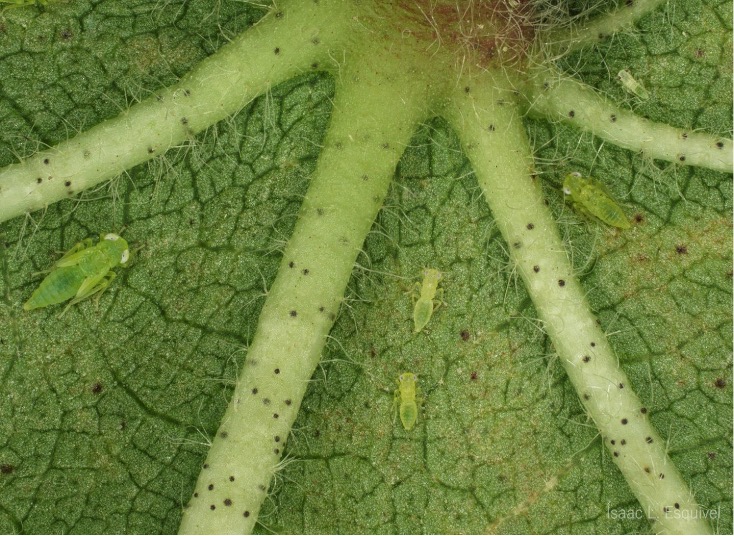
Figure 4. Cotton jassid nymphs on the underside of a leaf. Cotton jassids will progress through several instars before becoming adults. Photo courtesy of Dr. Isaac L. Esquivel, University of Florida Extension.
The cotton jassid feeds on the underside of leaves, causing hopperburn—a rapid yellowing, reddening, and browning that can quickly weaken plants (Figure 5). Initially, injury symptoms may look like nutrient deficiency with slight yellowing along the leaf tips and margins. Injury may also present as upward curling/cupping of the leaves. Once early symptoms are visible, leaves decline rapidly, turning red and brown. Because late-stage hopperburn can resemble a spider mite infestation, growers and consultants should scout for the pest causing injury prior to initiating control. Cotton jassid populations and hopperburn symptoms usually begin on field edges before moving into the cotton field.
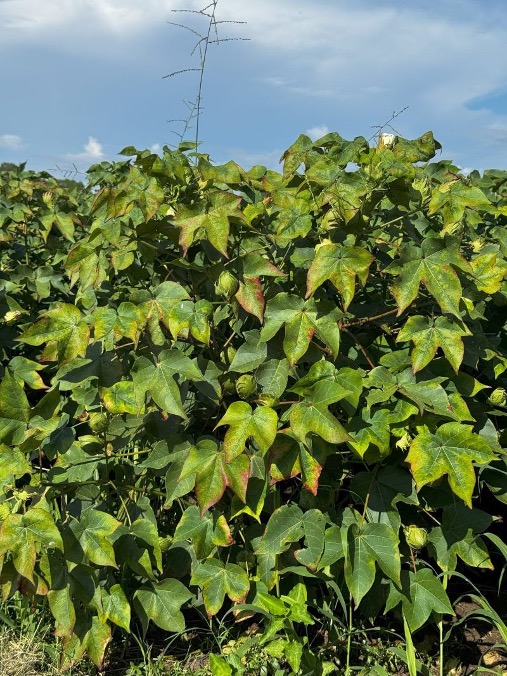
Figure 5. Cotton plants displaying hopperburn. Note the yellowing, reddening, and browning of leaves. Photo courtesy of Dr. Isaac L. Esquivel, University of Florida Extension.
Suggested Threshold, Scouting, and Chemical Control Guidance
Current recommendations for the suggested threshold and chemical control options are based on insecticide trials conducted by University of Florida, University of Georgia, Clemson University, and the University of Auburn Extension Entomologists. The threshold at which treatment is recommended for the cotton jassid is 2 nymphs per leaf with injury present anywhere in the field. To scout, inspect the underside of the main stem leaf on the third, fourth, or fifth node from the top of the cotton plant. Sample a minimum of 25 leaves across plants and average counts across the number of leaves sampled.
In terms of management, multiple products seem to provide good efficacy. Bidrin (6 oz/a) has been consistent in multiple trials across Florida, Georgia, and South Carlina, but may be difficult if whiteflies are an issue. Centric (2 oz/a) and Transform (1.5 oz/a) seem to be consistent as well. One product that should not be used is Bifenthrin, which has proven not to be effective across multiple trials. Information on suggested chemical control options, their efficacy, and general IPM guidance will be forthcoming as more is learned about this pest in U.S. cotton systems.
If you detect the cotton jassid in Oklahoma cotton, please contact IPM for Cotton Extension Specialist Maxwell Smith, Cotton Extension Specialist Dr. Jenny Dudak, or Cropping Systems Extension Entomologist Dr. Ashleigh Faris.