

Protecting your Pecan Crop from Pecan Weevil
For some pecan producers, decisions regarding pecan weevil treatment could be coming within the next couple of weeks. Most of the pecan trees at the CVRS (Cimarron Valley Research Station), Perkins, OK are still in the water stage (Fig. 1), however, early maturing cultivars such as “Peruque” are transitioning into gel stage, with later maturing cultivars soon to follow.
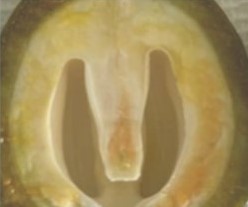
Figure 1a. Water, Gel, and Dough stage pecan development. Photo: OSU.
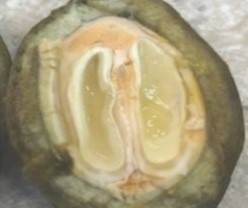
Figure 1b. Water, Gel, and Dough stage pecan development. Photo: OSU.
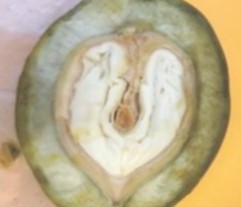
Figure 1c. Water, Gel, and Dough stage pecan development. Photo: OSU.
Our concern as far as Pecan Weevil damage is preventing female weevils from laying eggs (oviposition) in nuts and this generally does not happen until late gel to early dough formation (Fig. 2) mid to late August.
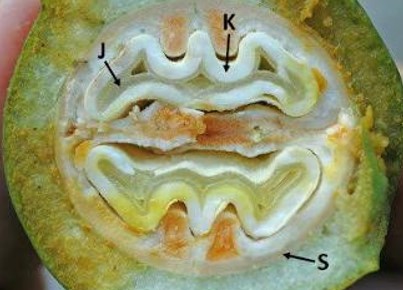
Figure 2. Photo: Northern Pecans. The arrow marked “K” denotes a newly formed kernel (starting dough stage). The white color indicates what the kernel will look like as the liquid absorbs back into the tree and continues to develop.
Inside the white kernel layer is a translucent later marked “J”. This is kernel tissue not fully developed into the solid state. This is the origin of the gel stage.
Often times, it is difficult to anticipate the timing of spray applications if monitoring traps are not deployed early enough or if crop maturity is not carefully examined. This is why we recommend getting pecan circle traps out early (late July) and monitoring crop development, making that first application when kernel formation (dough stage) has been reached.
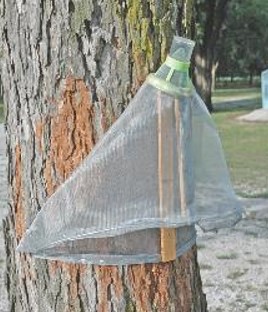 Figure 3. Pecan Circle Trap. Photo: Pecan South.
After the initial application, subsequent applications may be required based on previous year’s management and may take place in 5–7-day increments depending on label recommendations, however, growers can use trap captures (in Circle traps) (Fig 3) to dictate those latter applications based on continued emergence.
Female weevils are not known for oviposition after shuck split. Drought can delay pecan weevil emergence and crop development, including shuck split.
These delays can push back weevil timing later in the season. Therefore, continued monitoring is needed until reaching this crop stage.
So, what is the point of looking at nut maturity in making a decision about pecan weevil treatment?
Once the weevils begin emerging (generally following a heavy rainfall event) female weevils may test the pecans by feeding punctures; however, nuts fed on during the water stage will likely abort and fall from the tree. Widespread egg laying will not occur at this time.
The first application of an insecticide will be needed when the kernel starts the dough formation. The transition from gel to dough happens quickly. So, frequent monitoring (every 3 days) is recommended. During initial dough formation, some soft gel-like tissue can still be found within the kernel sack. Any subsequent applications for weevil should be based on trap captures.
We recommend two Circle traps per tree on 10 trees within a given range of cultivars (based on similar maturities). After the initial application, take trap tops off for a period of 5-7 days, allowing weevils that have been hit by the insecticide sufficient time to die. Next, place the trap tops back on and begin monitoring daily if possible.
For commercial growers, some form of pyrethroid (e.g. Lambda-cyhalothrin, bifenthrin, or zeta-cypermethrin) are the least expensive and most effective insecticides available for weevil control.
For homeowners, various products can be used and found at local home and garden centers. During hot and dry periods for weevil control aphid flare-ups can occur. If aphid populations are on the rise growers should consider tank mixing an aphicide with the weevil insecticide. There are several effective products available currently, and all have a different mode of action, so do not choose the same one each time. These products include Closer®, Carbine®, Movento®, PQZ®, Fulfill®, etc. This rotation can help with preventing insecticide resistance issues later.
One available organic product for weevils, called Grandevo® has proven efficacious in Georgia; however, the lowest effective rate on the label for weevils is 2lbs/acre which currently would cost about $50 per acre per application.
Because of the comparison to the much less expensive pyrethroids (about $2.00 per acre), this product has very little appeal for commercial growers.
More information on control options for Pecan Weevil can be found in CR 6209, Commercial Pecan Insects and Disease Control.