

Plant Health Update, May 2025 Summary
This year, we had an extended period of rainy weather with moderate temperatures (50-85F). These conditions are highly favorable for leaf spot diseases, and we have seen an increase in sample volume of plants with leaf spot problems (Figure 1).
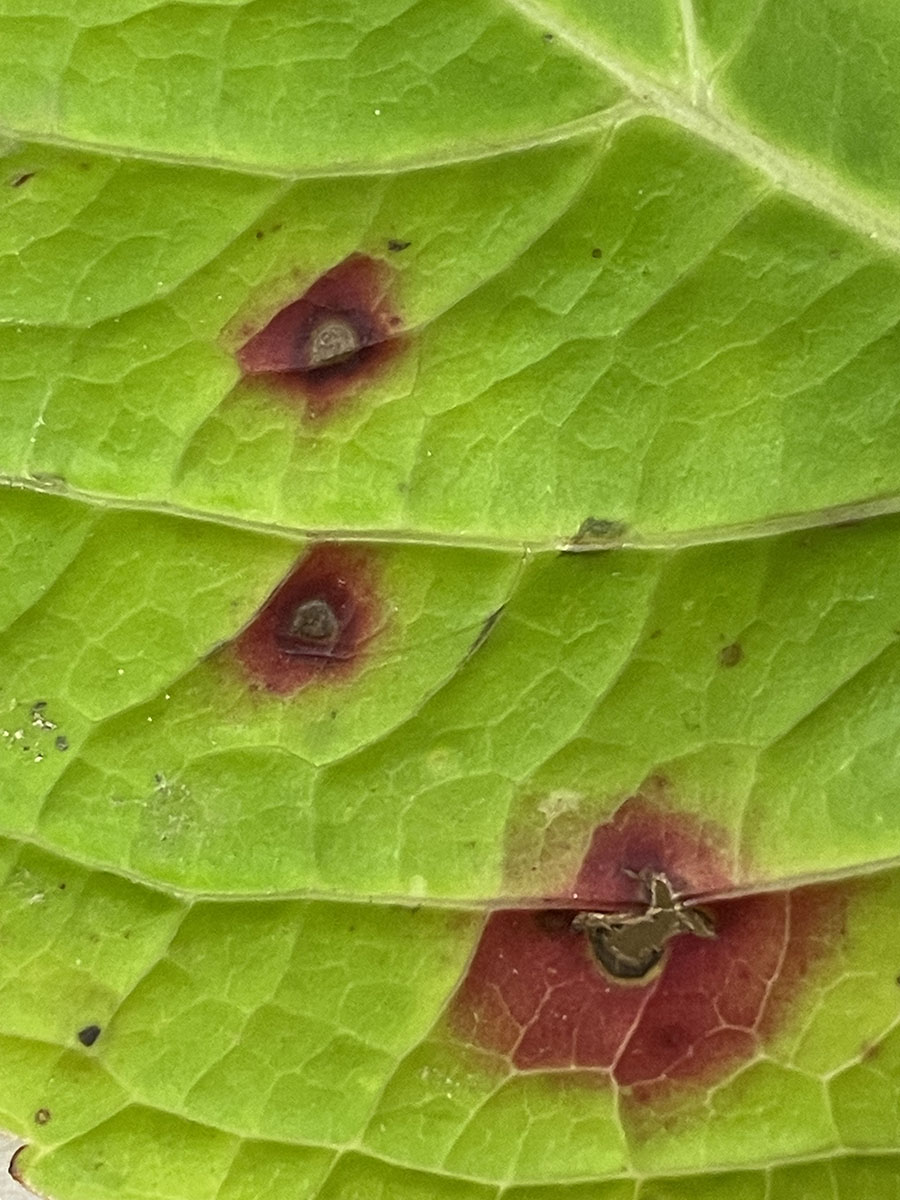
Figure 1. Close-up of a hydrangea with a fungal leaf spot disease. Photo by Holly Dobbs, Rogers County Extension.
Leaf spot diseases may be serious in years with rainy spring weather, but are minor in years with less rain or warmer temperatures. Leaf spot diseases are best managed with a combination of cultural and chemical strategies which are outlined below.
- Select plants that have resistance to leaf spot diseases.
- Follow planting guidelines and ensure that plants are properly spaced. Overcrowded plants are more likely to develop leaf spot problems.
- Ensure that plants have good air circulation. Prune plants to reduce crowding, as needed.
- Remove spotted leaves and discard them in the trash.
- Avoid overhead irrigation (sprinklers). When providing supplemental water, direct the water at the roots.
- Use proper fertility. Plants that are over fertilized with nitrogen are more likely to develop leaf spot diseases.
- Apply fungicides, if desired. When using fungicides, it is best to apply them when the disease level is low. The products will not cure leaves once they are already blemished. There are both organic and conventional fungicides for leaf spot diseases. Review and follow the label when mixing and applying chemicals.
- If disease levels are high, consider replacing the plant with one that has increased resistance to the disease or another type of plant.
A summary of plant health problems from Oklahoma specialty crop growers (horticultural crops) is provided in Table 1. The volume of samples submitted to the lab has increased with the warmer weather.
Table 1. Summary of samples and diagnostic results for May 2025 from Oklahoma Specialty Crop Growers.
| Number | Host | County | Diagnosis/Identification | DD | M | S | C | N | MD | DS | RS | O |
|---|---|---|---|---|---|---|---|---|---|---|---|---|
| 1 | Boxwood | Cherokee | Environmental/cultural problem | X | X | X | X | |||||
| 2 | Falsecypress | Cherokee | Phytophthora blight | X | X | X | X | |||||
| 3 | Fruit | Payne | Canker fungi and Pythium irregular | X | X | X | X | |||||
| 4 | Geranium | Payne | False rust (Synchytrium sp.) | X | X | X | ||||||
| 5 | Italian Cypress | Garfield | Environmental stress, Opportunistic Fungi | X | X | X | X | |||||
| 6 | Japanese Maple | Cherokee | Canker-Botryosphaeria seriata | X | X | X | X | |||||
| 7 | Japanese Yew | Oklahoma | Branch decline | X | X | X | X | |||||
| 8 | Magnolia | Alfalfa | Environmental stress | X | ||||||||
| 9 | Oak | Oklahoma | Oak anthracnose, scales | X | X | X | X | |||||
| 10 | Pecan | Tulsa | Pecan bunch disease | X | X | X | ||||||
| 11 | Pecan | Tulsa | Phytoplasma not detected | X | X | X | ||||||
| 12 | Pecan | Tulsa | Phytoplasma disease | X | X | X | ||||||
| 13 | Pecan | Tulsa | Phytoplasma not detected | X | X | X | ||||||
| 14 | Pecan | Tulsa | Pecan bunch disease | X | X | X | ||||||
| 15 | Viburnum | Cherokee | Botryosphaeria canker | X | X | X | X |
| Number | Host | County | Diagnosis/Identification | DD | M | S | C | N | MD | DS | RS | O |
|---|---|---|---|---|---|---|---|---|---|---|---|---|
| 1 | African Violet | Carter | White flies | X | ||||||||
| 2 | Apple | Okfuskee | Branch dieback, unidentified cause | X | ||||||||
| 3 | Apple | Ottawa | Fire blight | X | ||||||||
| 4 | Apple | Craig | Fire blight, Frog eye spot | X | ||||||||
| 5 | Apple | Woods | Rust, Sapsucker injury, Schizophyllum commune | X | ||||||||
| 6 | Apricot | Pottawatomie | Mechanical damage suspected | X | ||||||||
| 7 | Arborvitae | Oklahoma | Wound canker, Environmental stress | X | ||||||||
| 8 | Ash | Oklahoma | Blackheaded ash sawfly (Tethida barda) | X | ||||||||
| 9 | Ash | Garfield | Ash rust, Puccinia sp. | X | ||||||||
| 10 | Bald cypress | Carter | Environmental/cultural problem | X | ||||||||
| 11 | Barberry | Cherokee | Rhizoctonia root and stem rot | X | X | X | ||||||
| 12 | Bermudagrass | Texas | Environmental stress | X | ||||||||
| 13 | Bermudagrass | Oklahoma | Environmental/cultural problem | X | ||||||||
| 14 | Bermudagrass | Blaine | Winterkill, Animal urine damage | X | ||||||||
| 15 | Black raspberry | Payne | Cultural problem | X | X | X | X | |||||
| 16 | Blackberry | Grady | Leaf spot fungus (transferred to researcher) | X | X | X | X | |||||
| 17 | Burning bush | Cleveland | Nutritional deficiency | X | ||||||||
| 18 | Cantaloupe | Wagoner | Suspected for bacterial fruit blotch | X | X | X | X | |||||
| 19 | Chocolate Daisy | Carter | Spider mites | X | ||||||||
| 20 | Coneflower | n/a | Aster yellows suspected | X | ||||||||
| 21 | Crape myrtle | Oklahoma | Herbicide injury | X | X | |||||||
| 22 | Cypress | Oklahoma | Seiridium canker | X | ||||||||
| 23 | Cypress | Blaine | Seiridium canker suspected | X | ||||||||
| 24 | Cypress | Oklahoma | Seiridium canker suspected | X | ||||||||
| 25 | Dahlia | Logan | Environmental stress, Opportunistic Fungi | X | X | |||||||
| 26 | Daylily | Cherokee | Distortion-suspected cold temperatures | X | ||||||||
| 27 | Dianthus | Cleveland | Two-spotted spider mites | X | ||||||||
| 28 | Eastern red cedar | Rogers | Branch dieback, wound injury suspected | X | ||||||||
| 29 | Elm | Cleveland | Dutch elm disease | X | X | |||||||
| 30 | Elm | Oklahoma | Dutch elm disease | X | X | |||||||
| 31 | Elm | Oklahoma | Leaf spot-Botryosphaeria | X | X | X | X | |||||
| 32 | Elm | Canadian | Native elm wilt-Dothiorella | X | X | X | X | |||||
| 33 | Forsythia | Ottawa | Fungal root rot suspected | X | ||||||||
| 34 | Fruit | Payne | No pathogen found | X | X | X | X | |||||
| 35 | Fruit | Payne | Canker fungus, first report | X | X | X | X | |||||
| 36 | Fruit | Payne | Canker fungus, first report | X | X | X | X | |||||
| 37 | Fruit | Payne | Canker fungus, first report | X | X | X | X | |||||
| 38 | Fruit | Payne | Spider mites and thrips damage | X | ||||||||
| 39 | Fruit | Payne | Canker, root rot-Pythium | X | X | X | X | |||||
| 40 | Fruit | Payne | Spider mites and thrips damage | X | X | X | ||||||
| 41 | Fruit | Payne | Fusarium root rot | X | X | X | X | |||||
| 42 | Fruit | Payne | Phomopsis canker | X | X | X | X | |||||
| 43 | Fruit | Payne | Botryosphaeria canker | X | X | X | X | |||||
| 44 | Fruit | Grady | Leaf spot (Didymella) | X | X | X | X | |||||
| 45 | Garden | Roger Mills | Root knot nematodes | X | X | |||||||
| 46 | Garden | Roger Mills | Nematode problem not found | X | X | |||||||
| 47 | Garden | Roger Mills | Root knot nematodes | X | ||||||||
| 48 | Garden | Payne | Weevil/Billbug (Sphenophorus sp.) | X | X | X | ||||||
| 49 | Garden | Pontotoc | Slime mold | X | ||||||||
| 50 | Grape | Oklahoma | Dark flower scarab beetle | X | ||||||||
| 51 | Grape | Grady | Black rot | X | ||||||||
| 52 | Green bean | Blaine | Insect damage suspected | X | ||||||||
| 53 | Hackberry | Logan | Petiole gall, Herbicide injury | X | ||||||||
| 54 | Hackberry | Canadian | Petiole and nipple galls, Borers | X | X | X | X | |||||
| 55 | Holly | Cleveland | Mulberry whitefly | X | ||||||||
| 56 | Holly | Cleveland | Armored scales | X | ||||||||
| 57 | Hosta | Oklahoma | Cultural problem | X | X | X | ||||||
| 58 | Hydrangea | Cherokee | Bacterial leaf spot-Xanthomonas | X | ||||||||
| 59 | Hydrangea | Garfield | Herbicide injury | X | ||||||||
| 60 | Juniper | Jackson | Seiridium canker | X | X | X | X | |||||
| 61 | Juniper | Beaver | Environmental stress | X | ||||||||
| 62 | Landscape and garden | Garfield | Herbicide injury | X | ||||||||
| 63 | Loblolly pine | Oklahoma | Dothistroma needle blight, insect damage | X | X | X | X | X | ||||
| 64 | Magnolia | Oklahoma | Environmental stress, Opportunistic Fungi | X | X | |||||||
| 65 | Magnolia | Alfalfa | Environmental stress | X | ||||||||
| 66 | Magnolia | Garfield | Environmental stress | X | ||||||||
| 67 | Mahonia | Garfield | Herbicide injury | X | ||||||||
| 68 | Maple | Payne | Root or trunk fungus suspected | X | X | X | ||||||
| 69 | Oak | Oklahoma | Canker fungi (Cytospora, Dothiorella, Diplodia) | X | X | X | X | |||||
| 70 | Oak | Stephens | Bacterial wood | X | ||||||||
| 71 | Oak | Payne | Environmental stress, Diatrypella | X | X | X | X | |||||
| 72 | Oak | Stephens | Environmental stress | X | ||||||||
| 73 | Oak | Oklahoma | Fuscoporia sp. | X | X | X |
| Number | Host | County | Diagnosis/Identification | DD | M | S | C | N | MD | DS | RS | O |
|---|---|---|---|---|---|---|---|---|---|---|---|---|
| 74 | Oak | Pontotoc | Oak anthracnose | X | ||||||||
| 75 | Oak | Pontotoc | Sapsucker damage, Branch dieback | X | ||||||||
| 76 | Oak | Payne | Root injury, Phytophthora root rot suspected | X | ||||||||
| 77 | Oak | Oklahoma | Iron chlorosis | X | ||||||||
| 78 | Oak | Mayes | Bot canker; Wood decal fungus (Order Xylariales) | X | X | X | ||||||
| 79 | Oak | Logan | Kermes scale | X | ||||||||
| 80 | Oak | Seminole | Branch dieback, lichens | X | ||||||||
| 81 | Oak | Jackson | Iron chlorosis | X | ||||||||
| 82 | Oak | Creek | Oak decline | X | ||||||||
| 83 | Oak | Oklahoma | Ganoderma root rot suspected | X | ||||||||
| 84 | Oak | Beaver | Environmental stress | X | ||||||||
| 85 | Panicle Hydrangea | Oklahoma | Suspected cold temperature injury | X | X | |||||||
| 86 | Peach | Murray | Insect and mechanical damage | X | ||||||||
| 87 | Peach | Pontotoc | Bacterial leaf spot | X | ||||||||
| 88 | Peach | Pontotoc | Suspected white spring moth | X | ||||||||
| 89 | Peach | Okfuskee | Shot hole, Insect damage | X | ||||||||
| 90 | Peach | Le Flore | Insect damage | X | ||||||||
| 91 | Pear | Grady | Slime mold | X | ||||||||
| 92 | Pear | Cherokee | Canker disease (Various fungi) | X | X | X | X | X | ||||
| 93 | Pecan | Marshall | Decline (Diaporthe sp.) | X | X | X | X | |||||
| 94 | Pecan | Marshall | Fusarium root rot | X | X | X | X | |||||
| 95 | Pecan | Marshall | Fusarium and Pythium root rots | X | X | X | X | |||||
| 96 | Pecan | Marshall | No plant parasitic nematodes | X | X | |||||||
| 97 | Pecan | Marshall | Decline (Diaporthe sp.) | X | X | X | X | |||||
| 98 | Peony | Cleveland | Nutritional deficiency | X | X | |||||||
| 99 | Peony | Cleveland | Nutritional deficiency | X | X | |||||||
| 100 | Peony | Cleveland | Nutritional deficiency | X | X | |||||||
| 101 | Peony | Cleveland | Nutritional deficiency | X | X | |||||||
| 102 | Peony | Cleveland | Nutritional deficiency | X | X | |||||||
| 103 | Phlox | Garfield | Mechanical injury | X | ||||||||
| 104 | Pin oak | Payne | Phlebiopsis sp. (P. crassa suspected) | X | X | X | ||||||
| 105 | Pin Oak | Payne | Hypoxylon (Biscogniauxia) canker | X | X | X | X | |||||
| 106 | Pine | Pontotoc | Diplodia tip blight, Sapsucker damage | X | ||||||||
| 107 | Pine | Beaver | Environmental stress, root problem suspected | X | ||||||||
| 108 | Pine | Beaver | Diplodia tip blight | X | ||||||||
| 109 | Plant Identification | Stephens | Vetch | X | ||||||||
| 110 | Potato | Pontotoc | Early blight suspected | X | ||||||||
| 111 | Red oak | Mayes | Lecanium scale, Leaf miner, Stress | X | ||||||||
| 112 | Redbud | Pottawatomie | Environmental stress | X | ||||||||
| 113 | Redbud | Grady | Cercospora leaf spot suspected | X | ||||||||
| 114 | Rose | Tulsa | Rose rosette disease | X | X | |||||||
| 115 | Rose | Tulsa | Rose rosette disease | X | X | |||||||
| 116 | Rose | Payne | Cane borer | X | ||||||||
| 117 | Rudbeckia | n/a | Septoria leaf spot suspected | X | ||||||||
| 118 | Sedum | Logan | Leaf spot-Septoria suspected | X | ||||||||
| 119 | Shasta daisy | Logan | Environmental stress | X | ||||||||
| 120 | Spruce | Oklahoma | Branch dieback (unidentified agent) | X | ||||||||
| 121 | Strawberry | Tulsa | Rhizoctonia crown rot, Charcoal rot | X | X | X | X | |||||
| 122 | Strawberry | Tulsa | Pythium root rot | X | X | X | X | X | ||||
| 123 | Sweet gum | Lincoln | Decline-Botryosphaeria dothidea, Peniophora sp. | X | X | X | ||||||
| 124 | Sycamore | Payne | Sycamore anthracnose | X | ||||||||
| 125 | Sycamore | Major | Sycamore anthracnose | X | ||||||||
| 126 | Sycamore | n/a | Cladoptosis, surface roots | X | ||||||||
| 127 | Sycamore | Garfield | Environmental stress | X | ||||||||
| 128 | Sycamore | Garfield | Cladoptosis, environmental stress | X | ||||||||
| 129 | Sycamore | Payne | Phomopsis canker | X | X | X | X | |||||
| 130 | Sycamore | Wagoner | Herbicide injury | X | ||||||||
| 131 | Sycamore | Grady | Sycamore anthracnose | X | ||||||||
| 132 | Tomato | Ottawa | Cutworms suspected | X | ||||||||
| 133 | Tomato | Stephens | Spider mites, herbicide injury | X | ||||||||
| 134 | Tomato | Craig | Herbicide injury | X | ||||||||
| 135 | Tomato | Garfield | Thrips, Herbicide injury | X | X | |||||||
| 136 | Tomato | n/a | Nutrient deficiency suspected | X | ||||||||
| 137 | Tomato, Pumpkin | n/a | Edema, cultural problem | X | ||||||||
| 138 | Tree | Blaine | Bark loss, undetermined cause | X | ||||||||
| 139 | Variegated liriope | Cherokee | Fusarium crown rot | X | X | X | X | |||||
| 140 | Verbena | Cleveland | Spider mites, Thrips | X | ||||||||
| 141 | Virginia pine | Tulsa | Needle blight (Mycosphaerella) | X | X | X | X | |||||
| 142 | Weed ID-turf | Major | Field bindweed | X | ||||||||
| 143 | Weeping Alaska cypress | Payne | Seiridium canker | X | X | |||||||
| 144 | White gaura | Payne | Fasciation (abiotic); Leaf spot | X | X | |||||||
| 145 | Wisteria | Craig | Aphids | X | ||||||||
| 146 | Zucchini | Stephens | Herbicide injury | X |
| Key | Diagnostics Method |
|---|---|
| DD | Digital Diagnosis |
| M | Microscopy |
| S | Serological tests |
| C | Culture analysis |
| N | Nematode analysis |
| MD | Molecular diagnostic methods |
| DS | DNA sequencing |
| RS | Referral to specialist |
| O | Other diagnostic tests |
Fire blight has been a significant problem this spring and symptoms may be present on apples, pears and related hosts. For information about fire blight, review this newsletter article.
At this time of the year, fire blight is managed by removing blighted shoots. It is best to cut at least 12 inches into healthy wood to remove the pathogen. After each cut, clean hand pruning tools with a disinfectant (ie. Lysol spray, 10% household bleach solution). Pruning for the purpose of removing diseased plant tissue can be done at any time of the year, but it is best to prune when the plant is dry and dry weather is expected for a few days.
In some cases, fire blight can be difficult to remove by pruning. In Figure 2, fire blight has killed the branch on the left side of the pear tree. The limb should be removed by pruning as soon as possible, but the bacteria may have already infected the trunk. This tree is in my own landscape, and the limb has now been removed. The best approach is to “wait and see” if my pruning effort is successful. The tree will likely decline over the next few years. In preparation, I am shopping for a new fruit tree to install in another area of the landscape this fall. (One that is resistant to fire blight.)
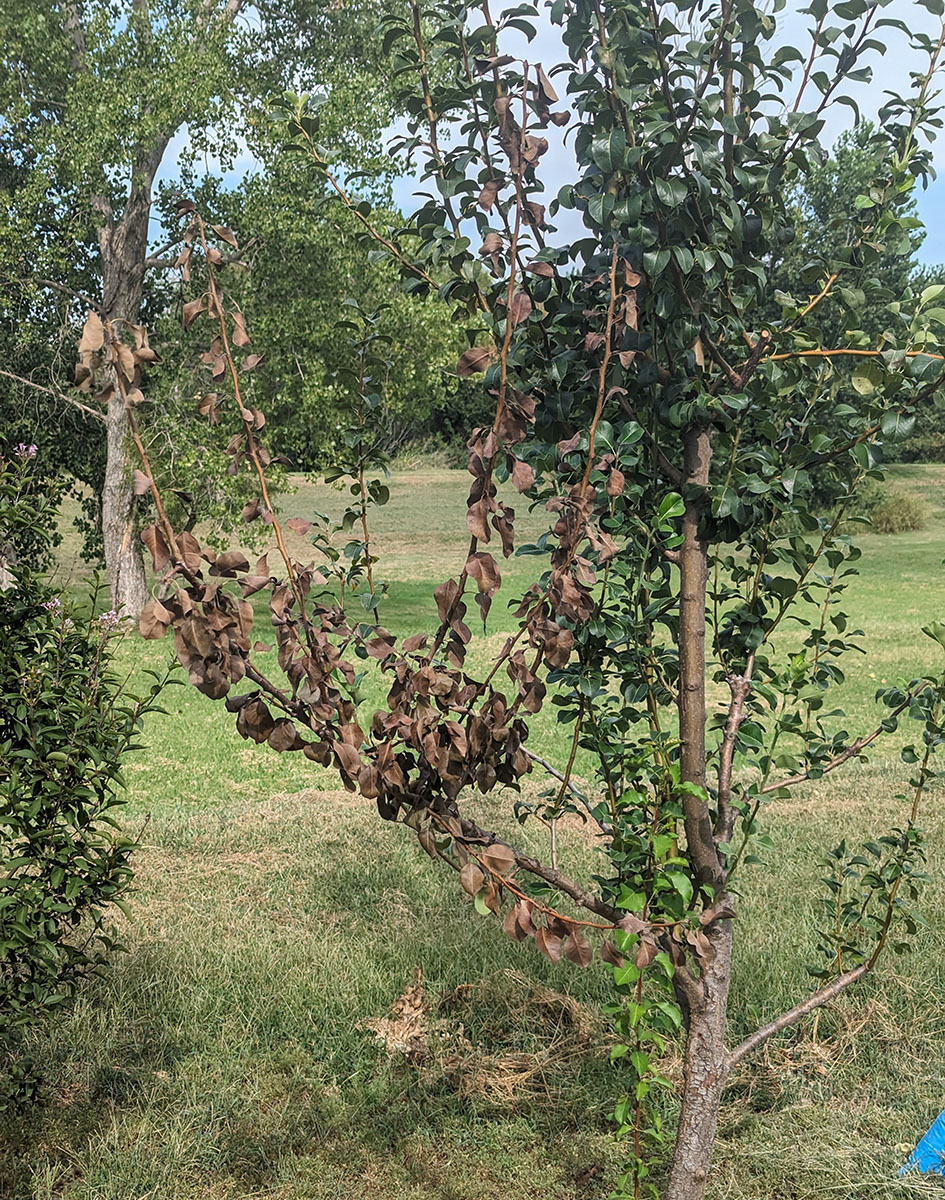
Figure 2. Fire blight, a bacterial disease, has caused the limb on the left side of this pear tree to die.
Look for additional plant health updates from the PDIDL throughout 2025. If you have suggestions for future topics, please contact jen.olson@okstate.edu or call the PDIDL at (405) 744-9961.