

Plant Health Update, March 2025
Each month, the Plant Disease and Insect Diagnostic Laboratory (PDIDL) provides a summary of plant health problems from Oklahoma specialty crop growers (horticultural crops). The volume of samples submitted to the lab has increased with the warmer weather. A summary of sample submissions is shown in Table 1.
| Submit Date | Host | County | Identification Method | Diagnosis/Identification |
|---|---|---|---|---|
| 2/26/2025 | Red Oaks | Oklahoma | Microscopy, Culture analysis, DNA PCR test, sequencing | Canker (Lasiodiplodia, Cytospora) |
| 2/27/2025 | Japanese Maple | Cherokee | Microscopy, Specialist consultation | Animal damage, possibly rabbits |
| 2/27/2025 | Holly | Cherokee | Microscopy, Culture analysis, DNA PCR test, sequencing | Edema, low transpiration |
| 3/3/2025 | African Violet | Payne | Microcopy | Cold water injury |
| 3/3/2025 | Hops | Payne | Microcopy | Spider mites, Thrips |
| 3/6/2025 | Creeping juniper | Cherokee | Microcopy | Cold temperature injury |
| 3/6/2025 | Spice Bush | Tulsa | Microcopy | Edema, low transpiration |
| 3/7/2025 | Magnolia | Oklahoma | Digital Diagnosis | Environmental stress (drought, cold temperatures) |
| 3/7/2025 | Hackberry | Pontotoc | Digital Diagnosis | Wound canker |
| 3/7/2025 | Oak | Ottawa | Digital diagnosis | Horned oak gall wasp |
| 3/7/2025 | Turfgrass | Oklahoma | Digital diagnosis | Environmental stress |
| 3/7/2025 | Boxwood | Delaware | Digital Diagnosis | Trunk girdling suspected |
| 3/7/2025 | Juniper | Delaware | Digital Diagnosis | Branch girdling suspected |
| 3/7/2025 | Boxwood | Delaware | Digital Diagnosis | Fungal branch canker and dieback suspected |
| 3/7/2025 | Parlor Palm | Payne | Microcopy | Nutritional deficiency suspected |
| 3/10/2025 | Osage Orange | Muskogee | Digital Diagnosis | Plant identification |
| 3/10/2025 | Arborvitae | not provided | Digital Diagnosis | Environmental stress |
| 3/11/2025 | Austrian Pine | Stephens | Digital Diagnosis | Environmental stress and Engraver beetles suspected |
| 3/11/2025 | Crape Myrtle | Stephens | Digital Diagnosis | Crape myrtle bark scale |
| 3/11/2025 | Fern | Pontotoc | Digital Diagnosis | Normal-reproductive spores |
| 3/11/2025 | Cherry laurel | Pontotoc | Digital Diagnosis | Cold injury and leaf spot |
| 3/11/2025 | Camellia | Pontotoc | Digital Diagnosis | Cold injury |
| 3/11/2025 | Elm | Murray | Digital Diagnosis | Environmental stress and Hypoxylon canker suspected |
| 3/11/2025 | House plants | Payne | Digital Diagnosis | Fungus gnats suspected |
| 3/11/2025 | Tomatoes, Peppers | Not provided | Digital Diagnosis | Insufficient light, inadequate irrigation |
| 3/11/2025 | Peach | Oklahoma | Digital Diagnosis | Brown rot |
| 3/12/2025 | Holly | Cherokee | Microcopy | Environmental stress (cold?) |
| 3/13/2025 | Landscape and garden | Payne | Visual examination, microscopy | Variegated cutworm |
| 3/13/2025 | Juniper | Rogers | Visual examination, microscopy | Armored scale, likely Juniper scale |
| 3/13/2025 | Greenhouse | Payne | Digital Diagnosis | Western leaf-footed bug |
| 3/13/2025 | Zoysia Grass | Muskogee | Digital Diagnosis | Environmental/cultural problems |
| 3/19/2025 | Home and garden | Oklahoma | Visual examination | Corklid trapdoor spider |
| 3/21/2025 | Zelkova | Payne | European fruit Lecanium (Parthenolecanium corni) | Lecanium scales, Twig blight (Diaporthe sp.) |
| 3/21/2025 | Zelkova | Payne | Microscopy, culture analysis, DNA PCR test, sequencing | Dothiorella canker |
| 3/21/2025 | Zelkova | Payne | Microscopy, culture analysis, DNA PCR test, sequencing | Environmental stress |
| 3/24/2025 | Pine | Not provided | Environmental stress; Problem (Abiotic disorder) | Environmental stress, Insect damage |
| 3/24/2025 | River Birch | Oklahoma | Digital diagnosis | Fusicolla merismoides |
| 3/25/2025 | Southern Magnolia | Pottawatomie | Digital diagnosis | Environmental stress, secondary mold |
| 3/25/2025 | Pine | Oklahoma | Digital diagnosis | Drought stress damage |
| 3/25/2025 | Eastern Red cedar | Oklahoma | Digital diagnosis | Environmental stress |
| 3/25/2025 | Arugula | Payne | Microscopy, Culture analysis, Virus testing, DNA PCR test, Sequencing | Insect damage suspected |
| 3/25/2025 | Arugula | Payne | Microscopy, Culture analysis, Virus testing, DNA PCR test, Sequencing | Insect damage suspected |
| 3/25/2025 | Mixed vegetables | Payne | Microscopy | Cabbage curculio, Cabbage flea beetle |
| 3/26/2025 | Home garden | not provided | Digital Diagnosis | Mason bee |
| 3/26/2025 | Eastern Red cedar | Tulsa | Digital Diagnosis | Drought stress, suspected root problems |
| 3/27/2025 | Daffodil | Payne | Virus tests-serological, molecular, sequencing | Cucumber mosaic and Tobacco ringspot viruses |
| 3/28/2025 | Loblolly Pine | Oklahoma | Digital diagnosis | Drought stress suspected |
| 3/28/2025 | Boxwood | Washita | Digital diagnosis | Environmental stress |
| 3/28/2025 | Decidious tree | Cleveland | Digital diagnosis | Secondary fungus on bark |
| 3/28/2025 | Lilyturf; Bordergrass | Cherokee | Microscopy, Culture analysis, DNA PCR test, sequencing | Mechanical injury, nutritional deficiency |
| 3/31/2025 | Pine | not provided | Digital Diagnosis | Winter injury (cold, drought) |
| 3/28/2025 | Loblolly Pine | Washington | Digital diagnosis | Environmental stress |
| 3/31/2025 | Japanese Maple | Creek | Digital diagnosis | Branch canker, unidentified cause |
| 3/27/2025 | Allium; Onions; leeks; garlic | Payne | Virus tests-serological, molecular, sequencing | in progress |
Bold indicates carry over from the previous month, or into the next month's report.
In March, the PDIDL received several image samples of junipers, arborvitae and pines with wilting and/or browning foliage. A few physical specimens were submitted to the lab for examination. The main problem with these evergreens is environmental stress, generally drought from low soil moisture and drying winter winds. Cold temperature injury may also be involved with the needle browning.
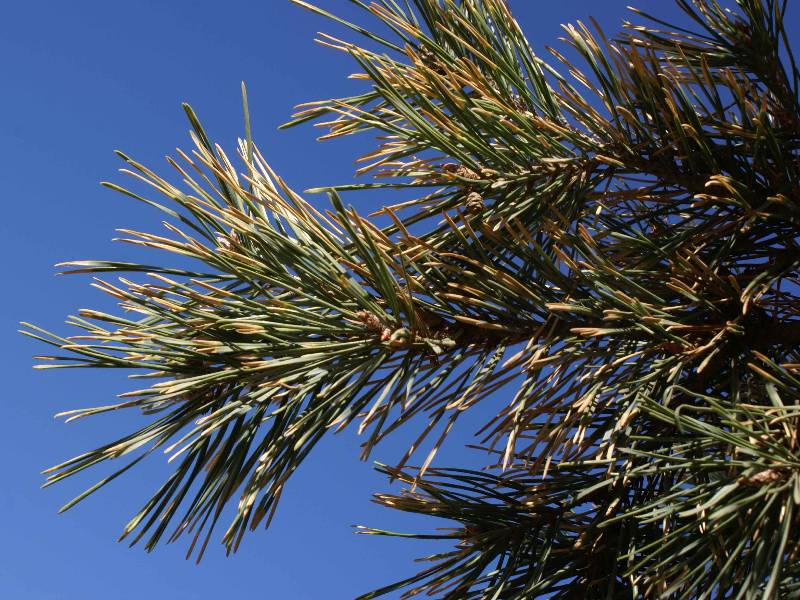
Figure 1. Pine shoot with needle tip browning caused by environmental stress factors (mainly drought and wind).
Of special interest this month was a photo submitted by Arborscapes Tree Service Inc. of a river birch showing an orange slime on the trunk of the tree (Figure 2). Based on the color of the exudate, it is most likely Fusicolla merismoides (previously known as Fusarium merismoides). This fungus, as well as other fungi and yeasts, will colonize sap that is leaking from a tree wound. As it appears to be developing along a long, vertical crack, this tree most likely suffered an injury, perhaps a frost or freeze crack from cold temperatures this winter. Alternatively, it may have occurred last year due to heat, drought, or some other unknown factor.
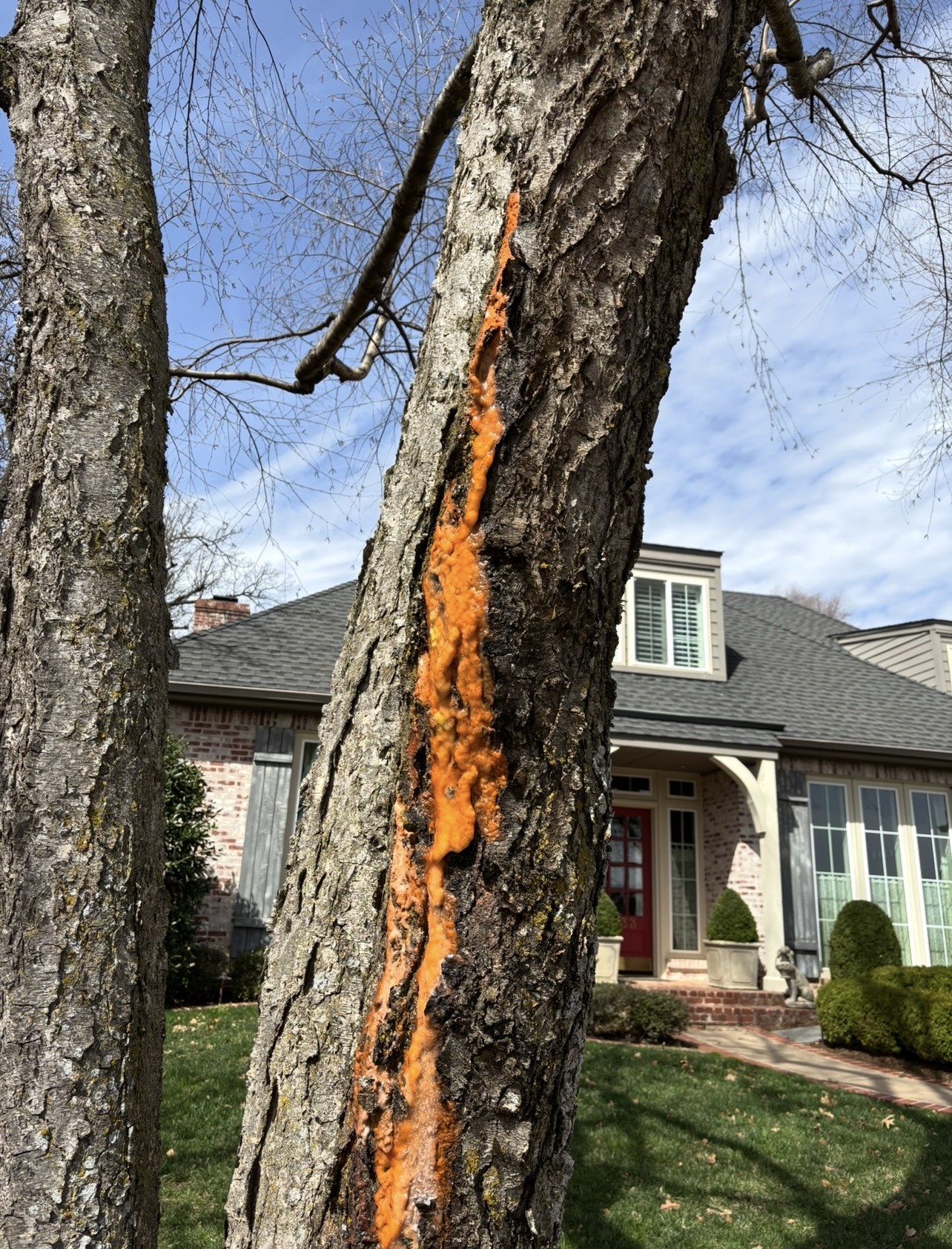
Figure 2. River birch with orange substance on the trunk. Image provided by Arborscapes Tree Services, Inc.
Why is this orange exudate present and is it a problem?
In the spring, tree roots begin actively moving water from the roots to the shoots to support the developing canopy. When there is increased sap-flow, if there is a crack in the trunk, some of the sap may leak from the site. Fungi (such as F. merismoides) can get nutrition from the exudate and will live at the leaking site. Many pathologists believe that this fungus is not harmful to the tree, and it is just colonizing the exudate. Others believe it can act as a weak or opportunistic pathogen. Regardless, the crack in the trunk is the more significant problem. Sometimes, vertical cracks will repair themselves as the tree trunk grows and enlarges (it grows back together). In other situations, tree health is negatively affected, and the crack leads to more significant problems. The suggestion is to provide good plant care, especially irrigation during periods of drought, and follow a "wait and see" approach.
In the PDIDL, we often identify fungi by examining fungal structures with dissecting and compound microscopes. Recently, we used this process to show a graduate student in the OSU Department of Entomology and Plant Pathology, Luana Muller, an interesting phenomenon that one fungus displays under certain conditions. The organism viewed, Phytophthora, produces sporangia, and although these spore structures can germinate directly (like a seed germinates), sometimes the sporangia give rise to motile zoospores. You can see this process in this YouTube Shorts video filmed by Ms. Muller. The sporangia (often lemon shaped) will open at one end, forming a goblet-like structure, and small circular motile spores will leave the structure through the opening. These zoospores move in films of water to initiate new infections in susceptible plants. This is why Phytophthora-diseases are often most severe in heavy, overwatered soils or under damp conditions.
Look for additional plant health updates from the PDIDL throughout 2025. If you have suggestions for future topics, please contact jen.olson@okstate.edu or call the PDIDL at (405) 744-9961.