

Plant Health Update, June 2025
Each year in May and June, many roses develop symptoms of rose rosette disease (Figure 1). This is a widespread problem in Oklahoma, but the disease is found in many areas of the United States. Fact sheet EPP-7329 Rose Rosette Disease thoroughly describes the symptoms, disease cycle and management of the disease.
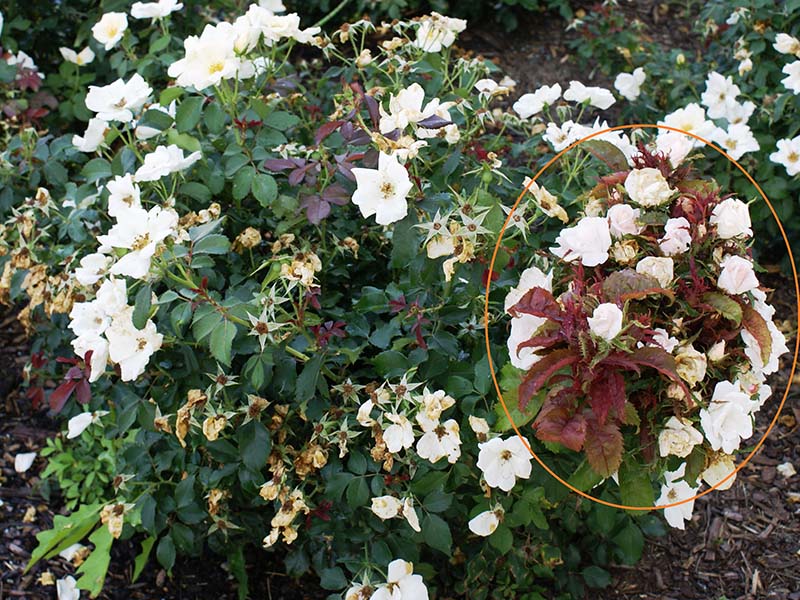
Figure 1. The left side of this rose has normal blooms and leaves. The circled area on the right side is disfigured by rose rosette disease.
Although growers attempt to remove rose rosette symptoms by pruning, this is rarely successful. By the time the symptoms are observed, the rose rosette virus has moved throughout the plant. Symptomatic plant parts may be removed by pruning, but it is not surprising when new growth develops, and it has symptoms of the disease. Even if rose rosette is present in your area, roses add beauty to the landscape and are still suggested as short-term perennials.
Each month, a summary of plant health problems from Oklahoma specialty crop growers (horticultural crops) is provided (Table 1). Sample volume has been high following a rainy spring and rapid transition to hot and drier conditions.
Table 1. Summary of samples and diagnostic results for June 2025 from Oklahoma Specialty Crop Growers.
| Key | Diagnostics Method |
|---|---|
| DD | Digital Diagnosis |
| M | Microscopy |
| S | Serological tests |
| C | Culture analysis |
| N | Nematode analysis |
| MD | Molecular diagnostic methods |
| DS | DNA sequencing |
| RS | Referral to specialist |
| O | Other diagnostic tests |
| Number | Host | County | Diagnosis/Identification | DD | M | S | C | N | MD | DS | RS | O |
|---|---|---|---|---|---|---|---|---|---|---|---|---|
| 1 | American elm | Oklahoma | Canker (Botryosphaeria dothidea) | X | X | X | X | |||||
| 2 | Apple | Choctaw | Environmental injury suspected | X | X | |||||||
| 3 | Apple | Pontotoc | Fire blight, cedar-apple rust | X | ||||||||
| 4 | Apricot | Stephens | Insect damage | X | ||||||||
| 5 | Austrian pine | Cleveland | Pine wilt not found | X | X | |||||||
| 6 | Austrian pine | Cleveland | Pine wilt not found | X | X | |||||||
| 7 | Bermudagrass | Kingfisher | Slime mold | X | ||||||||
| 8 | Bermudagrass | Garfield | Winter kill | X | ||||||||
| 9 | Bermudagrass | n/a | Spring dead spot | X | ||||||||
| 10 | Bermudagrass | Oklahoma | Bipolaris and Curvularia leaf spot | X | X | X | X | |||||
| 11 | Black-jack oak | Oklahoma | Botryosphaeria canker | X | ||||||||
| 12 | Blue atlas cedar | Payne | Environmental stress | X | ||||||||
| 13 | Blue atlas cedar | Payne | Environmental stress | X | ||||||||
| 14 | Boxwood | Cherokee | Environmental problem | X | X | X | X | |||||
| 15 | Boxwood | Cherokee | Colletotrichum leaf spot, anthracnose | x | ||||||||
| 16 | Boxwood | Seminole | Spider mites; Branch dieback | X | ||||||||
| 17 | Cantaloupe | Payne | Alternaria leaf spot | X | ||||||||
| 18 | Cantaloupe | Payne | Rhizoctonia and Pythium root and stem rot | X | X | X | X | |||||
| 19 | Cherry | McClain | Branch canker and dieback | X | ||||||||
| 20 | Chinese juniper | Pottawatomie | Environmental stress | X | X | X | X | |||||
| 21 | Chokeberry | Cherokee | Bacterial blight (Pseudomonas), Botroysphaeria dothidea | X | X | X | X | |||||
| 22 | Crabapple | Oklahoma | Branch canker and dieback | X | X | |||||||
| 23 | Crabapple | Muskogee | Fire blight | X | X | |||||||
| 24 | Crape myrtle | Beaver | Aphids suspected | X | ||||||||
| 25 | Crape Myrtle | Seminole | Environmental stress | X | ||||||||
| 26 | Cucumber | Payne | Spider mites suspected | X | ||||||||
| 27 | Cucumber | Osage | No pest or pathogen found | X | ||||||||
| 28 | Dogwood | Payne | Spider mites | X | ||||||||
| 29 | Eastern red cedar | Rogers | Branch canker and dieback | X | ||||||||
| 30 | Eastern redbud | Stephens | Root or wilt problem | X | ||||||||
| 31 | Elm | Harper | Mushroom, Wood borer damage | X | ||||||||
| 32 | Evergreens | Tulsa | Bagworm control recommendation | X | ||||||||
| 33 | Fescue | Tulsa | Brown patch | X | X | X | X | |||||
| 34 | Fescue | Canadian | No pathogen found | X | X | X | X | |||||
| 35 | Fescue | Tulsa | Brown patch | X | X | X | X | |||||
| 36 | Fescue | Canadian | Pythium blight suspected | X | X | X | X | |||||
| 37 | Fescue | Canadian | Pythium blight | X | X | X | X | |||||
| 38 | Flowering quince | Kiowa | Nutrient deficiency suspected | X | ||||||||
| 39 | Garden | Oklahoma | Fungus gnat | X | ||||||||
| 40 | Grape | Payne | Suspected herbicide injury | X | X | X | ||||||
| 41 | Grape | Texas | Environmental stresses | X | ||||||||
| 42 | Green been | Rogers | Herbicide injury | X | ||||||||
| 43 | Hackberry | Kiowa | Hackberry nipple gall | X | ||||||||
| 44 | Holly | Beckham | Spin spot; Phoma leaf spot | X | X | X | X | |||||
| 45 | Holly | Oklahoma | Botryosphaeria canker | X | X | X | X | |||||
| 46 | Holly | Kiowa | Spine spot, herbicide injury suspected | X | ||||||||
| 47 | Hydrangea | Rogers | Cercospora leaf spot | X | ||||||||
| 48 | Juniper | Tulsa | Transplant shock, injury | X | X | |||||||
| 49 | Lacebark elm | Cleveland | Excessive water | X | ||||||||
| 50 | Lilac | Logan | Insufficient sample | X | ||||||||
| 51 | Magnolia | Garfield | Lichens | X | ||||||||
| 52 | Maple | Oklahoma | Botryosphaeria canker; Sunscald | X | X | X | X | |||||
| 53 | Maple | Wagoner | Sapsucker damage | X | ||||||||
| 54 | Maple | Logan | Iron chorosis | X | ||||||||
| 55 | Mesquite | Jackson | Undetermined injury | X | ||||||||
| 56 | Mexicana squash | Payne | Rhizoctonia root and stem rot | X | X | X | X | |||||
| 57 | Mugo pine | Oklahoma | Diplodia tip blight, Dothistroma needle blight | X | ||||||||
| 58 | Mugo pine | Oklahoma | Dothistroma needle blight | X | ||||||||
| 59 | Mulberry | Beckham | Herbicide injury suspected | X | ||||||||
| 60 | Mulberry | Garfield | Environmental stress | X | ||||||||
| 61 | Mulberry | Oklahoma | Bacterial wetwood | X | ||||||||
| 62 | Oak | Oklahoma | Oak anthracnose | X | ||||||||
| 63 | Oak | Oklahoma | Environmental stress, insect damage | X | ||||||||
| 64 | Oak | Kingfisher | Iron chlorosis | X | ||||||||
| 65 | Oak | Wagoner | Lightning damage suspected | X | ||||||||
| 66 | Oak | Okfuskee | Insect damage suspected | X | ||||||||
| 67 | Oak | Oklahoma | Environmental stress | X | X | |||||||
| 68 | Oak | Oklahoma | Jumping oak gall suspected | X | ||||||||
| 69 | Oak | Oklahoma | Oak anthracnose | X | ||||||||
| 70 | Oak | McClain | Iron chlorosis | X | ||||||||
| 71 | Oak | Oklahoma | Iron chlorosis, branch canker | X | ||||||||
| 72 | Oak | Kiowa | Oak anthracnose, Iron chlorosis | X | ||||||||
| 73 | Oak | Wagoner | Lightning injury suspected | X | ||||||||
| 74 | Oak | Grady | Scales, Wood borer | X | ||||||||
| 75 | Oak | Logan | Iron chorosis | X | ||||||||
| 76 | Peach | Garfield | Bacterial leaf spot, hail damage | X | X | |||||||
| 77 | Pear | Beckham | Iron chorosis | X | X | |||||||
| 78 | Pear | Alfalfa | Pear rust, Wood borer damage, herbicide injury | X | ||||||||
| 79 | Pear | Nowata | Fire blight and Black rot | X | ||||||||
| 80 | Pecan | Lincoln | Pecan stem phylloxera | X | ||||||||
| 81 | Pecan | Payne | Pecan scab | X | X | X | X | |||||
| 82 | Pecan | Payne | Pecan scab | X | X | X | X | |||||
| 83 | Pecan | Payne | Pecan scab | X | X | X | X | |||||
| 84 | Pecan | Payne | Herbicide injury | X | ||||||||
| 85 | Pecan | Stephens | Environmental stresses | X | ||||||||
| 86 | Pecan | Kiowa | Black pecan aphid suspected | X | ||||||||
| 87 | Peony | Muskogee | Bacterial leaf spot-Xanthomonas | X | X | |||||||
| 88 | Pepper | Osage | No pest or pathogen found | X | ||||||||
| 89 | Pine | Stephens | Environmental stress | X | ||||||||
| 90 | Pine | Texas | Environmental stress | X | ||||||||
| 91 | Pine | Payne | Dothistroma needle blight | X | ||||||||
| 92 | Pine | Payne | pH induced pathology, Dothistroma | X | ||||||||
| 93 | Pine | Texas | Nantucket pine tip moth suspected | X | ||||||||
| 94 | Pine | Washita | Woodpecker damage | X | ||||||||
| 95 | Pine | Texas | Transplant shock or root problem | X | ||||||||
| 96 | Plant ID request | Seminole | Oak, white oak group | X | ||||||||
| 97 | Plant ID request | Seminole | Ash | X | ||||||||
| 98 | Post oak | Oklahoma | Botryosphaeria dieback | X | ||||||||
| 99 | Pricklypear | n/a | Cactus bugs, Cochineal scales | X | X | |||||||
| 100 | Privet | Payne | Phomopsis canker, Pythium root rot | X | X | X | X | |||||
| 101 | Redbud | Garfield | Fungal leaf spot | X | ||||||||
| 102 | Redbud | Pottawatomie | No pathogen found, Edema suspected | X | X | X | X | |||||
| 103 | Redbud | Pontotoc | Herbicide injury suspected | X | ||||||||
| 104 | Redbud | Pottawatomie | No pathogen found, Edema suspected | X | X | X | X | |||||
| 105 | River birch | Okfuskee | Nutritional deficiency suspected | X | ||||||||
| 106 | Rocky mountain juniper | Oklahoma | Canker (Diplodia cupressi and Seridium sp.) | X | X | X | X | |||||
| 107 | Rose | Rogers | Botrytis blight | X | ||||||||
| 108 | Rose | Oklahoma | Rose rosette | X | ||||||||
| 109 | Rose | Oklahoma | Rose rosette | X | ||||||||
| 110 | Rose | Washita | Flower balling | X | ||||||||
| 111 | Rose | Garfield | Environmental stress | X | ||||||||
| 112 | Rose | Kiowa | Rose mosaic virus | X | ||||||||
| 113 | Rose of Sharon | Garfield | Environmental stress | X | ||||||||
| 114 | Shumard oak | Oklahoma | Oak anthracnose | X | ||||||||
| 115 | Spaghetti squash | Payne | Fusarium stem and crown rot | X | X | X | X | |||||
| 116 | Spruce | Texas | Mechanical damage | X | ||||||||
| 117 | Squash | Payne | Plectosphaerella blight, Fusarium root/crown rot | X | X | X | X | |||||
| 118 | Squash | Pontotoc | Leaf spot (unidentified cause) | X | ||||||||
| 119 | St. Augustinegrass | Marshall | Take all disease | X | X | |||||||
| 120 | Sweet Gum | Cherokee | Phomopsis/Diaporthe leaf spot | X | X | X | X | |||||
| 121 | Sweet gum | Stephens | Environmental/cultural problem | X | ||||||||
| 122 | Tomato | Oklahoma | Herbicide injury | X | X | X | ||||||
| 123 | Tomato | McIntosh | Mites, nutritional deficiency | X | ||||||||
| 124 | Tomato | Rogers | Environmental problem | X | ||||||||
| 125 | Tomato | Payne | Physiological leaf roll | X | ||||||||
| 126 | Tomato | Choctaw | Bacterial wilt, Phytophthora root rot | X | X | |||||||
| 127 | Tomato | Pottawatomie | Herbicide injury suspected | X | X | |||||||
| 128 | Tomato | Garfield | Herbicide injury suspected | X | ||||||||
| 129 | Tomato | Alfalfa | Herbicide injury suspected | X | ||||||||
| 130 | Tomato | Payne | Fusarium root and stem rot | X | X | X | X | |||||
| 131 | Tomato | Payne | Bacterial canker | X | X | |||||||
| 132 | Tomato | Pottawatomie | Herbicide injury suspected | X | X | X | ||||||
| 133 | Tomato | Rogers | Herbicide injury suspected | X | ||||||||
| 134 | Tree | Oklahoma | Brumelia borer suspected | X | ||||||||
| 135 | Turfgrass | Garfield | Compaction | X | ||||||||
| 136 | Vegetables | Payne | Assassin bug | X | ||||||||
| 137 | Woody ornamental | Okfuskee | Herbicide injury suspected | X | ||||||||
| 138 | Yellow squash | Payne | Mucor rot | X | X | |||||||
| 139 | Zelkova | Texas | Insect damage suspected | X | ||||||||
| 140 | Zinnia | Kay | No virus found; herbicide injury suspected | X | X | X | ||||||
| 141 | Zucchini | Payne | Fusarium root/crown rot, Plectosphaerella blight | X | X | X | X |
The number of samples from oak trees submitted has been notably high. Many trees have symptoms of anthracnose (Figure 2). This disease causes distortion, discoloration, and tip dieback of oak trees. At this time of the year, pruning to removed diseased shoots is suggested. If the disease caused significant damage to an oak tree, consider contacting an arborist about fungicide injections. The fungus overwinters in the twigs and next spring, additional leaves may become infected if the disease was not “pruned out”. Fungicides can be applied next spring, at budbreak, to prevent new infections.
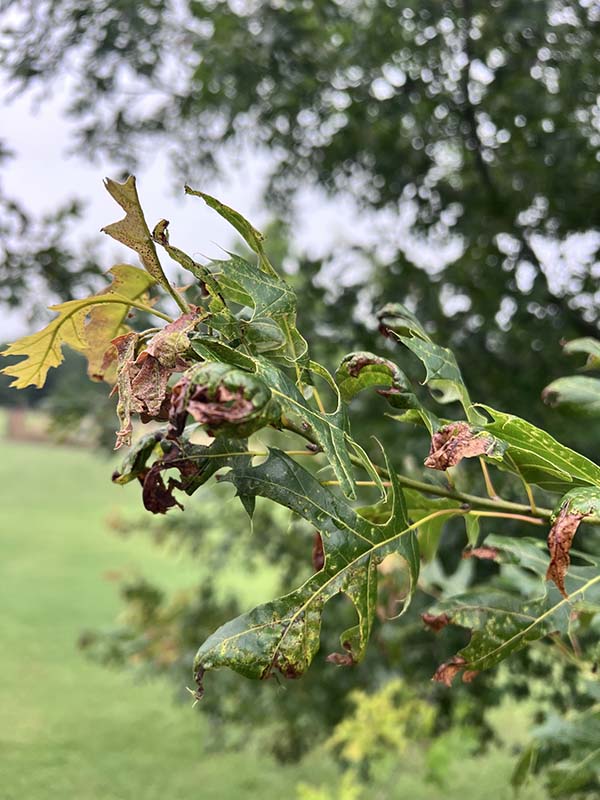
Figure 2. Oak leaves with distortion and disfiguration due to oak anthracnose. Image provided by Arborscapes Tree Services, Inc.
Each summer, the PDIDL receives inquiries about oak trees that are in decline, and clients inquire if oak wilt disease is the cause. The PDIDL has been in existence for +40 years and we do not have any confirmations of oak wilt caused by Bretziella fagacearum in our records. Oak trees most often show decline because of environmental stress factors (temperature extremes, drought , storm damage). Most of the more serious problems that develop on oak trees occur when trees are predisposed by other problems. It is vital to provide supplemental irrigation during periods of heat and drought, especially to oak trees in urban areas. When trees suffer damage from hail, wind, or ice, remove injured limbs by pruning as early as possible. Many fungi that affect oak trees are opportunistic. They will enter the tree through the injury site(s).
If you are concerned about an oak tree or other landscape plants, it is helpful to start by taking images. These can be submitted to your local county extension office and if needed, forwarded by the extension educator to the PDIDL. Images should be taken at a large size (high resolution). Start by taking images of the whole plant from a few different angles. Then, take closer images, zooming in on problem areas. After the images are reviewed, it will be determined if a physical specimen is needed.
Look for additional plant health updates from the PDIDL throughout 2025. If you have suggestions for future topics, please contact jen.olson@okstate.edu or call the PDIDL at (405) 744-9961.