

Plant Health Update, July-August 2025 Summary
Although temperatures were mild in early July, hot and dry weather was present by the middle of the month and throughout August. These conditions can contribute to plant stress, and many home gardeners started to notice damage from spider mites (Family Tetranychidae), which are attracted to stressed plants. The mites feed on the contents of individual plant cells, causing them to die. The result is a “sanded” or “stippled” appearance of the foliage (Figure 1). Many types of plants are affected by spider mites, and home gardeners should inspect leaves for mites and webbing. Webbing can be severe in some cases; however, it is not uncommon for two plants of the same type to have different susceptibility to spider mites (Figure 2). This may be due to other pests, disease, or environmental stress factors (amount of light, nutrition, proximity to other hosts, etc.). The two-spotted spider mite (Tetranychus urticae) is the most common mite observed in Oklahoma.
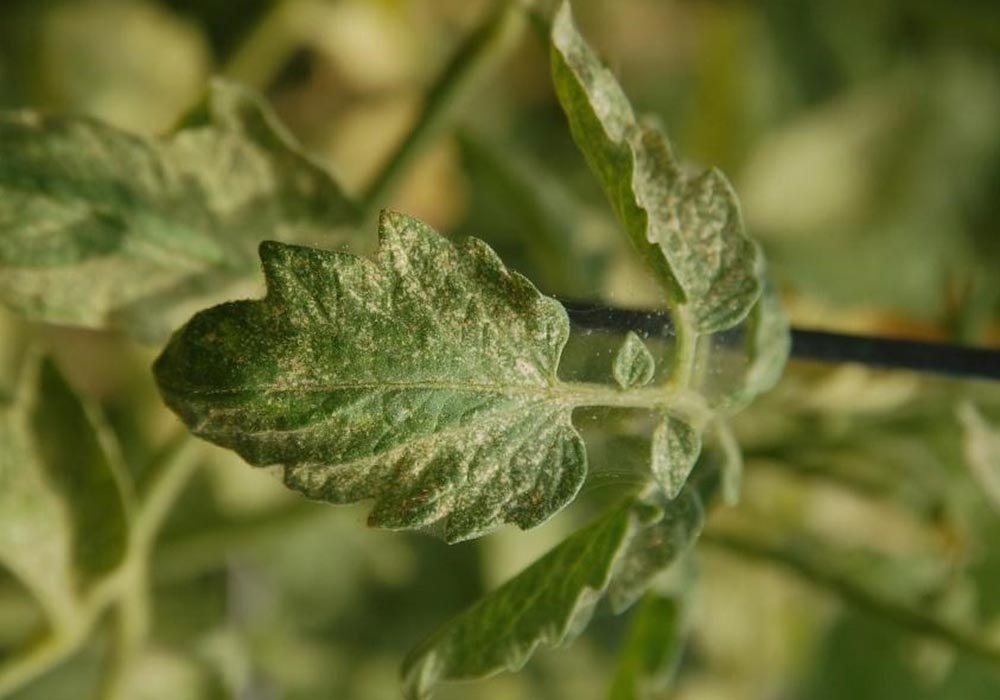
Figure 1. Tomato leaf with stippling and webbing from spider mites.
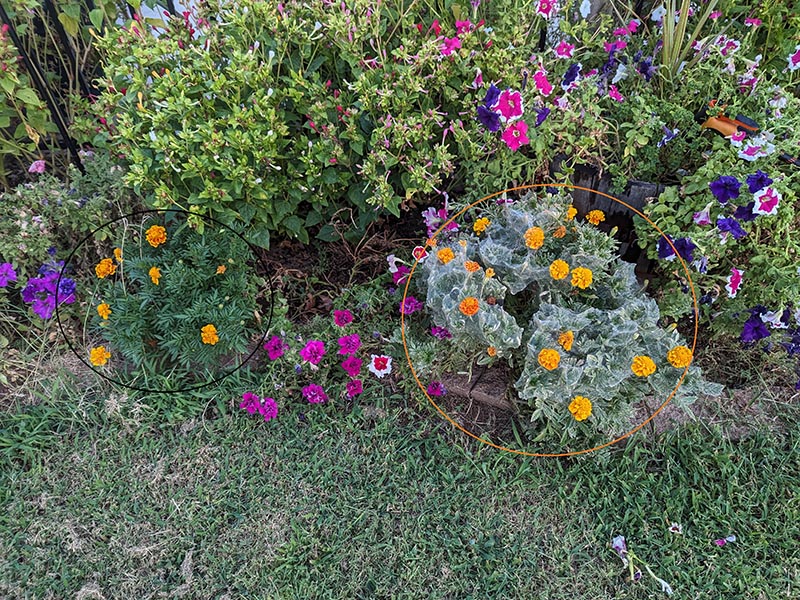
Figure 2. The marigold plant on the right (orange circle) is infested with spider mites. Note extensive webbing and stippling of the leaves. The marigold plant on the left (black circle) is unaffected.
Spider mite populations are best managed using integrated pest management practices. It is important to maintain balanced fertility of plants, as too much or too little nitrogen can allow spider mite populations to increase. To minimize plant stress, provide supplemental irrigation when needed. Avoid growing susceptible plants in locations with reflected heat (near walls or pavement). Additionally, crowded plantings are more prone to mite outbreaks than less dense plantings. Keeping plants well-spaced, clean, and free from debris or dying plant material can help prevent spider mite infestations. Heavily stippled or dying leaves can be trimmed and discarded in the trash (avoid leaving pruned plant tissues near healthy or unaffected plants). Some spider mite populations can also be reduced temporarily by rain or forcefully washing the leaves with water. For heavily infested plant tissues, however, discarding the entire plant in the trash may be necessary.
Spider mites are poorly controlled with most insecticides. Some insecticides (i.e. Pyrethroids) can result in an increased population of spider mites, as predatory arthropods or natural enemies (lady beetles, green lacewing larvae, predatory mites, etc.) are killed by these products. If chemical control is employed, contact insecticides (miticides) directly impacting mite life stages should be used. During application, it is important to uniformly coat lower leaf surfaces, since many mites and mite eggs can be found on the underside of the leaves. Active ingredients such as horticultural oil and insecticidal soap are often used; however, these products can damage plant foliage by burning leaves when applied in high temperatures (phytotoxicity).
In Oklahoma, spider mites are especially problematic on crops such as tomatoes. In late July-August, cutting back the foliage to remove stippled and brown leaves is the best management strategy. After pruning, fertilizing the plants will stimulate new growth. When temperatures cool in August, new blooms may set. These steps ensure many home garden tomatoes recover in time to produce a fall crop, when cooler temperatures and rainfall are less favorable to spider mites.
The PDIDL received one particularly interesting sample in July-August. Carla Smith, Horticulture Extension Educator in Pottawatomie County, submitted images (Figures 3-4) showing the lower trunk of a crape myrtle (Lagerstroemia indica) shrub with unusual fungal growth. It was indicated that the plant appeared to be healthy when the images were taken.
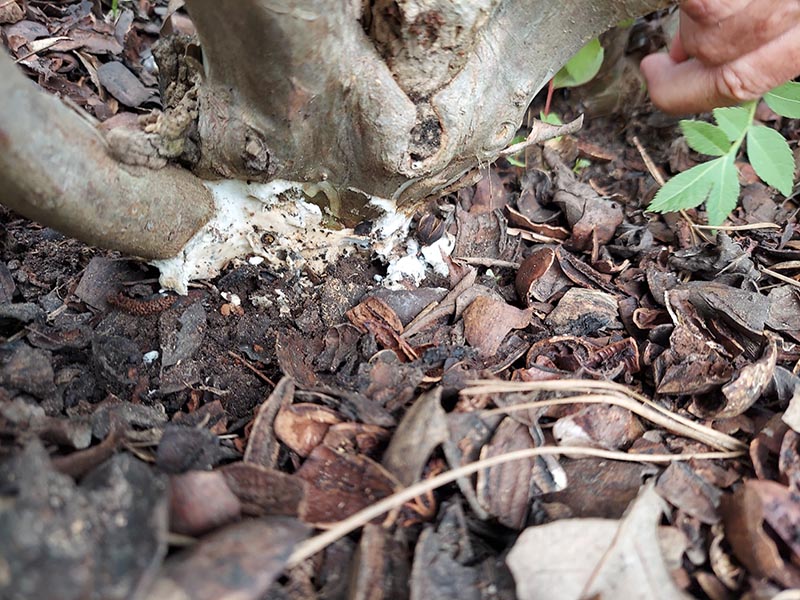
Figure 3. View one of crape myrtle stems with unusual fungal growth at the base of the plant. Image by Carla Smith, Pottawatomie County Extension.
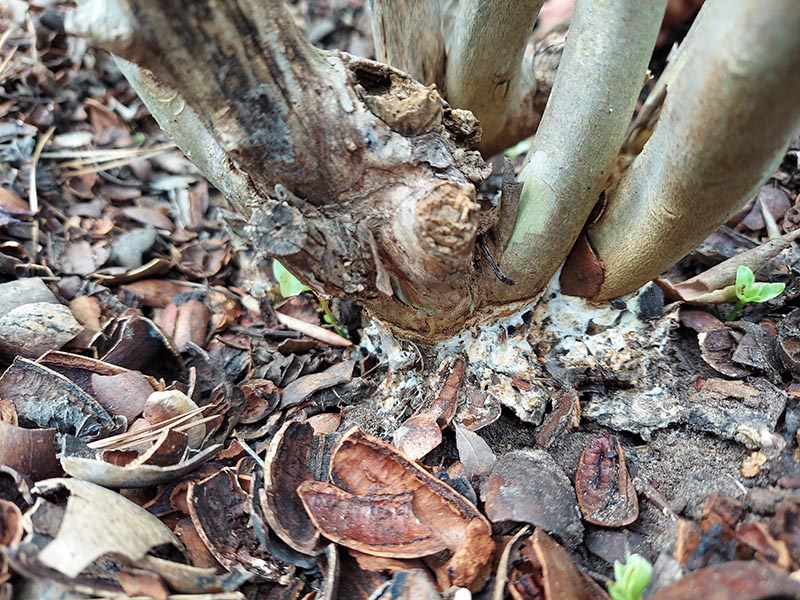
Figure 4. View two of crape myrtle stems with unusual fungal growth at the base of the plant. Image by Carla Smith, Pottawatomie County Extension.
Lab diagnosticians were unable to identify the fungus from the images alone, so a physical sample was submitted to the lab. Using molecular diagnostic methods (PCR and DNA sequencing), the fungus was identified as a Sebacina species. This fungus grows on organic material in or on the soil and is sometimes associated with plant stems. It is not harmful to the plant, and is sometimes beneficial, as it is reported as a mycorrhizae fungus on some hosts. There was no need to be concerned about the fungus; its growth was a result of high soil moisture and humid conditions.
Included in this report is a summary of plant health problems from Oklahoma specialty crop growers (horticultural crops). Table 1 shows the submissions for the month of July, and Table 2 shows the submissions for the month of August. When possible, the specific type of plant is indicated in the host column of the table.
| Abbreviation | Full Name |
|---|---|
| DD | Digital Diagnosis |
| M | Microscopy |
| S | Serological tests |
| C | Culture analysis |
| N | Nematode analysis |
| MD | Molecular diagnostic methods |
| DS | DNA sequencing |
| RS | Referral to specialist |
| Number | Host | Diagnosis/Identification | County | DD | M | S | C | N | MD | DS | RS |
|---|---|---|---|---|---|---|---|---|---|---|---|
| 1 | Apple | Plum curclio damage | Carter | X | |||||||
| 2 | Apple | Bitter rot (Colletotrichum sp.) | Lincoln | X | |||||||
| 3 | Bermudagrass | Take all | Rogers | X | |||||||
| 4 | Bermudagrass | Environmental problem | Kay | X | X | X | X | ||||
| 5 | Bermudagrass | Environmental problems | Canadian | X | X | X | X | ||||
| 6 | Bermudagrass | Spider mites | Payne | X | |||||||
| 7 | Bermudagrass | Fairy ring suspected | Kingfisher | X | |||||||
| 8 | Boxwood | Boxwood leaf miner suspected | Creek | X | |||||||
| 9 | Boxwood | Leaf spot (Colletotrichum) | Muskogee | X | |||||||
| 10 | Buffalograss | Leaf spot, dollar spot, spring dead spot | Osage | X | X | X | X | ||||
| 11 | Buffalograss | Eriophyid mites | Osage | X | |||||||
| 12 | Buffalograss | False smut (Porocercospora seminalis) | Osage | X | X | X | |||||
| 13 | Cantaloupe | Charcoal rot | Atoka | X | X | X | X | ||||
| 14 | Cedar | Trunk canker suspected | Oklahoma | X | |||||||
| 15 | Cedar, Blue Atlas | Cytospora canker suspected | Oklahoma | X | |||||||
| 16 | Cedar, Eastern red | Bagworms | Hughes | X | |||||||
| 17 | Cedar, Eastern red | Woodpecker or sapsucker damage | Kay | X | |||||||
| 18 | Cedar, Eastern red | Environmental stress, hail damage | Jackson | X | |||||||
| 19 | Cedar, Eastern red | Environmental problem | Garfield | X | |||||||
| 20 | Cedar, Eastern red | Rhizoctonia root rot | Cherokee | X | X | X | X | ||||
| 21 | Corn, sweet | Environmental stress | Payne | X | X | X | |||||
| 22 | Corn, sweet | Mutation suspected | Tulsa | X | X | ||||||
| 23 | Cotoneaster | Fusarium wilt | Cherokee | X | X | X | X | ||||
| 24 | Crape myrtle | Crape myrtle bark scale | Stephens | X | |||||||
| 25 | Crape myrtle | Heat and water stress suspected | Cleveland | X | |||||||
| 26 | Cypress | Trunk canker (unidentified cause) | Oklahoma | X | |||||||
| 27 | Elm | Herbicide injury | Cimarron | X | |||||||
| 28 | Elm, American | Dutch elm disease | Oklahoma | X | X | ||||||
| 29 | Fruit | Environmental stress suspected | Payne | X | X | ||||||
| 30 | Fruit | Environmental stress suspected | Payne | X | X | ||||||
| 31 | Fruit | Environmental stress suspected | Payne | X | X | ||||||
| 32 | Garden | Caterpillar | Pontotoc | X | |||||||
| 33 | Gum, sweet | Ganoderma root rot suspected | Okmulgee | X | |||||||
| 34 | Hackberry | Hackberry psyllids | Kay | X | |||||||
| 35 | Hibiscus | Whiteflies | Oklahoma | X | X | ||||||
| 36 | Holly | Herbicide injury | Payne | X | |||||||
| 37 | Holly, Yaupon | Geometrid moth | Wagoner | X | X | X | |||||
| 38 | Hosta | Sooty mold | Stephens | X | |||||||
| 39 | Hydrangea | Phytophthora and Xanthomonas blight | Cherokee | X | X | ||||||
| 40 | Hydrangea | Colletotrichum and Xanthomonas leaf spots | Cherokee | X | X | ||||||
| 41 | Landscape | Darkling beetle | Texas | X | |||||||
| 42 | Lilac | Branch dieback, bacteria suspected | Logan | X | |||||||
| 43 | Live oak | Brittle cinder suspected | Oklahoma | X | X | ||||||
| 44 | Maple | Iron chlorosis | Texas | X | |||||||
| 45 | Maple | Environmental stress | Murray | X | |||||||
| 46 | Maple, Japanese | Wound cankers (cicada or hail) | Seminole | X | |||||||
| 47 | Maple, Silver | Hypoxylon canker | Wagoner | X | |||||||
| 48 | Maple, Silver | Wound canker | Oklahoma | X | |||||||
| 49 | Maple, Silver | Hypoxylon canker | Cleveland | X | |||||||
| 50 | Oak | Lichens | Wagoner | X | |||||||
| 51 | Oak | Unidentified branch injury | Stephens | X | |||||||
| 52 | Oak | Environmental stress | Stephens | X | |||||||
| 53 | Oak | Storm damage | Stephens | X | |||||||
| 54 | Oak | Environmental stress | Stephens | X | |||||||
| 55 | Oak | Environmental stress | Stephens | X | |||||||
| 56 | Oak | Environmental stress | Stephens | X | |||||||
| 57 | Oak | Root rot suspected | Stephens | X | |||||||
| 58 | Oak | Root rot suspected | Oklahoma | X | |||||||
| 59 | Oak | Carpenter moth suspected | Creek | X | |||||||
| 60 | Oak | Anthracnose | Alfalfa | X | |||||||
| 61 | Oak | Botryosphaeria canker, herbicide injury | Canadian | X | |||||||
| 62 | Oak | Iron chlorosis, branch dieback | Garvin | X | |||||||
| 63 | Oak | Iron chlorosis, environmental problem | Cleveland | X | |||||||
| 64 | Oak | Wetwood | Wagoner | X | |||||||
| 65 | Oak | Deep planting, environmental stress | Wagoner | X | |||||||
| 66 | Oak | Suspected oak flake galls | Oklahoma | X | |||||||
| 67 | Oak | Environmental stress | N/A | X | |||||||
| 68 | Oak, Black-jack | Oak anthracnose (Discula quercina) | Cleveland | X | X | X | X | ||||
| 69 | Oak, Black-jack | Tubakia leaf spot, Iron chlorosis | Logan | X | |||||||
| 70 | Oak, Black-jack | Bacterial wetwood | Cleveland | X | |||||||
| 71 | Oak, Black-jack | Iron chlorosis, compaction | Oklahoma | X | |||||||
| 72 | Oak, Pin | Environmental problem | Muskogee | X | |||||||
| 73 | Oak, Pin | Insect damage | Craig | X | |||||||
| 74 | Oak, Post | Oak decline (Diplodia quercivora) | Osage | X | X | X | X | ||||
| 75 | Oak, Post | Oak decline (Diplodia sp.) | Cleveland | X | X | X | X | X | |||
| 76 | Oak, Red | Hypoxylon canker | Mayes | X | |||||||
| 77 | Oak, Shumard | pH induced pathology suspected | Logan | X | |||||||
| 78 | Oak, Shumard | Sawflies, Abiotic scorch | Stephens | X | |||||||
| 79 | Okra | Phymatotrichum root rot not detected | Payne | X | X | X | |||||
| 80 | Okra | Phymatotrichum root rot not detected | Payne | X | X | X | |||||
| 81 | Okra | Phymatotrichum root rot not detected | Payne | X | X | X | |||||
| 82 | Peach | Undetermined problem | Bryan | X | |||||||
| 83 | Peach | Brown rot, scab, insect damage | Garvin | X | |||||||
| 84 | Pear | Leaf spot (various fungi) | Cherokee | X | X | X | X | ||||
| 85 | Pecan | Phytoplasma not detected | Tulsa | X | X | X | |||||
| 86 | Pecan | Phytoplasma not detected | Tulsa | X | X | X | |||||
| 87 | Pecan | Pecan bunchy top Phytoplasma | Tulsa | X | X | X | |||||
| 88 | Pecan | Phytoplasma not detected | Tulsa | X | X | X | |||||
| 89 | Pecan | Phytoplasma not detected | Tulsa | X | X | X | |||||
| 90 | Pecan | Phytoplasma not detected | Tulsa | X | X | X | |||||
| 91 | Pecan | Pecan bunchy top Phytoplasma | Tulsa | X | X | X | |||||
| 92 | Pecan | Phytoplasma not detected | Tulsa | X | X | X | |||||
| 93 | Pecan | Phytoplasma not detected | Tulsa | X | X | X | |||||
| 94 | Pecan | Phytoplasma not detected | Tulsa | X | X | X | |||||
| 95 | Pecan | Midges | Noble | X | |||||||
| 96 | Pecan | Wound canker | Wagoner | X | |||||||
| 97 | Phlox | Spider mites | Oklahoma | X | X | ||||||
| 98 | Pine | Diplodia tip blight suspected | Washita | X | |||||||
| 99 | Pine | Diplodia tip blight suspected | Texas | X | |||||||
| 100 | Pine | Porcupine damage suspected | Beaver | X | |||||||
| 101 | Pine | Dothistroma needle blight | Canadian | X | |||||||
| 102 | Pine | Animal damage, Environmental stress | Cherokee | X | |||||||
| 103 | Pine | Environmental problem | Tulsa | X | |||||||
| 104 | Pine | Pine wilt not detected | Canadian | X | X | ||||||
| 105 | Pistache, Chinese | Trunk canker (unidentified fungus) | Oklahoma | X | |||||||
| 106 | Pistache, Chinese | Branch dieback (unidentified cause) | Oklahoma | X | |||||||
| 107 | Pumpkin | Fusarium wilt | Payne | X | X | X | X | ||||
| 108 | Pumpkin | Squash bugs | Pottawatomie | X | |||||||
| 109 | Pumpkin | Fusarium wilt (Fusarium spp.) | Payne | X | X | X | X | ||||
| 110 | Pyracantha | Cercospora leaf spot | Cherokee | X | |||||||
| 111 | Redbud, Eastern | Spider mites, edema | Pottawatomie | X | |||||||
| 112 | Redbud, Eastern | Environmental problem; Edema | Pottawatomie | X | X | X | |||||
| 113 | Redbud, Eastern | Saprophyte (Sebacina sp.) | Pottawatomie | X | X | X | X | ||||
| 114 | Redbud, Eastern | Redbud leaffolder | Oklahoma | X | |||||||
| 115 | Redbud, Eastern | Abnormal plant growth | Wagoner | X | |||||||
| 116 | Rose | Black spot | Okfuskee | X | |||||||
| 117 | Rose | Insect damage | McCurtain | X | |||||||
| 118 | Rose | Stinging rose caterpillar larvae | Rogers | X | |||||||
| 119 | Strawberry | Root rot suspected | Payne | X | |||||||
| 120 | Sycamore | Lightning strike suspected | Wagoner | X | |||||||
| 121 | Sycamore | Storm damage | Stephens | X | |||||||
| 122 | Sycamore | Herbicide injury | Woods | X | |||||||
| 123 | Tomato | Leaf spot (unidentified cause) | Craig | X | |||||||
| 124 | Tomato | No virus detected; environmental problem | Garfield | X | X | ||||||
| 125 | Tomato | Spider mites, Nutritional deficiency | Garfield | X | |||||||
| 126 | Tomato | Beet curly top virus suspected | Major | X | |||||||
| 127 | Tomato | Pythium root rot (P. aphanidermatum) | Oklahoma | X | X | X | X | ||||
| 128 | Tomato | Stink bug damage | Texas | X | |||||||
| 129 | Tomato | Bacterial canker suspected | Creek | X | |||||||
| 130 | Tomato | Spider mites and root rot suspected | Craig | X | |||||||
| 131 | Tomato | Environmental stress | Okfuskee | X | |||||||
| 132 | Tree, unidentified | Environmental problem | Kiowa | X | |||||||
| 133 | Tree, unidentified | Heartwood decay | Wagoner | X | |||||||
| 134 | Turfgrass | Weed identification-Purslane | Texas | X | |||||||
| 135 | Turfgrass | Fall armyworm | LeFlore | X | |||||||
| 136 | Turfgrass | Nostoc | Love | X | |||||||
| 137 | Vegetables | Fall armyworm | Pontotoc | X | |||||||
| 138 | Vinca | Root rot suspected | Pontotoc | X | |||||||
| 139 | Watermelon | Fusarium wilt | Atoka | X | X | X | X | ||||
| 140 | Wisteria | No virus detected | Cherokee | X | X | X | |||||
| 141 | Wisteria | No virus detected | Cherokee | X | X | X | |||||
| 142 | Yarrow | Spider mites, environmental | Payne | X | |||||||
| 143 | Zinnia | Powdery mildew, spider mites | Oklahoma | X | X | ||||||
| 144 | Zinnia | Cercospora leaf spot | McClain | X | X |
| Number | Host | Diagnosis/Identification | County | DD | M | S | C | N | MD | DS | RS | O |
|---|---|---|---|---|---|---|---|---|---|---|---|---|
| 1 | Almond | Bot canker (Diplodia seriata) | Canadian | X | X | X | X | |||||
| 2 | Apple | Sooty blotch, bitter rot | Nowata | X | ||||||||
| 3 | Apple | Bitter rot (Colletotrichum) | Stephens | X | ||||||||
| 4 | Arborvitae | Canker (Diplodia seriata) | Oklahoma | X | X | X | X | |||||
| 5 | Arborvitae, weeping threadleaf | Suspect Phyllosticta blight and Seiridium canker | Cleveland | X | ||||||||
| 6 | Ash | Ash flower gall mite | Kay | X | X | |||||||
| 7 | Basil, Sweet | Thrips damage | Payne | X | X | X | ||||||
| 8 | Begonia | Nutritional problem suspected | Payne | X | X | X | ||||||
| 9 | Bermudagrass | Fall army worm damage, drought stress | Pontotoc | X | ||||||||
| 10 | Bermudagrass | Environmental stresses | Marshall | X | X | |||||||
| 11 | Bermudagrass | Delphacids | Oklahoma | X | ||||||||
| 12 | Bermudagrass | Environmental stress suspected | Garfield | X | ||||||||
| 13 | Bermudagrass | Dollar spot suspected | Garfield | X | ||||||||
| 14 | Boxwood | Volutella blight suspected | Oklahoma | X | ||||||||
| 15 | Boxwood | Chemical injury suspected | Cherokee | X | X | |||||||
| 16 | Butterfly bush | Stem and root rot (Phytophthora nicotianae) | Cherokee | X | X | X | X | |||||
| 17 | Butterfly bush | Root problem suspected | Cherokee | X | ||||||||
| 18 | Cantaloupe | Stem rot or canker | Stephens | X | ||||||||
| 19 | Cantaloupe | Aphids | Rogers | X | X | X | X | |||||
| 20 | Catalpa | Environmental problem suspected | Kay | X | ||||||||
| 21 | Cedar, Blue Atlas | Bot canker (Botryosphaeria dothidea) | Oklahoma | X | X | X | X | X | ||||
| 22 | Cedar, Blue Atlas | Wound response suspected | Oklahoma | X | X | X | ||||||
| 23 | Cedar, Eastern red | Environmental stress | Oklahoma | X | X | X | X | |||||
| 24 | Cedar, Eastern red | Acrobat ants | Cleveland | X | ||||||||
| 25 | Cedar, Eastern red | White juniper fungus (Robergea suspected) | Carter | X | ||||||||
| 26 | Cedar, Eastern red | Branch dieback (Botryosphaeria suspected) | Cleveland | X | ||||||||
| 27 | Cedar, Eastern red | Fletcher scale | Cleveland | X | ||||||||
| 28 | Cherry, Sweet | Undetermined problem | Garfield | X | ||||||||
| 29 | Chrysanthemum | Root problem suspected | Cherokee | X | ||||||||
| 30 | Elderberry | Bacterial leaf scorch | Payne | X | X | |||||||
| 31 | Elderberry | Leaf spot (Xanthomonas sp.) | Payne | X | X | X | X | |||||
| 32 | Elm | Elm leaf beetle | Logan | X | ||||||||
| 33 | Elm | Elm leaf beetle damage suspected | Kay | X | ||||||||
| 34 | Elm | Suspected, elm leaf beetle | Stephens | X | ||||||||
| 35 | Elm | Flower scarab beetle (Euphoria sp.) | Noble | X | ||||||||
| 36 | Elm, American | Spider mites, Bot canker | Oklahoma | X | X | X | X | X | ||||
| 37 | Elm, American | Canker (Botryosphaeria dothidea) | Tulsa | X | X | X | X | |||||
| 38 | Fennel | Bacterial soft rot | Payne | X | X | X | X | |||||
| 39 | Flowering plants | Skipper moth | Cleveland | X | ||||||||
| 40 | Flowering plants | Snout moth | Cleveland | X | ||||||||
| 41 | Fountain grass | Crown rot and Take all | Cherokee | X | X | X | X | |||||
| 42 | Garden | Cicada killer (Sphecius speciosus) | N/A | X | ||||||||
| 43 | Geranium | Rhizoctonia root rot | Tulsa | X | X | X | X | |||||
| 44 | Gomphrena | Unidentified virus | Payne | X | X | X | X | X | ||||
| 45 | Hibiscus | Insect damage | Oklahoma | X | ||||||||
| 46 | Hibiscus, Hardy | Heat stress | Cherokee | X | ||||||||
| 47 | Hickory | Hickory anthracnose suspected | Oklahoma | X | ||||||||
| 48 | Hydrangea, Panicle | Root and stem rot (Rhizoctonia, Phytophthora nicotianae) | Cherokee | X | X | X | X | |||||
| 49 | Impatiens | Root rot suspected | Garfield | X | ||||||||
| 50 | Jujube | Leaf spot and dieback (Botryosphaeria dothidea) | Oklahoma | X | X | X | X | X | ||||
| 51 | Juniper | Tip dieback (Neopestalotiopsis, Phomopsis) | Cherokee | X | X | X | X | |||||
| 52 | Lantana | Pythium root and stem rot (Pythium ultimum) | Tulsa | X | X | X | X | |||||
| 53 | Lilac | Leaf spot (Pseudocercospora sp.) | Kay | X | ||||||||
| 54 | Lily, Canna | Fungal leaf spot | Payne | X | X | |||||||
| 55 | Lily, toad | Environmental problem | Payne | X | X | X | ||||||
| 56 | Locust | Mimosa webworm suspected | Creek | X | ||||||||
| 57 | Magnolia | Undetermined problem | Oklahoma | X | ||||||||
| 58 | Magnolia | Phytophthora canker and root rot suspected | Logan | X | ||||||||
| 59 | Maple | Environmental problem | McClain | X | ||||||||
| 60 | Maple | Virus or nutritional problem suspected | Cherokee | X | ||||||||
| 61 | Maple, Japanese | Phomopsis canker | Tulsa | X | X | X | X | |||||
| 62 | Maple, Red | Heat stress | Pontotoc | X | ||||||||
| 63 | Marigold | Bumblebee (Bombus sp.) | Texas | X | ||||||||
| 64 | Mixed woody plants | Environmental problem, red-shoulder bug | Pontotoc | X | ||||||||
| 65 | Mulberry | Herbicide injury | Washita | X | ||||||||
| 66 | Mulberry | Environmental stress | Oklahoma | X | ||||||||
| 67 | Mulberry | Cercospora leaf spot | Kiowa | X | ||||||||
| 68 | Nandina | Bacterial leaf spot (Xanthomonas sp.) | Payne | X | X | |||||||
| 69 | Oak | Oak lacebugs | Pontotoc | X | ||||||||
| 70 | Oak | Root or trunk rot, unidentified cause | Pontotoc | X | ||||||||
| 71 | Oak | Hypoxylon canker | Jackson | X | ||||||||
| 72 | Oak | Gall making midges (family Cecidomyiidae) | Carter | X | ||||||||
| 73 | Oak | Trunk or root problem | Oklahoma | X | ||||||||
| 74 | Oak | Undetermined problem | Noble | X | ||||||||
| 75 | Oak | Hypoxylon canker | Oklahoma | X | X | X | X | |||||
| 76 | Oak | Herbicide injury suspected | Oklahoma | X | X | |||||||
| 77 | Oak, Bur | Anthracnose, Hypoxylon canker | Oklahoma | X | X | X | X | X | ||||
| 78 | Oak, Nuttall | Scarab beetle | Payne | X | ||||||||
| 79 | Oak, Post | Root rot (mixed fungi) | Cleveland | X | X | X | X | X | ||||
| 80 | Oak, Post | Root rot (mixed fungi) | Cleveland | X | X | X | X | X | ||||
| 81 | Oak, Post | Root rot (mixed fungi) | Cleveland | X | X | X | X | X | ||||
| 82 | Oak, Post | Root rot (mixed fungi) | Cleveland | X | X | X | X | X | ||||
| 83 | Oak, Post | Anthracnose (Discula quercina) | Oklahoma | X | X | X | X | |||||
| 84 | Oak, Post | Anthracnose suspected, secondary wood rot fungi | Tulsa | X | ||||||||
| 85 | Oak, Red | Oak vein pocket gall midge | Oka | X | ||||||||
| 86 | Oak, Shumard | Leaf spot | Oklahoma | X | X | X | X | X | ||||
| 87 | Oak, Shumard | Environmental stress | Oklahoma | X | X | X | X | |||||
| 88 | Oak, Willow | Iron chlorosis, site disturbance | Cleveland | X | ||||||||
| 89 | Peach | Ring nematodes, Pythium root rot | Bryan | X | X | X | X | X | X | X | ||
| 90 | Peach | Heat stress | Garfield | X | ||||||||
| 91 | Pear | Fire blight | Payne | X | X | |||||||
| 92 | Pecan | Phytoplasma not detected | Payne | X | X | |||||||
| 93 | Pecan | Phytoplasma not detected | Payne | X | X | |||||||
| 94 | Pecan | Phytoplasma not detected | Payne | X | X | |||||||
| 95 | Pecan | Phytoplasma not detected | Payne | X | X | |||||||
| 96 | Pecan | Black pecan aphid, leaf scorch | Roger Mills | X | ||||||||
| 97 | Pecan | Insect damage, environmental stress | Oklahoma | X | ||||||||
| 98 | Pepper | Leaf spot (Xanthomonas sp.) | Payne | X | X | X | X | |||||
| 99 | Pepper, Bell | Spider mites | Payne | X | X | X | ||||||
| 100 | Pepper, Bell | Insect damage | Payne | X | X | X | ||||||
| 101 | Pepper, Bell | Herbicide injury suspected | Payne | X | X | X | ||||||
| 102 | Pepper, Italian | Herbicide injury suspected | Payne | X | X | X | ||||||
| 103 | Pepper, Jalapeno | Insect damage | Payne | X | X | X | ||||||
| 104 | Petunia | Phytophthora and Rhizoctonia root and stem rots | Tulsa | X | X | X | X | |||||
| 105 | Petunia | Phytophthora and Rhizoctonia root and stem rots | Tulsa | X | X | X | X | |||||
| 106 | Pine | Diplodia tip blight suspected | Caddo | X | ||||||||
| 107 | Pine | Diplodia and Dothistroma tip blight suspected | Grady | X | ||||||||
| 108 | Pine | Diplodia tip blight | Oklahoma | X | X | X | ||||||
| 109 | Pine, Loblolly | Seasonal needle drop; wood borers | Craig | X | ||||||||
| 110 | Pistache, Chinese | Hypoxylon canker | Jackson | X | ||||||||
| 111 | Pistache, Chinese | Environmental stress | Oklahoma | X | ||||||||
| 112 | Pistache, Chinese | Canker (Botryosphaeria dothidea) | Oklahoma | X | X | X | X | X | ||||
| 113 | Pistache, Chinese | Environmental problem | Washington | X | ||||||||
| 114 | Plum | Bacterial leaf spot suspected | Payne | X | X | X | X | |||||
| 115 | Portulaca | Nutritional problem suspected | Payne | X | X | X | ||||||
| 116 | Pumpkin | Environmental problem suspected | Osage | X | X | |||||||
| 117 | Pumpkin | Environmental problem suspected | Osage | X | X | |||||||
| 118 | Pumpkin | Wilt or root problem | Osage | X | ||||||||
| 119 | Raspberry | Raspberry cane borer suspected | Payne | X | ||||||||
| 120 | Redbud | Mechanical damage to trunk | Garfield | X | ||||||||
| 121 | Redbud, Eastern | Redbud leaffolder, eriophyid mites | Kay | X | X | |||||||
| 122 | Rudbeckia | Normal plant growth | Payne | X | X | |||||||
| 123 | Spirea | Rhizoctonia root rot | Cherokee | X | X | X | X | |||||
| 124 | St. John's Wort | Stem lesions/dieback (Colletotrichum, F. oxysporum) | Cherokee | X | X | X | X | |||||
| 125 | Strawberry | Fungal leaf spot suspected | Adair | X | ||||||||
| 126 | Sycamore | Animal damage | Payne | X | ||||||||
| 127 | Tomato | Fusarium wilt | Oklahoma | X | ||||||||
| 128 | Tomato | Spider mites, nutritional deficiency | Cherokee | X | ||||||||
| 129 | Tomato | Bacterial leaf spot suspected | Payne | X | X | X | X | |||||
| 130 | Tomato | Spider mites, Physiological leaf roll | Cleveland | X | ||||||||
| 131 | Tomato | Early blight, Fusarium wilt | Pottawatomie | X | X | X | X | |||||
| 132 | Tomato | Spider mite damage | Cleveland | X | ||||||||
| 133 | Tomato | Bacterial leaf spot, Early blight | Pottawatomie | X | X | X | X | |||||
| 134 | Tomato | Southern blight (Agroalthelia rolfsii) | Pottawatomie | X | X | X | X | |||||
| 135 | Tomato | Fusarium wilt | Pottawatomie | X | X | X | X | |||||
| 136 | Tomato | Bacterial spot, Early blight | Pottawatomie | X | X | X | X | |||||
| 137 | Tree, unidentified | Environmental problem | Canadian | X | X | |||||||
| 138 | Tree, unidentified | Root or trunk rot, unidentified cause | Blaine | X | ||||||||
| 139 | Trees, unidentified | Hypoxylon canker, Ganoderma root rot | Jackson | X | ||||||||
| 140 | Tulsa | Dieback (Botryosphaeria dothidea) | Tuliptree | X | X | X | X | |||||
| 141 | Vegetables | Root knot nematodes | Murray | X | X | |||||||
| 142 | Vegetables | Root knot nematodes | Murray | X | X | |||||||
| 143 | Watermelon | Aphids, likely melon aphid | Greer | X | ||||||||
| 144 | Watermelon | Melon aphid (Aphis gossypii) suspected | Caddo | X | ||||||||
| 145 | Yew | Sooty mold suspected | Seminole | X | ||||||||
| 146 | Yew, Japanese | Root problem suspected | Tulsa | X | ||||||||
| 147 | Zinnia | Tospovirus group | Payne | X | X | X | X | |||||
| 148 | Zinnia | Tospovirus group | Payne | X | X | X | X | |||||
| 149 | Zinnia | Whitemargined burrower bug suspected | McClain | X |
Look for additional plant health updates from the PDIDL in the next few weeks as the lab rounds out 2025. If you have suggestions for future topics, please contact jen.olson@okstate.edu or call the PDIDL at (405) 744-9961.