

Pecan Nut Casebearer: Time to Make a Plan
As we roll into May it’s time to start thinking about pecan nut casebearer. The pecan nut casebearer (PNC), Acrobasis nuxvorella (Neunzig), is one of the most devastating nut-feeding insects that occur in pecans and is found throughout the pecan growing regions. (Fig 1).
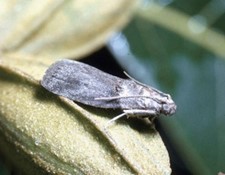
Figure 1. Pecan Nut Casebearer adult. Oklahoma State University.
In Oklahoma, adult casebearer moths deposit eggs during late May or early June. Eggs are deposited on the tips of early developing nuts shortly after tree pollination (Fig 2). After hatching, larvae burrow into nuts, potentially damaging the entire cluster (Fig 3).
While completing up to three generations per year, most of the damage is caused by first generation larvae. Overwintering larvae develop into pupae, and ultimately moths emerge from late May to early June. The primary means of controlling this insect is a well-timed application of insecticide based on infestation levels from each individual orchard.
| Image | Label |
|---|---|
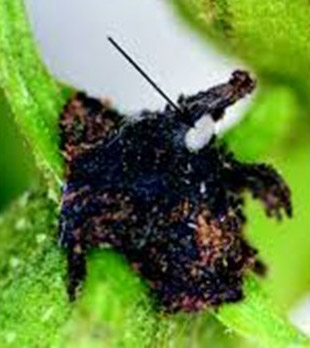 |
Figure 2a. PNC eggs. Oklahoma State University. |
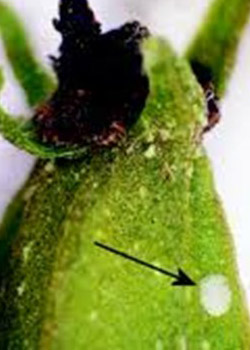 |
Figure 2b. PNC eggs. Oklahoma State University. |
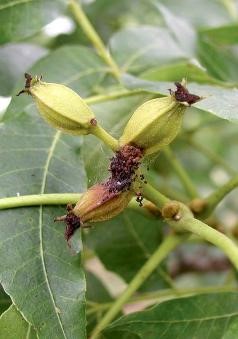 |
Figure 3. PNC damaged nut cluster. Pecan South. |
Pheromone-baited traps for PNC are available. The pheromone (sex attractant) mimics the chemical emitted by female casebearer moths and attracts male moths to a sticky trap (Fig. 4 & 5).
Trap captures can be a useful tool to detect the arrival of PNC in an area. Generally, for southern and central Oklahoma, traps should be in the orchard during the first week of May and for northern counties during the middle of May.
The key to using the pheromone traps is to have the traps out early in order to detect the onset of moth activity and first flight. The initial date of collections, when moths are collected for two consecutive nights, will act as a benchmark (biofix) for predicting egg laying (oviposition).
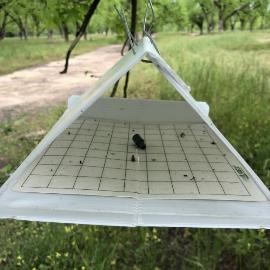
Figure 4. PNC male moths on sticky traps. Pecan South.
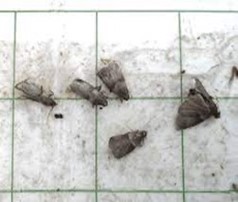
Figure 5. PNC male moths on sticky traps. Pecan South.
Over years of observation, researchers have determined oviposition generally starts about 7-10 days after the biofix date. This represents around 10-25% egg lay. Nut entry/damage can begin about 5-6 days later. Beginning to scout early allows plenty of time to anticipate the first significant nut entry, which should occur 12 to 16 days after an initial moth capture.
The table below can be used as an example for using the traps and establishing a biofix for your location (Table 1). By using this approach, you must be prepared to scout extensively for either eggs and/or the very first signs of damage during the first 20 days after the biofix date.
| Orchard | May 14 | May 15 | May 16 | May 17 | May 18 | May 19 | May 20 | Biofix |
|---|---|---|---|---|---|---|---|---|
| Orchard #1 | 0 | 0 | 1 | 2 | 1 | 5 | 8 | May 16 |
| Orchard #2 | 0 | 0 | 1 | 0 | 0 | 3 | 5 | May 19 |
| Orchard #3 | 0 | 0 | 3 | 0 | 1 | 3 | 0 | May 18 |
Based on the examples provided in Table 1, the biofix (first sustained moth capture) was determined to be May 16, May 19, and May 18 for orchards 1, 2, and 3, respectively.
Looking for eggs is difficult but can be the first sign of whether you will have PNC problems or not. If you do not reach a treatment threshold, return 3 days later and scout for eggs and/or signs of damage. If threshold is not reached, repeat this process in another 3 days to determine if PNC infestations have reached a treatment threshold (2 infested clusters before 310 clusters have been checked).
Treatment of PNC in Oklahoma is not always warranted due to timely weather events during this period, so it is essential to scout carefully and completely each time.
If the threshold is attained and an insecticide application is warranted, apply materials according to label directions and make every attempt to use products that are gentler on beneficial organisms (e.g. Confirm®, Intrepid®, Javelin®, Dipel ES®, or Spintor®). These products can also help control other lepidopteran pests occurring around the same time (e.g., bud moth, web worm, walnut datana, bag worm, and hickory shuckworm).
More information on pecan nut casebearer can be found in EPP- 7189, The Pecan Nut Casebearer.